

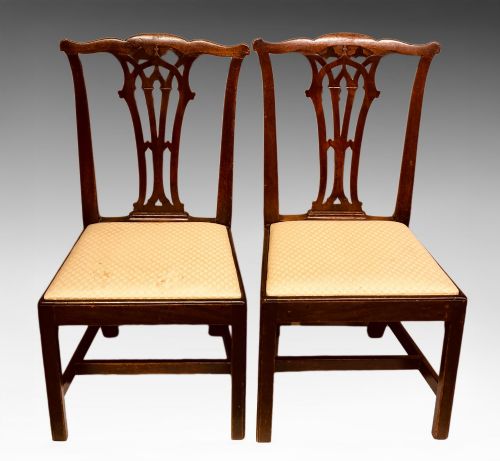


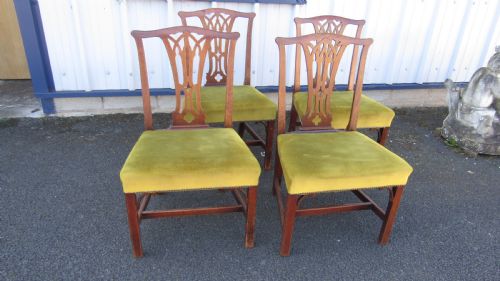


Gothic Splat Chairs
Gothic splat chairs are architectural seating pieces that bring medieval verticality into domestic spaces through pointed arches and tracery.
Gothic Splat Chairs
Gothic splat chairs combine the upright structural frame of traditional seating with openwork back splats inspired by medieval ecclesiastical architecture. The form emerges in the eighteenth century and continues through revival periods into the twentieth century, taking the shape of dining chairs, armchairs, side chairs, and desk chairs.
The most common versions met here date from the eighteenth and nineteenth centuries, spanning Georgian and Victorian periods as well as Chippendale revival styles. These pieces frequently appear in sets for dining use or as individual armchairs and hall chairs.
Makers construct these chairs using timbers such as mahogany, oak, yew, and elm, sometimes pairing the wooden frames with upholstered seats in fabric, leather, or velvet. Regional variations include country Windsor forms alongside formal revival dining sets.
How they were made
Makers shape the structural components of these chairs from solid hardwoods, primarily utilising mahogany and oak alongside regional timbers like yew and elm. Hand carving defines the ornament, shaping the central splat into pointed arches, trefoils, and tracery patterns.
Joinery methods rely on traditional mortise and tenon construction to secure the upright stiles, rails, and legs. Seats are either integrated into the wooden frame or dropped in to receive upholstery coverings in leather, velvet, or woven fabric, occasionally secured with brass details.
Gothic Splat Chairs Retail Price Guide 2026
Typical asking prices for gothic splat chairs among the pieces listed under this phrase on Sellingantiques today, from the lower quarter to the upper quarter. They describe what is for sale here now, not the wider market.
One listed apprentice piece demonstrates the maker's early ambition through a miniature Gothic hall chair.
What varies in quality
The standard of carving in the central splat dictates much of the distinction between simpler country interpretations and ambitious revival pieces. Crisp depth in the architectural tracery and well-defined angles in the Gothic motifs separate accomplished work from basic execution.
Timber selection and the integrity of the frame construction govern durability and presence. Heavy, dense mahogany and figured oak assemblies that retain tight joints without supplemental bracing represent the superior end of the range.
Ben Gilling·Allsop Worksop
The Gothic Splat Chairs Glossary
- Splat
- The vertical central strip of wood in the middle of a chair back. It receives the carved Gothic tracery and architectural motifs.
- Tracery
- Openwork ornamentation in stone or wood resembling intersecting ribs, translated here into the back splat of the chair.
- Stile
- The upright vertical side post of a chair back. It frames the splat and supports the top rail.
- Windsor
- A chair built with a solid wooden seat into which the legs and back spindles are direct-tenoned. Some examples incorporate Gothic back designs.
- Chippendale
- A style originating in the eighteenth century and revived later, known for elaborate back splats and sturdy proportions.
Gothic Splat Chairs: Frequently Asked Questions
How do I date a Gothic splat chair?
Dating relies on examining the timber species, construction joinery, and the specific character of the revival style. Eighteenth-century examples show different patination and hand tool marks compared to nineteenth-century revival pieces.
Changes in proportion and the evolution from Georgian restraint to Victorian ornamentation also help place the chair within its period of manufacture.
Are these chairs comfortable for daily dining?
Many of these pieces function well for dining, particularly the larger sets from the nineteenth century. The upright backs support an active sitting posture standard for formal meals.
Models with upholstered drop-in seats provide additional cushioning compared to solid wooden platforms, though seat heights vary across different centuries.
How should I care for wooden seats and frames?
Maintenance involves applying appropriate wax polish to nourish hardwoods like mahogany and oak without building up heavy residue. Keeping the furniture away from direct heat sources prevents timber shrinkage and joint loosening.
Upholstered elements require gentle vacuuming and professional cleaning when covered in velvet, leather, or delicate fabrics.
What is the difference between side chairs and armchairs?
Side chairs lack armrests and are designed to tuck neatly around a dining table or line a hallway wall. Their compact footprints suit symmetrical arrangements.
Armchairs feature integral arm supports attached to the seat and back stiles, providing a more commanding presence often used at the head of a table or as a desk chair.