
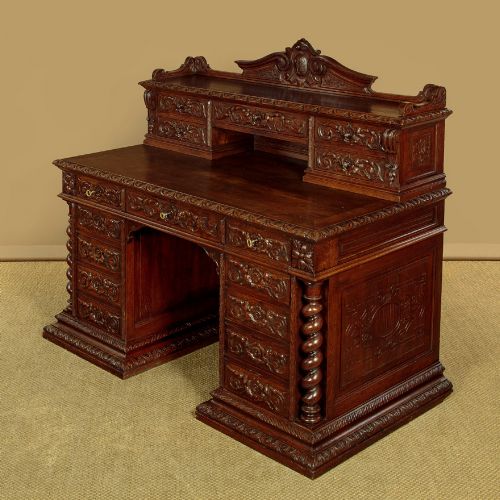


Gothic Revival Writing Bureau
A gothic revival writing bureau brings serious architectural presence to a room, offering dark timber craftsmanship and hidden compartments for correspondence.
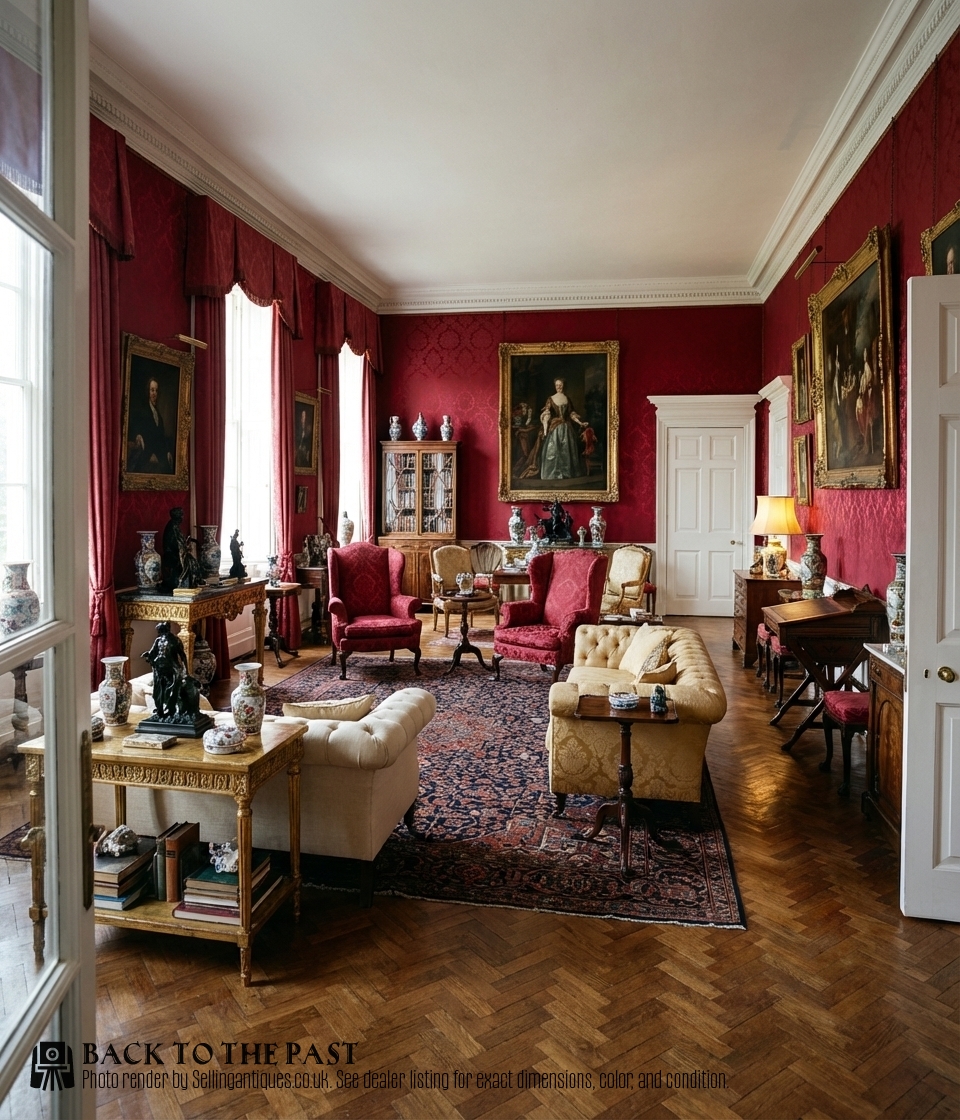
Gothic Revival Writing Bureau
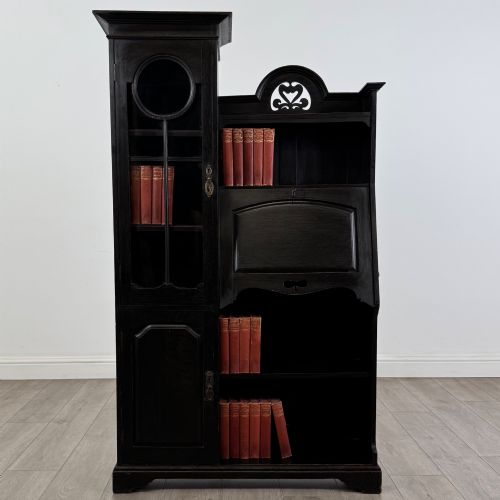
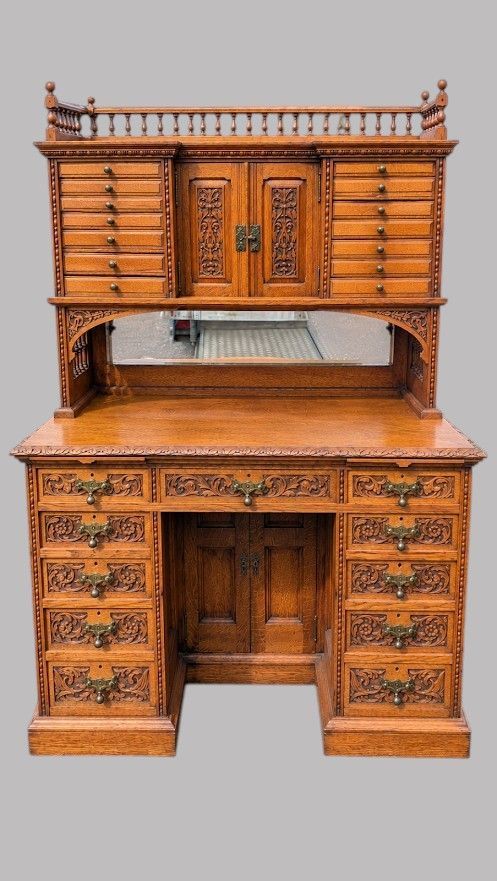
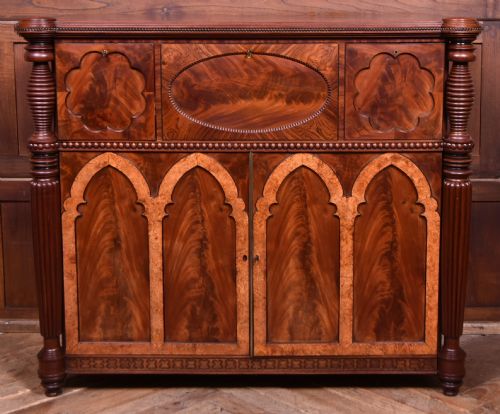
A gothic revival writing bureau combines medieval architectural motifs with functional storage for letters and papers. The examples encountered on this page span the Victorian and Edwardian eras, with oak predominating alongside occasional mahogany pieces.
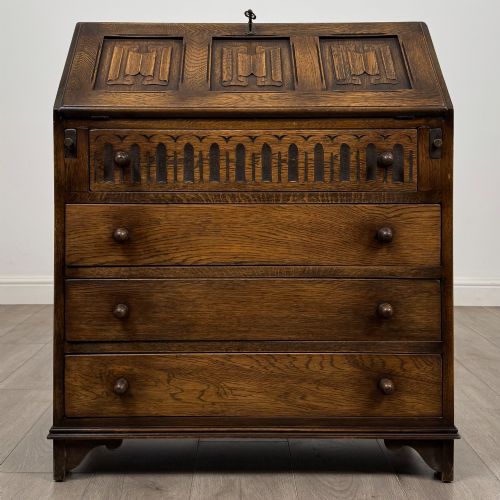
Forms vary from narrow slope-front bureaux and compact davenports to larger kneehole desks and tall secretaire bookcases. Many pieces incorporate characteristic details such as carved linenfold panels, brass hardware, and dramatic green man motifs.
The style draws heavily on historical revivals, frequently appearing alongside arts and crafts and Tudor revival influences. These desks suit studies and libraries where solid timber construction and period character set the tone.
Materials and construction
Cabinetmakers relied heavily on solid oak for these pieces, often selecting quartersawn timber to highlight natural grain patterns. Mahogany also appears among the listings, offering a smoother surface for detailed carving.
Structural elements frequently feature robust mortise and tenon joinery designed to support heavy drop-front writing slopes. Brass handles, hinges, and occasional glass panels complement the dark woods.
Carving is central to the aesthetic, executed by hand directly into the timber to create linenfold designs, tracery, and figural sculpture. Leather inserts often line the writing surfaces of desks and bureaux.
Object types span compact davenports, kneehole desks, narrow bureaux, and tall secretaire bookcases.
Assessing quality in construction and design
Depth and crispness of the timber carving separate standard production pieces from finer examples. Sharp lines in linenfold panels and detailed figural work indicate skilled hand carving rather than mechanical shaping.
The choice of secondary timbers and the stability of internal drawer construction reveal the maker's standard of work. Attributions to notable cabinetmakers like Gillows signal higher workshop standards in timber selection and assembly.
Proportion and the integration of architectural elements dictate visual success. Well-balanced secretaire bookcases and kneehole desks maintain structural integrity while displaying complex historic revival ornament.
Gillows
The Gothic Revival Writing Bureau Glossary
- Bureau
- A writing cabinet featuring a sloping lid that opens to reveal a fitted interior of small drawers and pigeonholes. This form provides a concealed workspace for correspondence.
- Secretaire bookcase
- A tall piece of furniture combining a glazed bookcase top with a pull-out or drop-front writing drawer at desk height. It unifies a library and a writing station in one cabinet.
- Linenfold
- A carved wooden panel motif resembling folded parchment or linen, commonly used on Tudor and gothic revival cabinetry. It adds texture and historic depth to drawer fronts and cupboard doors.
- Kneehole desk
- A flat-topped desk featuring a central recess for the user's legs, flanked by pedestals of drawers. This layout became popular for larger study and office environments.
- Davenport
- A compact small desk featuring a sloping desktop and a set of drawers opening to one side. The design maximises storage within a small footprint.
Gothic Revival Writing Bureau: Frequently Asked Questions
How do I care for antique oak?
Keep the timber away from direct heat sources and strong sunlight to prevent the wood from drying out and splitting. Apply a suitable beeswax polish occasionally to nourish the surface and maintain the natural sheen of the oak.
Avoid using modern liquid silicone sprays or heavy household cleaners that can damage the antique finish. A soft, dry cloth is best for routine dusting of carved details and linenfold panels.
What is a secretaire bookcase?
A secretaire bookcase combines a bookshelf with a dedicated writing desk built into the middle section. The drop-front or pull-out drawer conceals a fitted interior with small drawers and pigeonholes for letters.
This dual-purpose design allowed homeowners to store their library books and manage correspondence in a single piece of furniture. They suit larger studies and living spaces where floor area is at a premium.
How are Victorian and Edwardian pieces told apart?
Victorian pieces often feature heavier, more ornate carving, dense oak timbers, and dramatic architectural detailing such as green man masks. Edwardian items frequently display lighter proportions and occasionally incorporate ebonised finishes.
Stylistic crossover remains common because cabinetmakers continued traditional revival methods across both eras. Examining the interior construction and secondary woods helps clarify the manufacturing period.
Are these desks suitable for daily use?
These desks offer sturdy solid timber construction and practical internal compartments that easily accommodate modern writing materials. The sloping fronts and kneehole configurations provide functional workspaces for laptops and paperwork.
Care should be taken with antique leather writing surfaces and historic drawer runners to ensure longevity. Regular, gentle use helps keep the joints settled and functional.