





Gothic Revival Rack
A gothic revival rack brings architectural weight and ecclesiastical detail into domestic rooms, offering sturdy storage for books, coats, and umbrellas.
Gothic Revival Rack
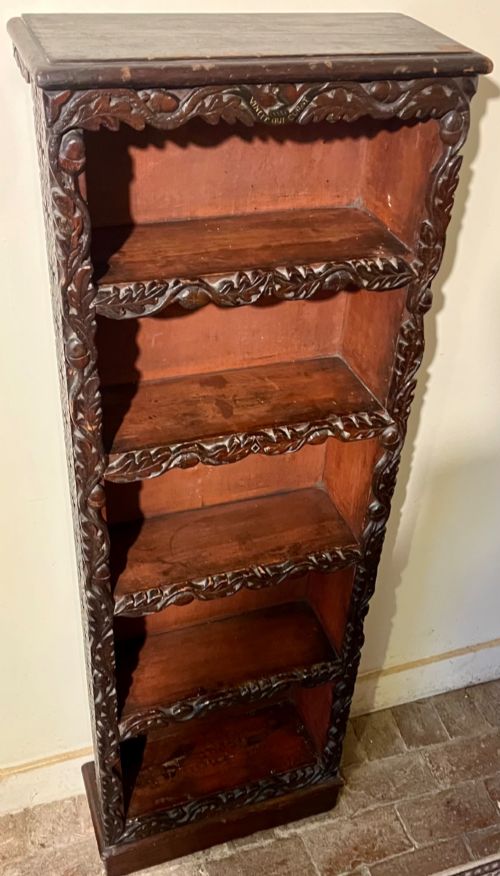
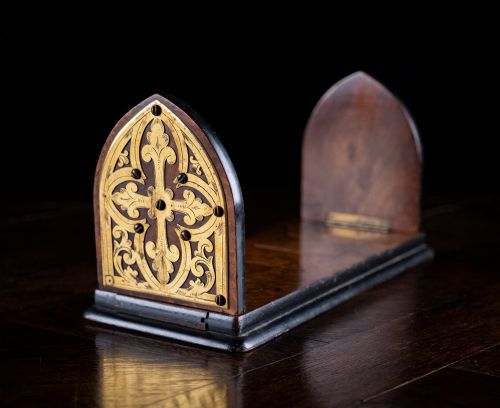
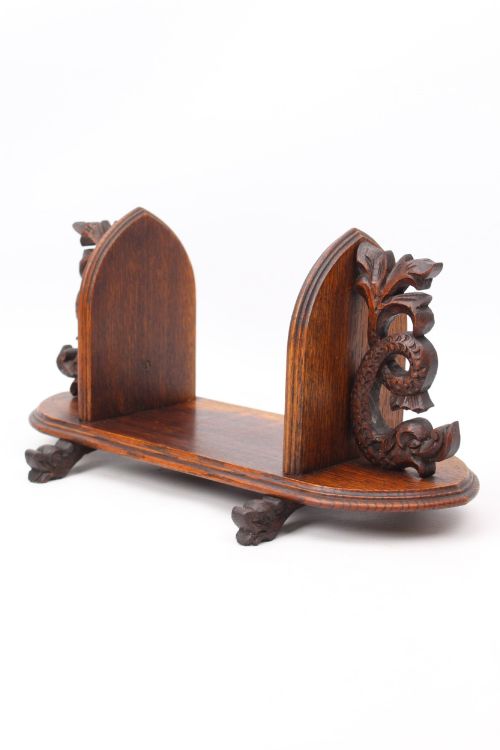
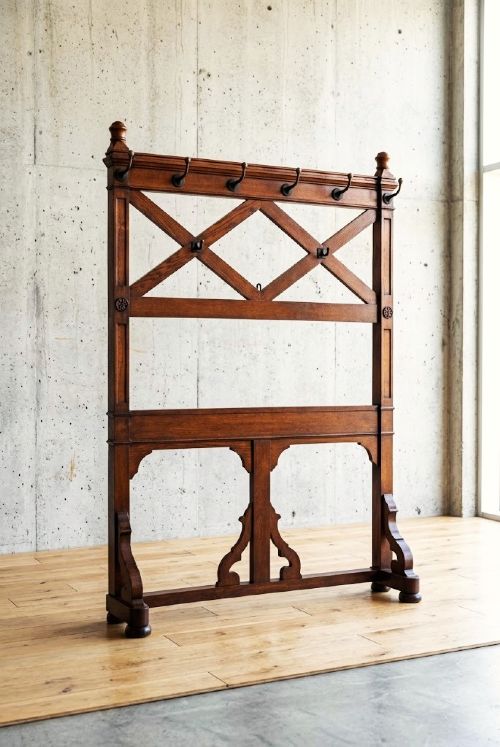
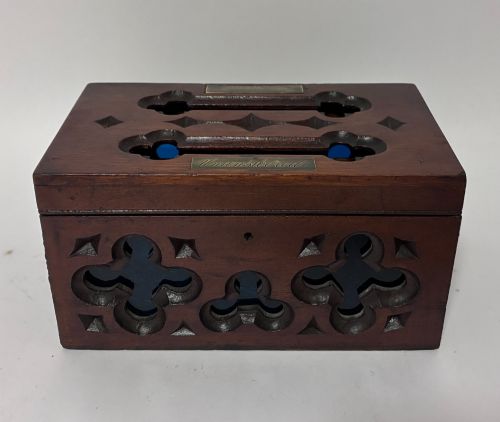
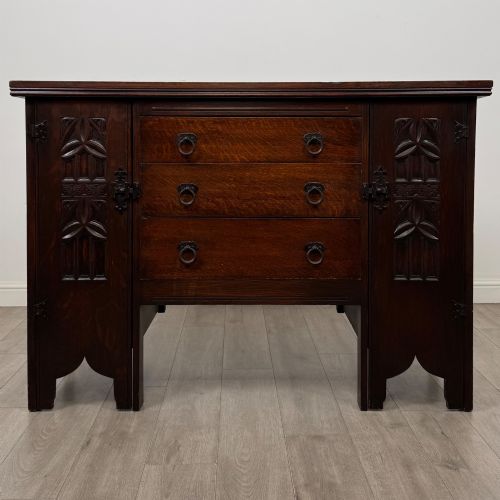
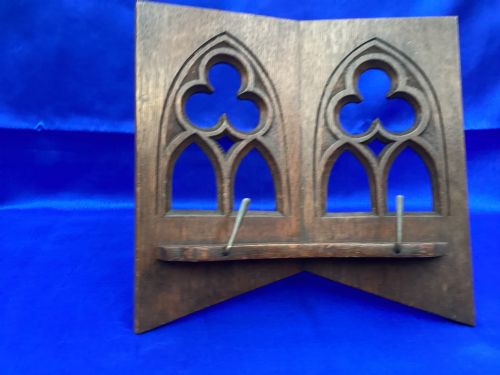
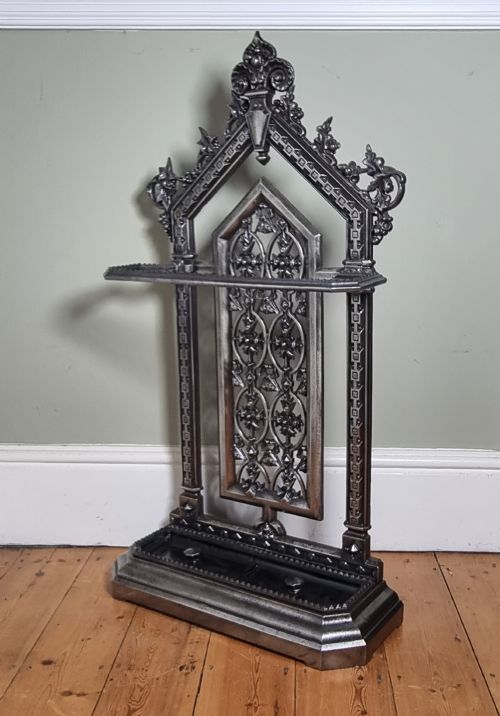
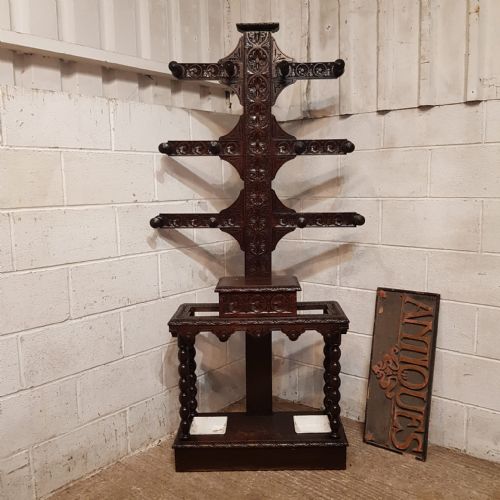
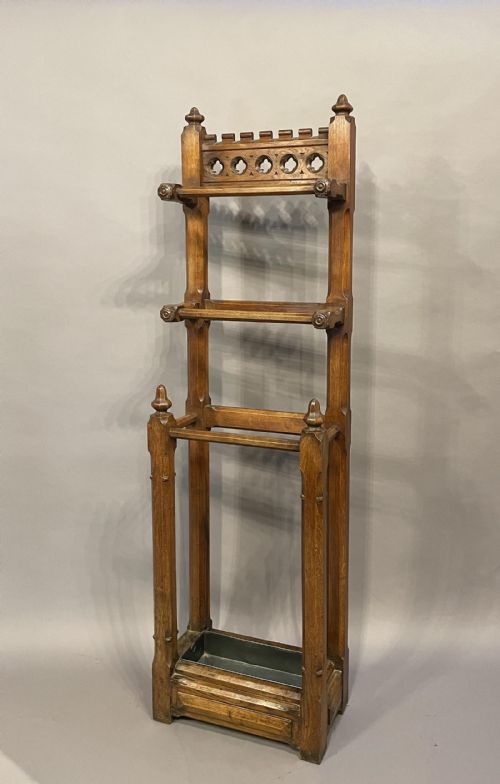
A gothic revival rack gathers architectural forms like pointed arches, trefoils, and heavy chamfering into functional household furnishings. Pieces matching this search phrase appear primarily in forms such as umbrella stands, coat stands, book slides, and wall shelves. The versions met most frequently on this page date from the Victorian period through to the Edwardian era, spanning the nineteenth and early twentieth centuries.
Makers and manufacturers constructed these furnishings to suit domestic libraries, hallways, and studies, using robust timbers and metals. Objects range from extending walnut book slides mounted with brass to large cast-iron stick stands and carved oak hall stands. The design vocabulary draws directly on medieval Gothic architecture, reinterpreted through nineteenth-century cabinet-making and ironfounding.
Materials and construction
Makers relied heavily on solid oak, walnut, and mahogany, often pairing them with contrasting brass mounts, hinges, and extending mechanisms. Cast iron appears frequently in umbrella and stick stands, shaped through heavy foundry work to create intricate pierced patterns and structural rigidity. Secondary timbers such as beech, maple, and satin birch support the primary show woods in shelving and internal framing.
Carpenters and joiners utilised traditional techniques including mortise and tenon joints for structural stability in coat and hall stands. Book slides incorporate sliding wooden mechanisms paired with brass tracks or fittings, allowing the framework to expand smoothly while holding volumes upright. Cast-iron pieces display crisp relief moulding from sand casting, occasionally bearing foundry stamps or registration marks.
Gothic Revival Rack Retail Price Guide 2026
Typical asking prices for gothic revival rack among the pieces listed under this phrase on Sellingantiques today, from the lower quarter to the upper quarter. They describe what is for sale here now, not the wider market.
Some nineteenth-century book slides incorporate secret folding bookends that pop up when you least expect a mechanical surprise.
Assessing quality and execution
Quality rests upon the crispness of the carved ornamentation and the architectural coherence of the design. Superior examples display deep, deliberate carving in oak or walnut where foliage, tracery, and grotesque masks like greenmen remain sharp and well-defined. Lesser versions rely on shallow stamped decoration or machine-routed details that lack three-dimensional depth.
The choice of materials and the integration of hardware dictate the standing of an individual piece. Top-tier items use dense hardwoods and heavy gauge brass mounts that operate smoothly without play in the joints. Poorer execution shows in loose extending actions on book slides, inferior secondary timbers, or cast-iron components with blurred surface casting.
The Gothic Revival Rack Glossary
- Gothic Revival
- An architectural and decorative style drawing inspiration from medieval forms such as pointed arches and clustered columns. It dominated nineteenth-century design through ecclesiastical and domestic furnishings.
- Book Slide
- An extending desk accessory designed to hold a varying number of volumes upright between two upright ends. These objects often feature brass hinges, pierced metal mounts, or folding ends.
- Hall Stand
- A substantial hallway furnishing combining coat hooks, a mirror, umbrella wells, and a glove drawer. They were produced in carved oak and walnut for Victorian and Edwardian entrance spaces.
- Tracery
- Openwork patterns reminiscent of stone window dividers in gothic cathedrals. Cabinet makers translated this architectural motif into carved wood panels and cast-iron frames.
Gothic Revival Rack: Frequently Asked Questions
Where should I place a gothic revival rack?
These furnishings suit hallways, studies, and living rooms where their architectural presence grounds the interior space. Umbrella and coat stands function naturally near entryways, while book slides and shelves complement library tables and walls.
Ensure the scale of the object matches the proportions of the room, as heavy carved oak demands sufficient clearance to avoid crowding smaller spaces.
How do I care for antique oak and walnut?
Maintain timber surfaces by applying natural beeswax sparingly and buffing with a soft cloth to preserve the grain. Keep pieces away from direct heat sources and strong sunlight to prevent wood shrinkage and fading.
Check brass mechanisms periodically on extending book slides to ensure they move freely without binding against the wooden tracks.
What defines the gothic revival style?
The style revives medieval European architecture through pointed arches, quatrefoils, trefoils, and heavy structural timbers. It reflects a nineteenth-century fascination with Gothic cathedral design applied to everyday domestic objects.
Cabinet makers blended these ecclesiastical motifs with practical household utility, creating distinctive furnishings that remain visually striking today.
How can I date these pieces accurately?
Dating relies on stylistic shifts, timber choices, and construction methods spanning the Victorian and Edwardian eras. Mid-nineteenth-century pieces often feature robust walnut or cast iron with crisp Gothic ornament, while later Edwardian examples lean towards lighter oak constructions.
Look for patent marks, brass stamps, or registration numbers which can provide specific manufacturing years or maker attributions.