
Gothic Revival Oak Seats
Gothic revival oak seats bring architectural presence and heavy timber construction into rooms that demand character.
Gothic Revival Oak Seats
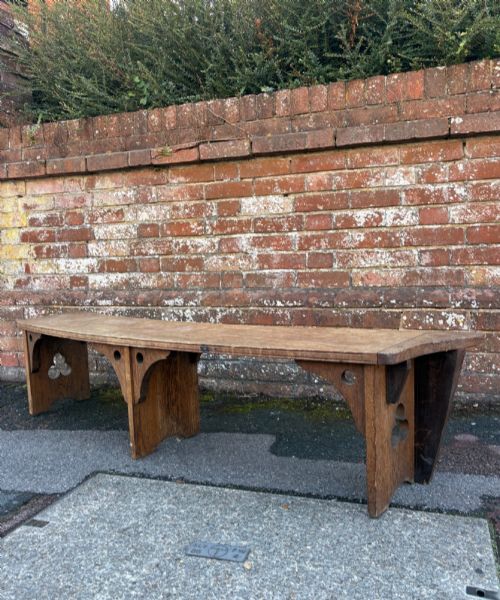
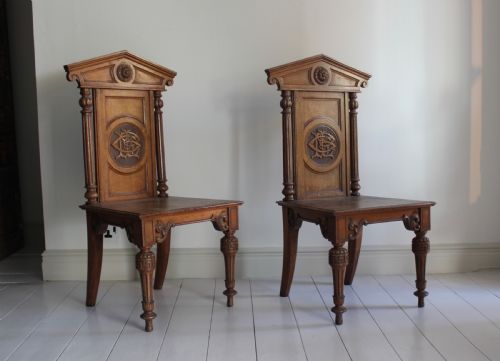
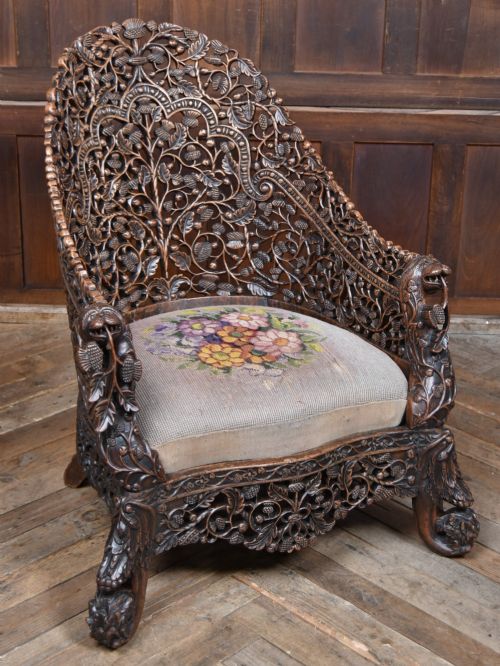
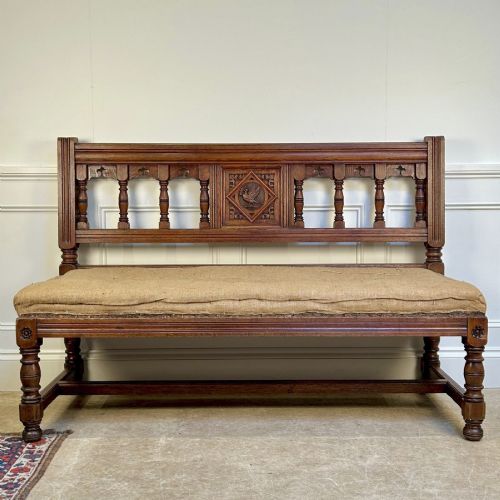
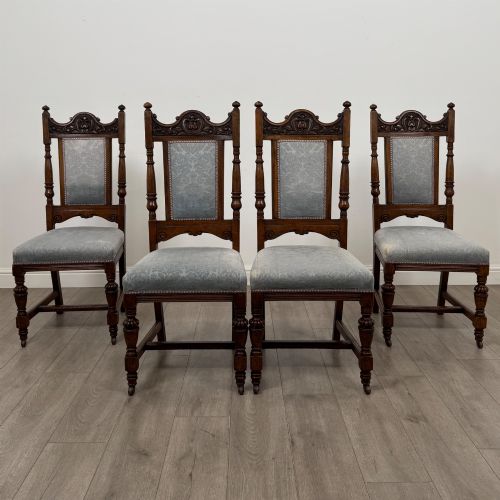
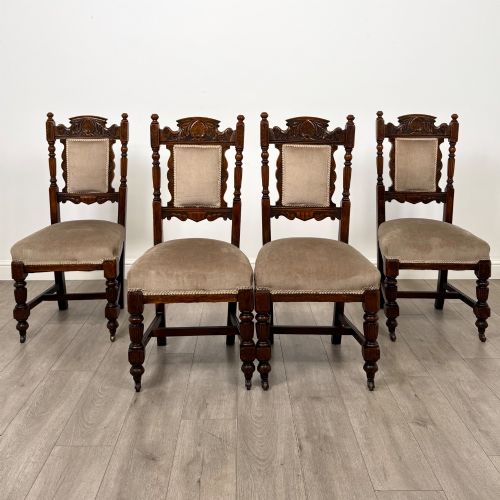
Gothic revival oak seats encompass dining chairs, armchairs, hall benches, and occasional seating shaped by historic architectural forms. Pieces range from straightforward vernacular seating to elaborate examples bearing trefoil carvings and high backs.
Victorian examples dominate the selection, spanning dining chairs, hall chairs, and substantial benches created in the nineteenth and early twentieth centuries. Makers drew heavily on medieval ecclesiastical and secular architecture for their ornamentation.
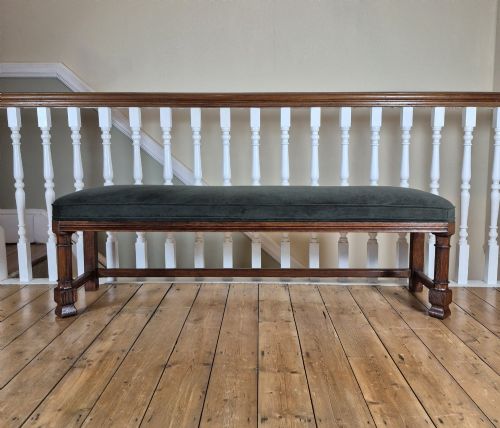
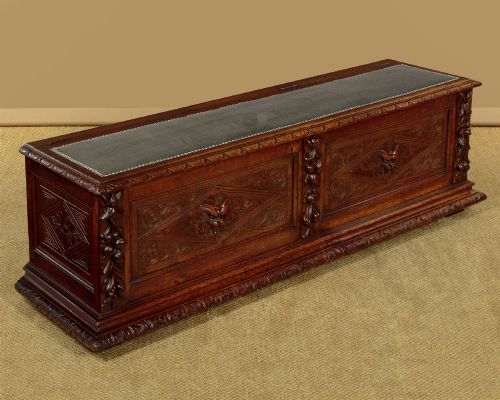
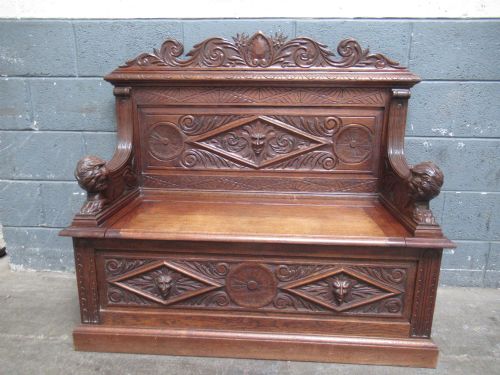
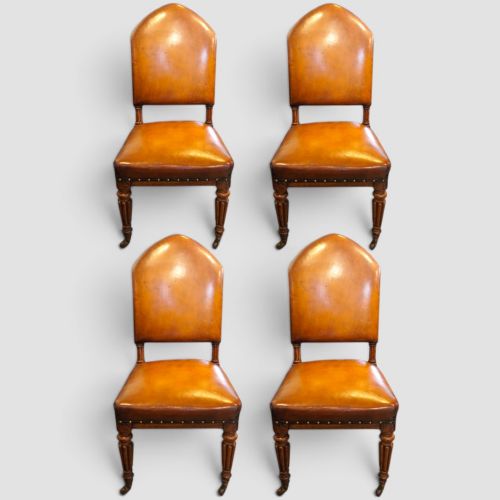
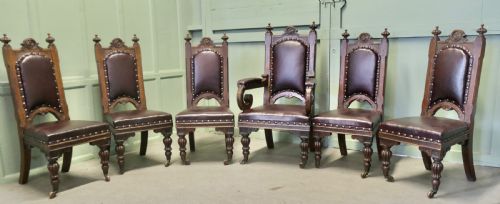
Forms include single hall chairs, pairs, and full sets of dining chairs alongside curved benches, settles, and ottoman box seats. Structural frames rely firmly on solid oak augmented by occasional brass or metal fittings.
Materials and construction
Solid oak serves as the primary structural timber, chosen for its strength and capacity to hold deep architectural carving. Craftsmen combined this heavy wood with secondary supports in metal, brass, and turned elements.
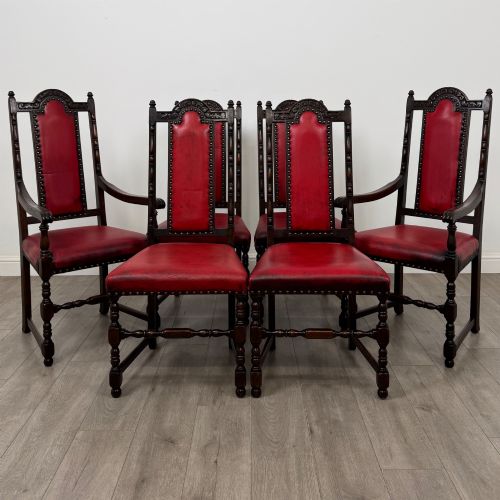
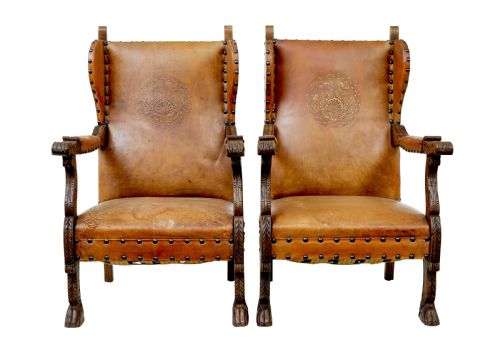
Upholstery materials include embossed leather, velvet, fabric, and tapestry inserts secured to seat pads or high back panels. Joinery techniques relied on pegged mortise and tenon joints to support the substantial weight of the timber.
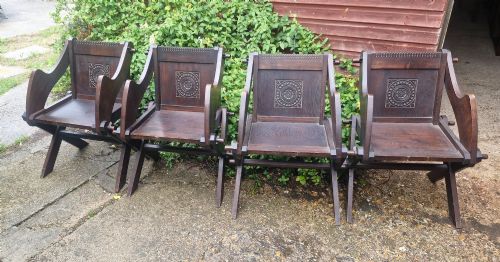
Sturdy church chairs marked for cathedral attendance carry centuries of silent prayers in their aged oak grain.
Distinctions in quality
Quality rests in the crispness of the architectural carving and the integrity of the solid oak frame. Superior pieces display deeply incised trefoils, linenfold panels, and well-proportioned turned supports rather than shallow surface stamping.
Makers known for exceptional cabinetwork produced pieces with tighter joinery and more refined finish, while simpler utilitarian church or hall seating prioritized robust utility over ornate decoration.
GIllows·Bruce James Talbert
The Gothic Revival Oak Seats Glossary
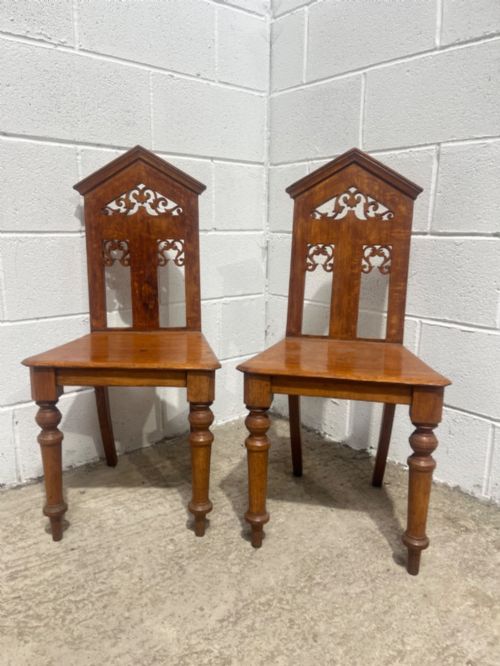
- Trefoil
- A three-lobed ornamental design resembling clover leaves, frequently pierced through wooden chair splats and bench supports. This architectural motif echoes window tracery found in medieval stone buildings.
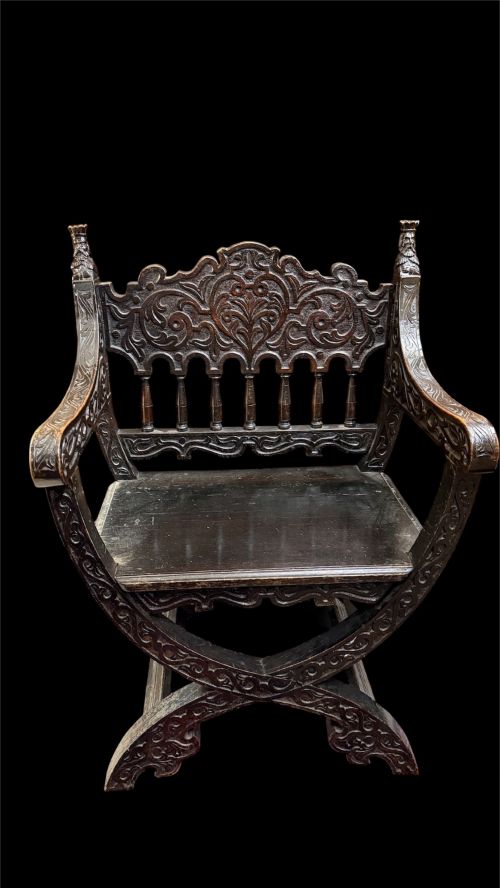
- Glastonbury chair
- A distinctive type of cross-frame armchair with a sloping back and panel seat, derived from an ancient monastic design. These chairs fold on a scissor action or assemble with interlocking wooden members.
- Settle
- A wooden bench with high solid back panels, enclosed arms, and a box seat or raised base designed to block draughts in large halls. They represent some of the most substantial forms of domestic seating.
- Hall chair
- A rigid wooden seat intended for entrance halls rather than prolonged sitting, often featuring a solid carved back and timber seat. Their designs relied heavily on heraldic motifs and architectural silhouettes.
- Jacobean Revival
- A style popular during the nineteenth century that reinterpreted seventeenth-century English joinery with turned legs, geometric panels, and strapwork. It frequently merged with gothic detailing on oak dining furniture.
Gothic Revival Oak Seats: Frequently Asked Questions
Where were gothic revival oak seats originally placed?
These pieces suited entrance halls, dining rooms, libraries, and ecclesiastical settings like churches and cathedrals. Their heavy timber construction matched the grand interior proportions of Victorian civic and domestic architecture.
Smaller side chairs and hall benches served transitional spaces where visitors waited, while substantial armchairs and dining sets furnished principal rooms.
How do I care for antique oak furniture?
Maintain oak seats by keeping them away from direct heat sources and rapid temperature fluctuations that cause timber to split. Apply microcrystalline wax sparingly to nourish the dry wood without building up heavy residues.
Protect upholstered leather and textile inserts with soft brushing and avoid exposing fabric panels to direct sunlight to prevent fading.
Are these chairs comfortable for daily use?
Many gothic revival oak seats prioritize architectural presence and upright posture over modern cushioned comfort. High carved backs encourage straight seating rather than lounging.
Versions with leather pads or upholstered drop-in seats offer softer contact, while plain wooden hall chairs suit brief seating rather than hours of relaxation.
How can I date a gothic revival oak chair?
Dating relies on examining construction marks, tool traces, timber patination, and stylistic shifts between the early nineteenth century and the Edwardian era. Victorian interpretations often incorporated machine assistance alongside hand carving.
Makers' stamps, exhibition marks, or cathedral inscriptions occasionally provide precise documentation for specific institutional commissions.