





Gothic Revival Carved Oak Chest
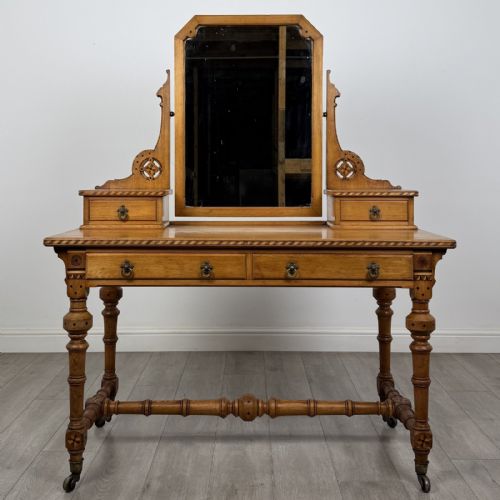
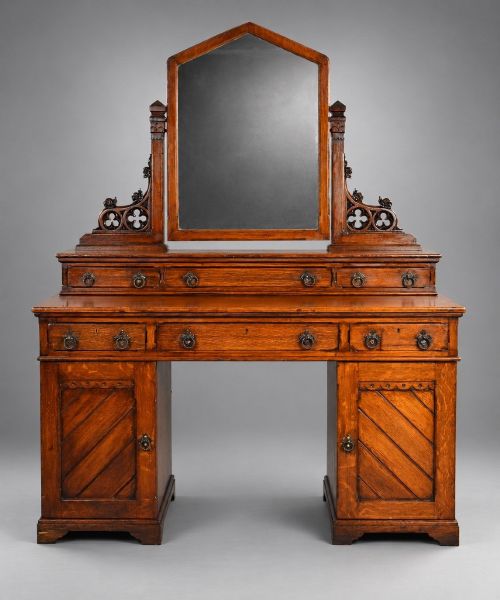
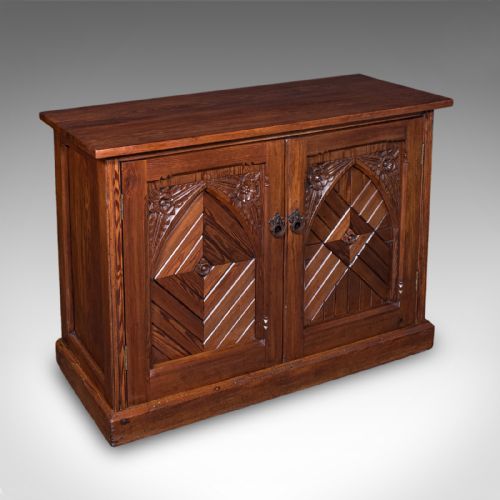
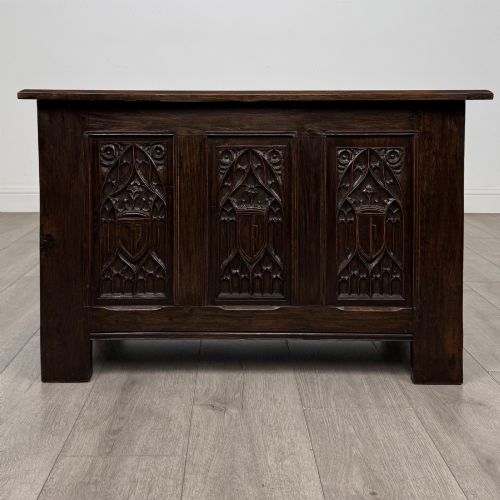
These gothic revival carved oak chest examples combine sturdy timber with ecclesiastical tracery to anchor a period interior.
Gothic Revival Carved Oak Chest
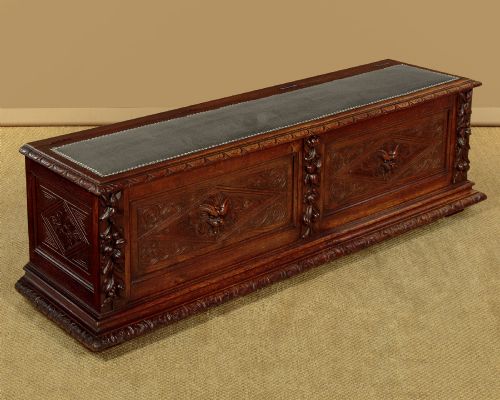
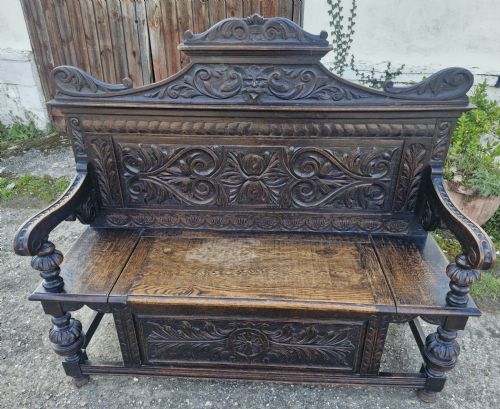
A gothic revival carved oak chest brings medieval motifs into 19th-century and later domestic spaces through heavy timber construction. Buyers exploring this phrase encounter pieces ranging from blanket boxes and blanket coffers to hall benches and monks benches.
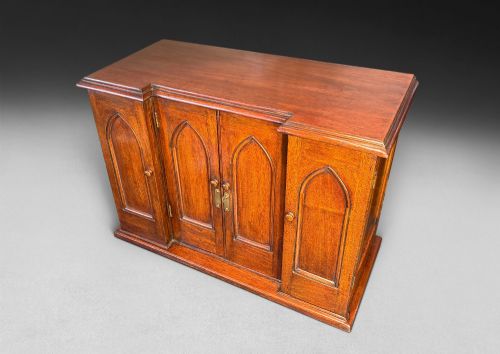
Most examples originate from the Victorian and Edwardian eras, utilising dark timber and traditional joinery to evoke earlier centuries. Forms span from simple table-top collectors cabinets and jewellery boxes to large hall seats and fitted writing desks.
How they were made
Joiners built these pieces primarily from solid oak, frequently augmented by secondary timbers like pine and hardwood. Metal hardware in brass and iron often appears on hinges, locks, and handles.
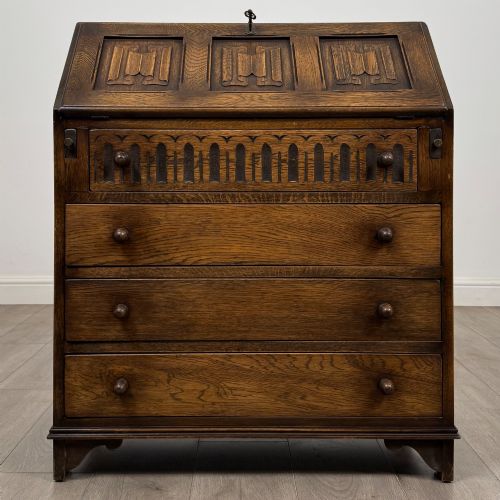
Carving provides the signature ornamentation, deploying linenfold panels, Green Man masks, and tracery directly into the timber. Polished finishes and occasional leather inserts complete the construction.
Gothic Revival Carved Oak Chest Retail Price Guide 2026
Typical asking prices for gothic revival carved oak chest among the pieces listed under this phrase on Sellingantiques today, from the lower quarter to the upper quarter. They describe what is for sale here now, not the wider market.
Listings incorporate oak, brass, iron, and pollard oak across periods from the Regency era to the 1940s.
What varies in quality
Depth and precision in the hand-carving separate standard utility furniture from finer architectural examples. Crisp relief work on panels and figurative elements indicates superior workmanship.
The choice of timber grain and the integrity of the original construction dictate overall standing. Figures utilising pollard oak or incorporating clever convertible mechanisms show greater ambition.
Jack Grimble
The Gothic Revival Carved Oak Chest Glossary
- Linenfold
- A style of wood carving that resembles folded parchment or linen, commonly seen on Tudor and Gothic Revival panels.
- Coffer
- A chest used originally for storing valuables, typically constructed with heavy timber and reinforced corners.
- Monks Bench
- A multifunctional piece of furniture featuring a hinged top that converts a seat into a table.
- Green Man
- A sculptural motif of a face carved with leaves and vines, frequently appearing in Gothic architecture and furniture.
- Tracery
- Architectural stonework ornamentation adapted into wooden panel carving to mimic Gothic window designs.
Gothic Revival Carved Oak Chest: Frequently Asked Questions
What is a monks bench?
A monks bench is a dual-purpose seat featuring a backrest that tilts forward to form a table top. This clever design saved space in historical homes.
Such items frequently incorporate storage beneath the seat base for linens or household goods.
How old are these chests?
Most pieces date from the Victorian and Edwardian periods, typically spanning the 19th and early 20th centuries. Revival styles from this era deliberately referenced much older medieval architecture.
Dates range from the 1870s through to later revival interpretations in the 1940s.
Where were they used?
These items were placed in hallways, bedrooms, and reception rooms to provide seating and enclosed storage. Large coffers held heavy blankets, while smaller boxes secured jewellery or documents.
Their robust timber construction suited high-traffic entrance spaces.
What is linenfold carving?
Linenfold is a specific type of relief carving designed to imitate folds of fabric. It became a dominant decorative feature during the Tudor period and saw a major resurgence in Gothic Revival design.
Craftsmen carved these patterns directly onto cabinet doors and chest panels.