



Gothic Office Chair
These gothic office chair examples bring solid oak, brass, and leather together in Victorian desk chairs and armchairs built to last.
Gothic Office Chair
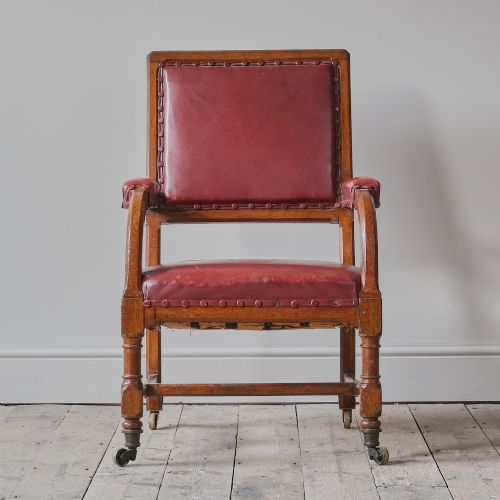
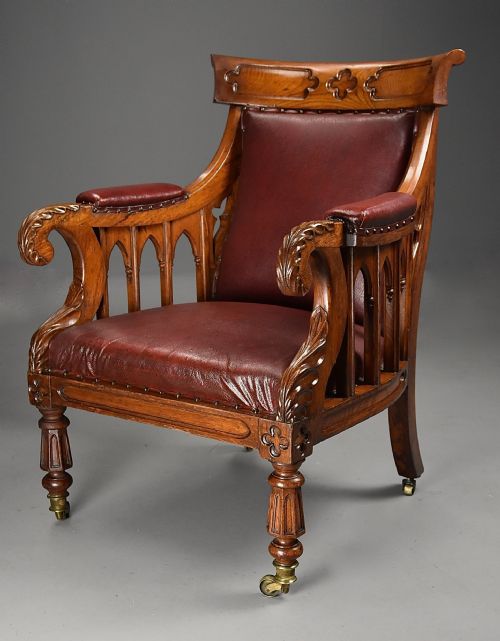
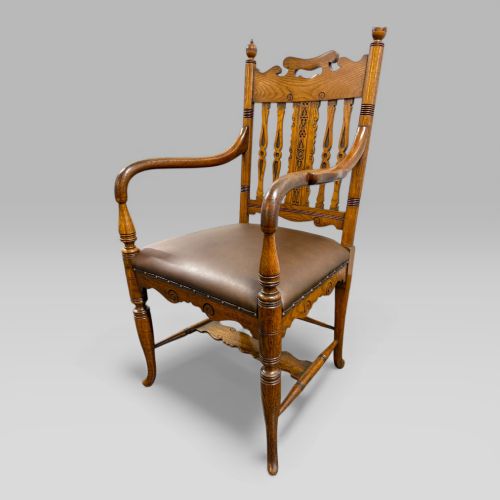
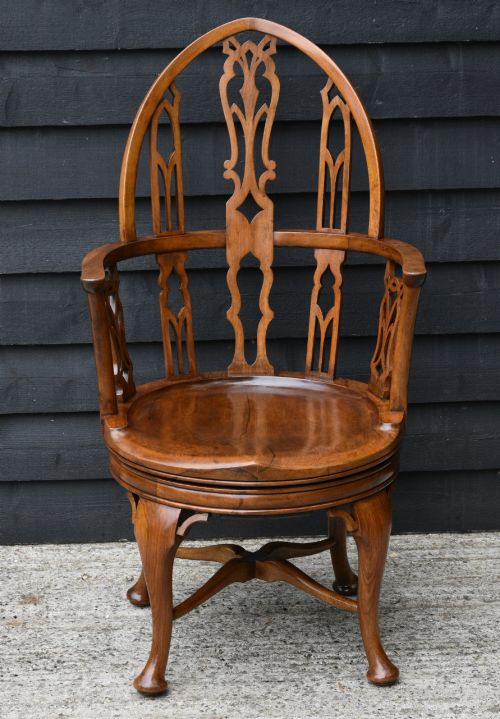
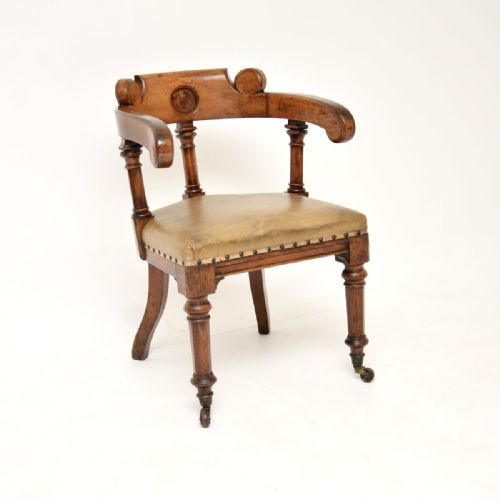
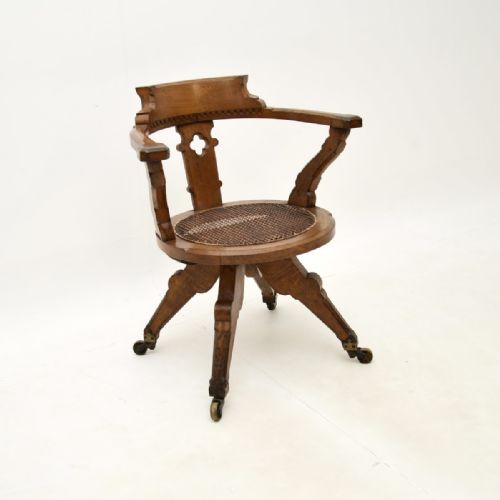
A gothic office chair offers a sturdy seat for working at a desk, drawing upon revival styles seen across the nineteenth century. These pieces take the form of desk chairs, armchairs, swivel designs, and revolving seats suited to studies and libraries.
Buyers meet solid oak builds most often on this page, alongside walnut variations and upholstered pads in leather or fabric. The aesthetic draws on Gothic Revival, Arts and Crafts, and Aesthetic Movement traditions from periods such as eighteen-seventy, eighteen-eighty, and eighteen-ninety.
Makers utilised heavy carving, revolving mechanisms, and X frames to combine industrial utility with historical ornament. Surviving examples reflect Victorian working spaces where furniture needed both durability and architectural presence.
How they were made
Makers relied primarily on solid oak and golden oak to build these frames, incorporating walnut for specific revolving models. Iron and brass components provided the mechanical strength needed for swivel and rotating desk chair mechanisms.
Upholstery relied on leather and fabric pads fixed to the wooden frames, whilst cane appeared in seating surfaces. Carvers applied heavy hand-chiselled details directly into the timber to achieve the characteristic revival aesthetic.
Gothic Office Chair Retail Price Guide 2026
Typical asking prices for gothic office chair among the pieces listed under this phrase on Sellingantiques today, from the lower quarter to the upper quarter. They describe what is for sale here now, not the wider market.
One heavily carved rotating ships chair proves that nineteenth-century workers took their stability at sea just as seriously as their desk posture.
What varies in quality
The standard of carving sets finer examples apart from plainer workshop pieces, particularly where heavy details show distinct sculptural depth. Attribution to known cabinet makers or specific design schools elevates the standing of an individual desk chair.
The complexity of the mechanism influences desirability, with fully rotating swivel functions and brass hardware marking out sophisticated nineteenth-century engineering. Timber selection also matters, distinguishing richly figured golden oak and walnut from standard plain varieties.
Gillows·Bruce James Talbert
The Gothic Office Chair Glossary
- Gothic Revival
- An architectural and decorative style that revived medieval forms, pointed arches, and heavy timber construction during the nineteenth century. It heavily influenced Victorian domestic and office furnishings.
- Swivel Desk Chair
- An office seat mounted on a rotating spindle or central pivot mechanism allowing movement while seated. Nineteenth-century versions often combined iron hardware with solid oak frames.
- Golden Oak
- A light, warm-toned variety of oak timber favoured by Victorian cabinet makers. It displays pronounced grain patterns when polished.
- X Framed
- A structural form utilising intersecting diagonal stretchers or legs shaped like the letter X. This configuration provided stability for heavy armchairs and desk seating.
Gothic Office Chair: Frequently Asked Questions
What periods do these chairs date from?
The pieces span the nineteenth century, with specific dates clustering around eighteen-seventy, eighteen-eighty, and eighteen-ninety.
They reflect Victorian manufacturing methods combined with medieval revival design influences.
Were these chairs used in offices?
Yes, these forms served as functional seating for desks, libraries, and studies during the Victorian era. Rotating and swivel mechanisms were developed specifically for working environments.
Heavier armchairs also functioned as library or desk seating for long periods of reading or writing.
What woods were used to build them?
Solid oak forms the primary material for the majority of these pieces, including variations in golden oak. Walnut also appears alongside iron and brass hardware used in the rotating mechanisms.
Upholstery materials include leather, fabric, and cane inserts for the seats.
How do revival styles differ here?
Designs draw on Gothic Revival, Arts and Crafts, and Aesthetic Movement principles. Some pieces feature Puginesque details reflecting the architectural theories of Augustus Pugin.
Others incorporate heavily carved motifs or simpler X-framed structures depending on the specific Victorian workshop origin.