

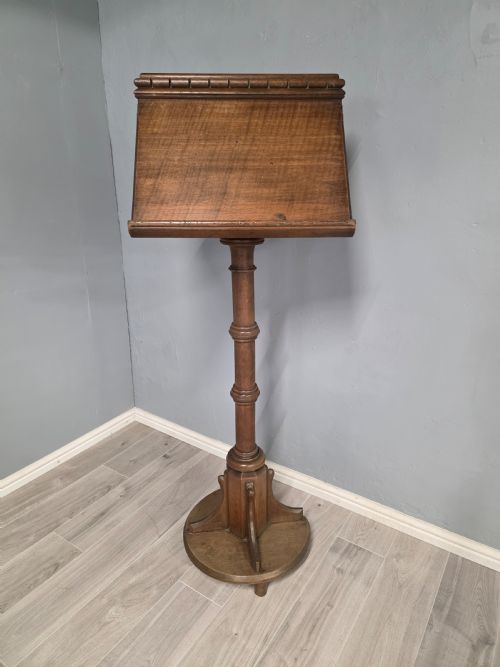


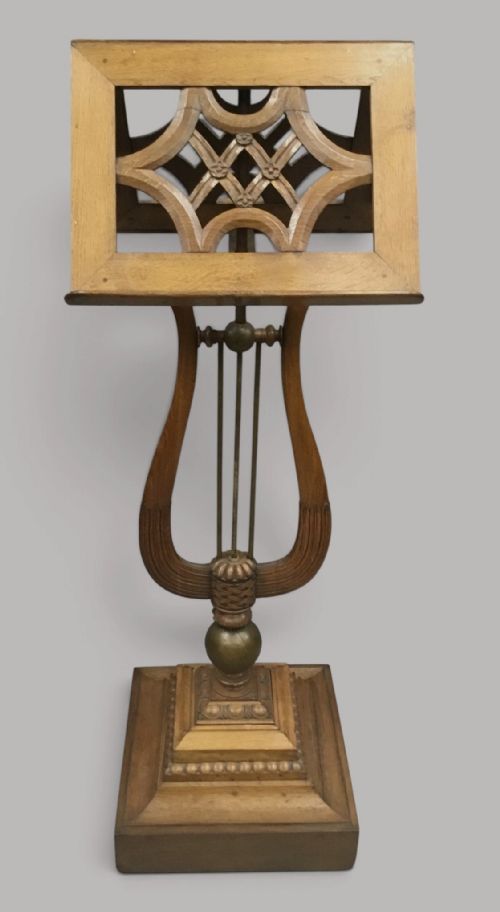


Gothic Oak Reading Desk
These gothic oak reading desk pieces bring heavy timbers and ecclesiastical character straight into your library.
Gothic Oak Reading Desk
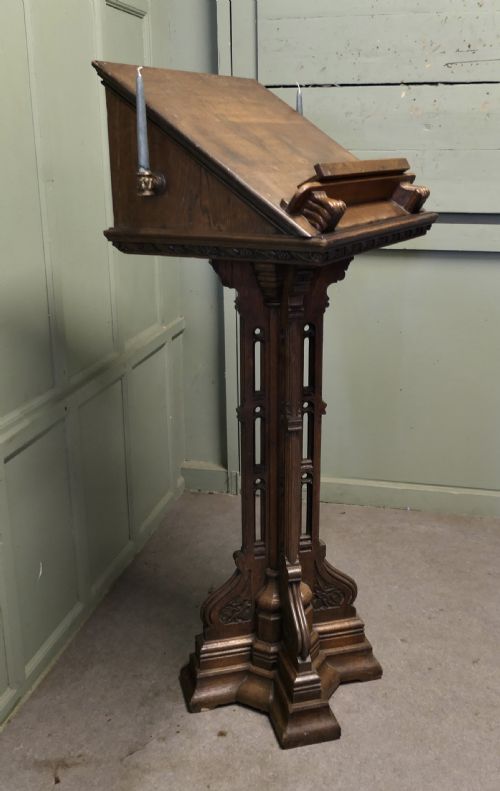
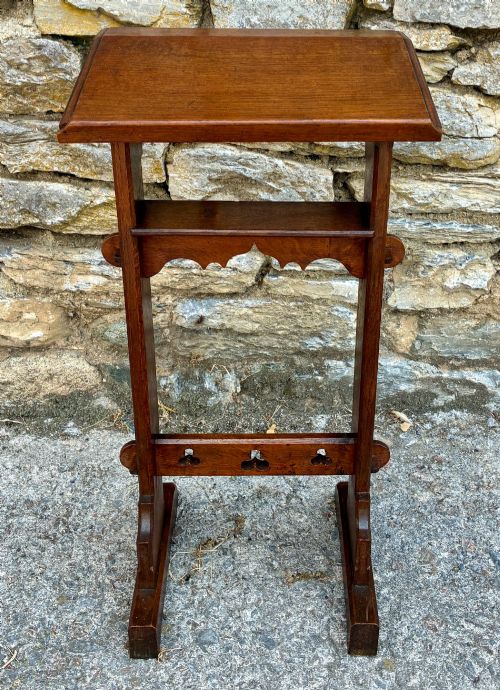
A gothic oak reading desk serves as a sturdy stand for books, menus, or manuscripts, often taking the form of an ecclesiastical lectern or a heavy library stand. These items draw heavily on medieval architectural motifs, displaying pointed arches, tracery, and robust proportions.
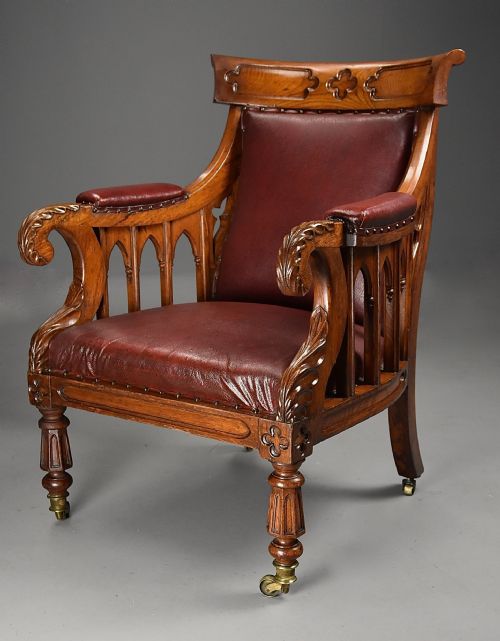
Most examples found in these listings date from the nineteenth century, spanning the Victorian period through to the early twentieth century. Alongside standard lecterns and podiums, the selection broadens to include related library seating such as armchairs and duet stands.
Makers constructed these pieces primarily for churches, chapels, and grand domestic libraries where substantial book storage and display were necessary. The physical presence of the oak ensures a commanding focal point in any room dedicated to study.
How they were made
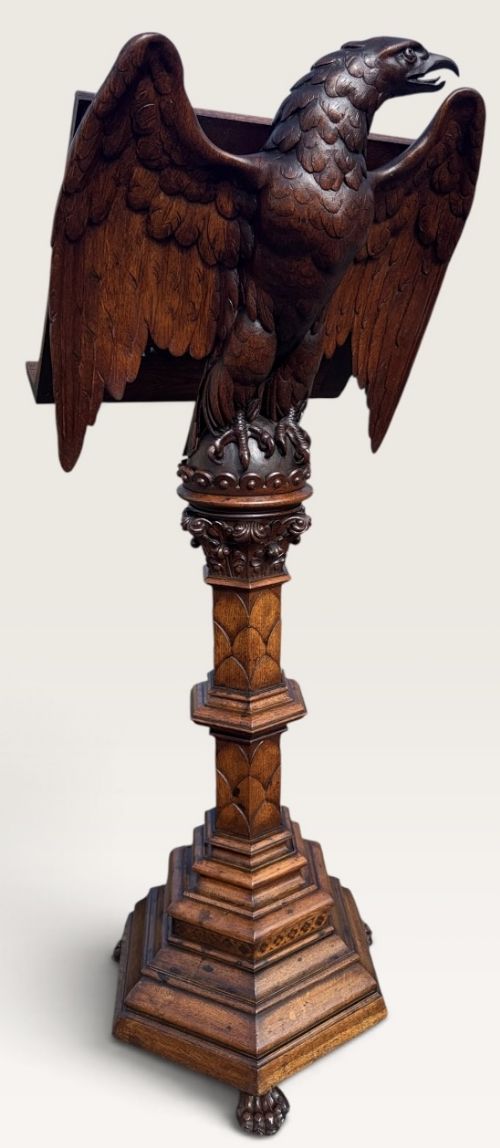
Craftsmen relied heavily on solid oak for the primary framework, sometimes combining it with secondary woods like pine for internal or hidden sections. Carving defines the aesthetic, with artisans chiselling intricate details such as eagles, foliage, and gothic tracery directly into the dense timber.
Metal fittings in brass frequently appear as hinges, pivots, or book rests, providing functional contrast to the dark wood. Certain library armchairs incorporate leather upholstery, often buttoned, secured with brass tacks along the edges of the seat and back.
Gothic Oak Reading Desk Retail Price Guide 2026
Typical asking prices for gothic oak reading desk among the pieces listed under this phrase on Sellingantiques today, from the lower quarter to the upper quarter. They describe what is for sale here now, not the wider market.
Several wooden eagles stand ready to support heavy volumes with wings spread wide.
What varies in quality
The depth and crispness of the woodcarving separate ordinary examples from exceptional pieces, particularly on figurative elements like carved eagles or heraldic motifs. Superior items display careful hand-chisedled details rather than shallow, mechanical tooling.
Proportion and structural integrity dictate the standing of a piece, with larger library armchairs and heavy lecterns requiring substantial timber to avoid bulkiness. The choice of golden oak or rich patinated timber, alongside original brass hardware, elevates the overall execution.
The Gothic Oak Reading Desk Glossary
- Gothic Revival
- A nineteenth-century architectural and decorative movement that revived medieval forms, pointed arches, and heavy ornamentation. This style heavily influences the structure and carved details of these reading desks and library seats.
- Lectern
- A tall stand with a slanted top designed to hold a book or notes for a standing reader. These often feature adjustable heights or decorative book rests.
- Ecclesiastical
- Relating to the Christian Church or its clergy, describing items originally commissioned for chapels, cathedrals, or parish churches. Many reading stands and lecterns originate from this context.
- Duet stand
- A specialised music or reading stand designed to hold two scores or books simultaneously for multiple performers or readers. These offer a wider platform than standard single stands.
- Patina
- The surface sheen and colour developed by aged wood and leather through handling and exposure to light over decades. A rich patina indicates genuine age and careful maintenance.
Gothic Oak Reading Desk: Frequently Asked Questions
What is a gothic oak reading desk used for?
These pieces serve as functional stands for heavy volumes, Bibles, or sheet music, positioning texts at a comfortable reading angle. In domestic settings, they often hold open art books or serve as striking podiums in studies.
Beyond reading, many of the listed forms double as library armchairs or music stands designed for prolonged use in private reading rooms.
How do I date a nineteenth century lectern?
Dating relies heavily on the style of the carving, the choice of hardware, and the type of construction used in the frame. Victorian pieces often display heavier proportions and distinct ecclesiastical motifs typical of nineteenth-century revivalism.
Examine the underside and joints for tool marks and timber shrinkage, which help confirm the nineteenth-century origin of the oak.
Are all these desks made from solid oak?
Most primary surfaces and structural elements utilise solid oak, known for its durability and prominent grain pattern. Secondary timbers like pine occasionally appear in hidden structural parts or internal framing.
Brass and leather frequently supplement the oak on hardware and upholstered library chairs.
How do I care for antique oak and leather?
Keep wooden surfaces away from direct heat sources and strong sunlight to prevent the oak from splitting or drying out. Regular dusting with a dry cloth maintains the natural finish without building up unwanted residues.
Condition leather upholstery sparingly with appropriate balms to preserve the flexibility of the material and prevent cracking.