


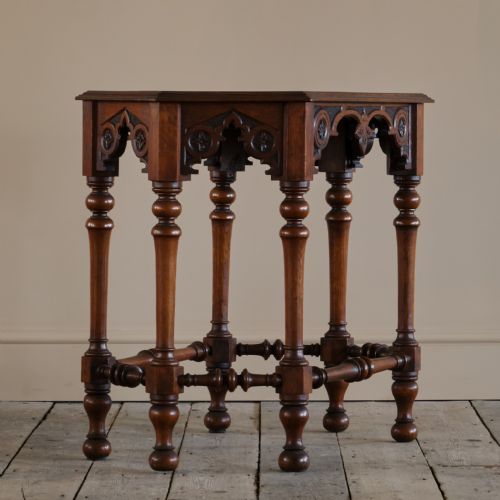

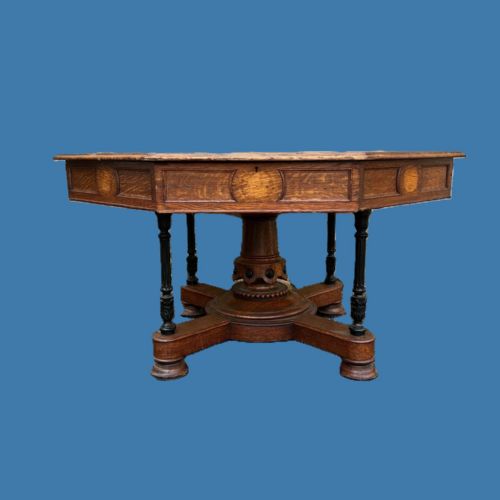
Gothic Oak Pedestal Table
A gothic oak pedestal table brings heavy medieval revival character and sturdy timber construction into a Victorian interior.
Gothic Oak Pedestal Table
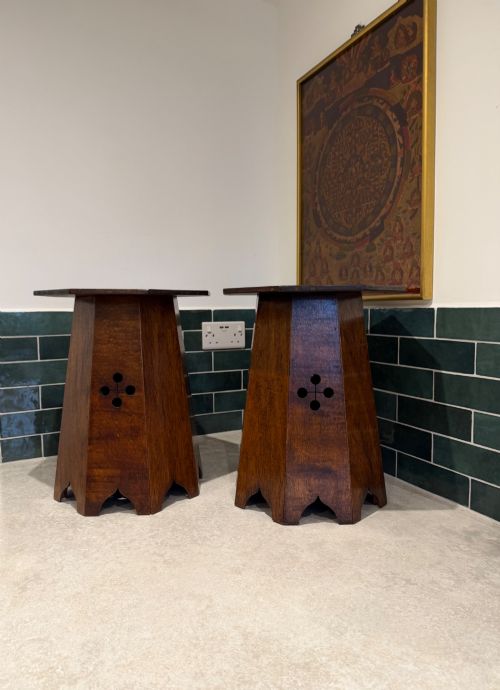
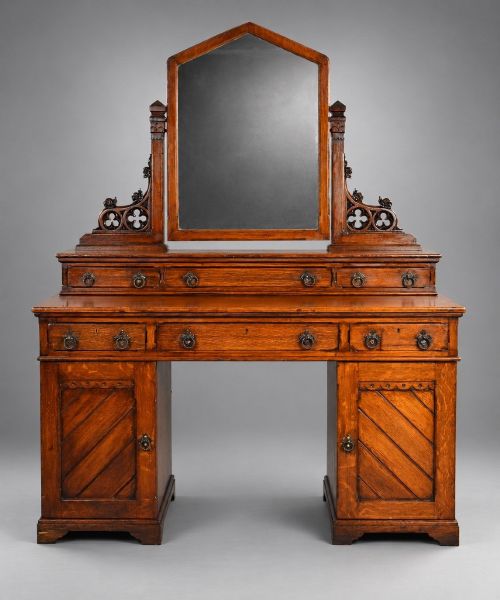
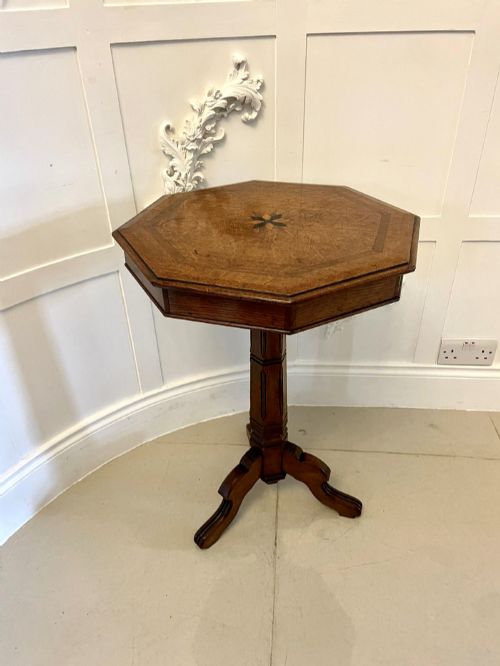
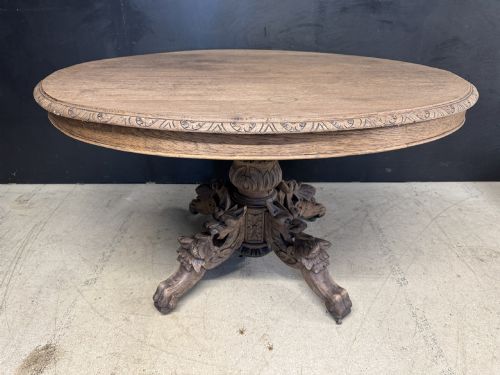
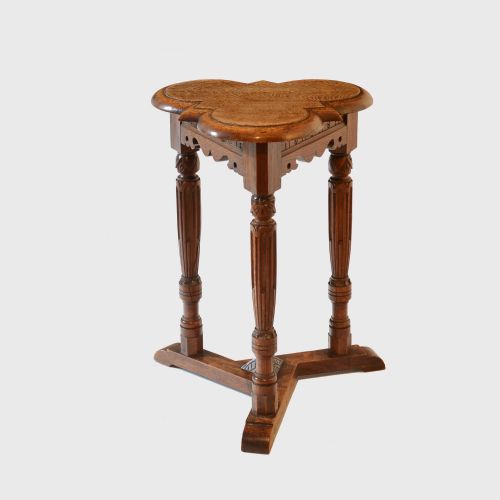
A gothic oak pedestal table stands on a central column or support, drawing upon nineteenth century revival styles that borrow heavily from medieval and ecclesiastical architecture. These pieces emerge predominantly from the Victorian period, alongside Edwardian examples and nineteenth century interpretations influenced by designers like Pugin.
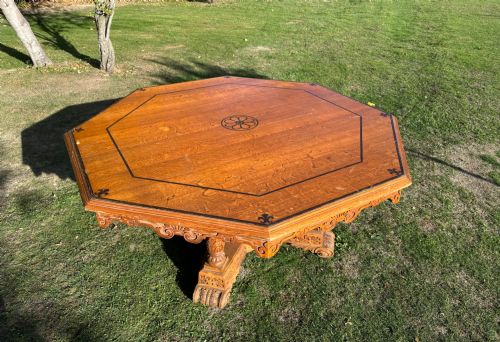
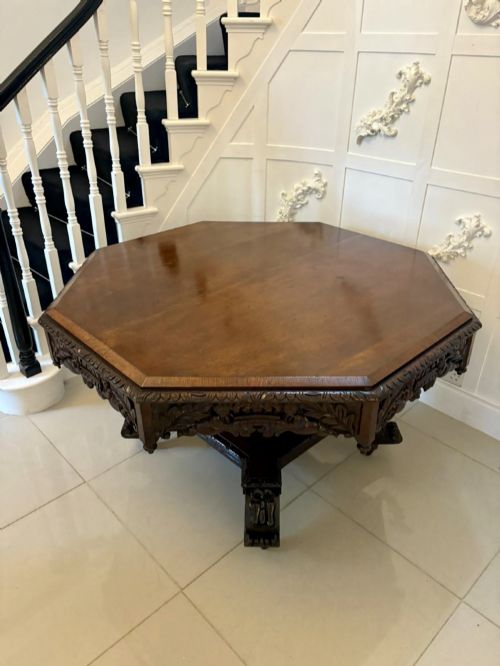
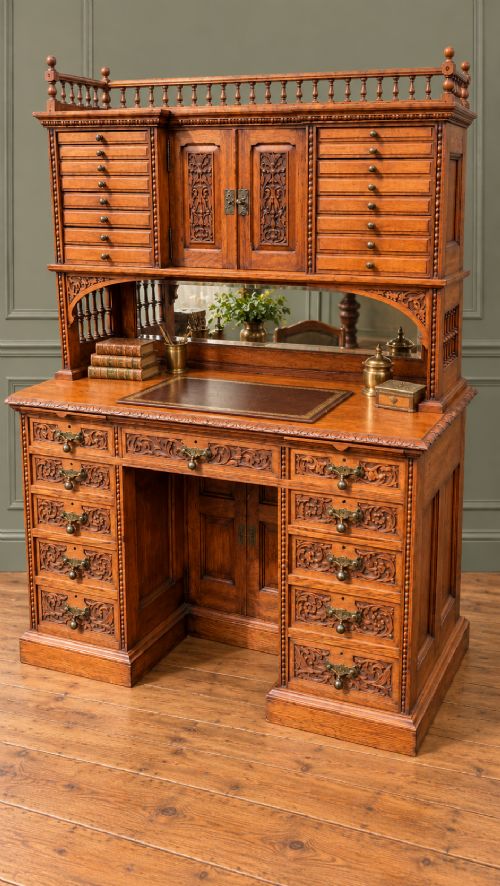
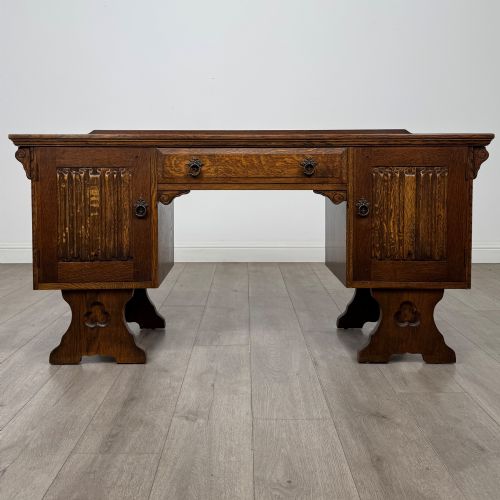
The forms found in this category extend across occasional tables, lamp tables, centre tables, and library tables, often incorporating carved details, linenfold panels, or trefoil motifs. While many pieces take on standard occasional or centre table formats, others utilise octagonal tops or heavy pedestals derived from Gothic Revival and Renaissance Revival vocabularies.
Buyers seeking a gothic oak pedestal table encounter items shaped by nineteenth century workshop traditions, where dark oak and sturdy pedestals define the visual weight. The selection ranges from compact occasional pieces to large library and centre tables designed for principal rooms.
What varies in quality
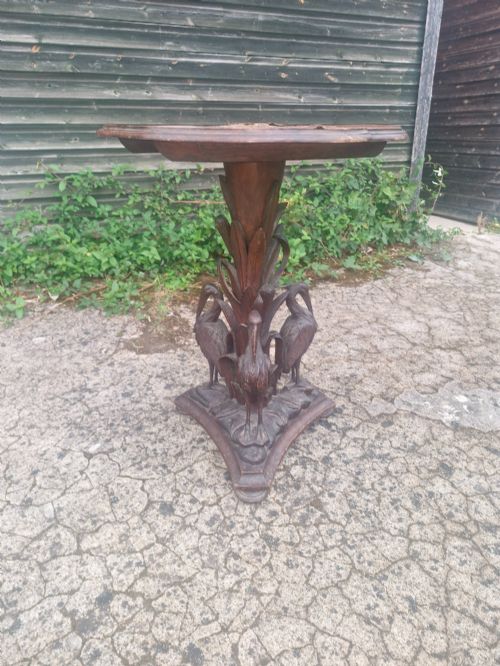
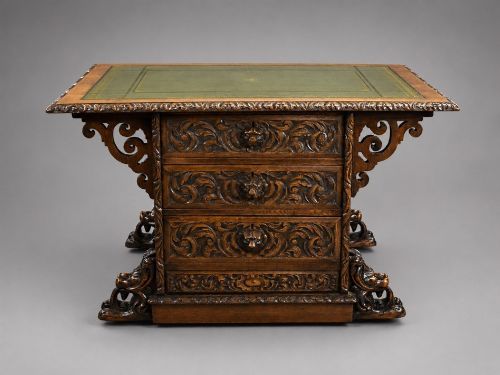
The depth and crispness of the carved ornamentation separate standard production items from pieces executed with exceptional sculptural ambition. Tables displaying sharp relief work on the pedestal and frieze command greater attention than those with repetitive or shallow decoration.
The choice of timber and the stability of the central pedestal assembly determine the structural integrity of each piece. Superior examples utilise dense, well-figured oak with robust internal framing that resists the shifting of heavy top panels.
Gothic Oak Pedestal Table Retail Price Guide 2026
Typical asking prices for gothic oak pedestal table among the pieces listed under this phrase on Sellingantiques today, from the lower quarter to the upper quarter. They describe what is for sale here now, not the wider market.
Listings feature oak alongside brass, leather, pine, and ebonised wood within Victorian and Edwardian periods.
Baillie Scott·Pugin
The Gothic Oak Pedestal Table Glossary
- Gothic Revival
- A nineteenth century architectural and decorative style that revives medieval pointed arches, trefoils, and heavy structural forms. It heavily influences nineteenth century furniture design.
- Linenfold
- A style of wood carving that mimics folded linen or parchment. It frequently decorates panels on Victorian oak furniture.
- Trefoil
- A graphic ornament composed of three overlapping rings or leaf-shaped lobes. It appears frequently in Gothic design as a decorative cutout or carved motif.
- Pedestal table
- A table supported by a single central column or pillar rather than four corner legs. This form allows for uninhibited seating placement around the top.
- Octagonal
- Having eight sides and eight angles. Many library and centre tables in this selection feature octagonal timber tops.
Gothic Oak Pedestal Table: Frequently Asked Questions
What periods do these tables come from?
The pieces listed originate primarily in the nineteenth century, spanning the Victorian era and the Edwardian period. Workshop dates cluster around the eighteen fifties, sixties, seventies, eighties, and nineties.
Revival styles from this era draw heavily upon earlier Elizabethan, Jacobean, and medieval design vocabulary while utilising nineteenth century manufacturing techniques.
How were pedestal tables used historically?
These tables served various domestic functions ranging from lamp placement and casual reading to central room display and library work. Their sturdy oak construction suited them to heavy daily use in studies, parlours, and libraries.
Larger versions functioned as centre tables for display or dining, whilst smaller formats acted as occasional or bedside furniture.
How do I identify Gothic Revival features?
Gothic Revival pieces display architectural motifs borrowed from medieval buildings, such as pointed arches, trefoils, heavy linenfold panels, and robust turned pedestals. The decoration often emphasises vertical lines and sombre timber tones.
Craftsmen working in this idiom deliberately recalled ecclesiastical and baronial interiors through deeply carved friezes and dark finishes.
How should I care for antique oak?
Antique oak benefits from stable room temperatures and protection from direct sunlight to prevent the timber from drying out or splitting. Regular dusting with a dry, soft cloth maintains the finish without needing heavy polishes.
Leather inserts found on related desks require specific leather dressings to keep the surface supple over time.