

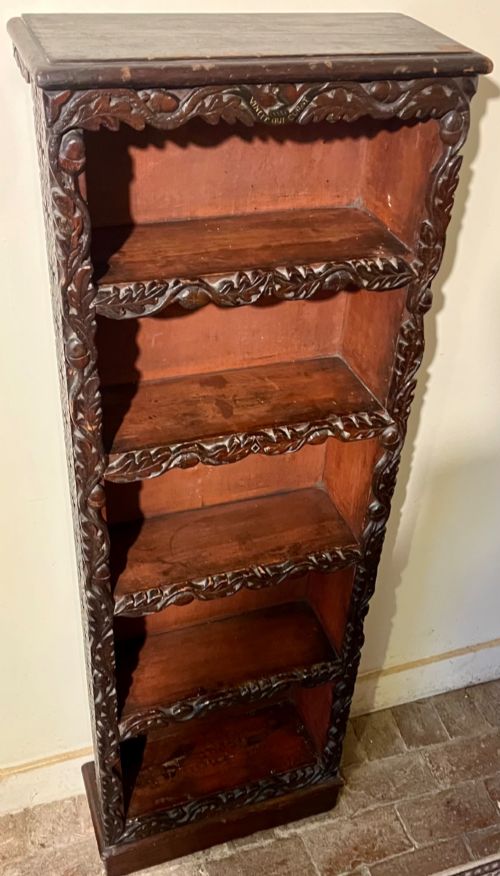
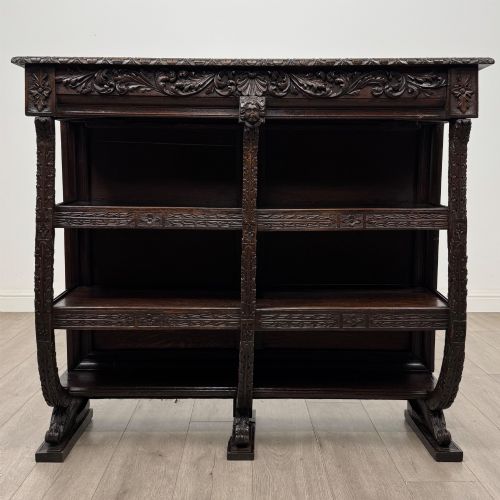
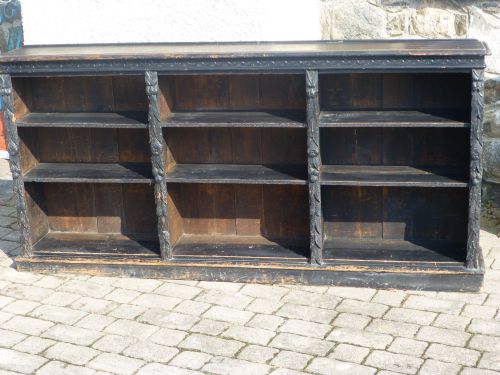


Gothic Oak Bookshelf
A gothic oak bookshelf brings architectural presence and rich grain to a room, offering sturdy housing for a serious collection.
Gothic Oak Bookshelf
A gothic oak bookshelf brings together heavy timbers and medieval architectural motifs, created to anchor a study or library. The pieces found here span the nineteenth century and the early decades of the twentieth, taking the form of open bookcases, wall shelves, and low dwarf variants.
Most examples belong to the Victorian and Gothic Revival periods, often featuring the deep mouldings and structural robustness characteristic of those eras. Alongside standard open bookcases, makers produced specialised formats like the ebonised low bookcase with adjustable shelves and taller double bookcases.
Makers drew on historic styles including Arts and Crafts and Victorian Renaissance Revival to shape these items. Buyers encounter standing open cases in solid oak alongside mixed timber constructions incorporating beech, iron, and glass display elements.
How they were made
Construction relies heavily on solid oak and ebonised oak, selected for durability and dark, prominent grain patterns. Secondary timbers such as beech appear alongside iron hardware and glass panels.
Carving defines the ornamentation, ranging from geometric tracery to figurative elements like the green man motif. Joinery utilises traditional methods appropriate to standing open bookcases and wall shelves.
Gothic Oak Bookshelf Retail Price Guide 2026
Typical asking prices for gothic oak bookshelf among the pieces listed under this phrase on Sellingantiques today, from the lower quarter to the upper quarter. They describe what is for sale here now, not the wider market.
The listings here span the nineteenth century, Victorian era, nineteen-hundred, and nineteen-thirty, using solid oak, ebonised oak, beech, iron, and glass.
What varies in quality
Depth and crispness of the carving separate standard workshop output from exceptional examples. Elaborate ornamentation and sculptural details require skilled handwork that elevates the visual weight of the timber.
Selection of the oak timber and the integration of secondary materials like beech or iron indicate the original ambition of the piece. Proportion and the inclusion of functional elements such as adjustable shelves dictate overall success.
The Gothic Oak Bookshelf Glossary
- Open bookcase
- A piece of furniture designed for book storage with uninhibited front access rather than doors. These frequently feature adjustable internal shelves.
- Green man
- A sculptural architectural motif depicting a human face disgorged from foliage, commonly found on carved nineteenth-century furniture. This detail connects domestic pieces to medieval stone church decoration.
- Gothic Revival
- An aesthetic movement reviving medieval architectural forms, pointed arches, and heavy proportions during the nineteenth century. It heavily influenced the design of domestic bookcases and library fittings.
- Ebonised oak
- Timber treated with a chemical stain or pigment to imitate heavy ebony wood. This finish creates a dense, dark surface popular in Victorian decorative arts.
- Arts and Crafts
- A design movement prioritising traditional craftsmanship and visible construction over industrial mass production. Pieces from this tradition emphasise honest materials.
Gothic Oak Bookshelf: Frequently Asked Questions
Where should I place a gothic oak bookshelf?
These substantial pieces suit studies, libraries, or living rooms where their dark timber and architectural lines can anchor the space.
Ensure the floor is level and capable of supporting heavy solid oak construction before loading the shelves with volumes.
How do I adjust the shelves?
Many nineteenth-century examples feature fixed divisions, but some incorporate adjustable shelf mechanisms within the vertical uprights.
Take care when repositioning oak boards to avoid damaging the interior veneer or painted ebonised surfaces.
Are these bookcases suitable for heavy books?
Solid oak construction provides exceptional natural strength, making these pieces ideal for housing large reference volumes and heavy collections.
Inspect the internal support battens to ensure they remain secure under sustained weight.
How do I date a gothic oak bookcase?
Examine the hardware, joinery methods, and stylistic indicators such as green man carvings or pointed arch tracery.
Nineteenth-century examples often display deep hand-carving and solid oak timbers, whereas later pieces transition toward Edwardian or nineteen-thirty simplifications.