



Gothic Hall Furniture
Gothic hall furniture brings heavy architectural presence to an entryway, uniting dark timber and medieval motifs.
Gothic Hall Furniture
When you search for gothic hall furniture, you encounter substantial pieces designed for 19th-century entranceways, reception halls and ecclesiastical spaces. The pieces listed on this page span the Victorian and Edwardian periods, running from the 1860s through to the 1920s.
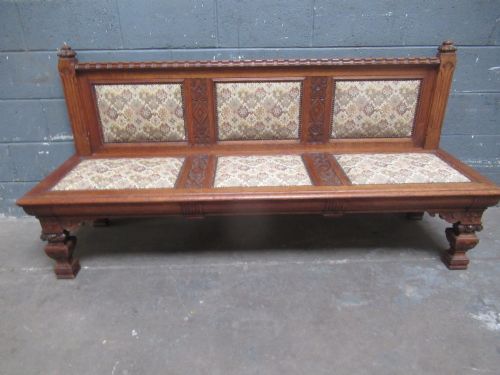
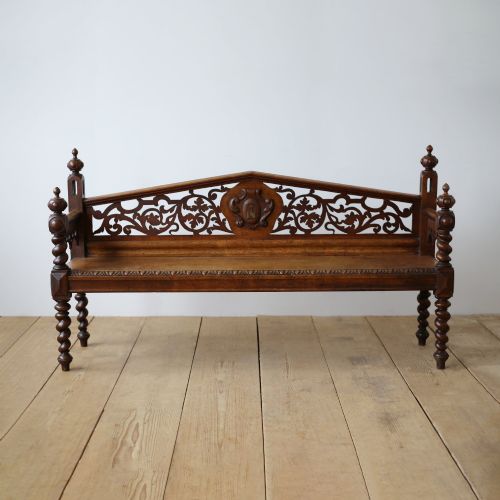
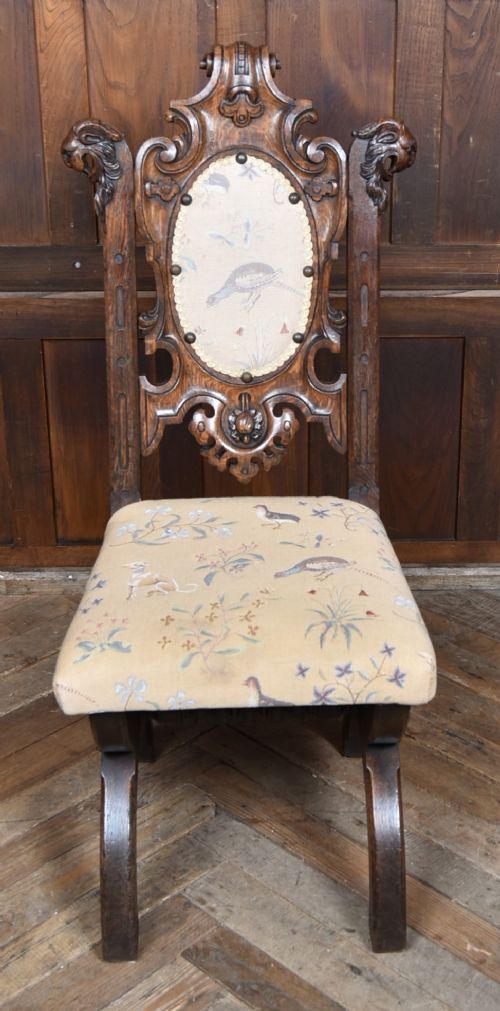
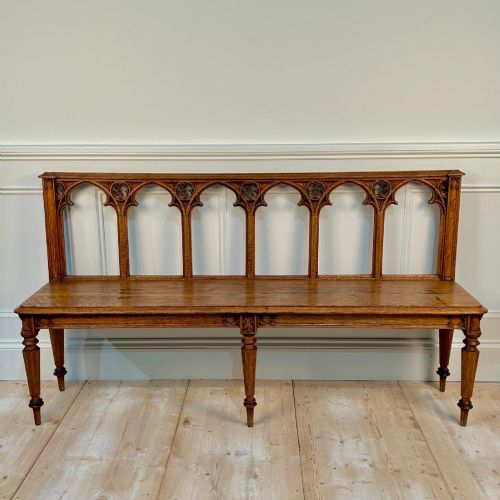
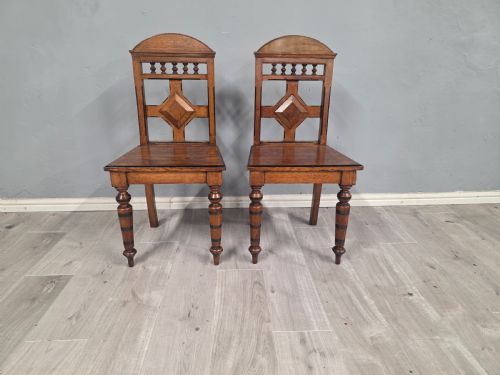
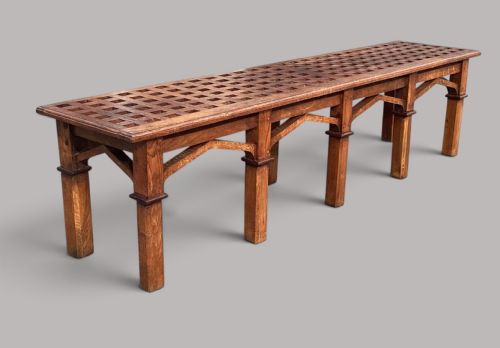
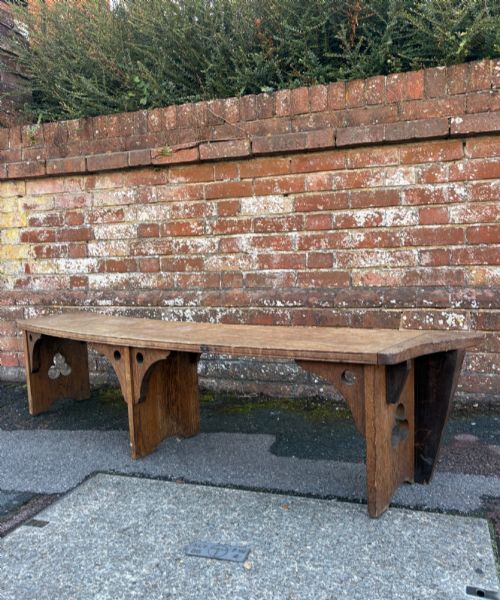
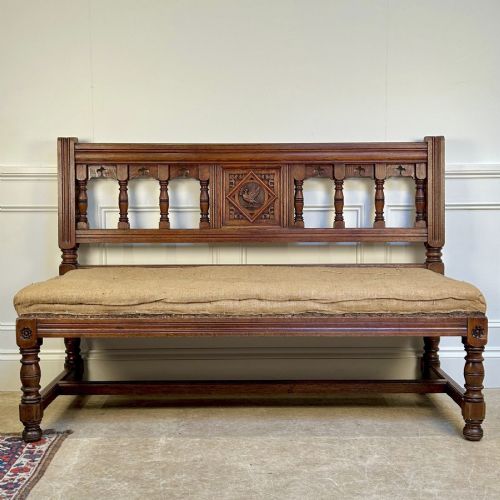
You are most likely to meet heavy oak benches, hall stands and church chairs featuring characteristic architectural details. These objects draw on the Gothic Revival, Arts and Crafts and Pugin styles, bringing pointed arches, trefoils and carved foliage into domestic spaces.
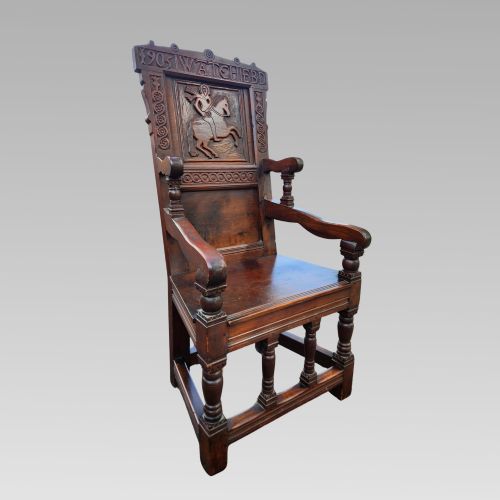
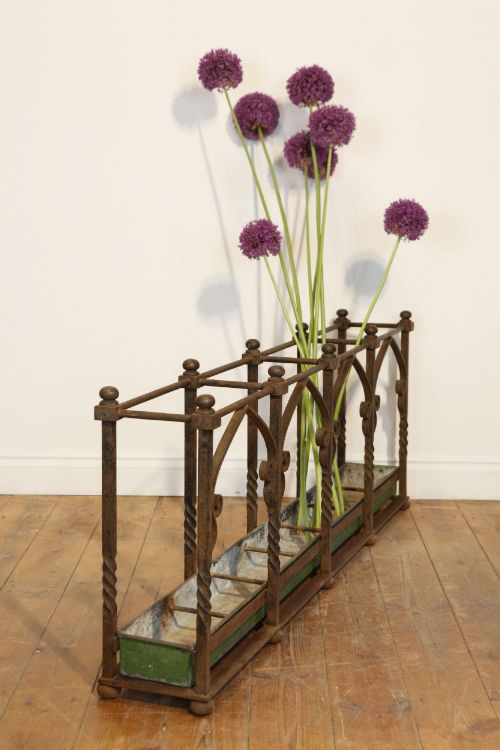
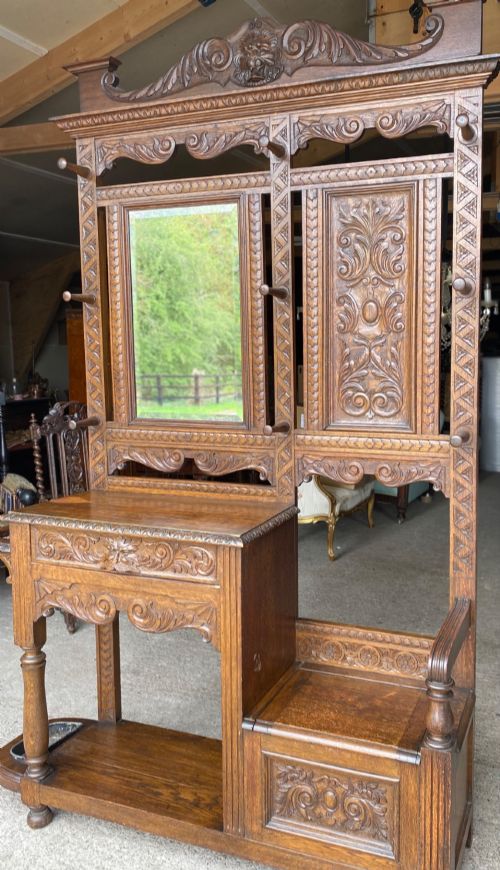
The selection ranges from large wainscot armchairs and coat stands with integrated mirrors to side tables and umbrella stands in cast iron. Each form served a practical function in the Victorian hall, accommodating visitors, outer garments and walking sticks.
Materials and construction
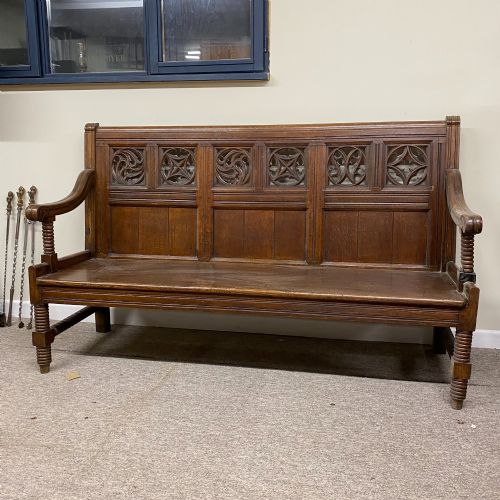
Makers relied heavily on solid English oak, shaping heavy timbers with deep relief carving to render Green Man motifs, tracery and linenfold panels. Secondary woods like walnut and pine appear alongside rosewood and burr elm in specific regional or period interpretations.
Metal components such as cast iron and brass provide structural support and utilitarian hardware for umbrella stands, coat hooks and stick racks. Upholstered elements incorporate fabric and velvet, while glass forms mirrors set into carved hall stands.
Gothic Hall Furniture Retail Price Guide 2026
Typical asking prices for gothic hall furniture among the pieces listed under this phrase on Sellingantiques today, from the lower quarter to the upper quarter. They describe what is for sale here now, not the wider market.
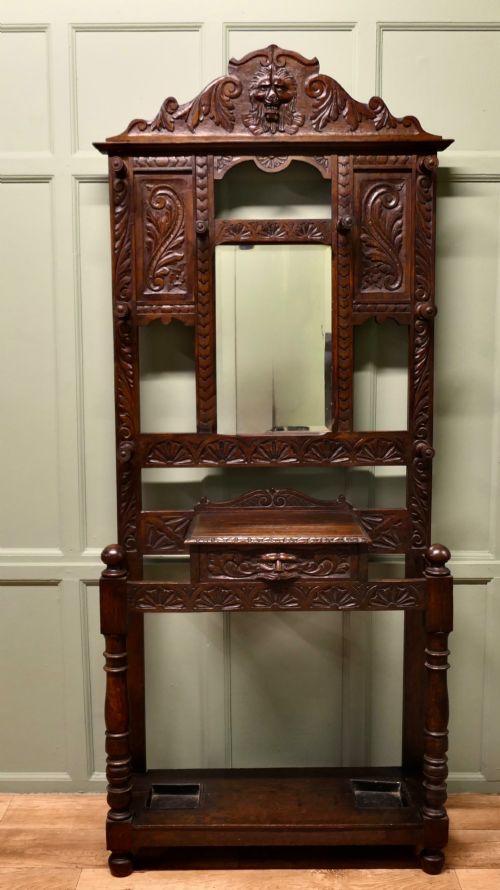
Several heavy oak hall stands gaze out across the room through the leafy mouths of carved wooden Green Men.
Evaluating craftsmanship
The standard of carving distinguishes exceptional pieces from standard production, separating crisp, deep relief work from shallow, mechanical moulding. Master carvers brought vitality to figures like the Green Man and precision to geometric trefoil supports.
Timber selection and joinery integrity dictate longevity, particularly in pieces subjected to the heavy daily use of a hallway. Superior examples utilise robust oak joints and well-seasoned wood that resists warping across large benches and altar tables.
Gillows·Coalbrookdale
The Gothic Hall Furniture Glossary
- Trefoil
- A three-lobed ornamental design resembling clover leaves, frequently pierced through wooden chair backs and bench supports. This motif derives directly from Gothic ecclesiastical architecture.
- Wainscot
- A type of wooden panelling or furniture construction utilising framed panels, often seen on the high backs and armrests of heavy hall chairs. It provides structural rigidity while offering a flat surface for decorative carving.
- Green Man
- A sculptural motif depicting a human face emerging from or entwined with foliage and vines, symbolising rebirth. It appears prominently on the crests of Victorian hall stands and monks benches.
- Settle
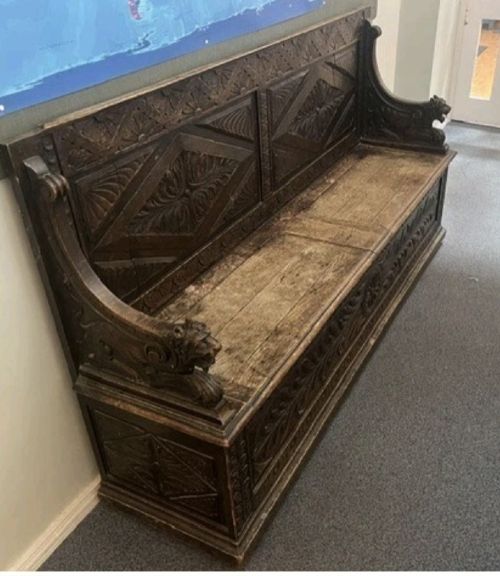
- A wooden bench with high backrests, solid arms and occasionally a box seat beneath for storage. In historical halls, these pieces blocked draughts from entrance doors.
- Pugin style
- Design characterised by strict adherence to medieval Gothic principles, championed by the architect Augustus Pugin. It prioritises structural honesty and authentic ecclesiastical detailing.
Gothic Hall Furniture: Frequently Asked Questions
What is a hall stand?
A hall stand is a tall entryway furnishing designed to hold outer garments, hats, walking sticks and umbrellas. They typically combine coat hooks, a central mirror and a base tray for wet items.
Victorian examples often incorporate elaborate carved oak frames with cast iron hardware, serving as both a functional cloakroom and an impressive decorative statement for guests.
How do I identify Gothic Revival furniture?
Gothic Revival pieces borrow architectural vocabulary from medieval cathedrals and churches. Look for pointed arches, quatrefoils, trefoils, heavy buttresses and pointed spires rendered in dark timber.
Cabinetmakers of the 19th century adapted these stone forms into woodwork, applying deep chamfers and iron strap hinges to enhance the medieval aesthetic.
Are church pews suitable for hallways?
Church pews and chapel benches provide long, narrow seating that fits neatly against hallway walls without obstructing walkways. Their solid wooden construction handles heavy everyday use.
Many examples feature open shelf backs or enclosed lower compartments, offering practical storage for boots and household items just inside the front door.