


Gothic Desk Accessories
Gothic desk accessories bring architectural weight and rich timber to the study, turning everyday correspondence into a ritual.
Gothic Desk Accessories
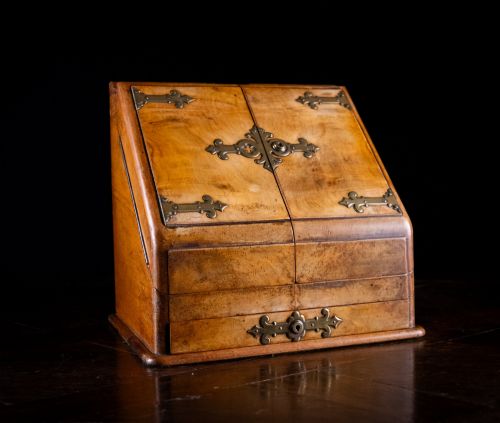
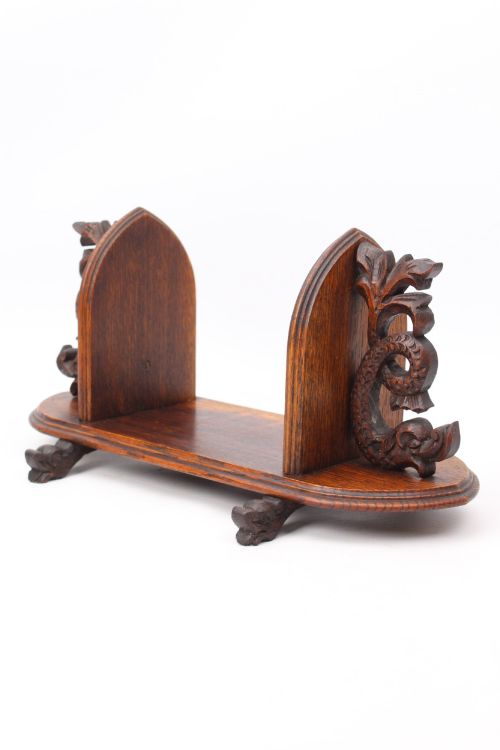
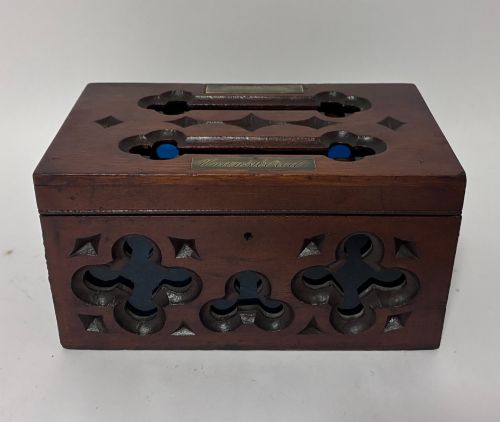
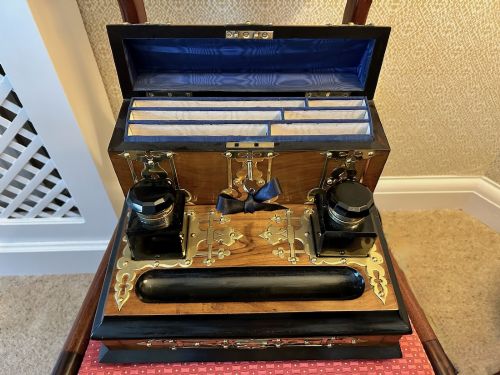
When you examine gothic desk accessories, you are looking at items designed to organise the nineteenth-century writing table through the lens of Gothic Revival, Victorian, and Arts and Crafts design. The selections here centre on practical forms such as extending book slides, stationery boxes, inkstands, and letter racks.
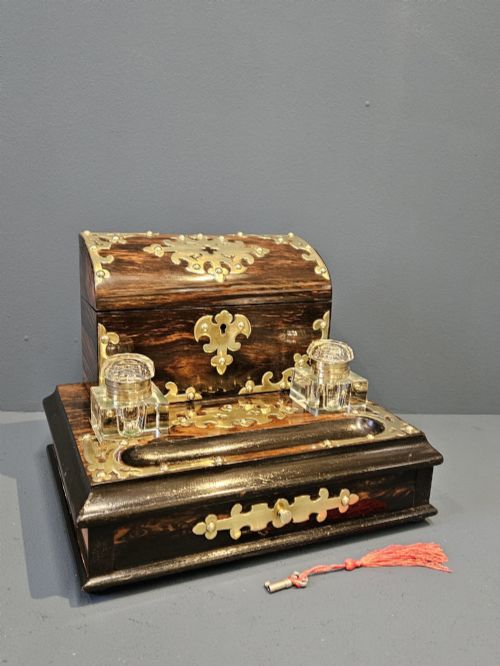
The version you are most likely to meet on this page is a Victorian piece combining heavy timber with brass mounts, strapwork, or ecclesiastical detailing. These objects span periods from the mid nineteenth century into the Edwardian era, reflecting how domestic interiors embraced medieval architectural motifs on a miniature scale.
How they were made
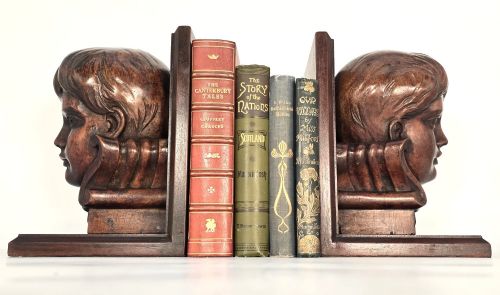
Cabinet makers utilised dense hardwoods including walnut, burr walnut, oak, pollard oak, mahogany, coromandel, maple, and ebony to construct the carcases of boxes and book slides. These timbers were selected for grain pattern and durability, often shaped with domed lids or extending actions.
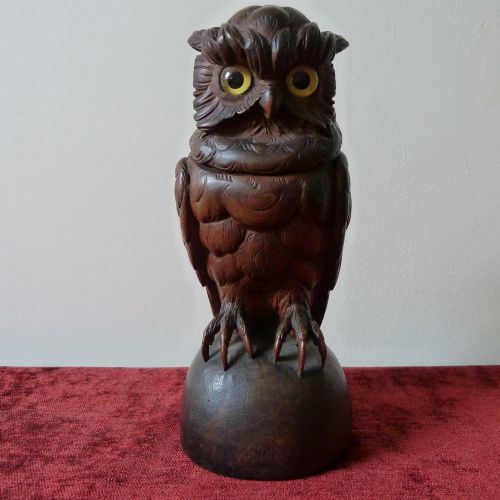
Metalwork played a structural and decorative role, featuring brass hinges, mounts, ormolu, and cast iron, frequently paired with inset porcelain plaques, agate cabochons, or glass inkwells. Carving appeared in mahogany and oak forms, alongside specialised mechanisms such as patent sliding book rests.
Materials represented across the selections include brass, walnut, burr walnut, oak, pollard oak, mahogany, coromandel, ebony, maple, glass, porcelain, and agate.
What varies in quality
The distinction between ordinary and superior items lies in the choice of timber and the integration of secondary materials. Burr walnut, coromandel, and pollard oak with well-matched grain patterns sit above plain domestic timbers, while cast or hand-chased brass mounts and painted porcelain plaques elevate the execution.
Ingenuity of design and mechanism also divides the range, distinguishing standard stationery storage from patented sliding book rests and fitted multi-piece desk sets. The precision of the joinery and the retention of original glass or porcelain components determine the standing of each piece.
Betjemanns
The Gothic Desk Accessories Glossary
- Book slide
- An extending wooden stand designed to hold a row of volumes upright on a desk. They often feature brass strapwork and expanding concertina or sliding actions.
- Stationery box
- A desk-top cabinet with a sloped or domed lid, built to house writing paper and envelopes. Interiors frequently contain compartmentalised dividers for organisation.
- Inkstand
- A tray or stand holding one or more inkwells, often accompanied by pen troughs and sometimes a matching taper stick. Materials range from solid oak and walnut to mounted brass and ormolu.
- Coromandel
- A dense, heavily figured timber imported from Asia, prized by Victorian cabinet makers for luxury boxes and desk accessories. Its rich dark grain shows distinctive lighter striations.
- Gothic Revival
- An architectural and decorative style drawing on medieval forms, pointed arches, and ecclesiastical motifs. In desk accessories, this translates to carved tracery, brass strapwork, and heavy timber.
Gothic Desk Accessories: Frequently Asked Questions
How do extending book slides work?
Extending book slides feature a central base with movable ends that pull outward to accommodate varying numbers of volumes. Many utilise brass mechanisms or wooden channels.
They allow owners to adjust the length of the rest depending on how many books sit upon the desk.
What is a coromandel stationery box?
A coromandel stationery box is a desk-top cabinet built from dense, exotic timber and fitted with brass hinges and mounts. It holds writing paper and correspondence.
These boxes often feature sloping lids and internal dividers, reflecting the importance of letter-writing in Victorian households.
How do I style these pieces at home?
Place book slides on open shelves or side tables to keep working volumes tidy and visible. Stationery boxes and inkstands suit top surfaces of desks and writing tables.
Their dark timbers and brass work well alongside leather desktops, heavy books, and traditional study interiors.
How are Victorian and Edwardian pieces told apart?
Victorian pieces from the mid to late nineteenth century frequently employ heavy walnut, coromandel, or mahogany with elaborate brass strapwork and Gothic Revival or Aesthetic details. Edwardian examples often lean towards simpler Arts and Crafts oak forms.
The progression moves from ornate, heavily mounted timbers toward cleaner architectural lines in later decades.