





Gothic Centre Table
A gothic centre table anchors a room with architectural timber, deep carving and heavy upright presence.
Gothic Centre Table
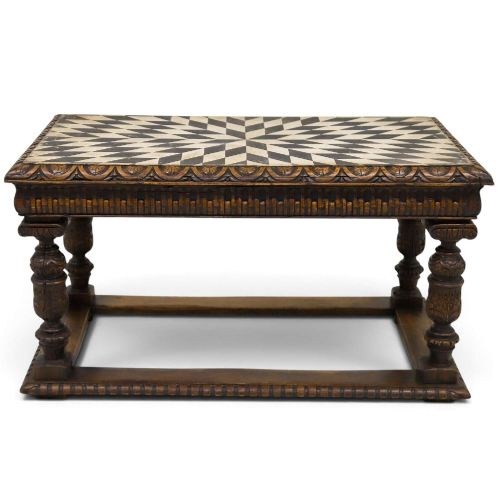
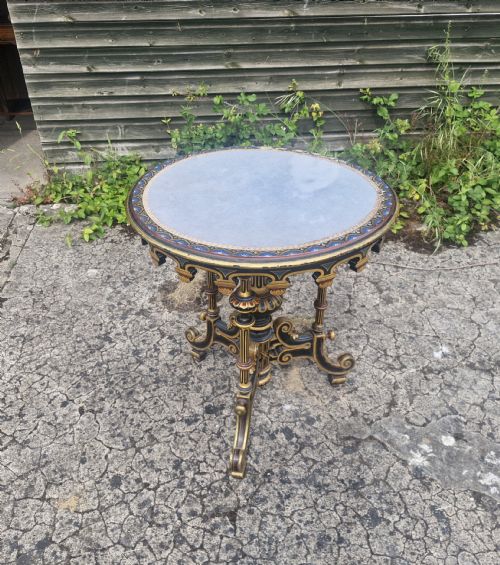
A gothic centre table is a freestanding piece designed to be viewed from all sides, standing away from the walls of a room. Most examples found here belong to the nineteenth century, spanning Victorian Gothic Revival, French Renaissance Revival, and Jacobean influences.
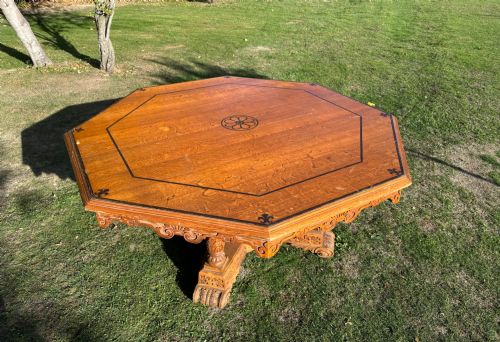
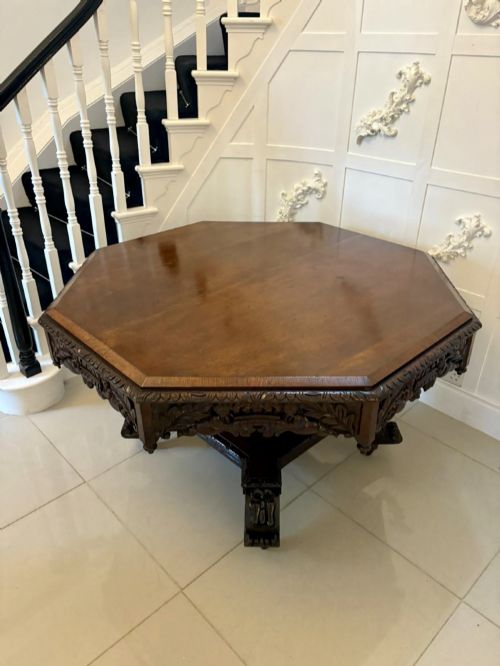
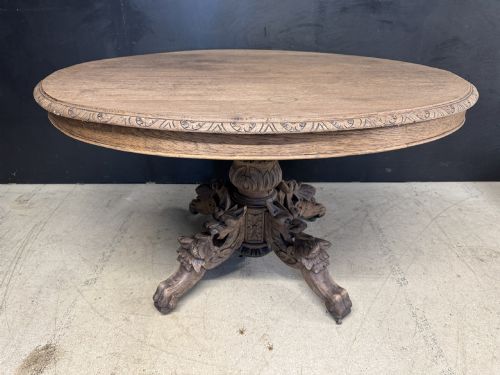
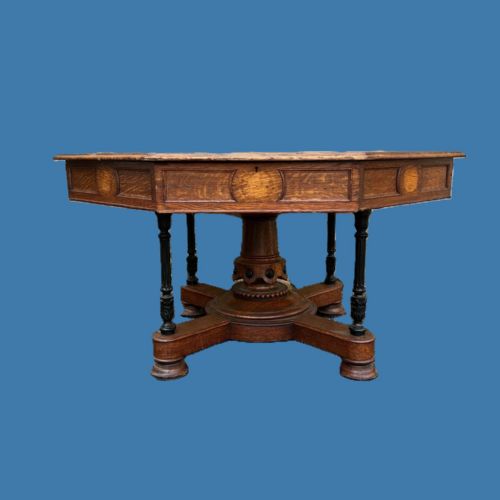
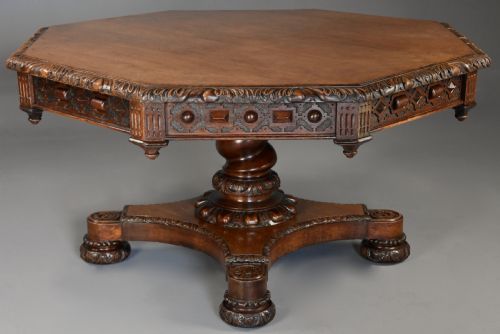
The form appears in various shapes, including round, oval, and octagonal tops resting on heavy carved pedestals or stout legs. These tables served as library desks, breakfast tables, or central display surfaces in large nineteenth-century houses.
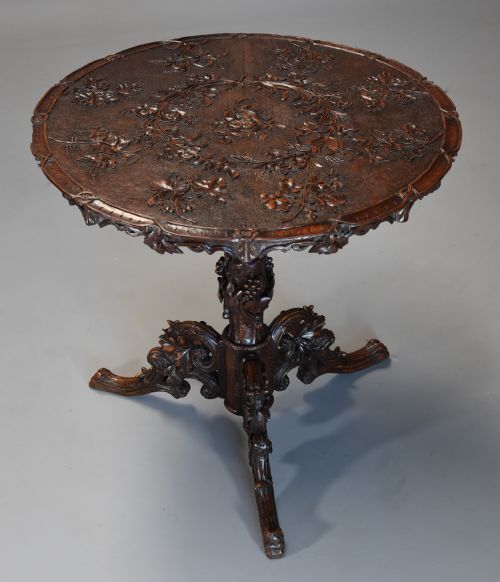
Oak dominates the selection, frequently carved with tracery, quatrefoils, and linenfold panels characteristic of the revival styles. Walnut, mahogany, and pitch pine also appear, alongside occasional leather inset tops for writing.
Materials and construction methods
Solid timber construction underpins these tables, with heavy oak, walnut, and mahogany worked by hand. Craftsmen utilised deep relief carving, scrollwork, and architectural mouldings drawn from medieval stone and wood ornamentation.
Many library and centre tables incorporate inset writing surfaces of tooled Moroccan leather, bordered by blind tooling or gilt stamps. Turned columns, pedestal bases, and substantial stretcher frames provide the structural rigidity required for heavy timber tops.
Gothic Centre Table Retail Price Guide 2026
Typical asking prices for gothic centre table among the pieces listed under this phrase on Sellingantiques today, from the lower quarter to the upper quarter. They describe what is for sale here now, not the wider market.
Listings feature nineteenth-century oak, walnut, mahogany, and pitch pine tables, spanning library, dining, and occasional forms.
Judging execution and material depth
Quality rests upon the crispness of the hand carving and the selection of the timber. Deeply undercut foliage, sharp tracery, and well-proportioned structural turnings separate accomplished cabinet work from plainer output.
The integrity of the timber movement and the retention of original surfaces, such as tooled leather inserts or darkened finishes, govern the desirability of each piece. Tables retaining their authentic patination show superior craftsmanship in the joints and framing.
James Winter·Howard And Sons
The Gothic Centre Table Glossary
- Gothic Revival
- An architectural and decorative style drawing on medieval forms, pointed arches, and ecclesiastical motifs. It gained prominence during the nineteenth century across furniture and buildings.
- Library Table
- A large freestanding table designed for heavy books and writing, often fitted with drawers or a leather inset top. These pieces occupy the centre of a room rather than sitting against a wall.
- Tracery
- Openwork ornamentation resembling stone ribbing in gothic windows, frequently carved into the friezes and panels of these tables. It forms a key visual identifier for the style.
- Linenfold
- A style of wood carving that mimics folded fabric, commonly seen on panels during the gothic and Elizabethan revivals. It adds texture and vertical emphasis to the lower framing.
- Octagonal
- Having eight sides, a popular geometric plan for nineteenth-century centre and library tables. This shape allowed easy access from multiple seating positions around the room.
Gothic Centre Table: Frequently Asked Questions
Where do you place a centre table?
A centre table stands in the middle of a room, intended to be walked around freely. It functions as a focal point for displaying books, lamps, or decorative objects.
Because the piece is finished on all sides, it requires adequate floor space away from walls and major walkways to reveal its proportions properly.
How do I care for an antique oak table?
Maintain the timber by dusting with a dry cloth and applying natural wax sparingly to nourish the grain. Avoid placing wood near direct heat sources or strong sunlight.
Protect leather inset tops from moisture and sharp implements by using pads when writing or placing items on the surface.
Were these tables used for dining?
Certain larger examples served multiple domestic functions, including breakfast or serving duties in country houses. Their sturdy timber construction and broad tops accommodated various daily uses.
Heavier library tables were primarily built for study and holding volumes rather than formal dining, though their proportions allowed flexible placement.
How do I identify a nineteenth-century gothic revival table?
Look for characteristic architectural motifs such as pointed arches, quatrefoils, heavy turned legs, and dense relief carving. The presence of solid oak or walnut construction points to nineteenth-century revival workshops.
Examine the joints and underside for hand-cut construction marks, which distinguish nineteenth-century cabinet work from later reproductions.