
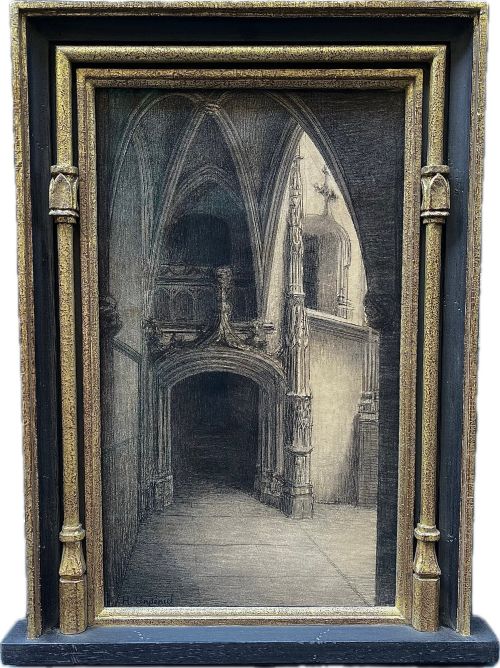
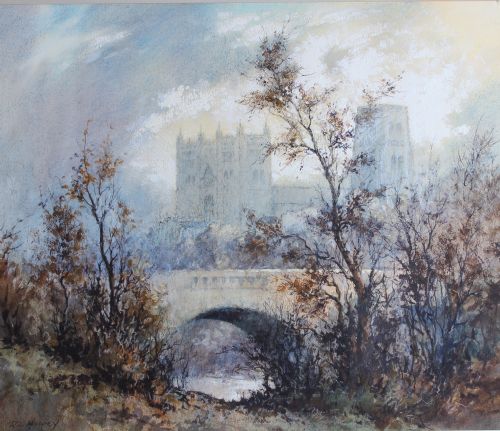


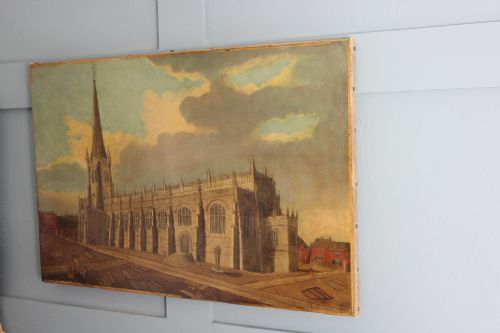


Gothic Cathedral Artwork
Gothic cathedral artwork brings historical ecclesiastical architecture into the home through detailed watercolours, oils, and architectural drawings.
Gothic Cathedral Artwork
Gothic cathedral artwork encompasses framed paintings, architectural drawings, prints, and watercolours depicting ecclesiastical buildings. These pieces capture historical religious structures through various artistic interpretations ranging from precise architectural records to atmospheric post-impressionist scenes.
The selections on this page feature works created across the eighteenth, nineteenth, and twentieth centuries. Buyers will encounter both large original drawings detailing the history of gothic art and specific portrayals of notable British and European churches.
Framed watercolours and oil paintings dominate the available pieces, often highlighting specific structures such as Durham, Norwich, Lincoln, and Wakefield cathedrals. Artists utilise paper, wood, glass, and ink to render these towering stone facades and vaulted interiors.
Evaluating quality in cathedral artwork
Quality rests upon the artist's ability to render architectural perspective accurately while conveying the scale and majesty of the subject. Pieces demonstrating confident draughtsmanship in pen, ink, or graphite stand apart from simpler decorative prints.
The depth of colour, condition of the paper or board, and the skill displayed in handling light and shadow across stone surfaces determine the distinction between standard illustrative records and fine artistic interpretations.
Stone masons and surveyors occasionally appear hard at work in the foreground of eighteenth-century cathedral views.
Henri Charles Angéniol·Robert Leslie Howey·Leopold Halvoet·R P Phillimore·Fred Lawson·George De Paris·Frank Greenwood·William Marlow
The Gothic Cathedral Artwork Glossary
- Gothic Revival
- An architectural and artistic movement reviving medieval gothic forms, prominent throughout the nineteenth century. This style influences many of the structural depictions and decorative elements found in these artworks.
- Watercolour
- A painting method where fine pigment is suspended in a water-based solution, typically applied to paper. Artists use this medium to create transparent washes that suggest light passing through cathedral windows.
- Etching
- A printmaking process where lines are incised into a metal plate with acid before ink is applied and transferred to paper. This technique produces fine, precise architectural lines.
- Trench art
- Objects created by soldiers and civilians during wartime conflicts using available materials. Examples include battlefield drawings executed on paper during periods of active service.
Gothic Cathedral Artwork: Frequently Asked Questions
What periods do these cathedral artworks come from?
The pieces span multiple centuries, with significant representation from the nineteenth century alongside eighteenth-century works and twentieth-century interpretations. Creators documented these ecclesiastical buildings during various historical revivals.
Buyers will find that Victorian and Edwardian periods contribute heavily to the selection through detailed architectural watercolours and pen drawings.
How should I hang framed architectural drawings?
Framed works on paper require careful placement away from direct sunlight to protect delicate watercolours, inks, and graphite from fading. Maintaining stable indoor humidity levels preserves both the paper support and the wooden frames.
Displaying these pieces at eye level allows viewers to appreciate the fine architectural details and pen work characteristic of gothic subject matter.
Are these artworks original pieces or prints?
The selection includes a mixture of unique original drawings, watercolour paintings, oil on board works, and signed period prints. Listings specify the exact medium used, distinguishing between hand-painted watercolours and printed works.
Original drawings often provide precise historical documentation of specific cathedrals and architectural elements studied by past artists.
Which specific cathedrals appear in these artworks?
Artists have documented numerous prominent British and European structures, including Norwich, Durham, Lincoln, and Wakefield cathedrals. Works also depict continental buildings such as Reims Cathedral in France.
These portrayals range from exterior studies of stone masonry to interior perspectives showing vaulted ceilings and collegiate church spaces.