

Gothic Carved Mirror
A gothic carved mirror brings heavy timber frames, pointed arches and medieval motifs straight into a room with real architectural weight.
Gothic Carved Mirror
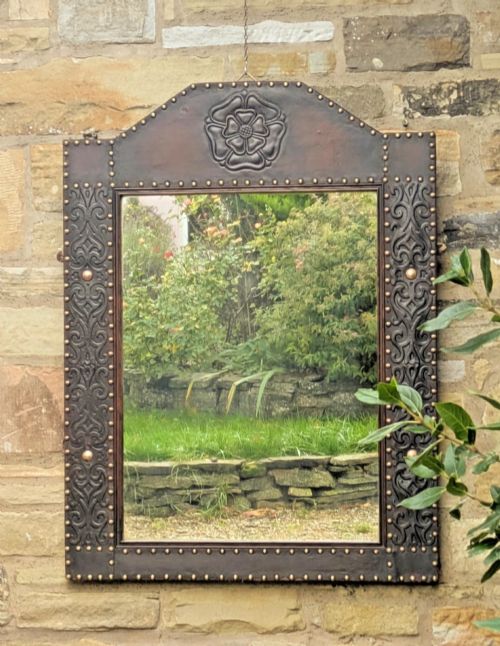
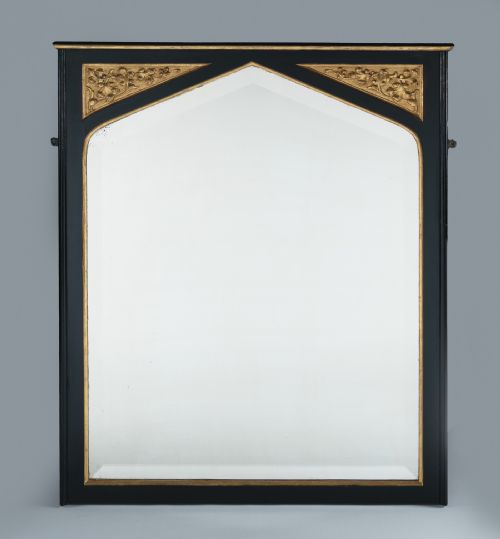
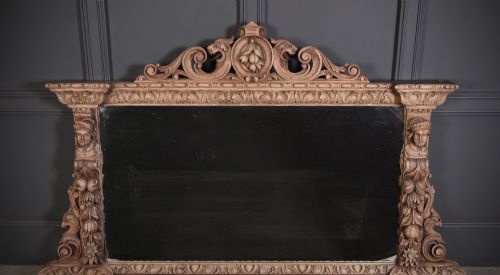
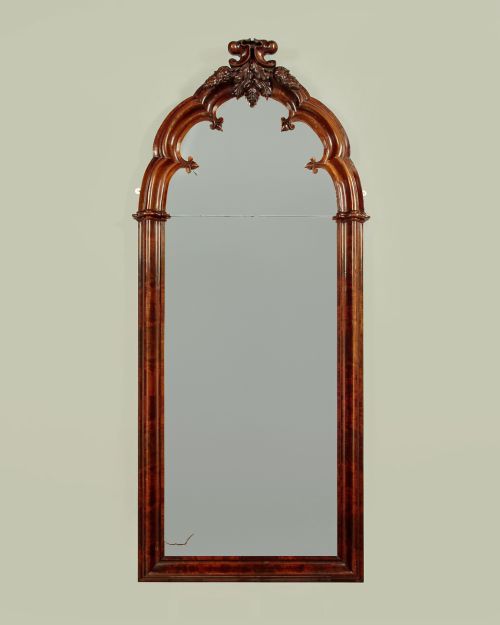
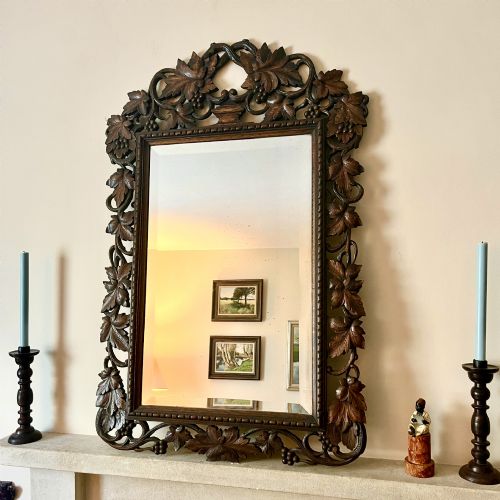
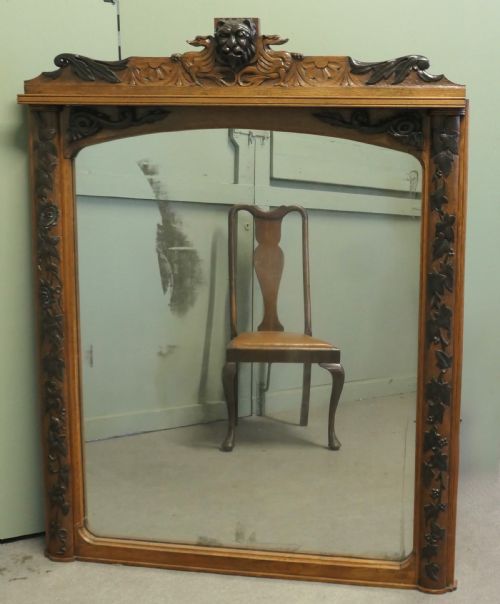
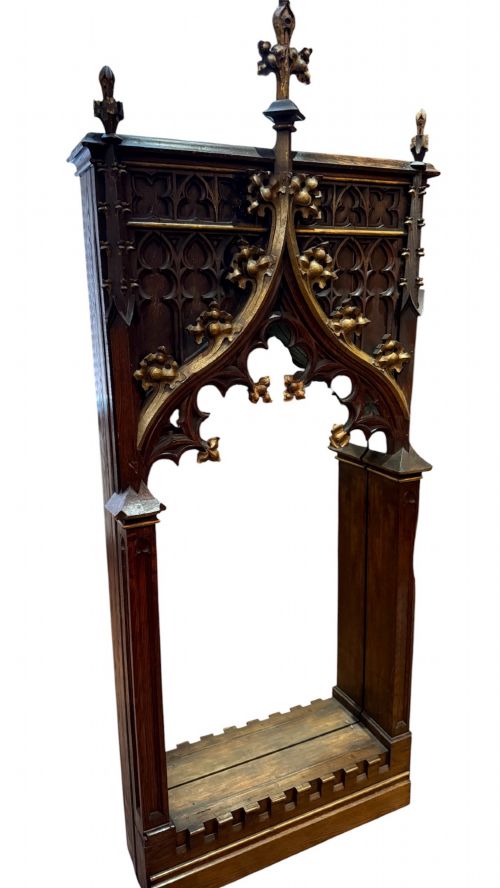
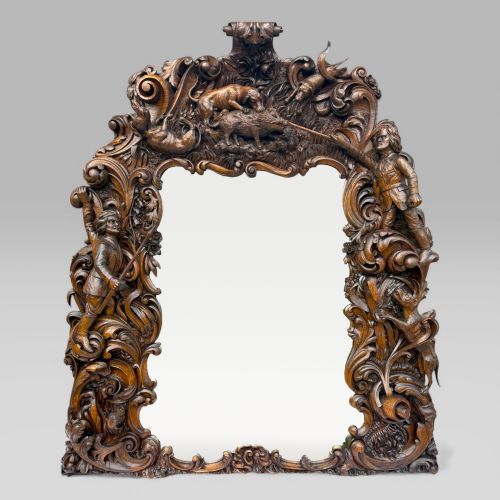
A gothic carved mirror is a decorative looking glass set within a heavily worked wooden frame that displays the pointed arches, tracery and architectural motifs of the medieval revival. These pieces range from simple wall-hanging frames to massive overmantels designed to sit above a fireplace and anchor a grand interior.
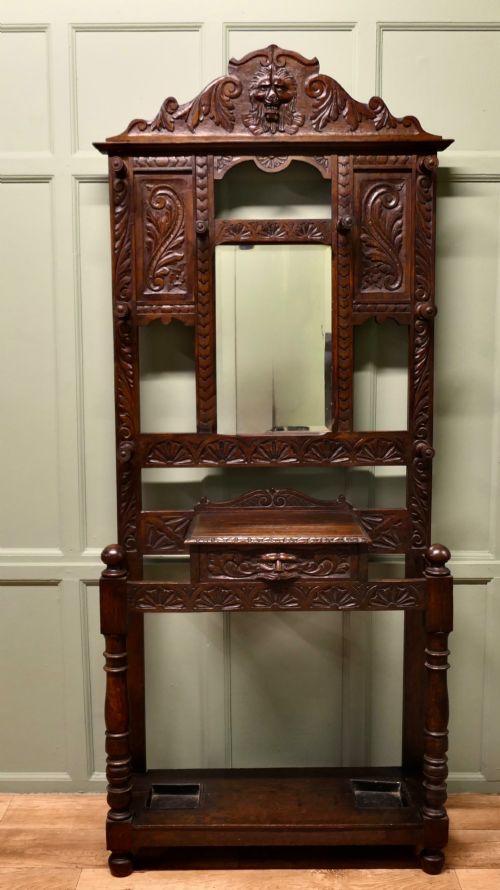
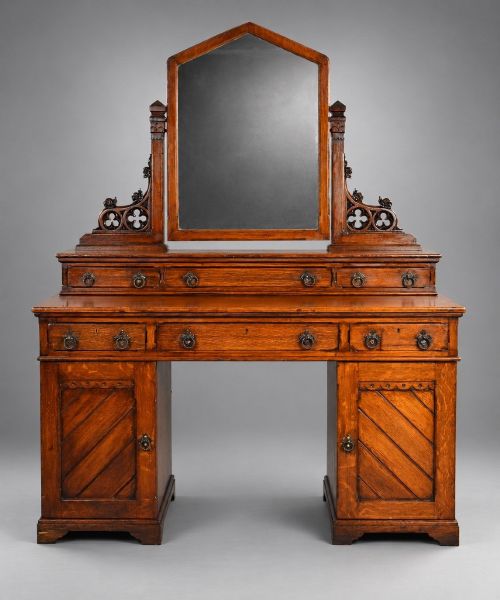
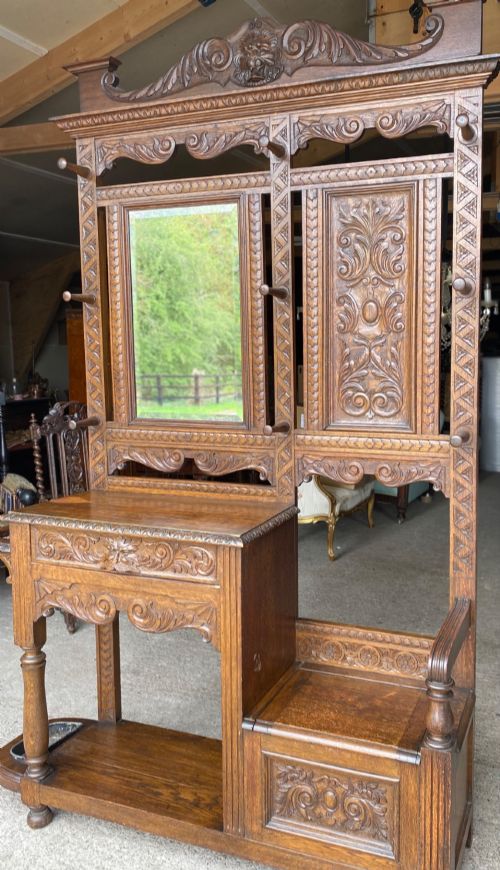
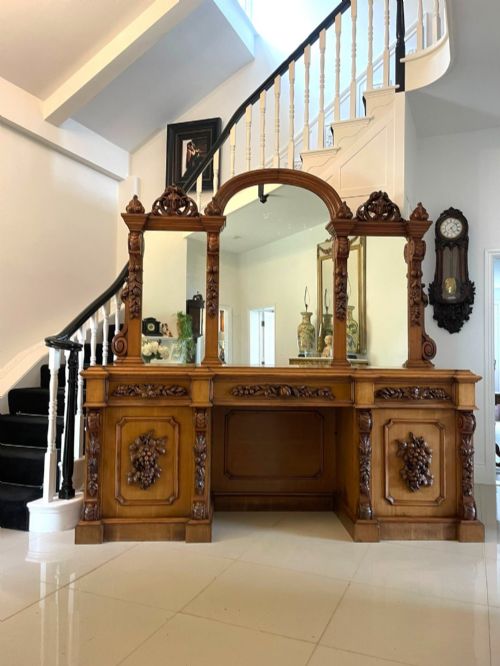
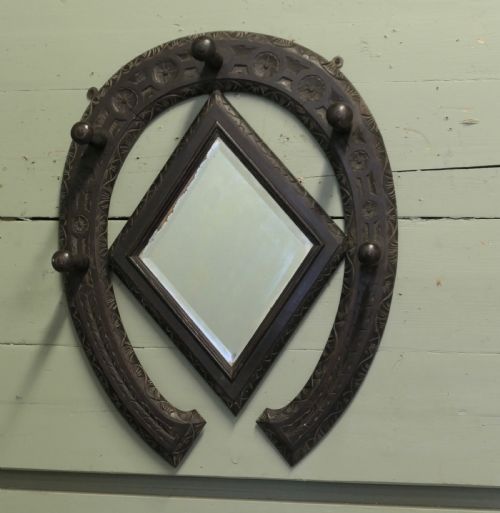
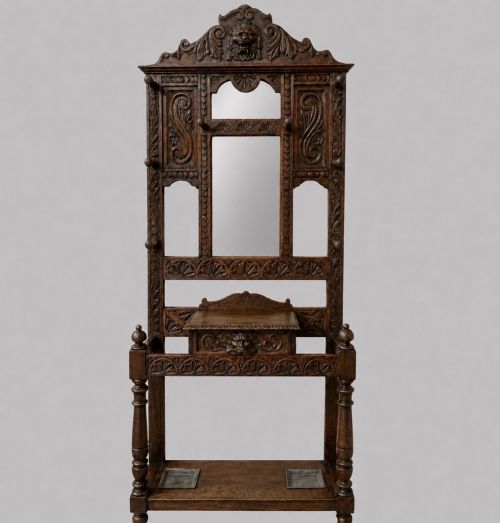
Most examples found here date from the nineteenth century, spanning the Victorian and Edwardian eras, with oak as the primary timber. Alongside dedicated wall mirrors, the selection includes hall stands, sideboards and coat racks incorporating mirrored glass within their carved wooden structures.
The aesthetic draws on nineteenth century revivals of gothic design, sometimes incorporating specific regional variations such as French gothic styles, German historicism or the distinct Puginesque interpretation of medieval forms. Buyers encounter everything from compact hall mirrors to grand overmantels with armorial crests or green man carvings.
How they were made
Makers relied primarily on solid oak, walnut, mahogany and rosewood, carving the dense timber by hand to achieve deep relief work. Giltwood, brass and gesso also appear, providing metallic contrast or gilded surfaces to catch the light within the dark wooden frames.
Mirrored glass panels, sometimes bevel-edged, were fitted into rebated frames and held with wooden backing boards. Joinery techniques from the period ensured that heavy overmantels and hall stands could support the significant weight of both the timber frame and the glass.
Gothic Carved Mirror Retail Price Guide 2026
Typical asking prices for gothic carved mirror among the pieces listed under this phrase on Sellingantiques today, from the lower quarter to the upper quarter. They describe what is for sale here now, not the wider market.
Listings feature periods from the Regency era through to the Edwardian period, with the majority anchored firmly in the nineteenth century.
What varies in quality
The depth and crispness of the carving separate the finer pieces from simpler production items. Superior examples display undercut foliage, sharply defined tracery and expressive figurative work rather than shallow, mechanical stamping.
Material selection dictates much of the character, with figured oaks, pollard oak and specialist timbers holding greater visual depth than plain commercial woods. The integration of the mirror plate with the frame, including original bevels and mercury silvering, marks the distinction between standard room accessories and master-carved furnishings.
L Blondie
The Gothic Carved Mirror Glossary
- Gothic Revival
- An architectural and decorative style spanning the eighteenth and nineteenth centuries that revived medieval forms such as pointed arches, quatrefoils and heavy timber construction. This movement directly inspired the frames found on these mirrors.
- Overmantel mirror
- A large horizontal mirror designed to sit directly on the mantelpiece above a fireplace. These pieces often feature elaborate frames that match the architectural scale of the room.
- Green Man
- A sculptural motif depicting a human face disgorging or entwined in foliage and vines, symbolising rebirth. This imagery frequently appears carved into nineteenth century oak mirror frames and hall stands.
- Pier mirror
- A tall, narrow mirror designed to hang on the solid section of wall between two windows. They make efficient use of vertical space and reflect ambient light back into dark Victorian rooms.
- Gesso
- A plaster-like material applied to wood surfaces and then carved, painted or gilded. It provides a smooth base for gold leaf applications on composite frames.
Gothic Carved Mirror: Frequently Asked Questions
How do I clean nineteenth century mirror glass?
Use a soft microfibre cloth and a minimal amount of mild glass cleaner applied to the cloth rather than directly onto the glass. Avoid letting moisture seep behind the edges of the frame where old silvering may be fragile.
Old mirror glass often displays foxing and minor age spots which form part of its historical character. Gentle cleaning preserves both the glass and the surrounding carved wood.
How can I tell a Victorian gothic mirror from a later reproduction?
Examine the backboards, fixings and timber shrinkage to assess the age of the construction. Nineteenth century pieces typically use hand-sawn boards, old screw types and dense, well-seasoned oak that shows natural patination.
The carving on older pieces exhibits tool marks and subtle irregularities consistent with hand execution. Modern reproductions often use uniform machine routing and lighter, newly milled timber.
What rooms suit a gothic hall stand with a mirror?
Hall stands work best in entrance halls, boot rooms or large landings where their vertical proportions and practical hooks serve an everyday function. The integrated mirror helps bounce light into darker hallways.
Ensure the floor space can accommodate the projection of the stand and any umbrella wells or bench seats attached to the base. They pair well with neutral walls that allow the dark carved oak to stand out.