
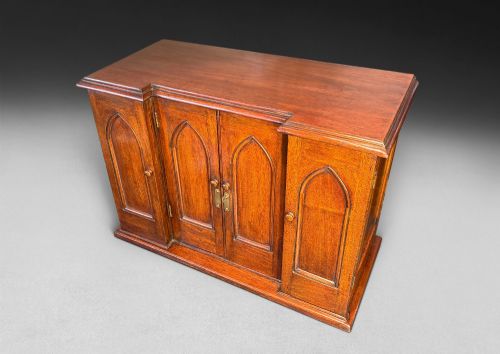
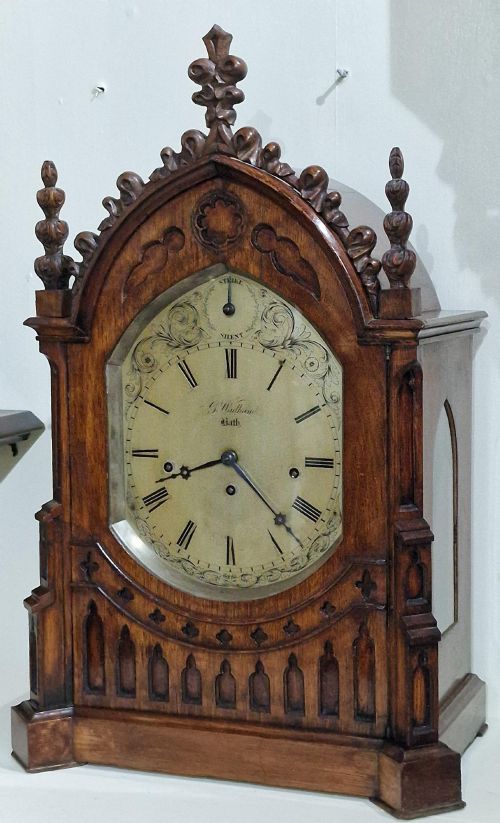
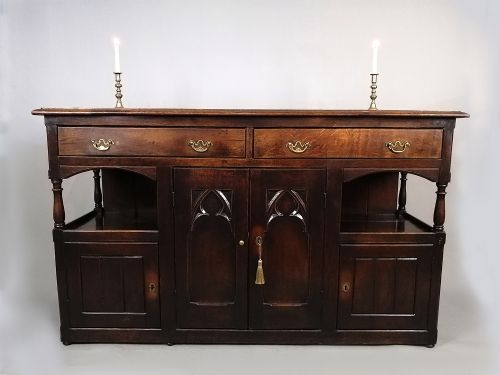
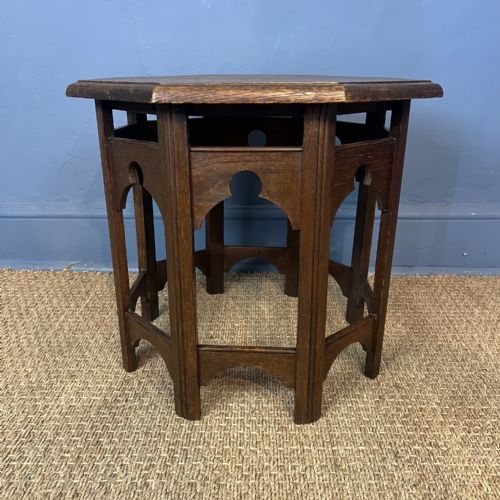

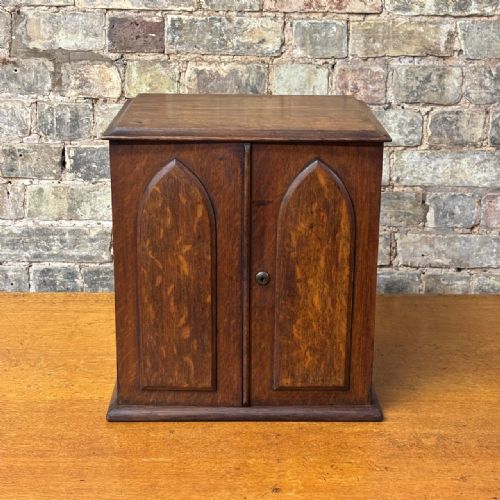


Gothic Arch Oak Table
A gothic arch oak table brings architectural presence into a room, offering sturdy construction and pointed geometric tracery.
Gothic Arch Oak Table
A gothic arch oak table combines medieval structural motifs with domestic furniture forms, drawing on styles such as Gothic Revival, Arts and Crafts, and Gothic Reform. Buyers searching for a gothic arch oak table typically encounter pieces from the nineteenth and early twentieth centuries, alongside earlier stylistic inspirations.
The material palette focuses on oak, sometimes accompanied by chestnut, while the objects themselves range from refectory tables and side tables to hexagonal and octagonal centre tables. These items reflect periods including the Victorian era and the decades around nineteen hundred, anchoring the design in historical revivalism.
Construction and materials
Makers utilised solid oak, supplemented occasionally by chestnut or larch, building heavy timber frames suited to domestic and ecclesiastical contexts. Joinery techniques relied on traditional framing and panel construction to support structural arches and underframes.
Carving and geometric tracery defined the surface work, incorporating cathedral arches and pointed panels that echoed stone architecture. Metal elements in brass and iron appear alongside the woodwork, reinforcing joints and doors.
Some tables come fitted with hidden compartments or tear drop details designed to make a cathedral architect smile.
Assessing quality
Quality rests in the crispness of the architectural carving and the selection of the timber grain. Refined examples display well-proportioned underframes and precise joinery that respects the structural demands of heavy wood.
The integrity of the surface finish and the harmony of the revival style distinguish finer interpretations from simpler vernacular items. Proportion and balance in the execution of the gothic arch dictate the visual success of each piece.
George Wadham·Sir Robert Lorimer
The Gothic Arch Oak Table Glossary
- Gothic Revival
- An architectural and decorative style drawing inspiration from medieval forms, pointed arches, and ecclesiastical motifs. It gained prominence during the nineteenth century across furniture and buildings.
- Refectory table
- A long dining or communal table traditionally used in monasteries and large halls. Examples in this category often feature heavy underframes and substantial timber tops.
- Gothic Reform
- A later nineteenth-century movement that reinterpreted medieval design with an emphasis on structural honesty and simplified decoration. It produced sturdy tables and cabinets with geometric clarity.
- Tracery
- Openwork stonework or woodwork ornamentation, typically consisting of intersecting ribwork in the head of a gothic window or panel. On furniture, this translates into carved pointed arches.
Gothic Arch Oak Table: Frequently Asked Questions
What is a gothic arch oak table?
A gothic arch oak table is a piece of furniture that incorporates medieval architectural motifs, specifically pointed arches and tracery, into a wooden table form. These items draw on nineteenth and early twentieth-century revival styles.
Such tables range from small side tables to larger refectory formats, often utilising solid oak and traditional joinery to achieve a sturdy, architectural appearance.
How were these tables used?
These tables served as functional domestic surfaces for dining, writing, or display, while also acting as decorative statements of historical taste. Their robust construction suited them to heavy daily use in Victorian and Edwardian interiors.
In some instances, the design language reflects ecclesiastical or communal origins, translating architectural dignity into domestic furniture.
How do I date a gothic table?
Dating relies on examining the timber preparation, joinery methods, and the specific revival movement visible in the design. Nineteenth-century pieces often display Victorian machinery marks or revivalist interpretations of earlier styles.
Comparing the decorative carving, such as Gothic Reform or Arts and Crafts linear details, helps narrow the period of manufacture between the early nineteenth and early twentieth centuries.
What distinguishes Gothic Reform from Revival?
Gothic Reform emerged later in the nineteenth century as a reaction against excessive ornamentation, focusing instead on structural truth and simpler geometric forms. Gothic Revival often embraced more elaborate tracery and decorative ecclesiastical detail.
Both styles utilise oak and pointed arches, but Reform pieces tend to show cleaner lines and an emphasis on the underlying construction.
How do I care for antique oak?
Antique oak benefits from stable environmental conditions with minimal fluctuations in temperature and humidity to prevent timber movement. Regular dusting with a soft cloth maintains the surface without the need for heavy chemical polishes.
Applying a traditional wax occasionally helps nourish the wood and preserves the natural sheen of the aged finish.