



Gong and Striker
A gong and striker brings a resonant acoustic presence to a room, offering the distinct chime that once summoned household gatherings in country houses and town mansions.
Gong and Striker
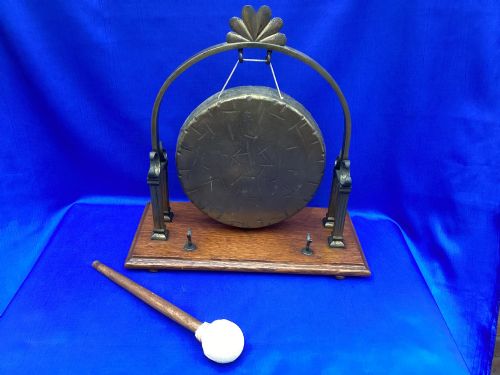
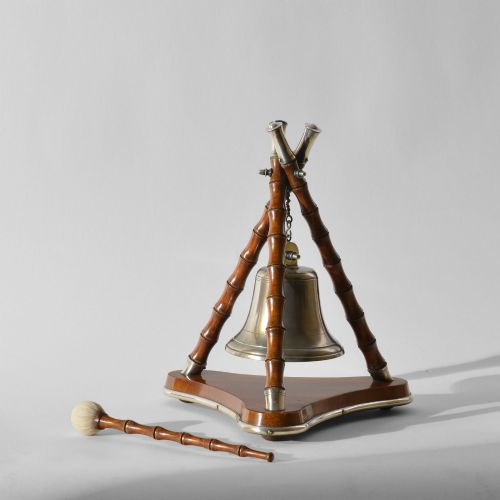
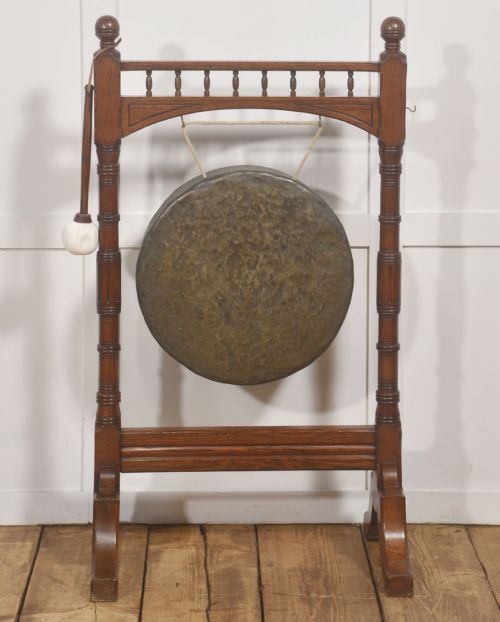
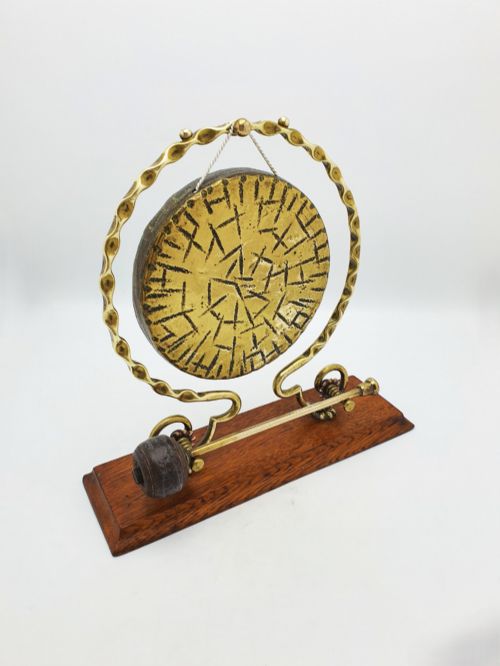
A gong and striker encompasses a suspended metallic disc or shell paired with a matching mallet, designed primarily for domestic use as a dinner gong. These objects emerge across the nineteenth century and early twentieth century, spanning Victorian, Edwardian, and Arts and Crafts iterations.
The common form on this page pairs a brass or bronze gong suspended within an oak, wrought iron, or carved wood frame, accompanied by a handheld wooden or cord-bound striker. Pieces range from tabletop models to wall-mounted chimes and larger carved floor or table arrangements originating from British, continental, and export traditions.
How they were made
Construction relies heavily on cast and beaten brass or bronze for the resonant hanging element, often mounted using cord or textile ties to timber frames. Frames utilise solid oak, carved mango wood, and wrought iron, reflecting cabinet-making and metalworking standards of the period.
Surface finish varies from plain polished metal to engraved detailing and silver plating, whilst wooden supports show turned carpentry, carved ornamentation, and structural ironwork tailored to sustain the vibrations of the hanging bell.
Gong and Striker Retail Price Guide 2026
Typical asking prices for gong and striker among the pieces listed under this phrase on Sellingantiques today, from the lower quarter to the upper quarter. They describe what is for sale here now, not the wider market.
Every dinner gong eventually tested the patience of neighbours when an enthusiastic guest discovered its acoustic projection.
What varies in quality
Quality rests in the acoustic resonance of the metal and the solidity of the supporting framework, where heavier brass gauges and dense hardwoods yield a clearer, more sustained tone. Finer examples display deliberate proportion between the hanging gong and its frame, avoiding lightweight rattling joints.
Artistic execution divides standard production from superior pieces, particularly in hand-carved wooden bases, detailed metal engraving, or integrated aesthetic and Art Nouveau design motifs that elevate a utilitarian household object into a decorative centrepiece.
The Gong and Striker Glossary
- Dinner gong
- A domestic percussion instrument utilised to announce meals in large residences. It typically consists of a metal disc hung in a supportive stand.
- Striker
- The handheld mallet or beater used to sound the gong. These often feature wooden handles with leather, cord, or textile heads to soften the impact.
- Table gong
- A smaller version designed to sit on a sideboard or table rather than hang from a wall or heavy floor frame. These nineteenth-century pieces offer a compact acoustic range.
- Palazzo wall chime
- A decorative wall-mounted assembly designed for interior resonance. Such pieces often incorporate multiple striking elements within a structured architectural frame.
Gong and Striker: Frequently Asked Questions
What is a gong and striker used for?
These pieces served historically as domestic signaling devices to announce dinner or summon household staff. In modern settings, they function as decorative interior objects with a working acoustic chime.
Their resonant tone provides a distinct auditory feature, while the frames serve as sculptural woodwork or metalwork for surfaces and walls.
How do I date a gong and striker?
Dating relies on combining the stylistic motifs of the frame with the construction methods of the metal gong. Victorian and Edwardian examples often feature characteristic oak turnings, wrought ironwork, or Aesthetic Movement designs.
Examining the fixings, cordage, and types of wood provides further context, placing pieces across the nineteenth and early twentieth centuries.
Where were these pieces placed?
Tabletop versions sat comfortably on sideboards in dining rooms or entrance halls for easy access during the day. Larger framed designs were hung on walls or placed on dedicated tables where the sound could carry through the house.
The placement depended entirely on the scale of the frame and whether it was built for tabletop use or wall mounting.
What materials make up the frame?
Frames are constructed predominantly from solid timber such as oak and carved mango wood, alongside wrought iron supports. These materials provided the structural stability needed to hold a heavy suspended metal disc.
Textiles and cord were also employed to suspend the gong securely from its upper crossbar without dampening the vibration.