


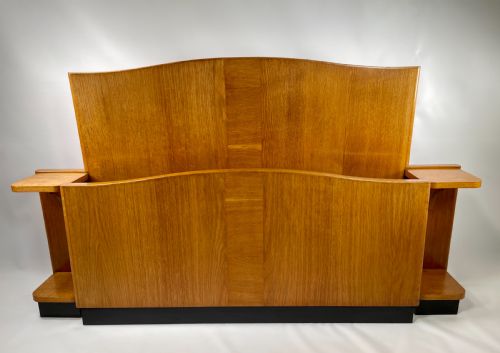
Golden Oak Nightstands
Golden oak nightstands are solid wood bedside cabinets and small tables that bring warmth and practical storage to a bedroom.
Golden Oak Nightstands
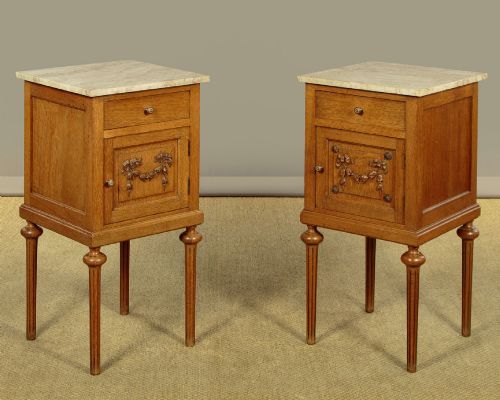
Golden oak nightstands encompass bedside cabinets, side tables, and side cabinets dating from the Victorian era through the 1930s. These pieces include pairs of bedside cabinets alongside individual side tables and cupboards.
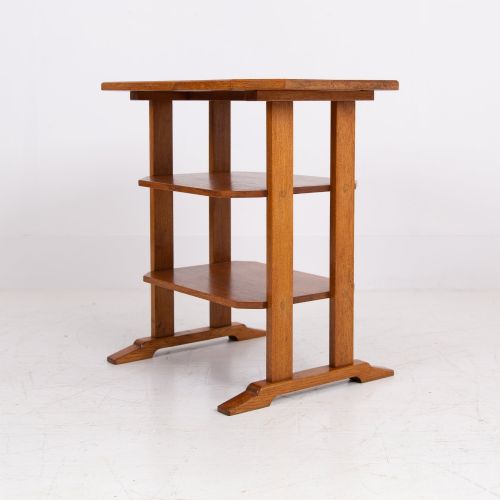
The selection here draws primarily from Edwardian, Arts and Crafts, and Art Deco periods, showcasing the timber through diverse forms. Buyers encounter traditional cupboards with doors as well as tiered side tables suited for bedside placement.
How they were made
Craftsmen built these pieces using solid oak, oak veneer, and ebonised wood, often pairing the timber with brass hardware. Selected pieces incorporate marble surfaces alongside the wood construction.
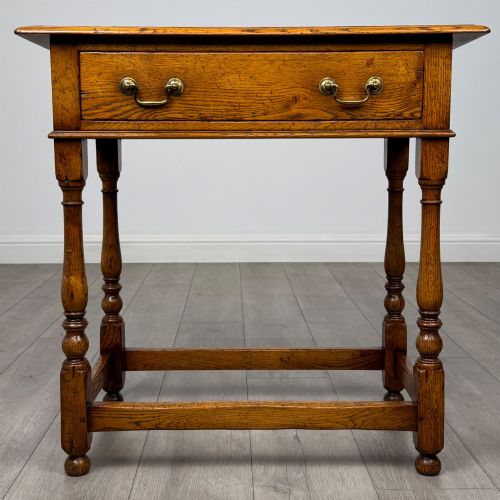
Makers shaped the timber through regional traditions, spanning Cotswold School methods and English and French country joinery. The resulting furniture balances structural utility with distinct period styling.
What varies in quality
Quality rests upon the selection of the timber and the integrity of the joinery, distinguishing straightforward utilitarian pieces from those bearing refined design details. The handling of the golden oak grain and the execution of period styles dictate the standing of each cabinet.
The presence of matching pairs elevates certain bedside cabinets above single items, while the integration of materials like brass and marble alters the character of the piece. Construction methods characteristic of specific movements, such as Arts and Crafts workshops, further define the calibre of the furniture.
The Golden Oak Nightstands Glossary
- Golden oak
- A warm, honey-toned timber finish popular across late Victorian, Edwardian, and early twentieth-century furniture. It highlights the natural grain of the wood.
- Bedside cabinet
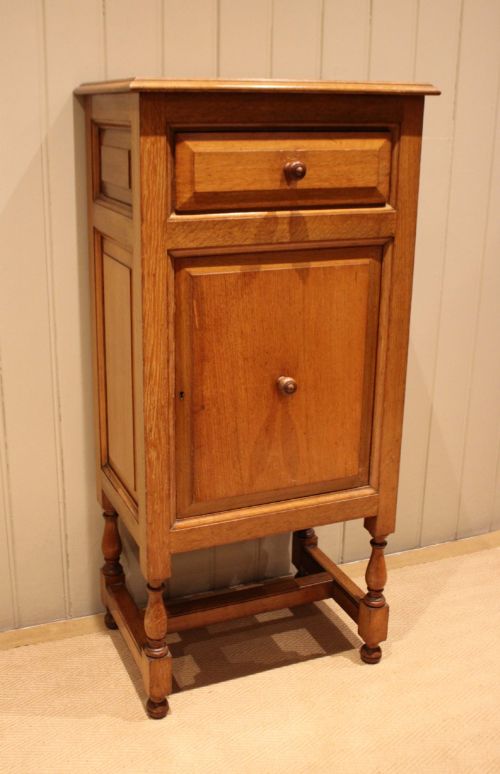
- A small enclosed cupboard or cabinet designed to sit beside a bed for night-time storage. These often feature a single door and interior shelving.
- Arts and Crafts
- A design movement valuing honest construction, simple forms, and visible craftsmanship. Pieces from this tradition often display exposed joinery and hand-worked hardware.
- Ebonised wood
- Timber treated to resemble ebony, creating a dense black finish. This technique frequently appears as a contrasting detail on period furniture.
- Tiered side table
- A small table featuring multiple levels or shelves connected by vertical supports. These provide open storage space beside a bed or seating area.
Golden Oak Nightstands: Frequently Asked Questions
What periods do these nightstands come from?
These pieces date from the late Victorian era through the Edwardian period and into the nineteen-thirties. The selection spans distinct design movements including Arts and Crafts and Art Deco.
Each period imparts characteristic forms and construction methods to the furniture. Buyers find both traditional cupboards and tiered tables representing these decades.
Are pairs of nightstands common?
Matched pairs appear alongside individual cabinets within the selection. Finding matching bedside tables from the early twentieth century offers a cohesive look for a bedroom.
Single side tables and pot cupboards also serve as practical bedside surfaces. Each listing indicates whether a piece is offered as a single item or a pair.
What materials are used besides oak?
While oak forms the primary material, makers incorporated other elements into these pieces. Brass hardware appears frequently on doors and drawers.
Certain tables and cabinets feature marble tops or accents of ebonised wood. These secondary materials reflect the specific style and period of manufacture.
How do I distinguish Arts and Crafts pieces?
Arts and Crafts nightstands emphasise straightforward construction and the natural qualities of the wood. They often display simple, sturdy lines without excessive ornamentation.
Such pieces may originate from workshops influenced by the Cotswold School. The focus remains on solid timber and functional design.