


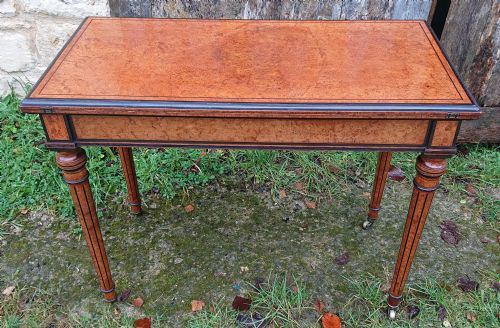

Golden Brown Hall Table
A golden brown hall table brings warmth and utility to an entrance, combining rich timber tones with practical proportions for daily use.
Golden Brown Hall Table
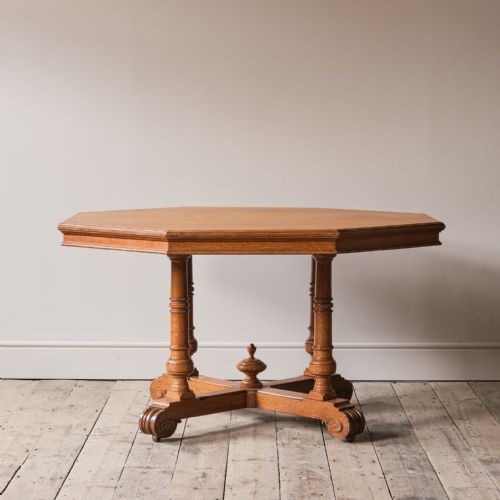
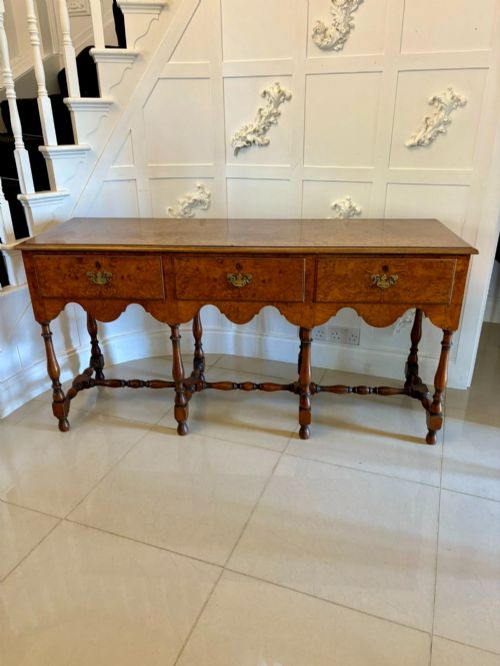
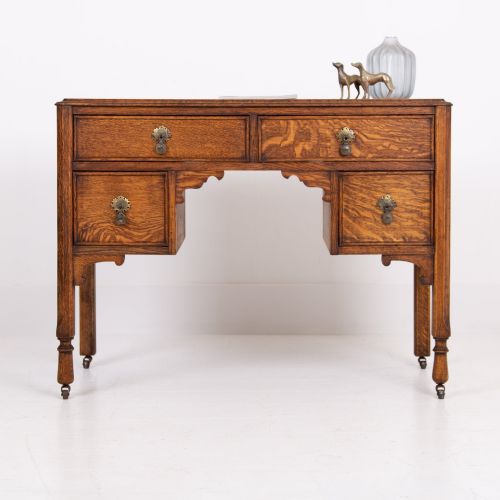
The versions you are most likely to meet on this page span the nineteenth century and the early twentieth century, featuring forms such as octagonal centre tables and compact side pieces. They serve as practical surfaces for everyday organisation while establishing a welcoming focal point in a hallway.
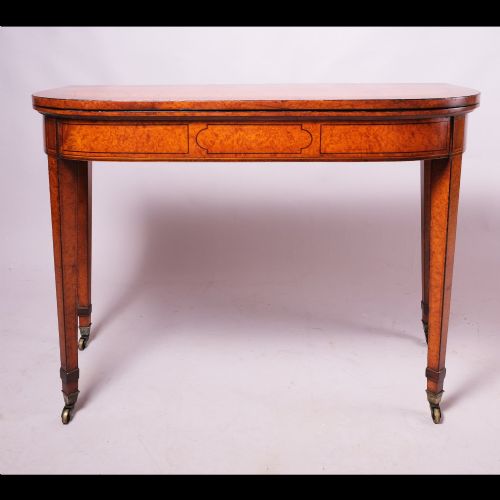
Origins range from Georgian influences to Art Nouveau interpretations, utilising woods like oak, walnut, and amboyna. Each item reflects the domestic requirements of its era, balancing surface utility with decorative presence in a narrow space.
How they were made
Cabinetmakers utilised dense hardwoods such as oak and walnut to build robust frames that endure generations of daily hallway traffic. Burr walnut and pollard oak veneers were frequently selected for their striking, figured grain patterns on table tops and fascias.
Secondary elements incorporate contrasting materials like brass for handles, hinges, or casters, adding functional detail to the wooden structures. Joinery techniques relied on traditional framing methods, ensuring stability across diverse forms from tea tables to monks benches.
Some historic tables double as benches, allowing you to sit down while putting on your boots.
What varies in quality
The distinction between standard examples and finer pieces lies in the selection and matching of timber veneers, particularly figured burr walnut and amboyna. Superior items display meticulous grain continuity across surfaces and refined carving that enhances the natural warmth of the wood.
Construction depth also separates workshop output, seen in the weight of the timber used for structural carcases and the subtlety of mouldings. Original hardware, such as brass castors or mounts, contributes significantly to the integrity and character of the piece.
The Golden Brown Hall Table Glossary
- Burr walnut
- A highly figured wood grain obtained from the wart-like growths on walnut trees, prized for decorative veneering. It creates intricate, swirling patterns across table tops.
- Console table
- A table designed to stand against a wall, frequently supported by decorative brackets or legs. These items occupy minimal floor space in hallways and reception rooms.
- Centre table
- A freestanding table intended to be viewed from all sides, often placed in the middle of a room or grand hall. Examples often feature octagonal or circular tops.
- Pollard oak
- Oak timber taken from trees that were cut back to encourage dense, knotty branch growth, resulting in highly textured wood. This material provides distinctive visual movement on period furniture.
Golden Brown Hall Table: Frequently Asked Questions
What defines a hall table?
A hall table is a narrow or compact surface designed to fit domestic entranceways and corridors without obstructing movement. These items provide a convenient drop-off point for keys and post.
They span various historical periods and utilise timbers like oak and walnut to complement interior entrance schemes.
How do I care for antique wood?
Maintain wooden surfaces by dusting regularly with a soft, dry cloth and avoiding direct sunlight to prevent fading. Occasional application of appropriate wax preserves the sheen of the timber.
Keep tables away from direct heat sources to stop the wood from drying out or splitting over time.
Are these tables sturdy enough for daily use?
Period tables constructed from solid hardwoods like oak and walnut are built for practical durability. Their traditional joinery ensures they withstand normal household demands in an entranceway.
Heavily veneered surfaces require slightly more care to avoid impact damage to the decorative outer layer.
How do I identify the wood type?
Oak typically displays prominent grain rings and medullary rays, while walnut offers smoother, darker brown tones with varied figuring. Exotic timbers like amboyna present dense, spotted patterns.
Close inspection of the grain structure and colour variation reveals the specific species utilised by the cabinetmaker.