

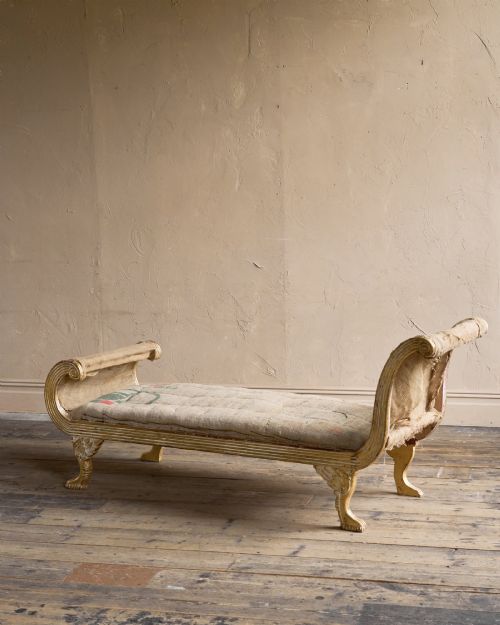
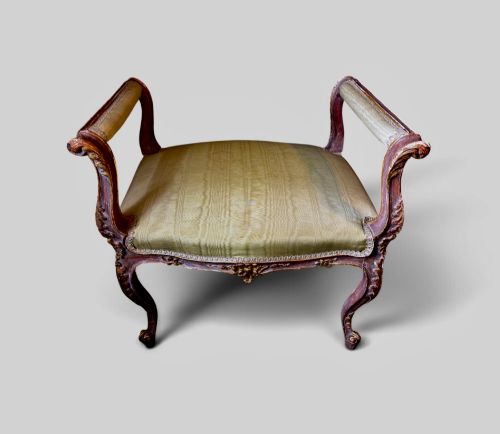
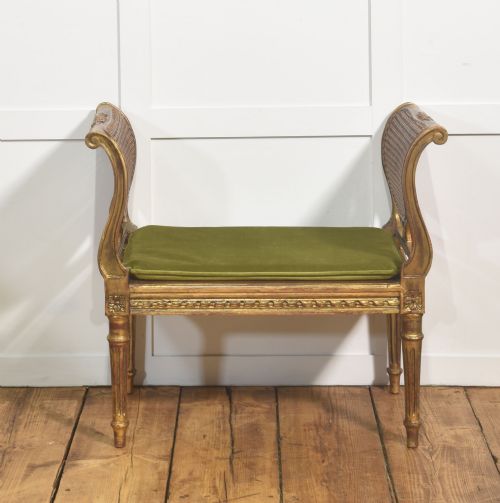
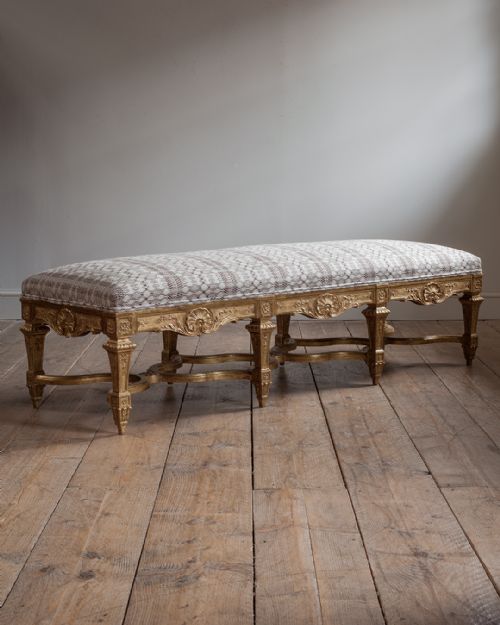
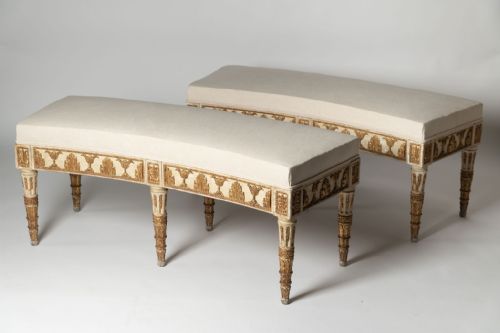


Gold Window Seat
A gold window seat brings gilded elegance and tailored seating to a bay or hallway.
Gold Window Seat
A gold window seat combines structural woodwork with gilded surfaces, taking the form of a long stool, duet bench, or low settee designed to sit beneath sills. These seating pieces span from the eighteenth century through the Edwardian era, incorporating styles such as Louis XVI, Rococo Revival, and Chippendale.
The version most commonly encountered on this page relies upon giltwood frames, often shaped with carved details and upholstered in fabric, velvet, or silk. Makers across the nineteenth and early twentieth centuries produced these items in French, Italian, and English workshops to fit intimate architectural spaces.
Beyond standard window benches, the selections here include cane seats, curule forms, and piano stools that share the characteristic gilded or partially gilded finish. Each object serves as both a functional resting place and a decorative focal point within a room.
What varies in quality
The refinement of the carving distinguishes finer examples from simpler production, particularly in the crispness of acanthus leaves, scrollwork, and classical motifs on the wooden frame. Hand-carved detail displays a depth and precision that machine-finished or plain mouldings simply lack.
The application and preservation of the gilding further separate tiers of quality, with genuine gold leaf ageing differently than later paint treatments. Original upholstery foundations and the structural integrity of the joints dictate how well the piece survives centuries of use.
Gold Window Seat Retail Price Guide 2026
Typical asking prices for gold window seat among the pieces listed under this phrase on Sellingantiques today, from the lower quarter to the upper quarter. They describe what is for sale here now, not the wider market.
Listings feature items from the eighteenth century up through the 1930s, constructed in giltwood, mahogany, and ebonised wood.
The Gold Window Seat Glossary
- Giltwood
- Timber coated with gold leaf or powder over a prepared gesso base. This finish provides the characteristic metallic brilliance seen on antique frames.
- Curule stool
- An ancient Roman chair shape featuring cross-frame legs in an X-form. Nineteenth-century revival pieces often adopted this symmetrical silhouette.
- Gesso
- A plaster-like mixture applied to wood surfaces to create a smooth base for gilding. It allows carvers to achieve sharp relief details before applying gold leaf.
- Duet stool
- An extended seat designed for two musicians to sit side by side at a piano. These share similar proportions and framing with long window benches.
- Chippendale
- A mid-eighteenth-century English design style named after cabinetmaker Thomas Chippendale. Pieces in this tradition feature robust mahogany construction and classical carving.
Gold Window Seat: Frequently Asked Questions
Where should I place a window seat?
These pieces sit naturally beneath low windows, in wide corridors, or at the foot of a bed. Their modest height keeps them from blocking natural light while offering a convenient resting spot.
In living areas, a gilded bench works well as an occasional seat that adds a decorative accent without overwhelming the floor plan.
How do I care for giltwood?
Giltwood requires gentle dusting with a soft, dry cloth to prevent abrasion to the delicate metallic surface. Avoid moisture, chemical polishes, and direct sunlight, which can cause the gold leaf to lift or fade over time.
Handling the frame by its structural solid wood rather than protruding carved elements helps preserve the antique finish.
How do I identify Louis XVI style?
Louis XVI pieces display straight tapering fluted legs, rectangular frames, and restrained classical ornamentation like ribbon twists and bead reels. This aesthetic contrasts with the curved, asymmetrical lines of earlier Rococo designs.
Giltwood versions from this tradition emphasise architectural symmetry and refined proportion.