



Gold Wall Shelves
Gold wall shelves bring decorative display and gilded warmth to an interior, drawing the eye upwards with carved wood and mirrored glass.
Gold Wall Shelves
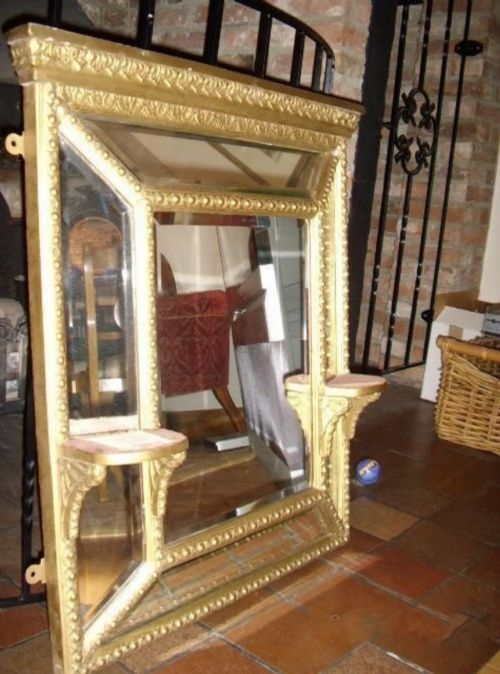
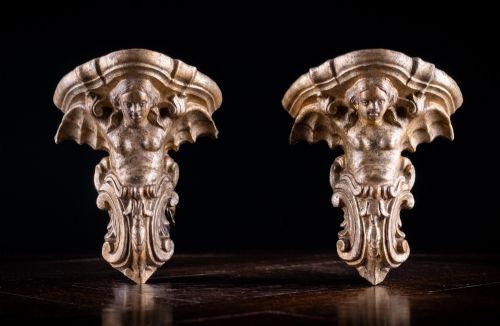
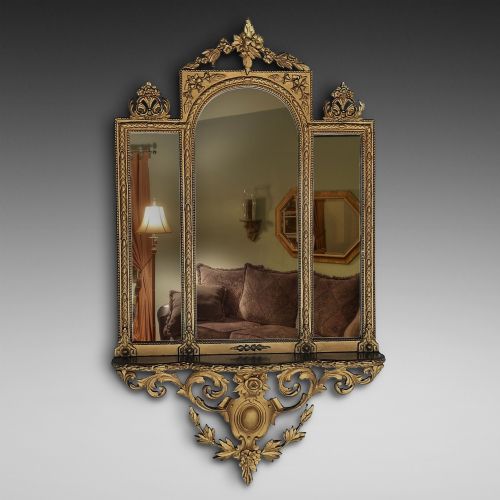
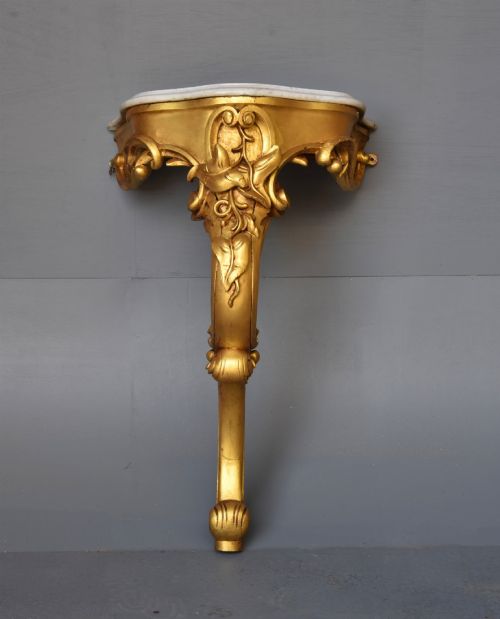
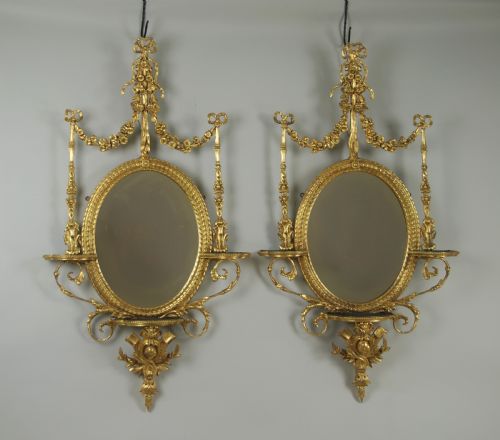
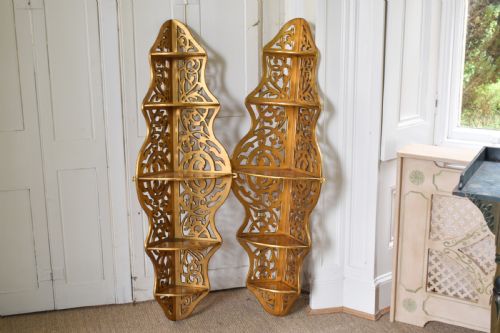
Gold wall shelves encompass a variety of gilded display fixtures designed to mount directly onto a wall, including dedicated corner shelves, carved brackets, and mirrored display consoles. These pieces emerge predominantly from the nineteenth century, with Victorian and Edwardian examples sitting alongside earlier eighteenth-century forms.
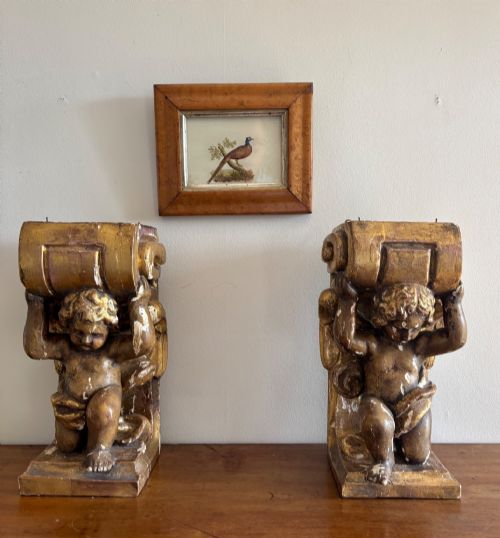
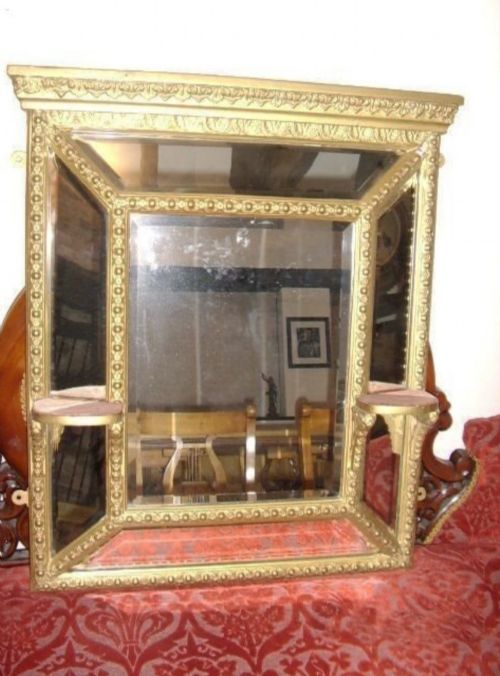
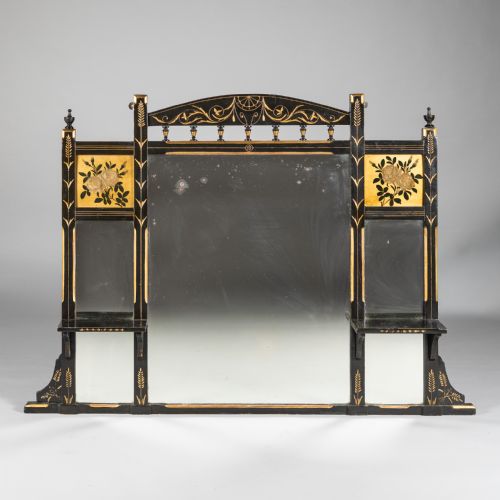
The buyer frequently encounters matched pairs of carved giltwood brackets or mirrored display shelves rather than single items, reflecting their original purpose as symmetrical salon adornments. Alongside these traditional ledgers, the selection broadens into related wall-mounted furniture such as overmantel mirrors fitted with integral ledges and console tables.
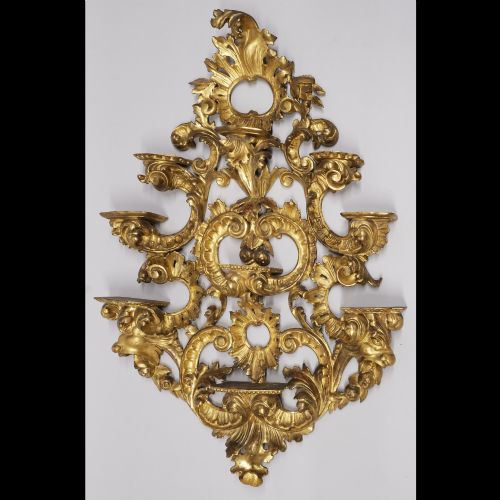
Italian, French, and English workshops dominate the origins of these items, bringing distinct regional interpretations to the gilded surface. Whether shaped as Rococo scrolls or restrained Neoclassical lines, each piece serves the dual function of holding small objects while projecting light across a room.
Materials and construction
Makers built these shelves using timber carcases formed from wood, gesso, and occasionally terracotta or brass, onto which gold leaf or liquid gilt was applied by hand. Giltwood constructions rely on deeply carved wooden bases that receive layers of gesso to capture crisp architectural and floral ornament before gilding takes place.
Reflective surfaces integrated into these wall fixtures utilise heavy mirror glass, frequently featuring bevel-cut edges and original silvering that displays the passage of time. Brass elements appear in luggage racks and portmanteaus, offering structural strength alongside decorative cast detail.
Gold Wall Shelves Retail Price Guide 2026
Typical asking prices for gold wall shelves among the pieces listed under this phrase on Sellingantiques today, from the lower quarter to the upper quarter. They describe what is for sale here now, not the wider market.
Object forms on this page include corner shelves, girondoles, portmanteaus, and overmantel mirrors with display brackets.
Assessing quality
The distinction between ordinary and superior gold wall shelves lies in the depth and crispness of the hand-carved detail beneath the gold leaf. Fine pieces display sharp undercut foliage and scrolls where lesser examples rely on thick gesso build-up to simulate deep relief.
Originality of the gilding and mirror plates governs the integrity of the piece, with untouched surfaces retaining a softer metallic tone than later overpainting. Heavy timber construction and well-seated original brackets indicate superior workshop execution from the outset.
Strahan of Dublin·Henri Dasson
The Gold Wall Shelves Glossary
- Giltwood
- Wood that has been coated with gold leaf over a prepared gesso ground. This technique provides the rich reflective surface characteristic of antique decorative brackets.
- Gesso
- A plaster-like mixture applied to wood surfaces and carved to form ornamental details before gilding. It allows for intricate mouldings that hold the gold leaf firmly.
- Overmantel mirror
- A large wall mirror designed specifically to hang above a fireplace, frequently incorporating display shelves or gilded brackets. These pieces anchor the decorative scheme of a period room.
- Girondole
- A branched wall-mounted light fixture incorporating a mirror to multiply the illumination from candles. These pieces combine functional reflection with ornate gilded frames.
- Portmanteau
- A wall-mounted hall fixture combining hooks, mirrors, and storage shelves for hats and coats. They offer a practical architectural presence in entrance halls.
Gold Wall Shelves: Frequently Asked Questions
How were gold wall shelves used?
These shelves served primarily to display porcelain figures, small clocks, or decorative ornaments in principal reception rooms. Their gilded surfaces caught the flickering light of candles and lamps to brighten dimly lit Victorian interiors.
Positioned above console tables or flanking fireplaces, they created balanced architectural focal points on plain walls. The integrated mirror plates further amplified the sense of space and light within the room.
How do I mount a heavy giltwood shelf?
Secure mounting requires engaging directly with structural wall studs or using heavy-duty cavity fixings suited to the specific wall type. The substantial weight of carved timber, gesso, and mirror glass demands robust support rather than standard plaster fixings.
Professional installation is advisable for large overmantel mirrors and heavy bracket shelves to ensure the weight distributes safely. Checking the original hanging loops or added brackets on the reverse helps determine the correct mounting approach.
How do I clean antique gilt surfaces?
Dust these delicate surfaces gently using a soft, dry ostrich feather duster or a very soft artist brush. Moisture and chemical cleaning agents must be avoided entirely, as they strip away historical gold leaf and soften the underlying gesso.
Professional conservators should handle any structural repairs or deep cleaning of tarnished metalwork. Preserving the original patina protects the historical integrity and visual warmth of the piece.
How do I distinguish Victorian from earlier styles?
Victorian interpretations often blend heavy proportions with revivals of Rococo and Neoclassical motifs, frequently incorporating thicker gesso ornament. Earlier eighteenth-century examples tend to feature lighter, hand-carved wooden structures with more fluid organic asymmetry.
Examining the construction methods, backboards, and fastener types on the reverse provides clear clues to the manufacturing era. The character of the mirror glass and the wear patterns on the gilding also help confirm the age of the piece.