





Gold Wall Corbels
Gold wall corbels are heavy architectural brackets and wall brackets finished in gilt, bringing immediate sculptural presence and decorative support to a room.
Gold Wall Corbels
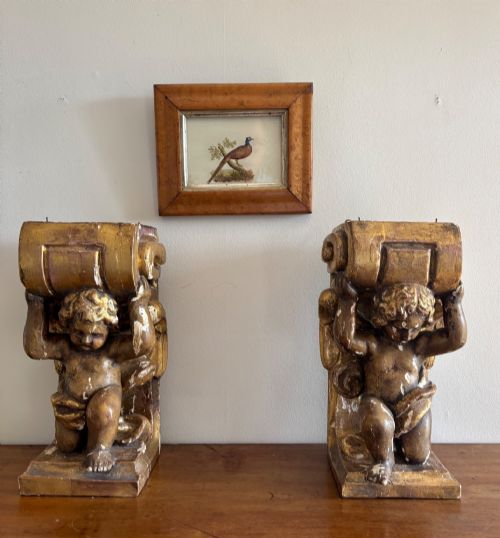
Gold wall corbels encompass carved wooden brackets and architectural shelf supports finished in rich leaf or gilt coatings. These pieces function primarily as decorative architectural salvage, designed to project from a wall and display an object.
The selections span the eighteenth century through to the early twentieth century, showing strong Italian influence alongside Victorian and Napoleon III aesthetics. Buyers frequently encounter carved giltwood pairs from nineteenth-century Italian workshops, alongside singular terracotta or ebonised examples.
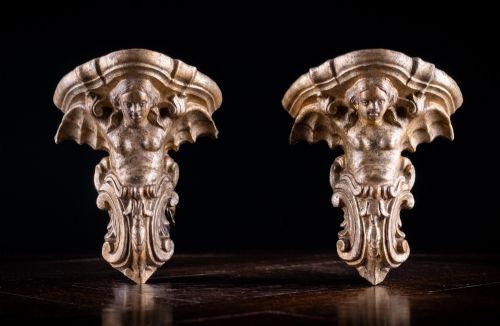
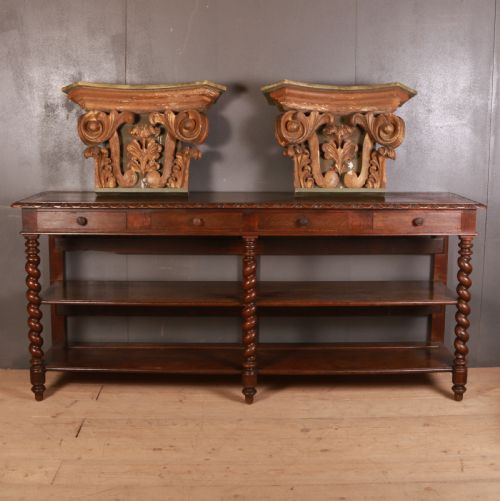
Object forms range from traditional wall brackets to architectural capitals and framed hanging supports. Winged siren motifs and elaborate scrollwork appear frequently among the carved wooden and terracotta iterations.
How they were made
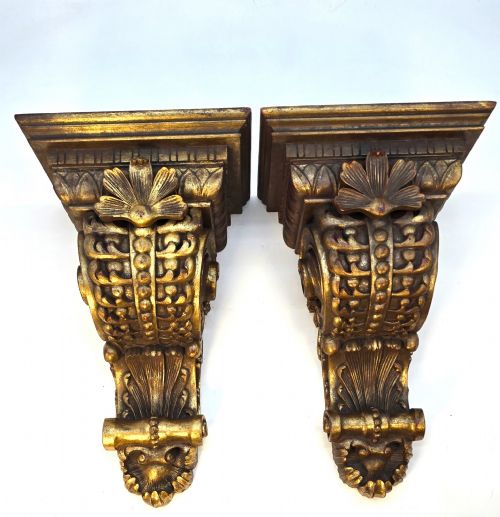
Makers shaped these corbels from carved wood, terracotta, and ebonised wood, applying delicate layers of gesso to prepare complex scrollwork and figurative details for gilding. Artisans then laid gold leaf over the prepared surfaces to achieve a luminous, reflective finish that catches candlelight or natural illumination.
Advanced ateliers employed ormolu mounts alongside ebonised wood to create striking textural contrast in high-status brackets. Traditional carving techniques allowed craftsmen to render intricate winged sirens, classical capitals, and deep acanthus reliefs with sharp physical definition.
Gold Wall Corbels Retail Price Guide 2026
Typical asking prices for gold wall corbels among the pieces listed under this phrase on Sellingantiques today, from the lower quarter to the upper quarter. They describe what is for sale here now, not the wider market.
Winged sirens occasionally peer from the shadows of nineteenth-century brackets, keeping a watchful, gilded eye on the room.
What varies in quality
The distinction between ordinary and exceptional gold wall corbels lies in the depth and precision of the original hand carving. Crisp undercut foliage and sharply articulated figurative elements indicate a master carver rather than a hurried workshop production.
The application and integrity of the gold leaf or gesso foundation dictate visual richness over time. Finer pieces retain complex burnished highlights and harmonious patination across the gilt surfaces, whereas lesser examples show flat, uniform gilding that obscures the carved contours beneath.
Henri Dasson
The Gold Wall Corbels Glossary
- Giltwood
- Wood that has been treated with gesso and covered with thin gold leaf. This finish protects the timber while providing a brilliant metallic lustre.
- Gesso
- A plaster mixture applied to wood surfaces as a smooth base for gilding. It allows carvers to refine fine details before the gold leaf is laid.
- Ormolu
- Finely chased and gilt bronze applied to furniture or architectural fittings. It brings a bright metallic contrast against dark woods like ebonised timber.
- Capital
- The uppermost member of a column or pilaster providing structural support. In architectural salvage, these elements are often adapted into decorative wall brackets.
- Terracotta
- Fired clay used to model sculptural brackets and architectural ornaments. It offers a robust medium for complex moulded or modelled forms before gilding.
Gold Wall Corbels: Frequently Asked Questions
What were gold wall corbels used for?
These pieces functioned as structural or decorative wall supports designed to hold busts, clocks, or porcelain urns. In period interiors, they added architectural gravity and visual interest to plain plaster walls.
Today, they serve a similar display purpose while functioning as independent sculptural wall art. Collectors often mount them in pairs to frame doorways, fireplaces, or important paintings.
How do I mount a heavy wall bracket safely?
Due to the dense carved timber, gesso, and terracotta materials, these brackets require secure fixing directly into wall studs or solid masonry. Professional bracket installation using appropriate heavy-duty wall anchors ensures the weight of the piece and any displayed object is safely supported.
It is advisable to check the load-bearing capacity of the wall before hanging large eighteenth or nineteenth-century examples. Balanced placement prevents strain on the original historic joints.
How do I distinguish eighteenth-century pieces from later revivals?
Eighteenth-century Italian and European corbels typically display hand-carving with deeper tool marks and older, denser timber beneath the gesso layers. The preparation layers and wear patterns on the gold leaf develop a distinct organic crackle over centuries.
Later nineteenth-century revival pieces often utilise machine-sawn backing boards or standardised casting methods for terracotta elements. Examining the rear construction and the composition of the gesso provides clear clues to the exact period of manufacture.