




Gold Venetian Mirror
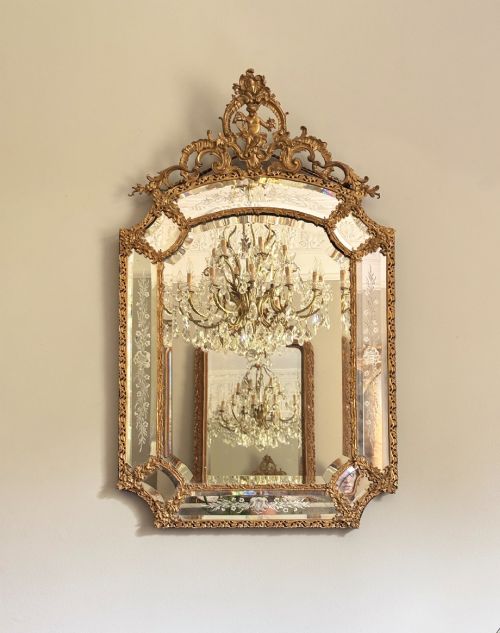
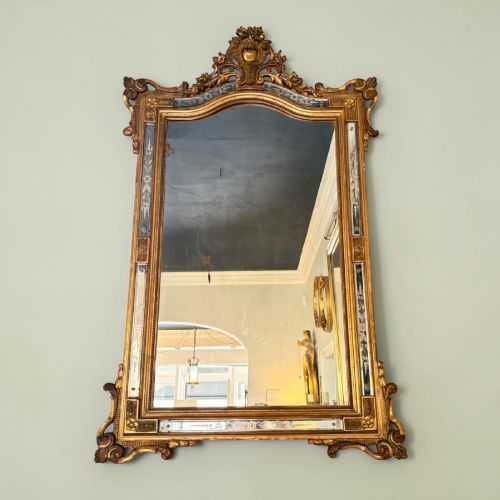
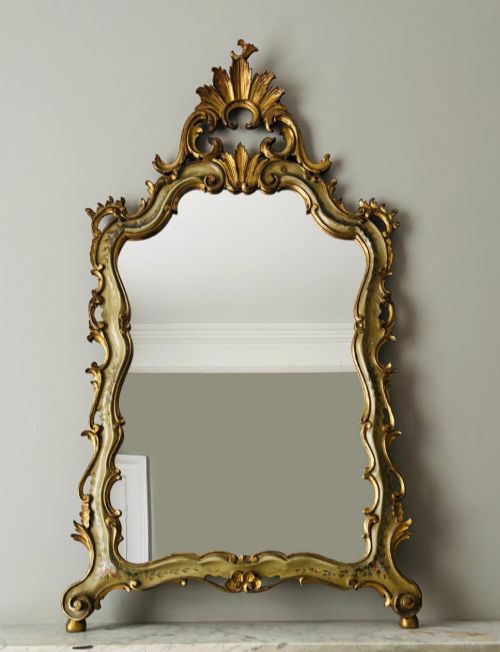
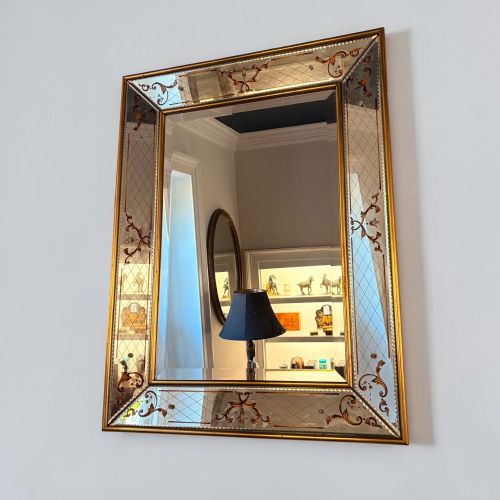
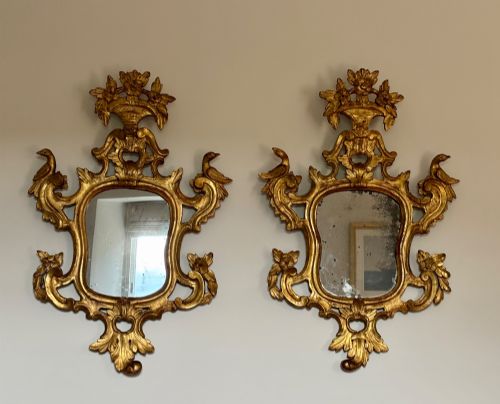
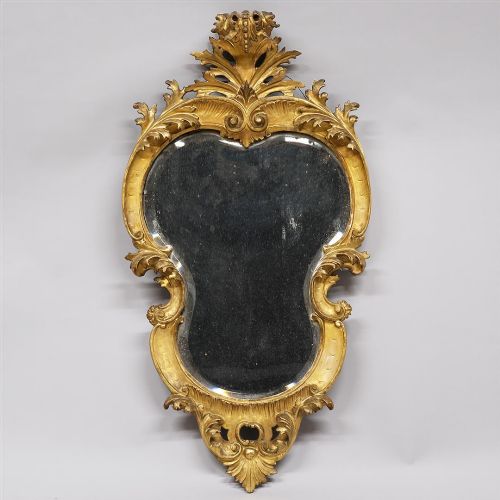
A gold venetian mirror brings dramatic Italian craftsmanship into a room, reflecting light through intricately carved frames and antique glass plates.
Gold Venetian Mirror
A gold venetian mirror represents a distinct tradition of decorative Italian looking glasses, often found in wall-hung formats such as pier mirrors and girandoles. These pieces emerge across periods from the eighteenth century to the mid-twentieth century, capturing enduring regional styles.
The versions most commonly met on this page span the nineteenth and early twentieth centuries, alongside select eighteenth-century examples and later interpretations. They frequently adopt Rococo forms, featuring ornate scrolling and hand-painted polychrome details.
Makers and artisans from Italy and France shaped these wall mirrors using traditional techniques, resulting in varied formats that include engraved plates and margin-edged cobalt blue glass. Each object carries the distinct aesthetic of its original period, whether Victorian revival or earlier Venetian design.
How they were made
The construction of a gold venetian mirror relies heavily on carved timber substrates built up with layers of gesso before the application of gold leaf or paint. Artisans shaped these frames into elaborate Rococo profiles, integrating wooden elements with mirrored glass panels.
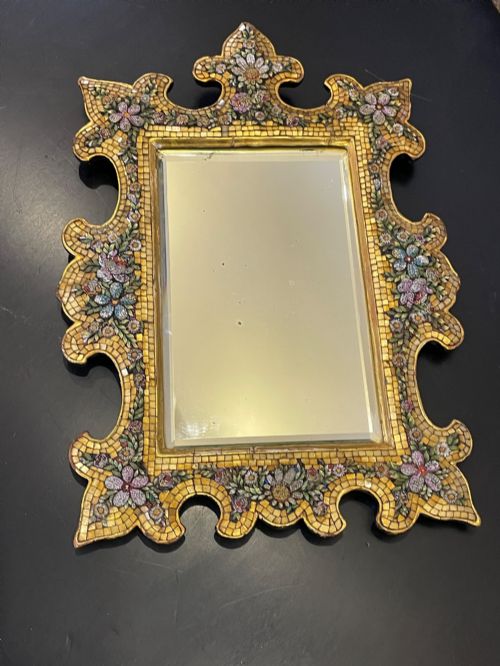
Surface decoration frequently combines gilding with hand-painted polychrome pigments, eglomise techniques, and etched or engraved glass plates. Frames often incorporate gilt bronze mounts or structural wood supports to secure the heavy mirrored components.
Gold Venetian Mirror Retail Price Guide 2026
Typical asking prices for gold venetian mirror among the pieces listed under this phrase on Sellingantiques today, from the lower quarter to the upper quarter. They describe what is for sale here now, not the wider market.
Listings for this phrase include examples spanning the eighteenth century through to the 1960s, utilising materials such as gesso, giltwood, and painted glass.
What varies in quality
The depth and crispness of the wood carving distinguish finer examples, where artisans spent considerable time undercutting scrolls and floral motifs. Softer definition in gesso and casting indicates a more hurried production.
The integrity of the reflective surface matters greatly, with hand-engraved plates and specialised margin-edged glass representing higher degrees of specialised craftsmanship. Original gilding and untouched polychrome paint retain more visual character than later refurbishment.
The Gold Venetian Mirror Glossary
- Giltwood
- Wood that has been coated with gold leaf or gold powder over a prepared gesso base. This finish provides the bright reflective surface typical of these frames.
- Gesso
- A plaster-like mixture applied to wooden frames to create a smooth surface for carving and gilding. It allows for fine decorative relief work.
- Eglomise
- A technique where cold painting and gilding are applied to the rear face of glass. This creates a mirrored panel with rich decorative borders.
- Girandole
- A branched wall mirror or sconce designed to hold candles. The reflective glass multiplies the candlelight within the room.
- Pier Glass
- A tall mirror designed specifically to hang on the wall space between windows. These pieces often feature hand-painted details or matching console tables.
Gold Venetian Mirror: Frequently Asked Questions
How do I hang a heavy antique wall mirror safely?
These heavy frames require professional wall anchors suited to your specific wall construction, such as brick or lath and plaster. Weight should be distributed evenly across substantial fixing points rather than relying on a single picture wire.
Consult a specialist art handler if the frame lacks original hanging loops or structural bracing. Securing the base with discreet mirror brackets prevents the piece from tilting forward.
What is the difference between Venetian and Rococo styles?
Venetian mirrors often incorporate delicate etched glass plates, hand-painted polychrome decoration, and elaborate crested frames made of shaped glass and giltwood. They emphasise lightness, asymmetry, and luminous glass borders.
Rococo is a broader European design style characterised by C-scrolls, shell motifs, and naturalistic asymmetry. When applied to Italian mirrors, it merges with local craftsmanship to produce highly ornate gilded wooden frames.
How should I clean antique mirrored glass?
Use a soft, dry microfibre cloth to gently remove dust from the glass surface and the carved giltwood frame. Avoid spraying liquids directly onto the mirror, as moisture can seep behind the silvering and cause dark oxidation spots.
If cleaning is essential, apply a small amount of distilled water to the cloth rather than chemical glass cleaners. Keep moisture entirely away from painted or gilded wooden surfaces.
How do I date an antique Venetian mirror?
Examine the construction of the wooden backing, the composition of the gesso, and the manufacturing characteristics of the glass plate. Eighteenth-century examples often display hand-beveled glass with slight imperfections and deep, hand-carved wooden frames.
Nineteenth- and twentieth-century pieces may show machine-drawn glass characteristics, standardised casting, or later backing boards. Comparing stylistic details like Rococo scrollwork helps place the object within its specific period.