


Gold Twist Ring
When you search for a gold twist ring, you are looking at curving bands that cross or entwine stones on the finger.
Gold Twist Ring
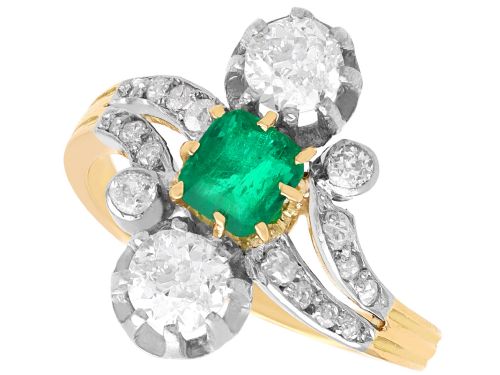
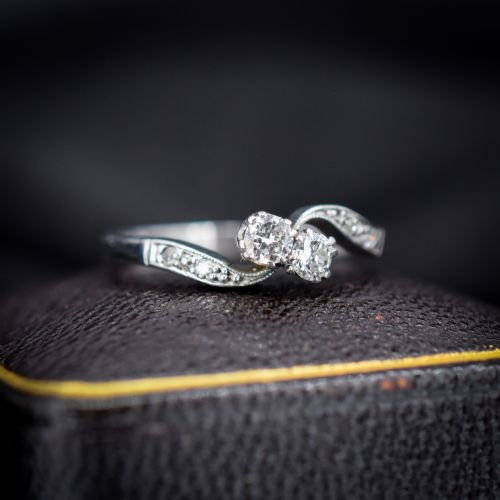
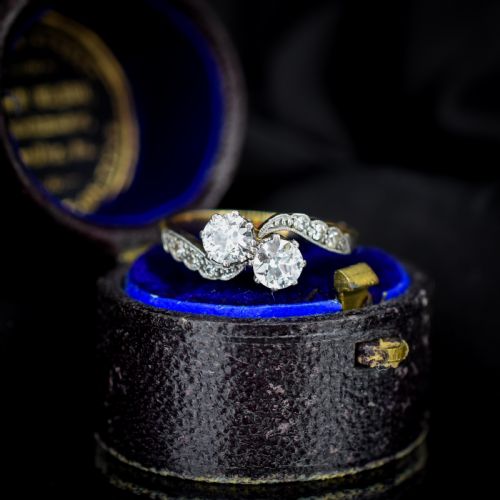
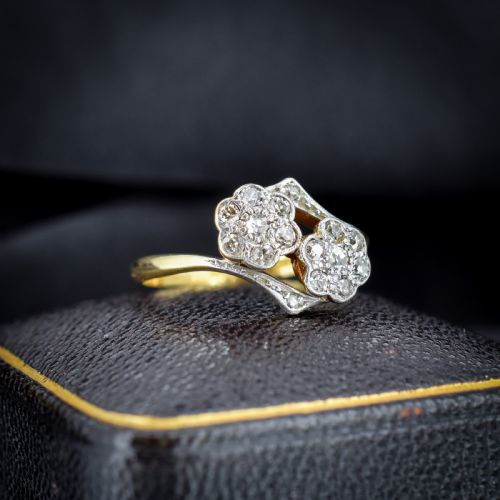
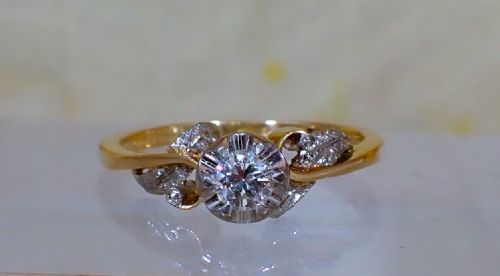
A gold twist ring places the band into a sweeping, crossover curve that follows the contour of the finger. These pieces often feature two or three stones set closely together, such as diamonds, sapphires, rubies, or emeralds.
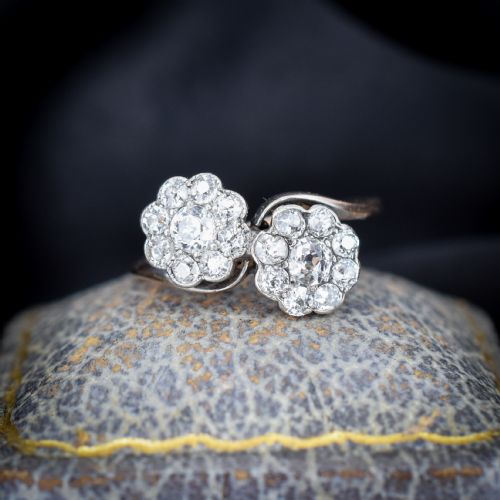
You will most commonly meet Edwardian and Art Deco examples on this page, alongside vintage pieces from the mid-century decades. The designs range from delicate toi et moi configurations to robust multi-stone crossover bands.
Materials and construction
Goldsmiths utilised 18ct yellow and white gold, frequently pairing the gold body with platinum settings to secure the stones safely. The bands themselves were forged or cast into spirals, ropes, and bypass shapes.
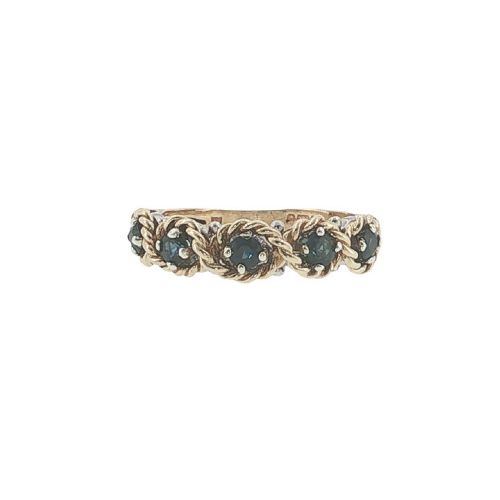
Stones such as old-cut diamonds and basaltic sapphires were held in claw or flush mounts designed to emphasise the curving movement of the shank.
Listings span from the late Victorian era through the Edwardian, Art Deco, and mid-century periods, utilising 9ct, 14ct, and 18ct gold alongside platinum.
Judging the range
The distinction between tiers rests upon the precision of the metalwork where the bands overlap and the symmetry of the stone arrangement. Finer examples maintain crisp lines in their twists and securely balance the weight of the gems without distortion to the hoop.
The choice of stones also dictates the grade, with matched coloured gems and clean old-cut diamonds elevating the piece well above standard commercial work.
The Gold Twist Ring Glossary
- Toi et Moi
- A ring style featuring two main stones positioned side by side in a curving embrace. The phrase translates from French as you and me.
- Crossover
- A band design where the shoulders sweep past one another over the top of the finger. This layout creates the characteristic twist shape.
- Trilogy
- A setting comprising three stones arranged in a row across the hand. In these listings, they often incorporate the twisting shank.
- Old Cut
- A diamond faceting style prevalent in the Georgian, Victorian, and Edwardian eras. These stones feature smaller tables and larger culets than modern brilliant cuts.
Gold Twist Ring: Frequently Asked Questions
What is a twist ring?
A twist ring is a band shaped with a crossover or spiral design that wraps across the finger. They frequently showcase diamonds or coloured gemstones in pairs or trios.
These pieces gained popularity across the Edwardian and Art Deco periods for their fluid, organic silhouettes.
How do I date my ring?
Dating relies on hallmarks, stone cuts, and stylistic clues like platinum detailing on yellow gold. Edwardian pieces often display delicate millegrain work, while Art Deco items favour geometric symmetry.
Consulting assay office marks and registered hallmarks provides the most reliable verification of the year of manufacture.
Can these rings be resized?
Most gold twist rings can be adjusted by a skilled jeweller, though the spiral shank requires careful handling. Altering the size must be done without disrupting the symmetry of the crossover design.
Stones set near the shoulders may need tightening after the metalwork is heated and shaped.
What stones are used?
Diamonds are the most frequent choice, often accompanied by sapphires, rubies, emeralds, opals, and pearls. These gems are secured in platinum or gold settings atop the swirling band.
Earlier pieces typically feature old-cut diamonds and natural sapphires, while mid-century examples introduce varied cuts and enamelling.