

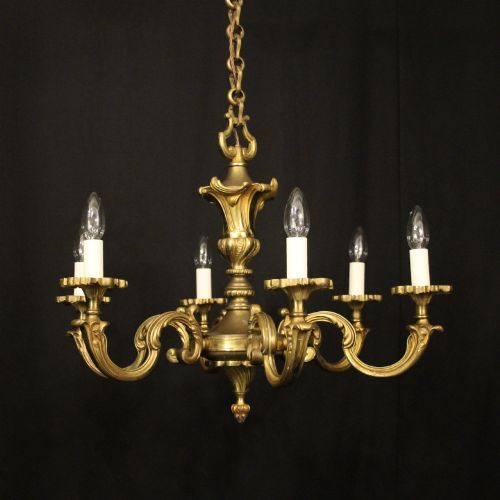
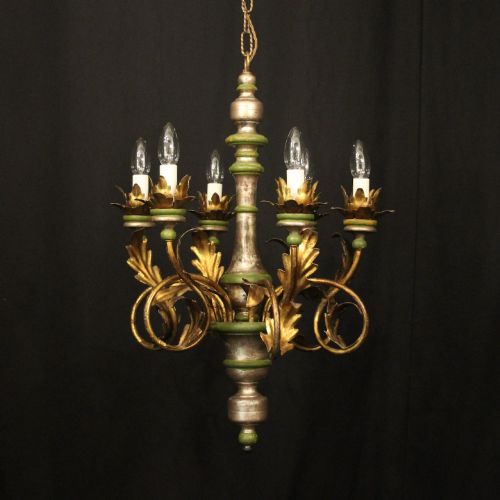
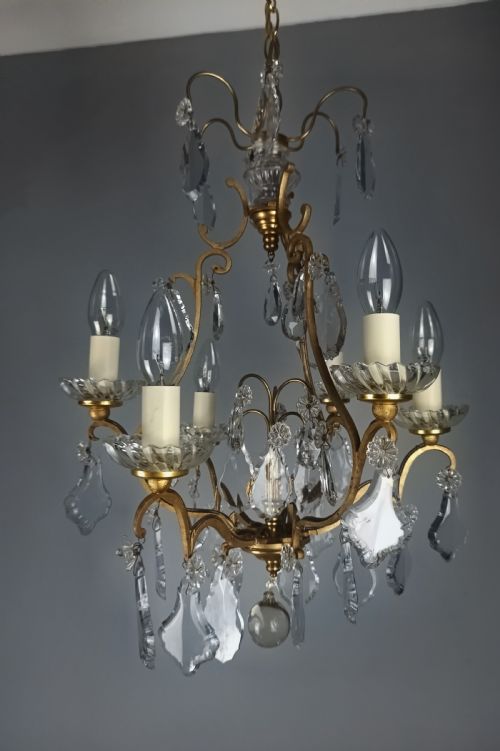
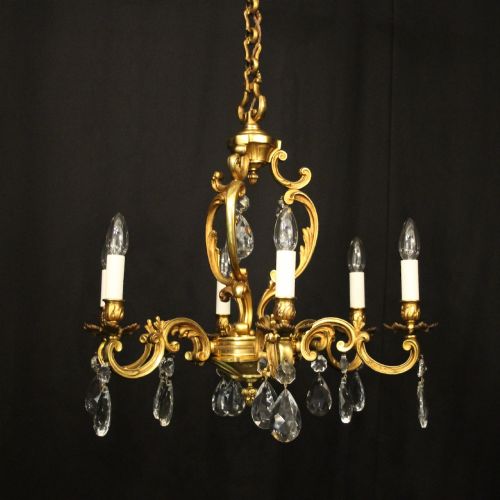




Gold Six Arm Chandelier
A gold six arm chandelier brings warmth and grandeur to a room, casting a layered glow from six distinct branches.
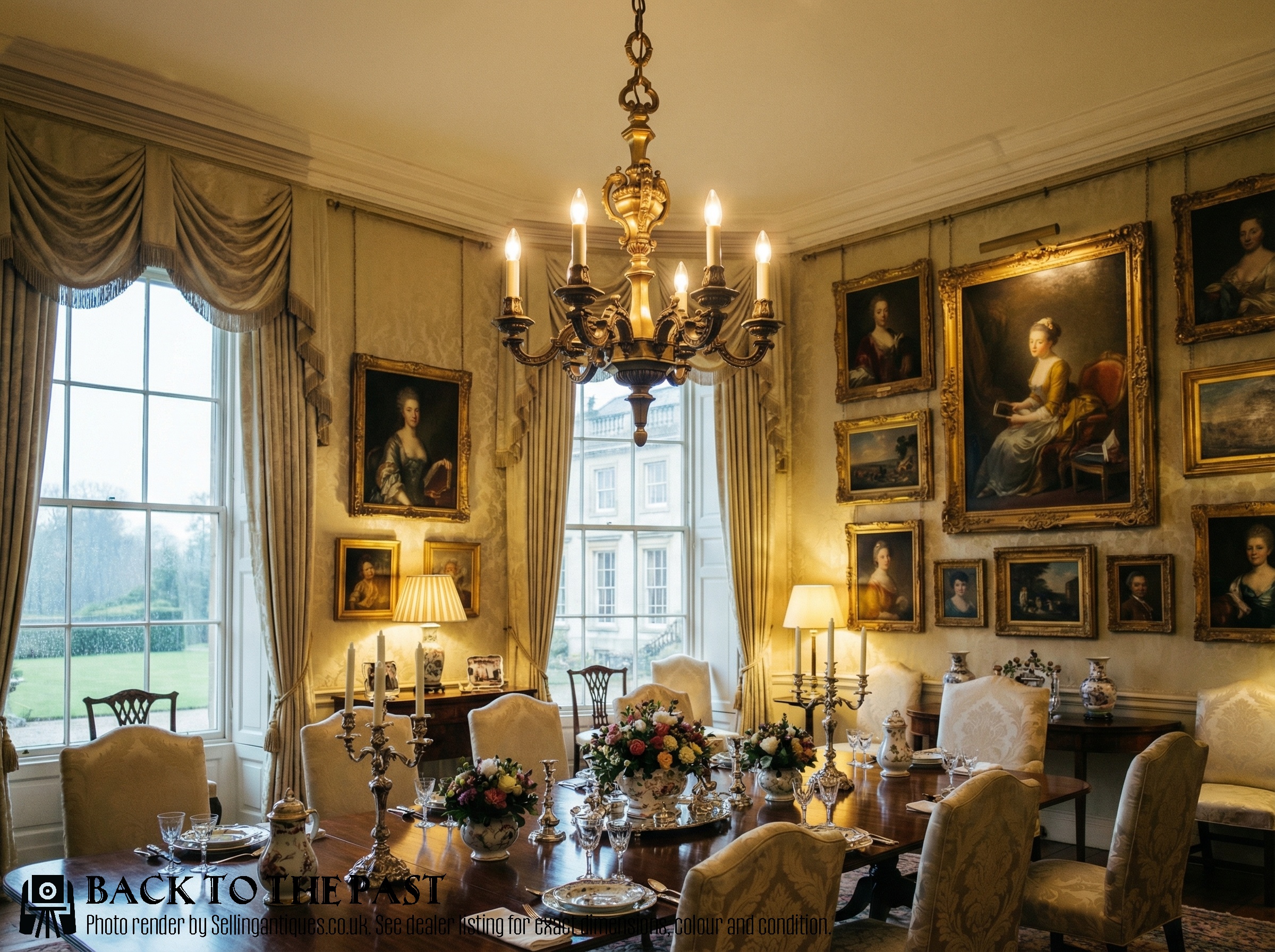
Gold Six Arm Chandelier
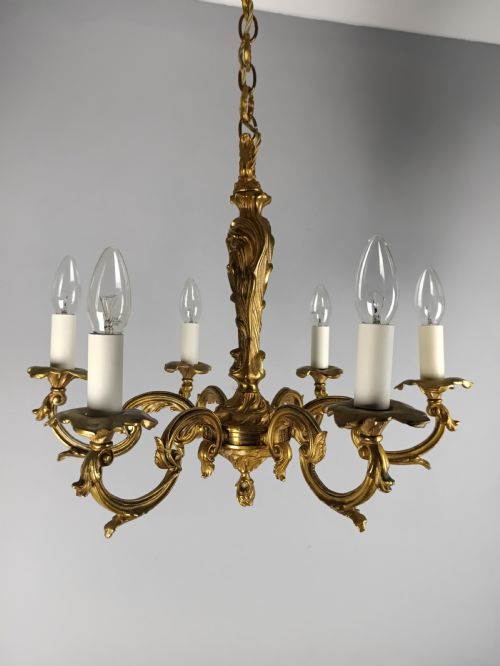
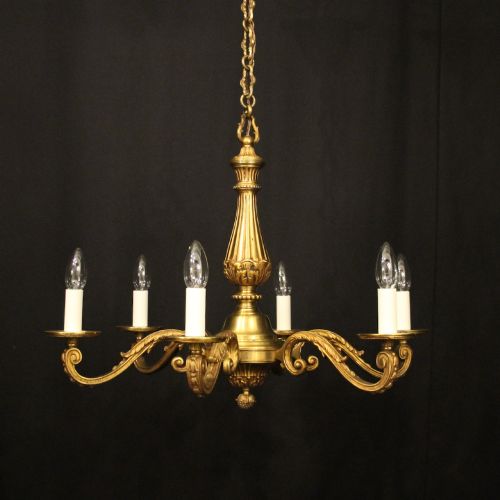
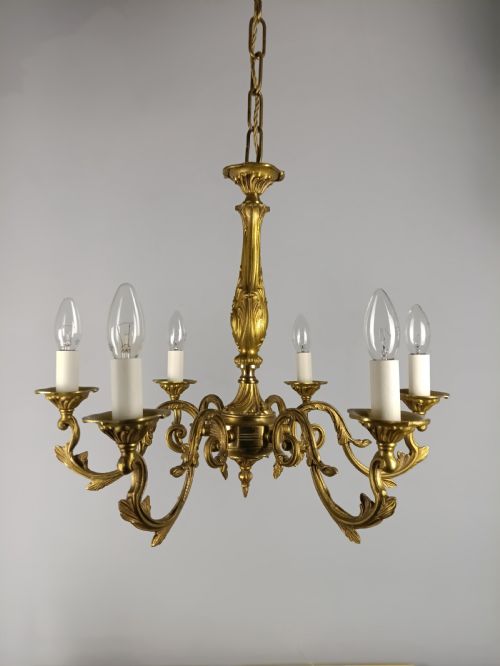
A gold six arm chandelier is a multi-branched lighting fixture designed to suspend from the ceiling, carrying six individual light sources across its spread. When buyers search for a gold six arm chandelier, they encounter pieces originating largely from the nineteenth and early twentieth centuries, spanning periods from the Victorian era through the Edwardian years and the 1920s and 1930s.
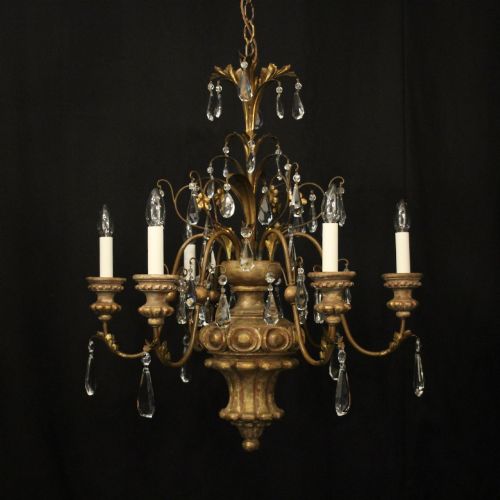
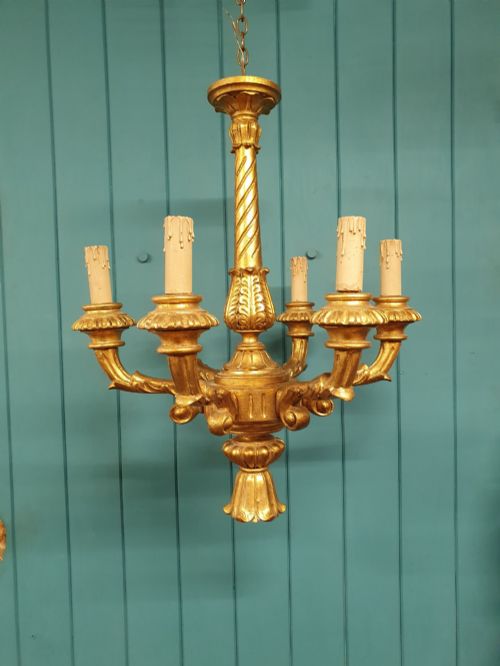
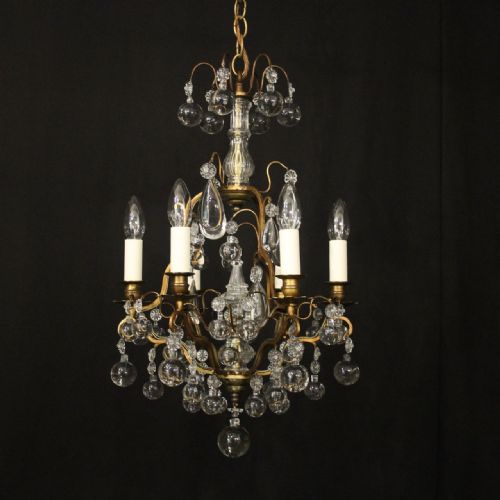
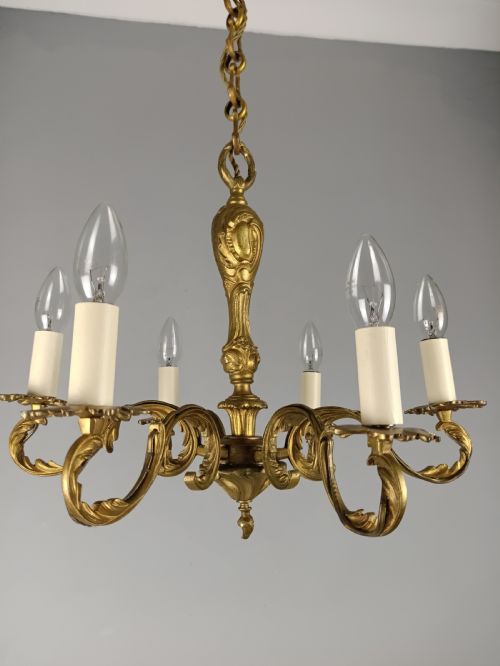
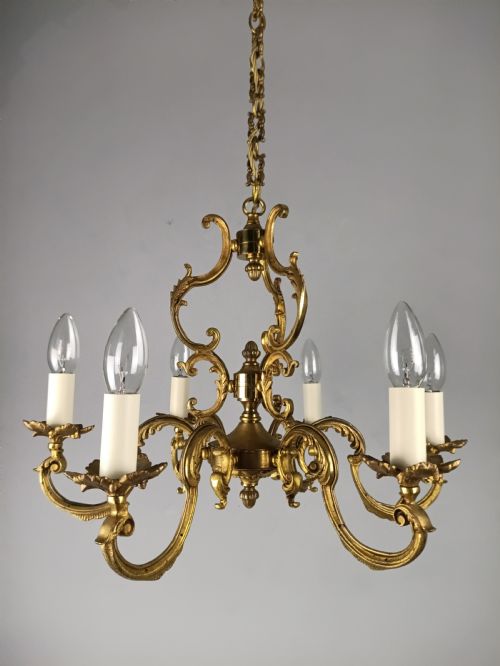
The selections on this page showcase distinct regional characters, ranging from Florentine giltwood creations and Italian birdcage crystal designs to French gilt bronze fixtures and Dutch pendant forms. Common styles represented include French Rococo, Florentine Baroque, and Italian Classical, reflecting elaborate decorative traditions.
These fixtures utilise a consistent arm count while varying considerably in physical scale and ornamentation, accommodating diverse interior spaces from compact rooms to large halls.
How They Were Made
Construction relies upon metals such as brass, gilt metal, gilt bronze, and wrought iron, alongside carved timbers like giltwood and gesso. Metal components are cast, forged, or shaped to form the structural frame and the six projecting arms.
Surface finish is achieved through gilding, painting, or ebonising, lending a golden or contrasting tone to the underlying substrate. Crystal elements, glass droplets, and coloured fruits are frequently wired or pinned to the frame to refract the light.
Gold Six Arm Chandelier Retail Price Guide 2026
Typical asking prices for gold six arm chandelier among the pieces listed under this phrase on Sellingantiques today, from the lower quarter to the upper quarter. They describe what is for sale here now, not the wider market.
Listings feature pieces from the 19th Century, 1900, 1910, 1920, and 1930.
What Varies in Quality
Quality reveals itself in the crispness of the casting and the depth of the hand-carved detail on giltwood or bronze elements. Finer examples display meticulous attention to surface enrichment, where gilding holds a rich patina and structural joins remain seamless.
The integration of secondary materials, such as cut crystal drops and hand-formed glass, dictates the overall visual refinement. Pieces exhibiting harmonious proportions between the central stem, the six arms, and the decorative hangings represent the upper tier of execution.
The Gold Six Arm Chandelier Glossary
- Gilt bronze
- Metal cast with detailed ornamentation and coated in a layer of gold. It provides a durable and sharp surface for decorative forms.
- Giltwood
- Timber carved and surfaced with thin gold leaf. This material appears frequently in Italian Florentine designs.
- Birdcage chandelier
- A form structured around an open metal cage framework wrapped in crystal strands. It creates a volumetric silhouette.
- Gesso
- A plaster-like mixture applied to wood surfaces as a base for gilding. It allows for smooth or relief-moulded ornamentation.
Gold Six Arm Chandelier: Frequently Asked Questions
How do I clean a crystal chandelier?
Dust the fixture regularly with a soft feather duster to prevent grime accumulation. For deeper cleaning, wipe components gently with a cloth dampened in a mild soapy solution.
Ensure the power is disconnected before undertaking any cleaning. Dry all metal and crystal surfaces thoroughly immediately afterwards to prevent tarnishing or spotting.
Can these chandeliers be wired for modern power?
Most antique fixtures are adapted for contemporary electrical standards by professional restorers. Rewiring ensures the internal components meet current safety requirements while preserving the exterior appearance.
Consult a qualified electrician to install appropriate lamp holders and check the load capacity of the ceiling fixture.
What ceiling height do I need?
Consider the physical drop of the fixture relative to the room dimensions and foot traffic paths below. Smaller variants measure fifteen inches, while others extend further downward.
Allow adequate clearance beneath the lowest point of the chandelier for people to walk comfortably, especially in central living spaces.
How do I identify a Florentine piece?
Florentine chandeliers typically utilise carved giltwood construction and elaborate scrolls characteristic of regional Italian workshops. These pieces often incorporate openwork frames and rich surface textures.
Compare the decorative motifs against known Italian Classical and Baroque design vocabularies to confirm the stylistic origin.