




Gold Shell Brooch
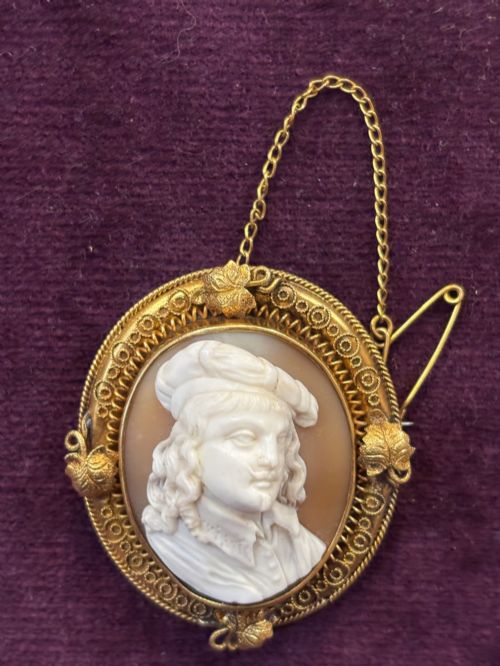
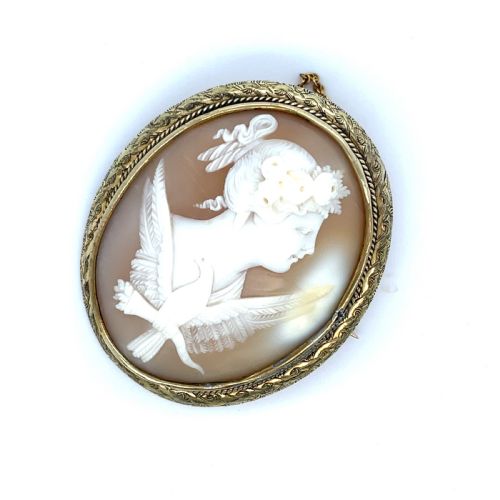
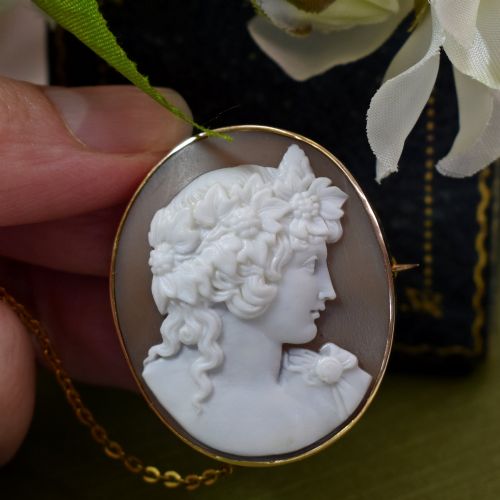
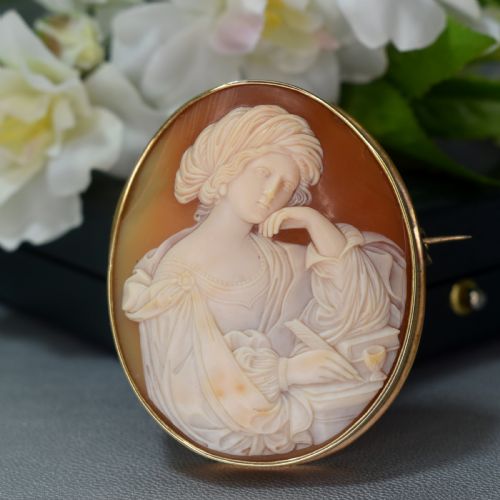
A gold shell brooch carries hand-carved classical scenes in miniature, framed in yellow, 9ct, 12ct, 14ct, 15ct, 18ct, or 20ct gold.
Gold Shell Brooch
A gold shell brooch presents carved relief imagery mounted in precious metal, spanning Georgian, Victorian, Edwardian, and mid-20th-century periods. These pieces often depict mythological figures, goddesses, and classical portraits including Aphrodite, Flora, Aurora, Antinous Vertumnus, and the Persian Sibyl.
The most common pieces on this page are Victorian brooches featuring shell carvings set within yellow gold frames. Alongside standard brooches, the selection includes cameo pendant necklaces, stick pins, filigree mounts, pinchbeck settings, and large tabletop ornaments.
Italian provenance appears frequently, linking to the Grand Tour tradition where travellers acquired carved shell jewellery in Rome and Naples. These items combine the natural layers of marine shells with disciplined metalwork mounts in various gold purities.
Factors influencing quality
The weight and metal purity of the gold frame, alongside the complexity of decorative mounts like filigree or integrated pearl accents, distinguish standard production pieces from elaborate high-status items.
Gold Shell Brooch Retail Price Guide 2026
Typical asking prices for gold shell brooch among the pieces listed under this phrase on Sellingantiques today, from the lower quarter to the upper quarter. They describe what is for sale here now, not the wider market.
Listings include items from Victorian, Georgian, Edwardian, 1850, 1860, 1900, 1910, and 1950 periods.
R. Pernice
The Gold Shell Brooch Glossary
- Cameo
- A method of carving an object such as a gemstone or shell where a relief image stands out from a background of a different colour.
- Pinchbeck
- An alloy of copper and zinc invented in the eighteenth century to imitate gold, used frequently for costume and antique jewellery frames.
- Grand Tour
- A cultural journey of Europe undertaken by wealthy young men in the eighteenth and nineteenth centuries, resulting in the acquisition of Italian carved shells and antiquities.
- Filigree
- Delicate ornamental work of fine gold wire formed into open patterns, seen on Victorian and Georgian frames.
- Stick Pin
- A long pin with an ornamental head, such as a carved shell and baroque pearl, worn in cravats and lapels during the Edwardian era.
Gold Shell Brooch: Frequently Asked Questions
How do I date a gold shell brooch?
Dating relies on the style of the gold mount, the depth of the carving, and the specific subject matter. Georgian pieces often display distinct neoclassical motifs, while Victorian examples span various frame purities and ornate wirework.
Changes in pin fixings and hinge construction also help establish whether a brooch originates from the nineteenth century or later periods like Edwardian or mid-century.
Were these brooches made in Italy?
Many carved shell pieces originated in Italy, particularly in Rome and Naples, where local artisans catered to foreign travellers on the Grand Tour.
These Italian works were then exported or brought back home, where local British jewellers mounted them in yellow gold frames of varying carats.
What subjects appear on these carvings?
Carvings commonly portray figures from classical mythology and ancient history. Subjects include goddesses such as Flora and Aurora in her chariot, alongside literary and historical figures like Antinous Vertumnus and the Persian Sibyl.
Portrait profiles of classical deities and cherubs also feature prominently across Victorian and Georgian items.
Can a brooch also be worn as a pendant?
Certain pieces are constructed as convertible items, featuring integrated loops or bails behind the frame. This allows the mount to function both as a chest brooch and as a pendant suspended from a necklace.
Checking the reverse of the mount reveals whether a hinged pin is accompanied by a loop for chain suspension.