

Gold Seed Pearl Drops
Gold seed pearl drops combine tiny, lustrous pearls with rich gold settings to create delicate, dangling jewellery from the Victorian and Edwardian eras.
Gold Seed Pearl Drops
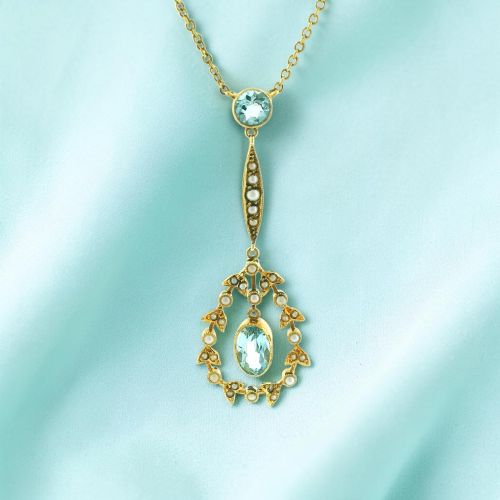
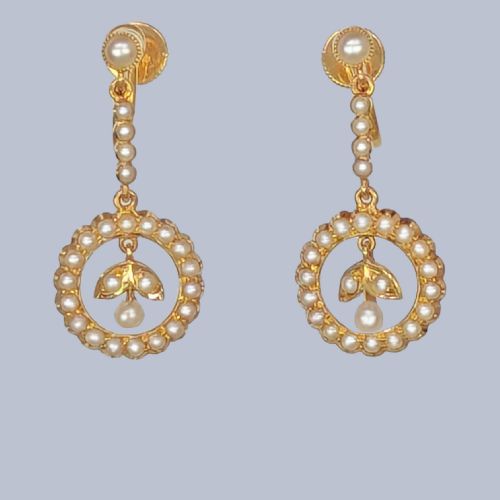
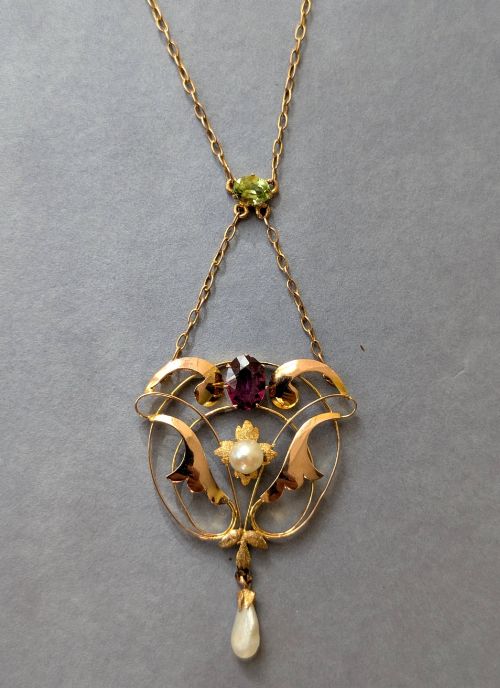
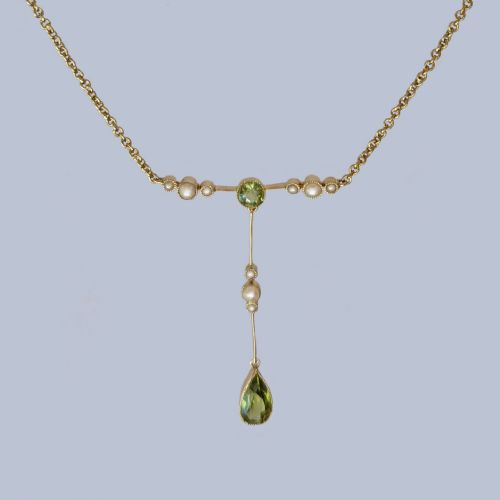
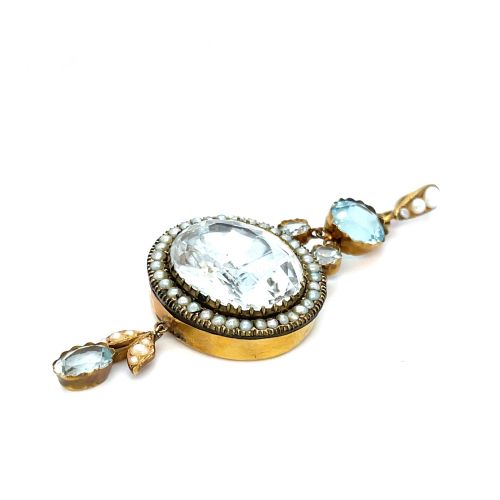
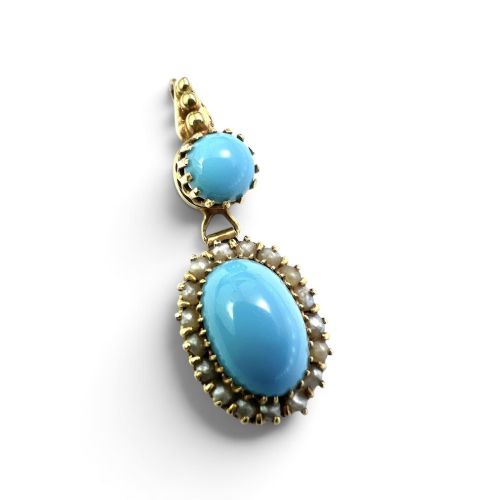
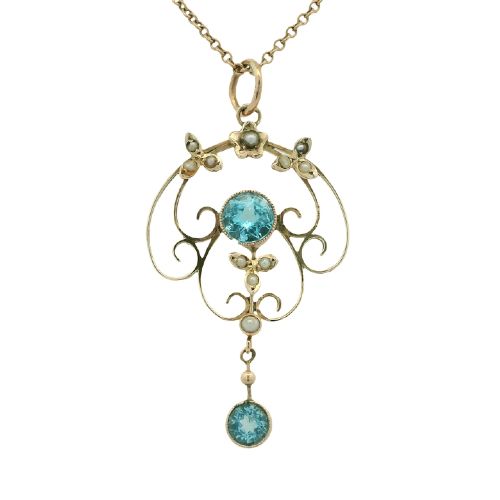
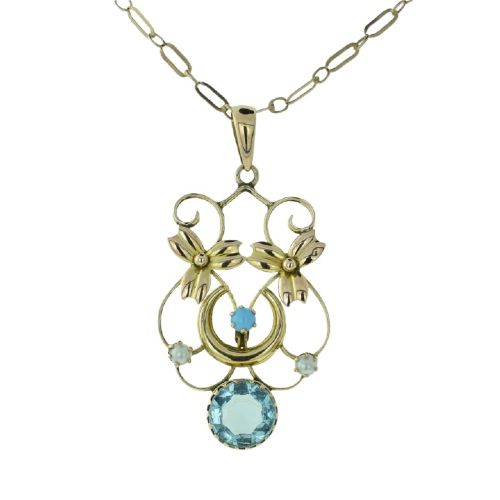
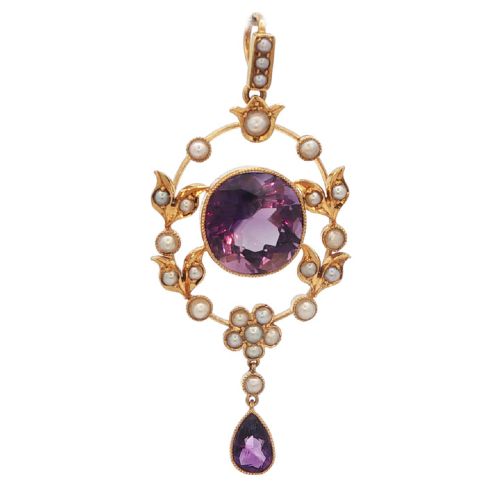
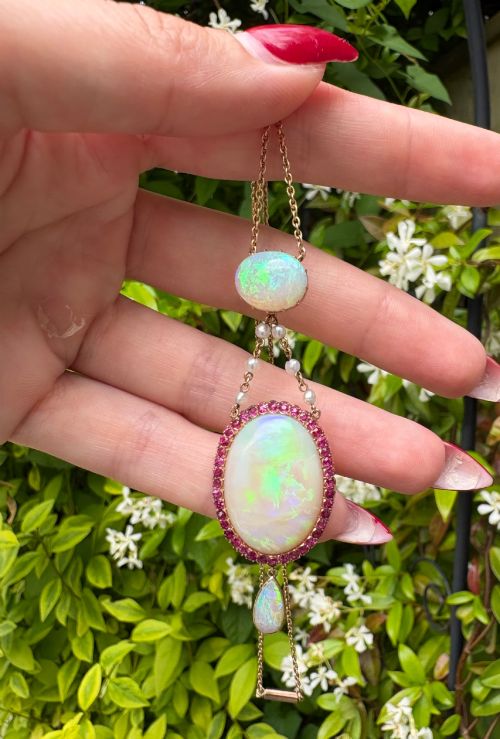
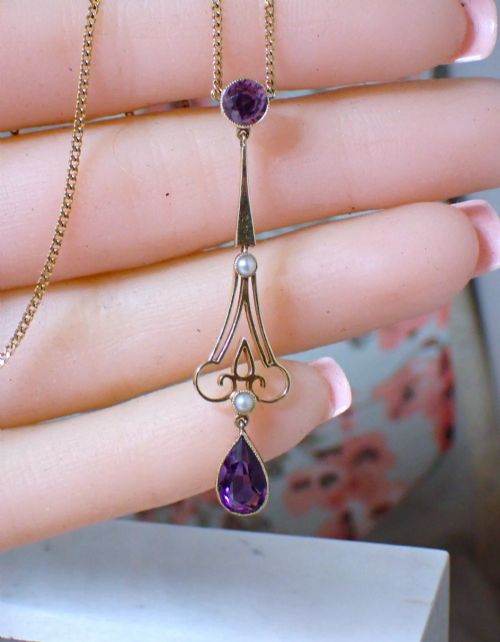
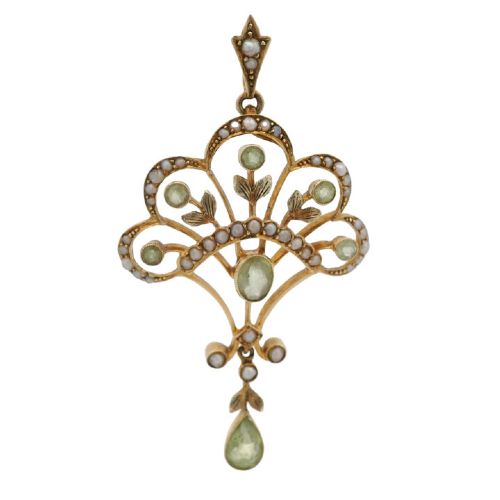
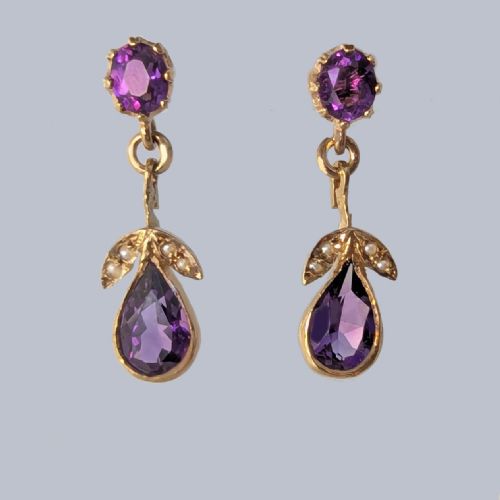
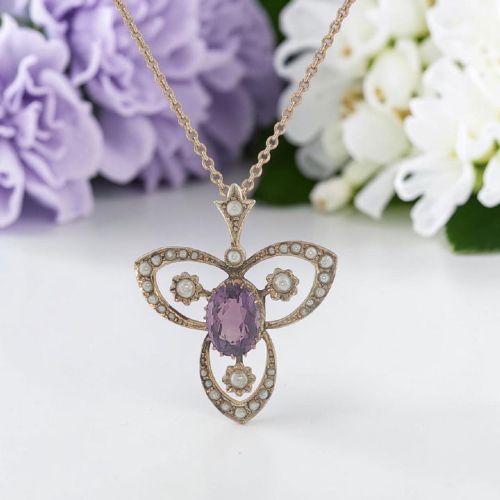
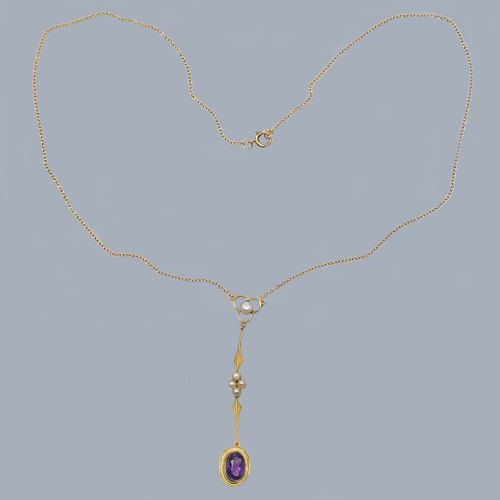
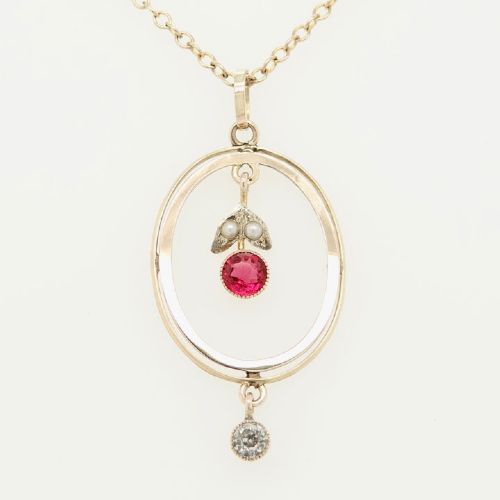
When you search for gold seed pearl drops, you encounter delicate pendants, lavalier necklaces, and drop earrings defined by tiny, uniform pearls. These pieces frequently pair seed pearls with central coloured gemstones such as peridot, amethyst, and turquoise.
The items on this page span the Victorian and Edwardian periods, stretching from the late nineteenth century into the early twentieth century. Art Nouveau designs appear often, featuring flowing organic lines alongside floral or foliate motifs.
Pendants and necklaces dominate the selection, often incorporating articulated drops that swing gently with movement. Screw-back and hinged drop earrings also feature, representing the predominant drop configurations of their respective eras.
Materials and Construction
Goldsmiths of the Victorian and Edwardian periods utilised nine-carat and fifteen-carat gold extensively, frequently setting stones in higher purity gold or platinum highlights. These metals provide the durable yet malleable framework necessary for securing hundreds of microscopic pearls.
Seed pearls were typically half-drilled and secured onto tiny pins or wired by hand into intricate floral clusters and fringed arrangements. This labour-intensive method allowed artisans to build complex, dimensional drop motifs that dance with light.
Gold Seed Pearl Drops Retail Price Guide 2026
Typical asking prices for gold seed pearl drops among the pieces listed under this phrase on Sellingantiques today, from the lower quarter to the upper quarter. They describe what is for sale here now, not the wider market.
Listings feature items spanning the 19th Century, Victorian, Edwardian, and 1930 periods, incorporating seed pearls, peridots, amethysts, and turquoise.
Quality Variations
The standard of gold seed pearl drops rests heavily on the uniformity and lustre of the tiny pearls. Matching hundreds of pearls for consistent size, creaminess, and orient distinguishes finer examples from work utilising mismatched or dull beads.
Construction intricacy also separates high-end workshop production from standard commercial output. Superior pieces exhibit precise wirework, secure bezel or prong settings for accompanying gemstones, and fully articulated joints that move fluidly without stiffness.
S. Blanckensee & Son·Hamilton & Co
The Gold Seed Pearl Drops Glossary
- Seed pearl
- A very small natural pearl, typically under two grains, often used in large quantities to encrust jewellery or form delicate floral patterns.
- Lavalier
- A pendant necklace featuring a central stone suspended from a chain, frequently terminating in a dangling drop component typical of the Edwardian era.
- Fringe necklace
- A necklace featuring numerous dangling drops suspended at regular intervals along the lower edge of the collar or chain.
- Screw back
- A mechanical earring finding utilising a threaded post and a small nut to secure non-pierced lobes, common in late Victorian and Edwardian drop earrings.
Gold Seed Pearl Drops: Frequently Asked Questions
Are gold seed pearl drops fragile?
Seed pearls are organic gems that require gentle care, avoiding immersion in water, harsh chemicals, or ultrasonic cleaning. Storing them away from harder jewellery prevents abrasion to the delicate nacre.
While the gold settings provide sturdy structure, the tiny pins and wires holding the pearls demand careful handling when wearing or cleaning your pendant or earrings.
How do I date a seed pearl pendant?
Dating relies on stylistic markers, hallmarks, and the combination of gemstones. Edwardian pieces often incorporate peridots or aquamarines in airy platinum and gold Art Nouveau settings.
Victorian examples tend towards heavier gold work, occasionally featuring foil-backed stones or deep amethyst clusters. Hallmarks stamped on the bail or reverse offer definitive manufacturing stamps when present.
Can I wear these drops every day?
Daily wear is possible with mindful precautions, particularly for sturdy pendants and brooches. Earrings and delicate lavaliers experience more movement and friction during routine activities.
Removing your jewellery before sleeping, swimming, or applying cosmetics preserves the natural lustre of the pearls and protects fragile drop hinges from strain.
What is the difference between Victorian and Edwardian styles?
Victorian jewellery generally presents a heavier, more romantic aesthetic, frequently utilising rich fifteen-carat yellow gold, deep amethysts, and intricate closed-back settings. Starburst motifs and locket backs appear often in this period.
Edwardian pieces shift towards lightness and grace, favouring delicate nine-carat gold, platinum accents, and flowing organic Art Nouveau curves. Peridot and pink tourmaline are common companion stones in these refined designs.