

Gold Ruby Cluster
Gold ruby cluster pieces bring together central red corundum and framing stones in settings spanning the Victorian era to the mid-twentieth century.
Gold Ruby Cluster
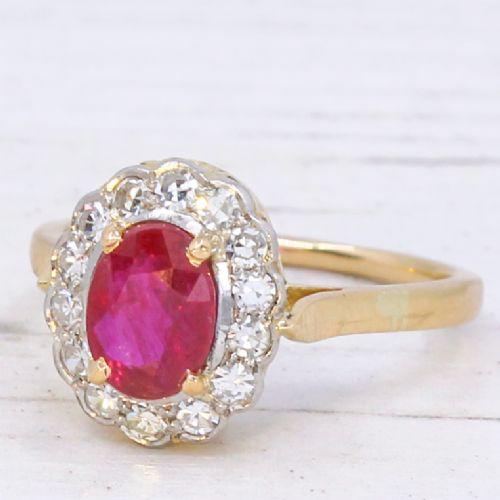
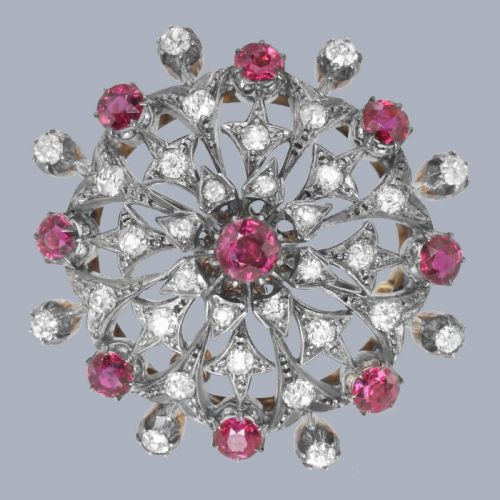
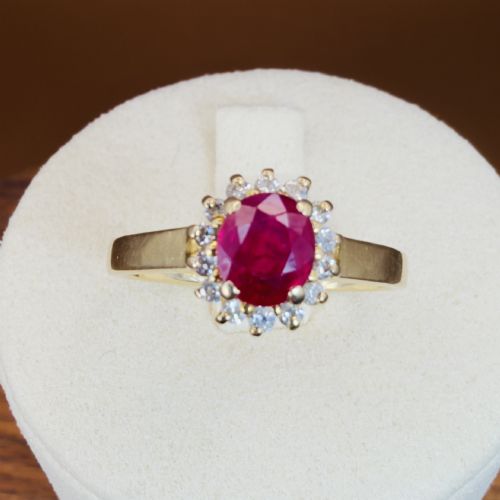
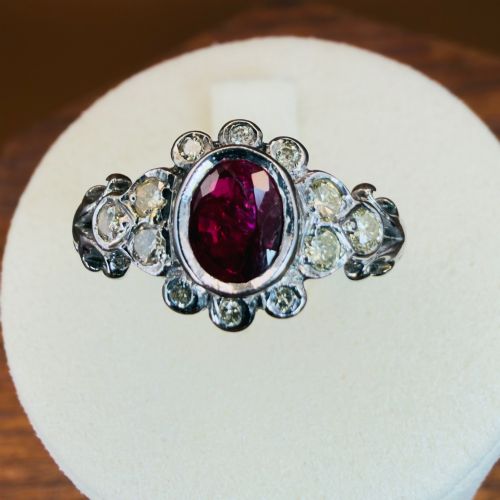
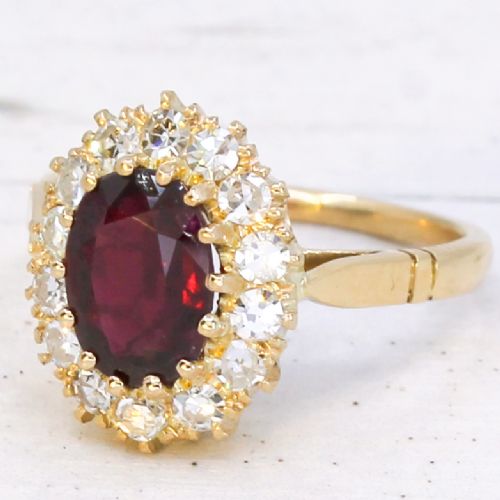
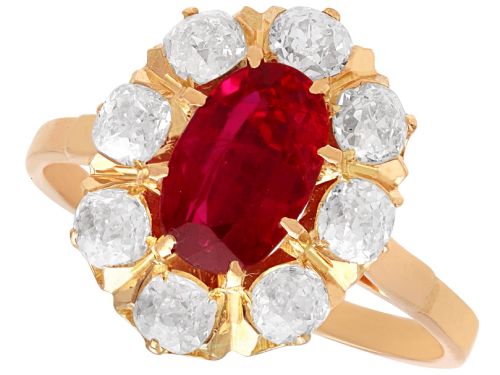
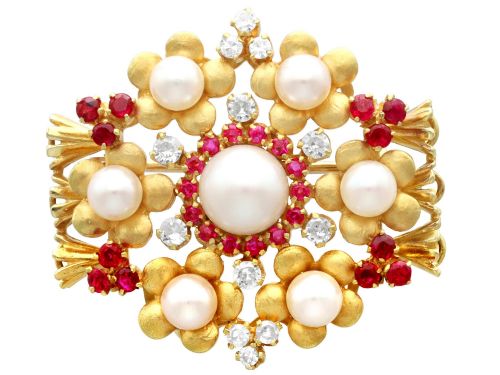
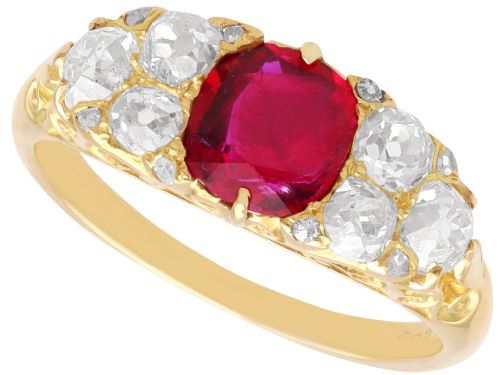
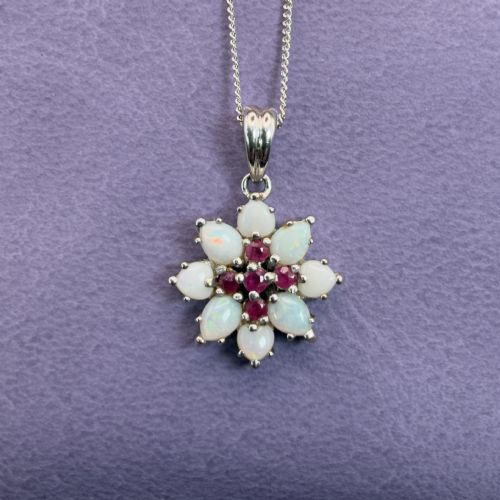
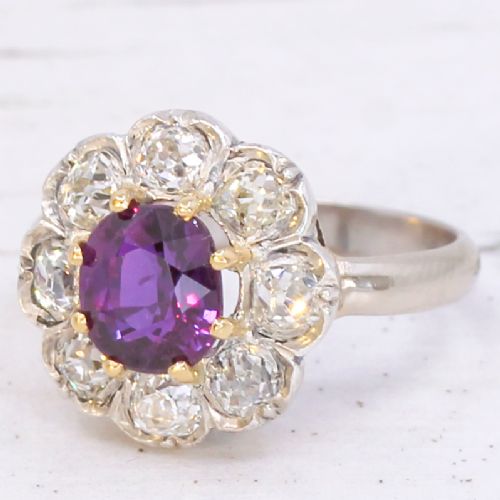
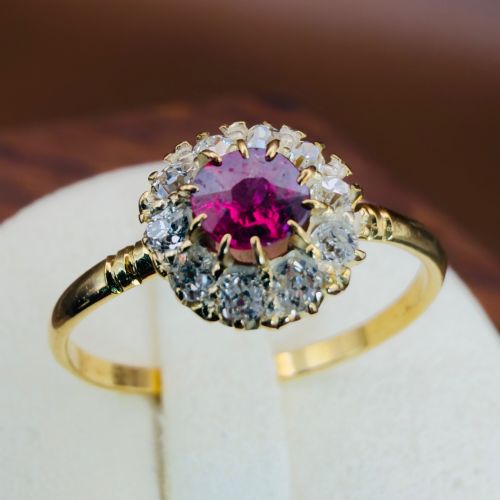
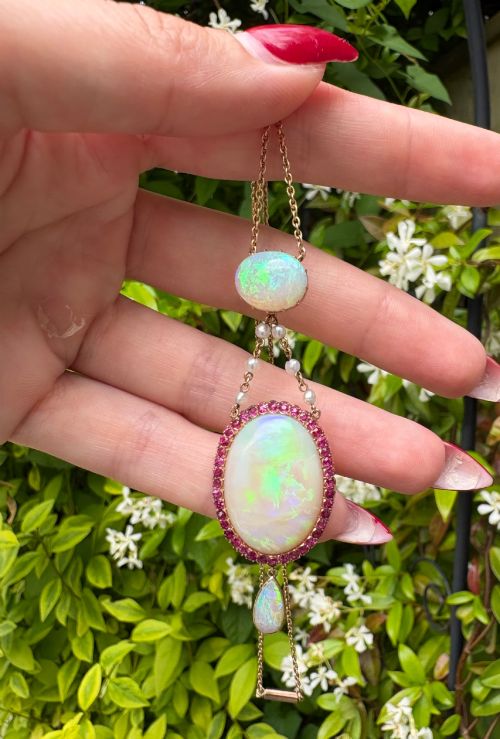
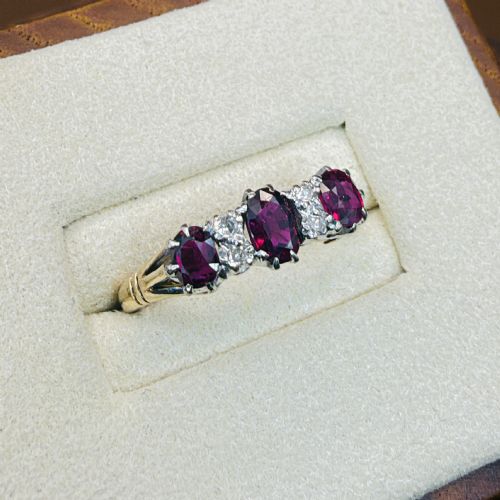
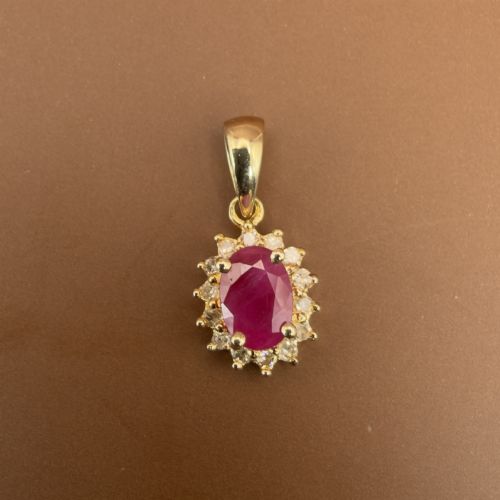
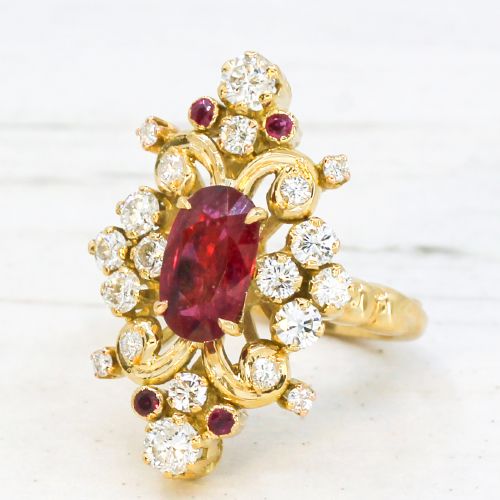
A gold ruby cluster centres on a red corundum surrounded by a border of contrasting stones, most frequently diamonds in varying cuts. These arrangements appear predominantly as rings, though pendants, brooches and earrings also occur across the inventory.
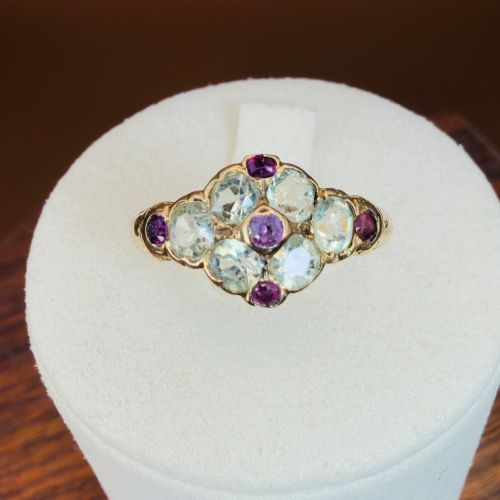
Makers utilised diverse materials including natural unheated Burmese stones, synthetic sapphires, pearls, spinels and paste alongside standard rubies. Each period contributes distinct silhouette choices, from tight Victorian daisy clusters to elongated Edwardian navette shapes.
Materials and construction
Goldsmiths worked primarily in 18ct yellow and white gold, alongside 9ct and 15ct variations, frequently combining gold shanks with platinum settings to secure the outer diamond borders.
Gemstones display historical cutting styles, including old cut, princess, oval and marquise facets, mounted in claw, halo or flush arrangements depending on the manufacturing decade.
Gold Ruby Cluster Retail Price Guide 2026
Typical asking prices for gold ruby cluster among the pieces listed under this phrase on Sellingantiques today, from the lower quarter to the upper quarter. They describe what is for sale here now, not the wider market.
Listings span from Georgian silver-backed pieces and Victorian floral clusters to Art Deco navette shapes and 1950s white gold halo designs.
Distinctions in quality
Distinctions in quality rest upon the origin and thermal treatment of the central corundum, with unheated Burmese stones commanding particular interest alongside certified gemological reports.
The precision of the surrounding stone arrangement, the weight of the gold mount and the preservation of original hand-cut facets separate standard production from exceptional examples.
The Gold Ruby Cluster Glossary
- Cluster ring
- A ring design featuring a prominent central gemstone encircled by a group of smaller secondary stones.
- Navette
- A boat-shaped gemstone setting or cluster configuration that tapers to points at both ends.
- Halo cluster
- A setting style where a primary stone is completely surrounded by a continuous ring of smaller pavé or claw-set diamonds.
- Old cut
- A hand-faceted diamond cutting style predating modern brilliant cuts, characterised by high crowns and open culets.
- Unheated
- A descriptor for natural gemstones that have undergone no thermal enhancement to improve colour or clarity.
Gold Ruby Cluster: Frequently Asked Questions
How do I date a gold ruby cluster ring?
Dating relies on stylistic markers such as navette proportions or daisy motifs, combined with hallmarks indicating metal purity. Specific cuts like old cut diamonds often point toward Victorian or Edwardian periods.
Later mid-century pieces introduce white gold and distinct geometric arrangements that separate them from nineteenth-century manufacturing techniques.
Are all rubies in these pieces natural?
The inventory includes both natural stones, such as Burmese origins with gemological reports, and historical alternatives like synthetic sapphires or paste.
Descriptions explicitly note whether stones are unheated or carry specific laboratory certification regarding their origin and treatment.
What metals are used in these clusters?
Pieces utilise 18ct yellow, white and rose gold, alongside 9ct and 15ct variations. Platinum frequently appears in combination with gold to mount diamond borders securely.
Earlier Georgian and Victorian items sometimes incorporate silver components alongside gold shanks to highlight white gemstone facets.
Can I wear a cluster ring every day?
Daily wear depends on the specific age and setting style of the piece, as antique claw mounts require careful handling. Heavier gold bands and robust bezel or halo configurations offer greater durability for regular use.
Consulting professional jewellers for periodic checks on stone security ensures these historical settings remain protected during routine wear.