




Gold Religious Necklace
When you search for a gold religious necklace, you are looking at devotional medals, crosses and pendants rendered in precious metals.
Gold Religious Necklace
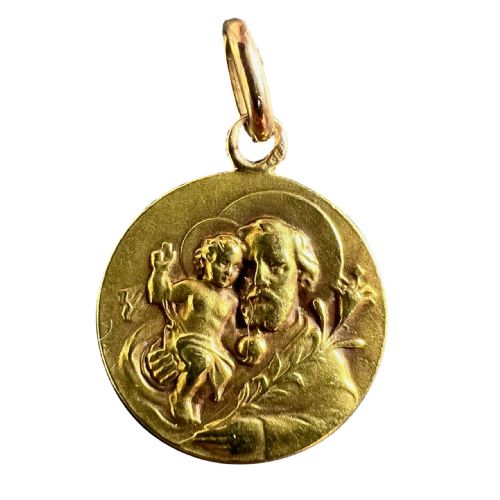
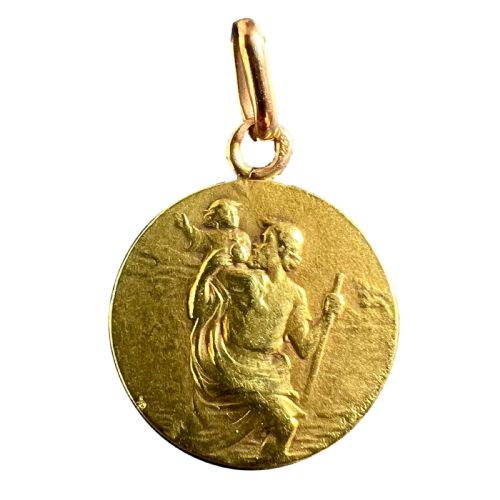
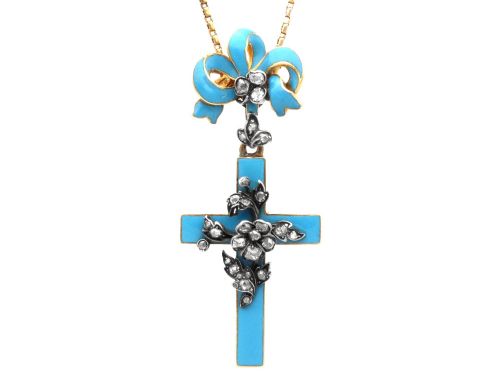
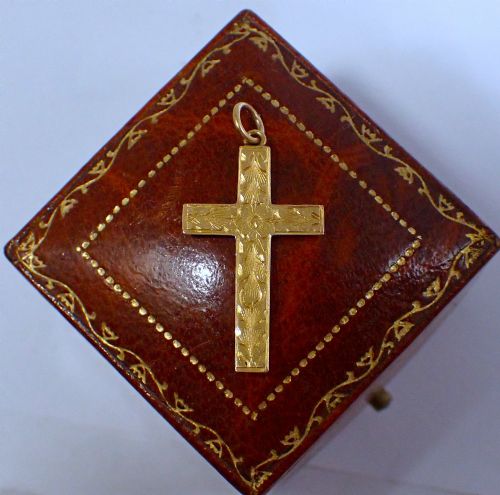
A gold religious necklace typically combines a devotional pendant or medal with a chain. The pendants appearing in this category range from Georgian crosses set with coral and seed pearls to mid-century French medallions depicting the Virgin Mary or Saint Christopher.
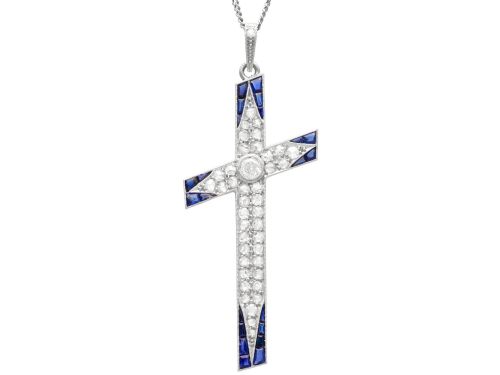
French religious medals form a distinct group among these listings, often bearing the names of makers such as Rasumny, Dropsy or Sellier. Alongside these circular and oval medals, cross pendants appear frequently, executed in yellow or white gold with occasional diamond or sapphire additions.
Materials and construction
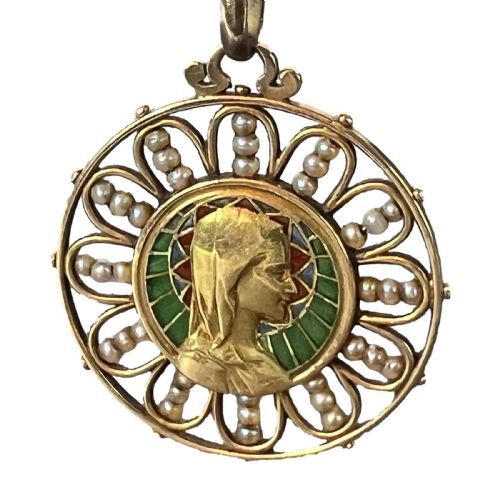
The physical pieces rely heavily on 18ct yellow and white gold, alongside 9ct and 15ct variants, shaped into medals and crosses. Enamel work, particularly plique-à-jour which allows light through the translucent coloured glass, appears alongside seed pearls and turquoise.
Goldsmiths employed techniques such as engraving, piercing and sunburst radiating patterns to decorate the metal surfaces. Gemstones including diamonds, rubies and sapphires are flush or prong set into the gold frameworks of the cross pendants.
Gold Religious Necklace Retail Price Guide 2026
Typical asking prices for gold religious necklace among the pieces listed under this phrase on Sellingantiques today, from the lower quarter to the upper quarter. They describe what is for sale here now, not the wider market.
Some travel medals were carried for divine protection on early motoring and railway journeys.
Distinctions in craftsmanship
Material combination also elevates a piece, such as the integration of plique-à-jour enamel or well-matched diamonds and sapphires. Signed work by known medallists demonstrates a higher standard of artistic execution than unsigned general production.
Rasumny·Paul Brandt·Monier·Perriat·Sellier·Dropsy·Mazzoni·Tairac·Serraz·Augis
The Gold Religious Necklace Glossary
- Plique-a-jour
- An enamelling technique where the enamel is applied without a backing, creating a stained-glass effect that lets light pass through. This delicate method requires great skill from the jeweller.
- Medal
- A flat metal disc bearing a commemorative or religious image and inscription. In this category, they frequently depict saints or biblical scenes.
- Seed pearl
- A very small natural or cultured pearl, often half-drilled and glued or pegged onto jewellery. They appear commonly on Victorian and Georgian cross pendants.
- Rose cut
- An antique diamond cut featuring a flat base and a domed top faceted with triangular shapes. This cut produces a softer sparkle than modern brilliant cuts.
Gold Religious Necklace: Frequently Asked Questions
What figures appear on these medals?
The medals frequently depict the Virgin Mary, Jesus Christ, Saint Christopher and Saint Joseph. Other subjects include the Sacred Heart, Madonna and Child, and Saint Therese.
These figures are usually stamped in relief on 18K yellow gold, sometimes accompanied by French hallmarks or maker signatures on the rim.
How do I identify the period?
Dating relies on stylistic clues and material standards such as 9ct, 15ct or 18ct gold usage. Georgian and Victorian pieces often incorporate seed pearls, coral or turquoise in cross designs.
Later pieces from the twentieth century lean towards French devotional medals with plique-à-jour enamel or geometric Art Deco and mid-century framing.
Are these necklaces supplied with chains?
The listings comprise pendants, charms and medals which may or may not include a matching gold chain. Many buyers source a compatible antique or vintage chain separately to suit their preferred length.
It is common to find these items described as pendant medals or charm pendants intended for suspension.
What is plique-à-jour enamel?
Plique-à-jour is an enamelling method resembling miniature stained glass where coloured glass powder is fired within open wire compartments. It allows light to shine straight through the transparent enamel areas.
This technique is particularly prominent in French religious pendants from the early twentieth century alongside seed pearl decoration.