



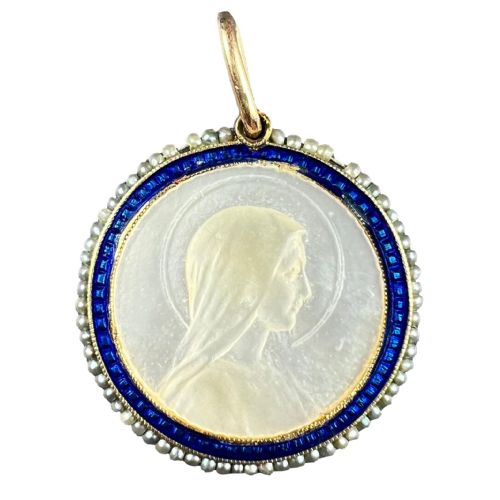
Gold Pearl Mary Pendant
These gold pearl mary pendant pieces unite French devotional subjects with lustrous mother-of-pearl and gold work, offering wearable history for the discerning collector.
Gold Pearl Mary Pendant
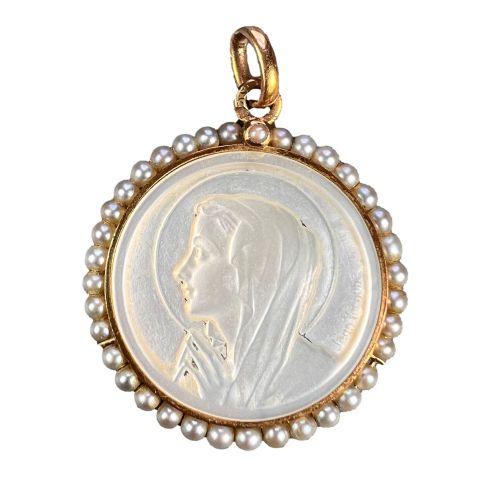
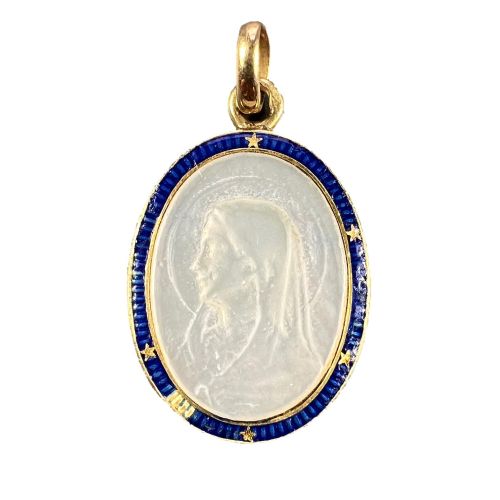
A gold pearl mary pendant combines religious iconography with precious metals, primarily taking the form of devotional medals and charms dedicated to the Virgin Mary. These pieces frequently emerge from French workshops spanning the late Victorian era through the Art Deco period.
Originating predominantly from French makers around nineteen hundred to nineteen thirty, these pendants reflect traditional religious sentiments executed in refined jewellery formats. Collectors find them functioning as both personal amulets and historical artefacts of European devotional craft.
Materials and construction methods
Craftsmen utilised eighteen-carat gold, both yellow and white varieties, to form the structural mounts and frames of each pendant. This metalwork often houses carved mother-of-pearl plaques that serve as the luminous backdrop for the central devotional figures.
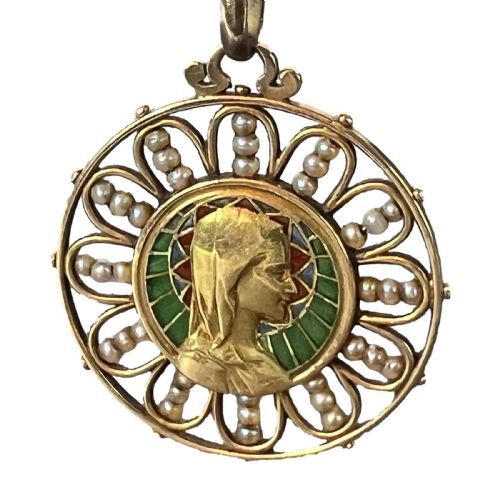
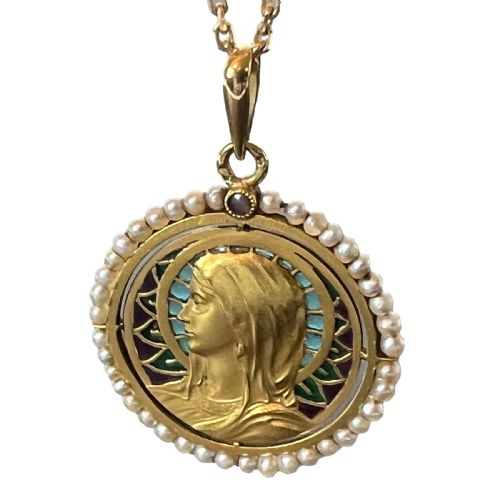
Surface ornamentation frequently incorporates seed pearls and vitreous enamel, including specialised plique-a-jour techniques that create stained-glass effects without foils. Individual components are hand-assembled, reflecting traditional French bench-work standards of the early twentieth century.
Gold Pearl Mary Pendant Retail Price Guide 2026
Typical asking prices for gold pearl mary pendant among the pieces listed under this phrase on Sellingantiques today, from the lower quarter to the upper quarter. They describe what is for sale here now, not the wider market.
Materials recorded across the archive include both yellow and white eighteen-carat gold alongside enamel and mother of pearl.
Distinctions in craftsmanship and design
Quality differences emerge in the intricacy of the metalwork and the translucency of the enamel work. Superior examples display precise plique-a-jour framing and finely sculpted mother-of-pearl rather than simpler stamped or plain backgrounds.
The crispness of the devotional engraving and the uniform matching of seed pearls dictate the upper tier of these items. Workshops with designated signatures or attributed makers often demonstrate superior finishing on the reverse and suspension loops.
Sellier·Becker
The Gold Pearl Mary Pendant Glossary
- Plique-a-jour
- Enamelling technique where enamel is applied in cells without a backing, allowing light to shine through transparent colours. This method resembles miniature stained glass and demands exceptional skill from the metalsmith.
- Mother of pearl
- Iridescent inner layer of mollusc shells used as a carved surface for devotional imagery. It provides a shimmering tonal shift behind the gold figures.
- Seed pearl
- Very small natural or cultured pearls threaded or set closely together in decorative borders. They impart a soft, glowing halo effect around central medallions.
- Devotional medal
- Religious token struck or carved for personal piety and worn as a pendant. These objects often commemorate specific saints or holy figures.
- Belle Epoque
- Period of optimistic design spanning the late nineteenth century and the outbreak of the First World War. Jewellery from this era emphasises lightness, garland motifs, and platinum or high-karat gold.
Gold Pearl Mary Pendant: Frequently Asked Questions
What periods do these pendants come from?
The available selection primarily dates from the early twentieth century, specifically around nineteen hundred to nineteen thirty.
These pieces capture late Victorian, Belle Epoque, and early Art Nouveau design movements originating in France.
How were these devotional pendants worn?
Original owners wore these items suspended from fine gold chains as personal necklaces or attached to charm bracelets.
They served simultaneously as expressions of religious devotion and fashionable personal adornment.
What materials predominate in this category?
The listings consistently feature eighteen-carat gold paired with natural mother-of-pearl plaques.
Additional embellishments frequently include seed pearls and decorative enamel work.
How do I distinguish between different French styles?
Art Nouveau and Belle Epoque examples incorporate flowing lines and translucent enamel techniques like plique-a-jour. Traditional religious pieces rely on classic medallion formats with carved mother-of-pearl.