





Gold Patinated Bronze
Gold patinated bronze pieces bring together dark metal surfaces and brilliant gilding, offering heavy classical presence for a mantel or table.
Gold Patinated Bronze
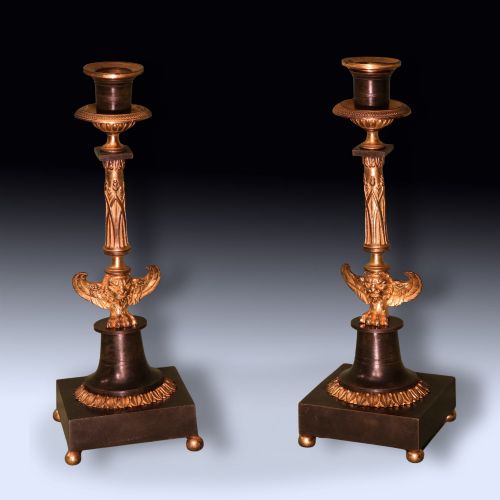
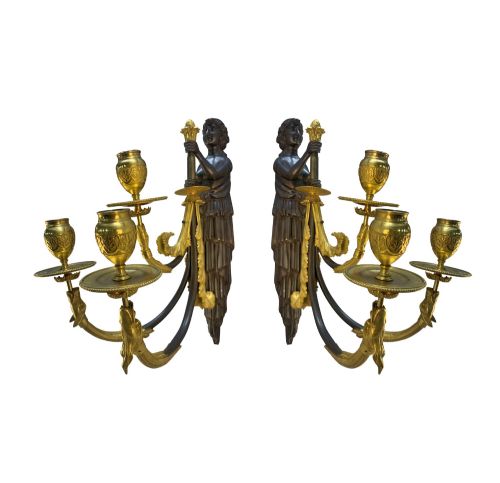
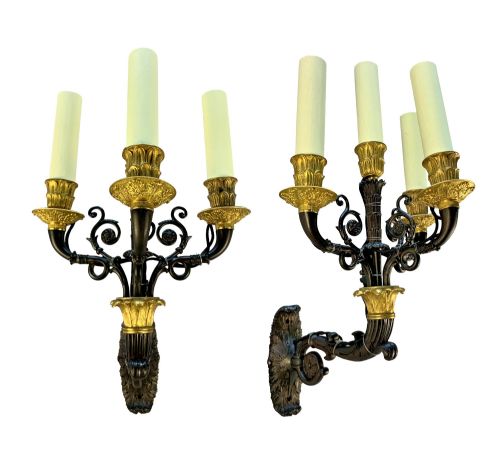
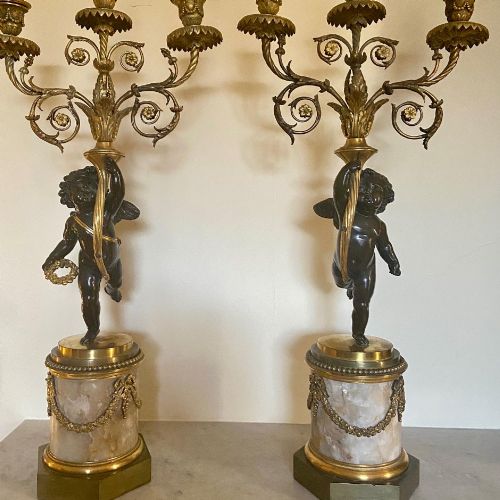
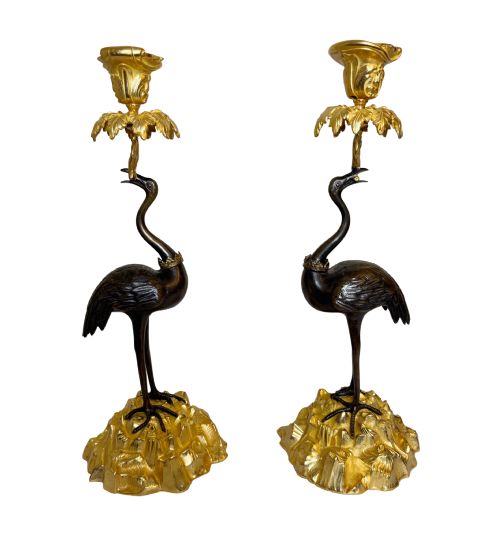
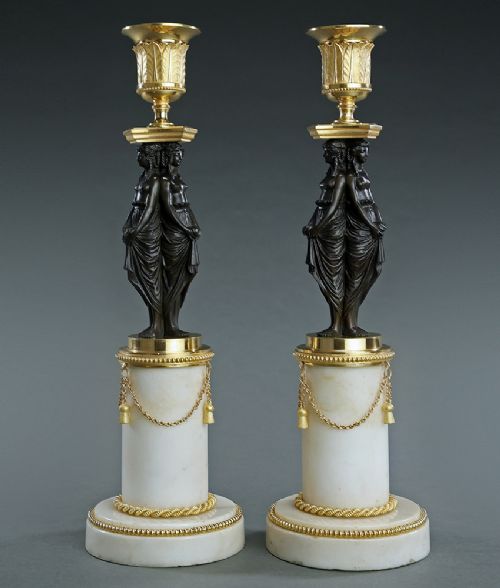
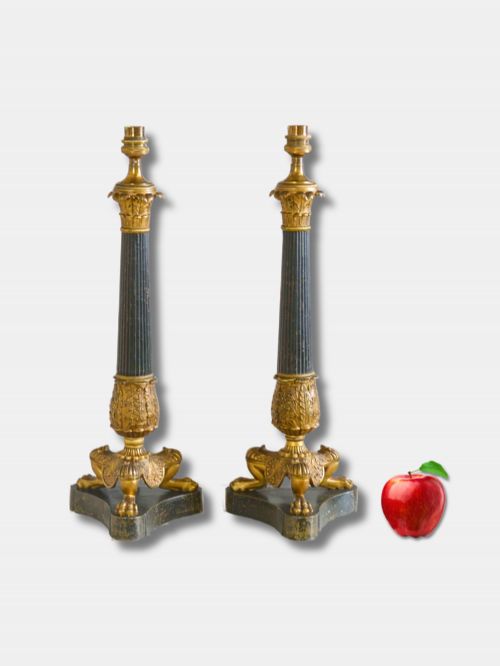
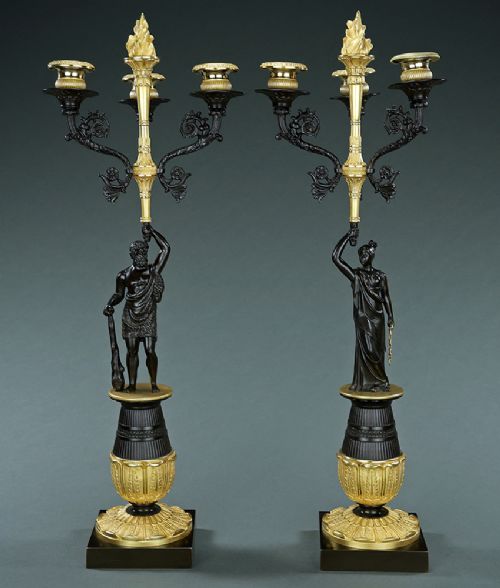
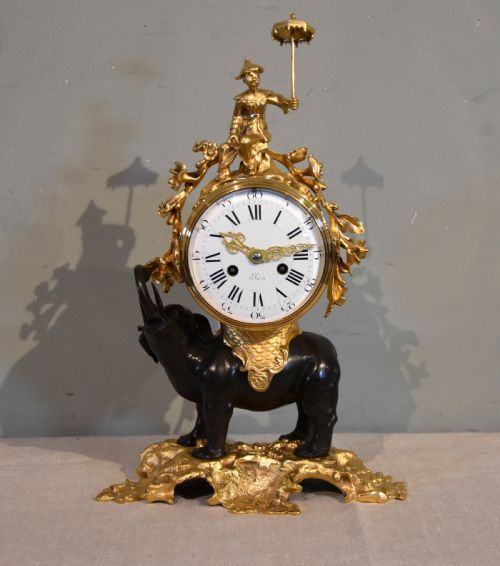
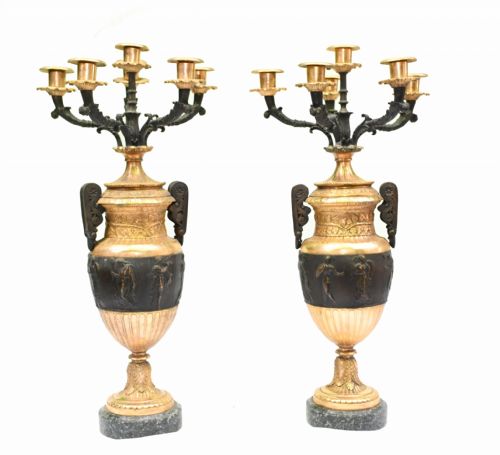
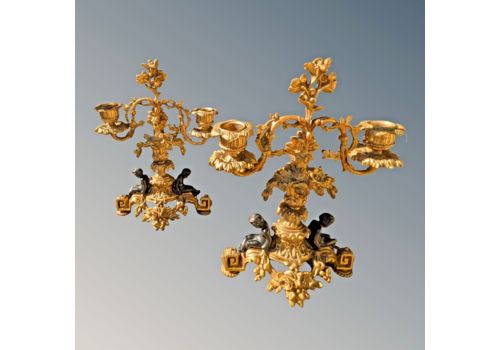
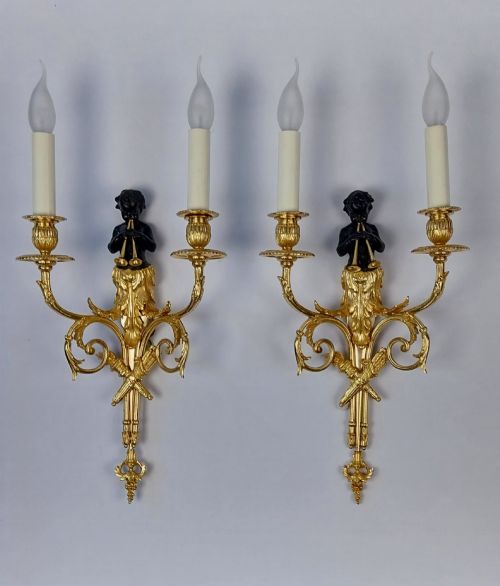
When searching for gold patinated bronze, buyers encounter a selection of nineteenth-century decorative metalwork, French Empire mantel clocks, and heavy candelabra. The most frequent examples on this page are matched pairs of candlesticks, wall lights, and figural mantel clocks combining dark metal bodies with bright ormolu mountings.
These items originate predominantly from French workshops working in the Regency, Louis XVI, and Rococo Revival styles. Alongside lighting and timepieces, the listings include occasional fireplace accessories such as chenets, as well as figural bronzes and decorative vessels.
Materials and Construction
The objects are produced from cast bronze that receives a dark chemical patination alongside applied mercury gilding or ormolu. Artisans also incorporate secondary materials including marble bases, slate, enamel dials, and occasional highlights of brass or fluorspar.
Makers utilised lost-wax or sand-casting techniques to shape detailed figures, putti, and architectural mounts. Guild standards of the period required mercury amalgamation to achieve the characteristic deep, warm gold surface alongside the darkened bronze.
Gold Patinated Bronze Retail Price Guide 2026
Typical asking prices for gold patinated bronze among the pieces listed under this phrase on Sellingantiques today, from the lower quarter to the upper quarter. They describe what is for sale here now, not the wider market.
Listings feature nineteenth-century French mantel clocks incorporating patinated bronze figures alongside gilt ormolu mounts and enamel clock dials.
Judging Quality and Finish
The weight of the cast metal and the integration of the marble or slate bases distinguish standard production items from workshop pieces created for specific commissions. Original movements in clocks and properly matched mounts further elevate the standing of an individual piece.
Josef Lorenzl·Jennings Brothers·Raingo Fres Paris·Francois Redmond·Rabiat·Dugourc
The Gold Patinated Bronze Glossary
- Ormolu
- Finely chopped gold amalgamated with mercury and applied to bronze through heat gilding. This technique produces a durable, rich golden surface characteristic of French decorative arts.
- Patinated Bronze
- Bronze treated with chemical solutions to produce a dark, stable surface finish. This technique highlights bright gilt bronze mounts by contrast.
- Chenet
- Ornamental iron or bronze fire dog placed at the hearth. These decorative supports often feature figural castings matching standard candelabra.
- Cassolette
- Decorative vase or urn featuring a reversible lid that converts the vessel into a candleholder. These double as mantel garniture elements.
- Fusee
- A conical pulley used in clock movements to maintain equal driving force as the mainspring unwinds. This mechanism improves timekeeping precision.
Gold Patinated Bronze: Frequently Asked Questions
What is gold patinated bronze?
Gold patinated bronze describes metalwork combining a darkened chemical surface with bright gilt bronze or ormolu highlights. It defines much of the nineteenth-century French decorative output.
These pieces use the contrast between dark bronze and shimmering gold to emphasise classical figures, architectural mounts, and floral ornament.
Were these clocks made to keep time?
French mantel clocks function as accurate timekeepers driven by spring-driven mechanisms with anchor escapements. Many retain their original single-chain fusee or pendulum movements.
Periodic professional servicing keeps the delicate gear trains operational without altering the historic components.
How do I spot a matched pair?
Matched pairs display identical casting dimensions, uniform patination wear, and corresponding numbers or factory marks stamped into the bronze bases. Candelabra arms should mirror each other precisely.
Subtle variations in hand-chasing indicate separate hand-finishing work, which remains normal for nineteenth-century workshop production.