


Gold Ormolu Wall Fixtures
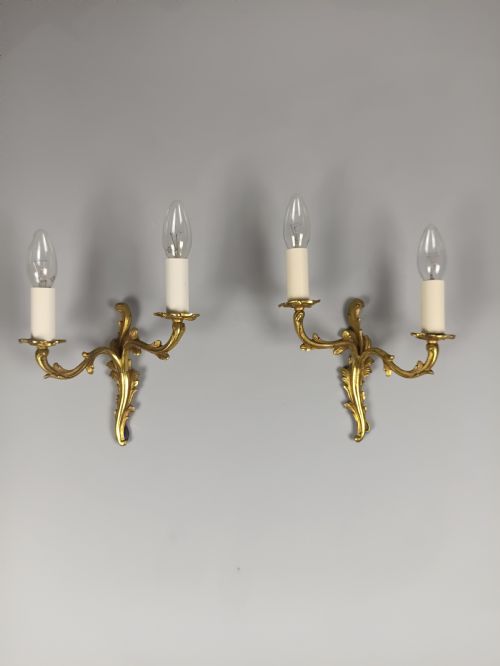
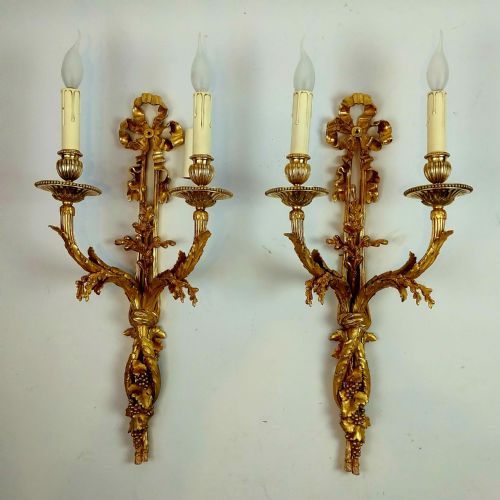
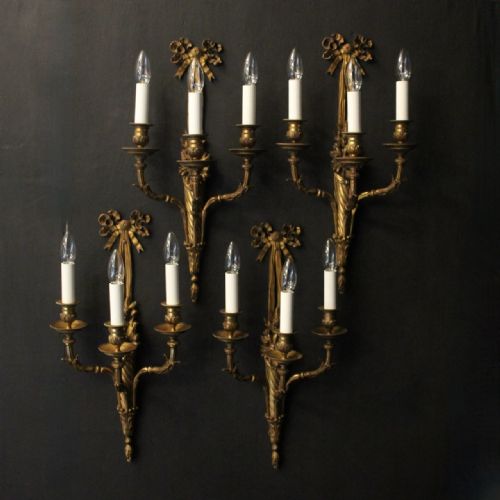
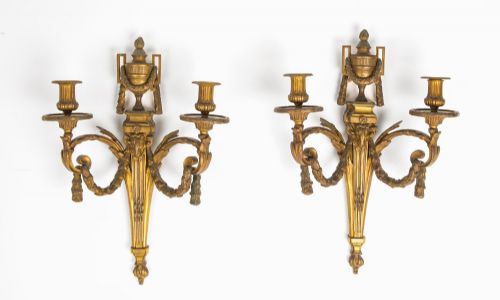
These gold ormolu wall fixtures bring brilliant French illumination and sculptural weight to a room, offering grand decorative presence across the Victorian and twentieth-century periods.
Gold Ormolu Wall Fixtures
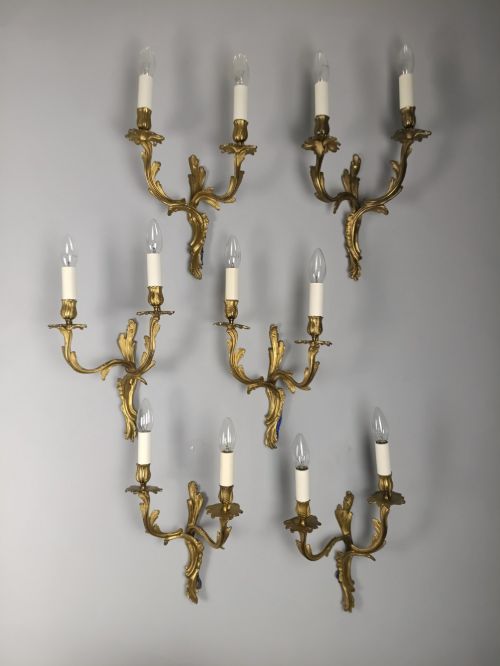
Gold ormolu wall fixtures take the form of wall lights, wall sconces, and appliques designed to mount directly onto interior walls for ambient candle or electrical lighting. You will most frequently encounter pairs and sets originating from France, spanning the nineteenth century through the 1930s.
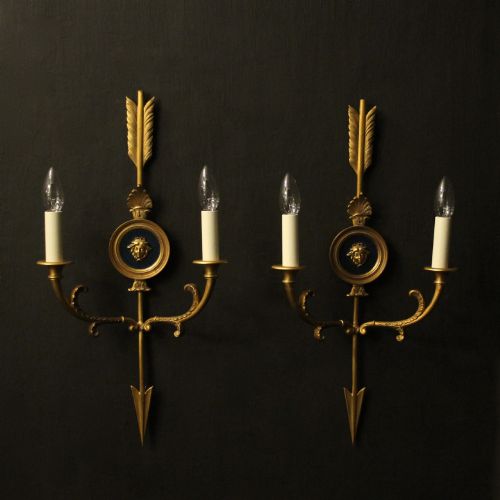
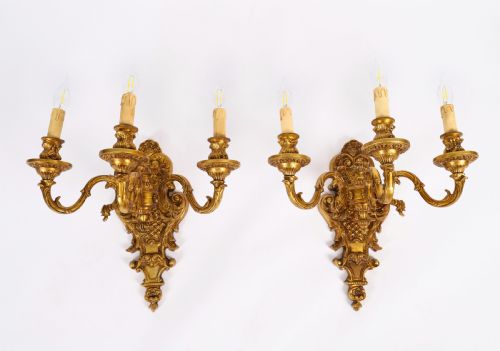
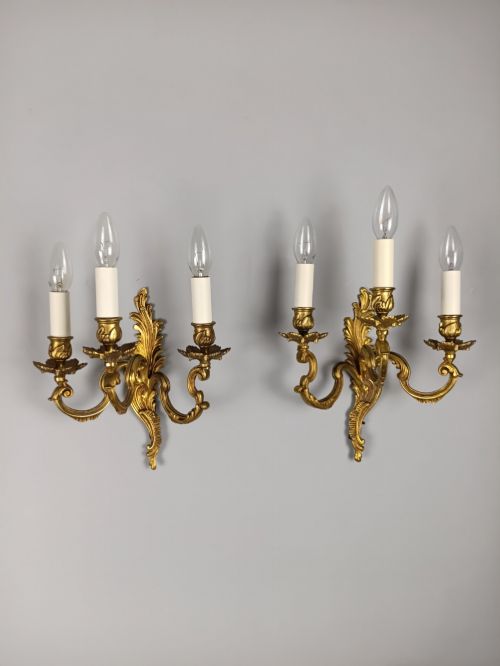
The aesthetic draws heavily on classical and revivalist vocabularies, featuring French Rococo, Louis XV Revival, Louis XVI Style, and Neoclassical designs. These pieces often incorporate elaborate branching arms, ranging from twin-arm and triple-arm configurations to detailed architectural motifs.
Makers and designers of these fixtures utilised distinct regional interpretations, moving from ornate scrolls and asymmetric curves to restrained classical symmetry. Finding matching sets or pairs remains common, offering balanced proportions for hallway, drawing room, or parlour placement.
Materials and construction methods
Construction relies upon cast metals including gilt bronze, ormolu, gilded brass, and standard brass, shaped into intricate relief forms. Artisans employed metal casting and chasing techniques to achieve sharp surface detailing before applying a gold-gilded finish.
The combination of heavy bronze or brass casting with durable fire-gilding or applied surface gilding ensured the metal retained its metallic lustre over decades of use. Natural metal alloys form the structural core, supporting multi-arm branches and decorative elements like ram's head masks.
Design influences span French Rococo, Neoclassical, and Louis XV Revival styles, encompassing twin-arm and triple-arm configurations.
Indicators of quality
The weight and gauge of the bronze or brass components also dictate quality, with heavier metal stock providing superior structural rigidity to multi-arm sconces. Furthermore, the remaining depth and warmth of the original gilding indicate how well the fixture has survived years of polishing and environmental exposure.
The Gold Ormolu Wall Fixtures Glossary
- Ormolu
- A gold-coloured alloy of copper, zinc, or nickel that was treated with mercury gilding or applied gold finishes to imitate solid gold on decorative metalwork. It gives French wall lights their characteristic warm brilliance.
- Applique
- A decorative wall sconce or light fixture designed to be mounted flush against a wall surface. The term appears frequently in descriptions of French lighting.
- Rococo Revival
- A nineteenth-century design style mimicking the ornate, asymmetric scrolls, shell motifs, and naturalistic curves of the eighteenth-century French court. It dominates many nineteenth-century wall sconce designs.
- Neoclassical
- A style rooted in classical Greek and Roman architecture and art, characterised by symmetry, straight lines, urns, and ram's head masks. This aesthetic provides a formal contrast to earlier curved revival styles.
- Grand Tour
- A traditional trip through Europe undertaken by upper-class young men during the eighteenth and nineteenth centuries to collect art and antiquities. Italian brass wall lights often date to this cultural phenomenon.
Gold Ormolu Wall Fixtures: Frequently Asked Questions
How do I clean antique ormolu safely?
Dust the surface gently with a soft, dry microfibre cloth to remove everyday particles without abrasion.
Avoid chemical metal cleaners or abrasive polishes, as these can strip away the delicate gold gilding permanently.
Were these wall fixtures wired for electricity?
Most surviving pieces were originally designed for wax candles and were subsequently converted for electric bulbs during the twentieth century.
Buyers should inspect the internal wiring of each sconce and consult a qualified electrician to ensure safety compliance.
How do I date a French wall light?
Stylistic clues such as asymmetric Rococo scrolls usually point to nineteenth-century revival periods, while cleaner Neoclassical lines often reflect Louis XVI influences.
Examining the backplate casting marks, fixing screws, and metal composition also helps narrow down the period between the Victorian era and the 1930s.
Can I mix different styles of sconces?
Mixing pieces requires matching the metal tone and scale to maintain visual harmony across a room wall.
Sticking to related French revival periods or matching brass and gilt bronze finishes prevents competing aesthetics in a single space.