

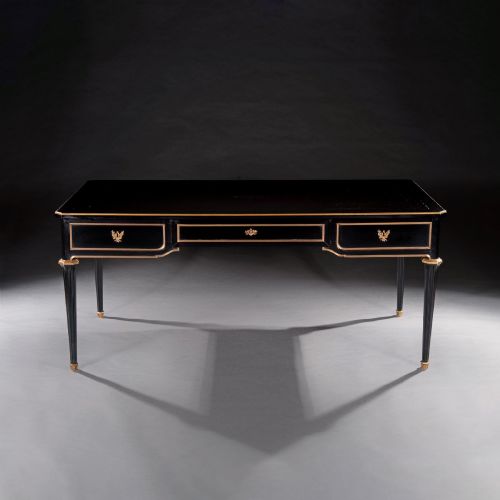
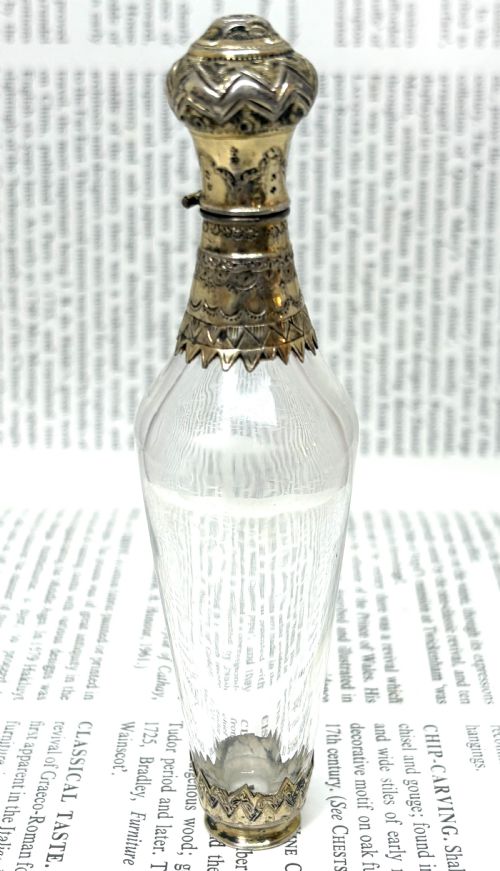
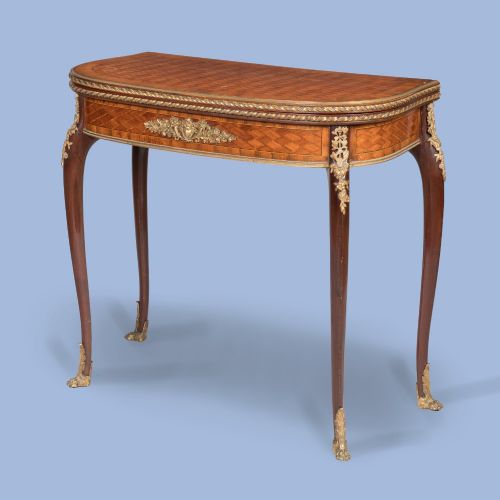
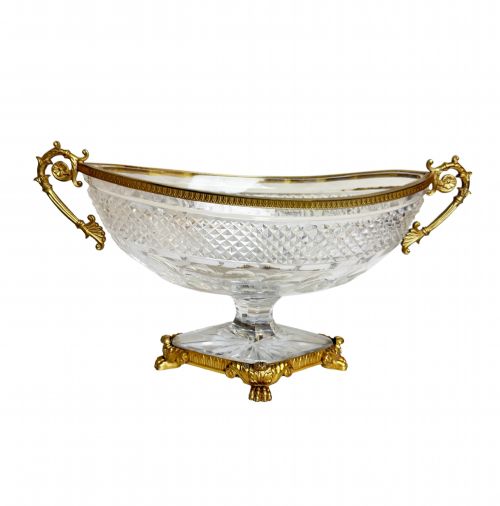


Gold Mounted Table
A gold mounted table brings together polished timber or marble and refined metalwork to anchor a room with distinct historical character.
Gold Mounted Table
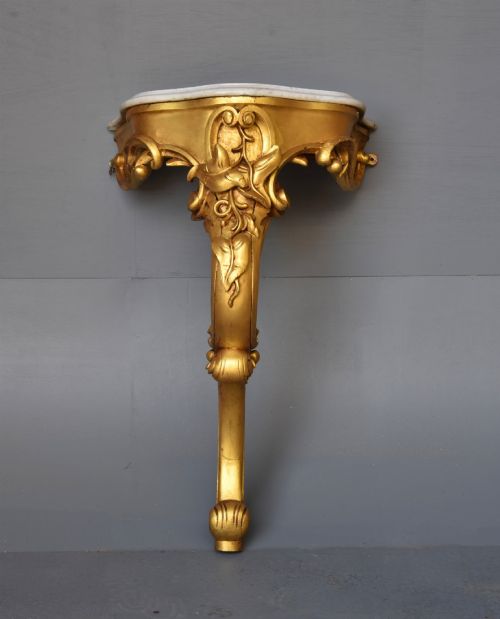
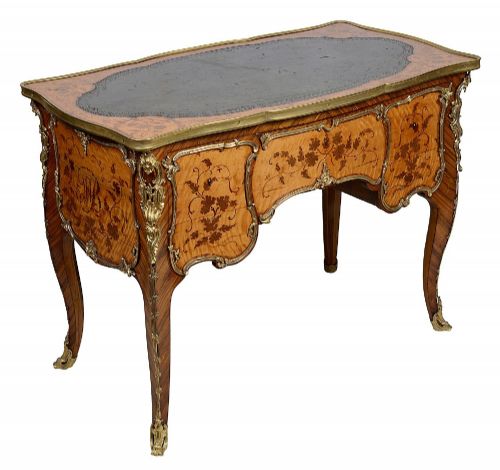
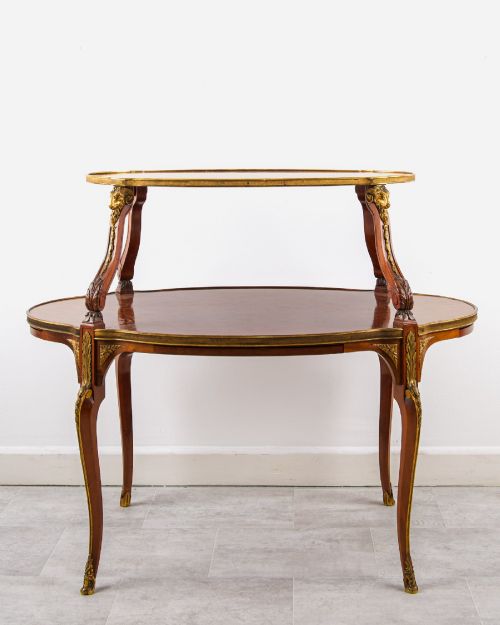
When searching for a gold mounted table, collectors encounter furnishings adorned with gilt bronze, ormolu, brass, or silver gilt mounts. These pieces span from the eighteenth century through to the early twentieth century, reflecting varied European design movements.
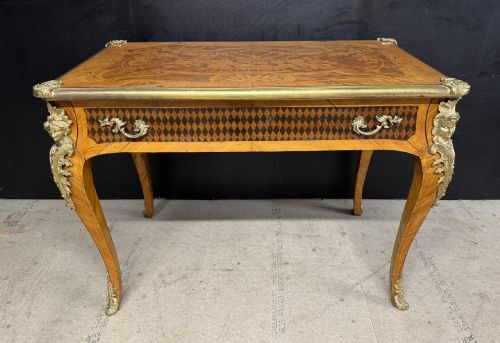
Console tables, side tables, writing desks, and bureau plats form the primary selections on this page. Many examples follow French Rococo Revival, Louis XV style, Louis XVI style, or Empire aesthetics.
Materials such as kingwood, mahogany, walnut, and marble frequently serve as the foundational body for these metal mounts. The resulting forms range from compact occasional tables to large centre tables.
How they were made
Craftsmen built timber carcases using dense hardwoods like mahogany, kingwood, and walnut, often applying intricate marquetry or parquetry patterns in veneer. Surfaces were then fitted with cast metal details that were subsequently gilded.
Ormolu and gilt bronze components required lost-wax casting and hand-chiselling before fire-gilding with mercury. These metal mounts were secured to marble tops, wooden edges, and corners to protect vulnerable areas while adding decorative contrast.
Gold Mounted Table Retail Price Guide 2026
Typical asking prices for gold mounted table among the pieces listed under this phrase on Sellingantiques today, from the lower quarter to the upper quarter. They describe what is for sale here now, not the wider market.
Some tables hide their inkwells and writing drawers so cleverly that guests might mistake them for ordinary side furniture.
What varies in quality
The precision of the metal casting and the depth of the subsequent hand-chasing separate standard examples from superior pieces. Crisp details in foliage, figures, or scrollwork indicate skilled artisan output.
The choice of underlying timber and the complexity of the wood veneers also dictate the tier of the piece. Matching grain patterns and carefully executed marquetry demonstrate higher workshop standards.
François Linke·Paul Sormani·Etienne Lenoir
The Gold Mounted Table Glossary
- Ormolu
- A gilded bronze technique utilising mercury amalgamation, popular in French furniture making. It provides a warm, enduring metallic lustre.
- Bureau Plat
- A formal freestanding writing table fitted with drawers, originating in France. These tables typically feature leather writing inserts and elaborate metal mounts.
- Marquetry
- The art of applying decorative pieces of veneer to a structure to form intricate designs. Cabinetmakers used various tinted woods to create pictorial or geometric scenes.
- Console Table
- A wall-mounted or freestanding table designed to stand against a vertical surface. They often feature prominent marble tops supported by carved or gilded frames.
- Louis XV Style
- A revival style drawing on eighteenth-century Rococo curves, asymmetry, and naturalistic motifs. Furniture from this design lineage prioritises flowing lines and organic ornamentation.
Gold Mounted Table: Frequently Asked Questions
What is a gold mounted table?
A gold mounted table is a piece of antique furniture decorated with cast metal mounts finished in ormolu, gilt bronze, or brass. These items include writing desks, side tables, and console tables.
The metal elements serve both a decorative and protective function, highlighting the structural lines of the timber or stone beneath.
How do I identify the period?
Period identification relies on examining the construction methods, timber choices, and stylistic vocabulary used in the piece. Eighteenth and nineteenth-century examples often display specific revival characteristics like Louis XV curves or Empire symmetry.
Matching the metal mount techniques and timber preparation to known eras helps narrow down the date of manufacture.
Where should I place it?
These tables suit principal reception rooms, studies, and hallways where their detailed craftsmanship remains visible. Side tables and console variants function well against blank walls or beneath large mirrors.
Positioning them away from direct sunlight and extreme temperature shifts protects the delicate veneers and gilt surfaces.
How do I care for the surface?
Maintenance involves dusting timber and metal components regularly with a soft, dry cloth. Avoid chemical polishes and abrasive cleaners that can damage fragile gilt bronze or antique wood finishes.
Maintaining stable indoor humidity levels prevents the underlying woods from shrinking or warping over time.