




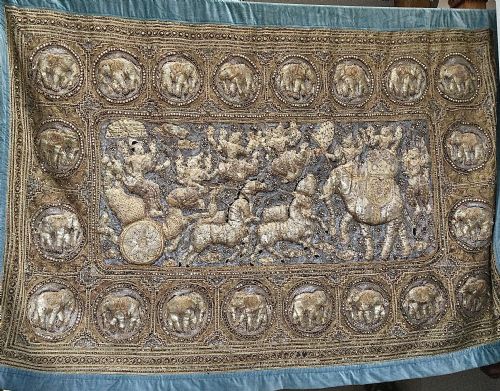

Gold Metallic Thread Textile
These gold metallic thread textile pieces span centuries of global needlework, offering rich metallic detailing and historic craftsmanship for the serious collector.
Gold Metallic Thread Textile
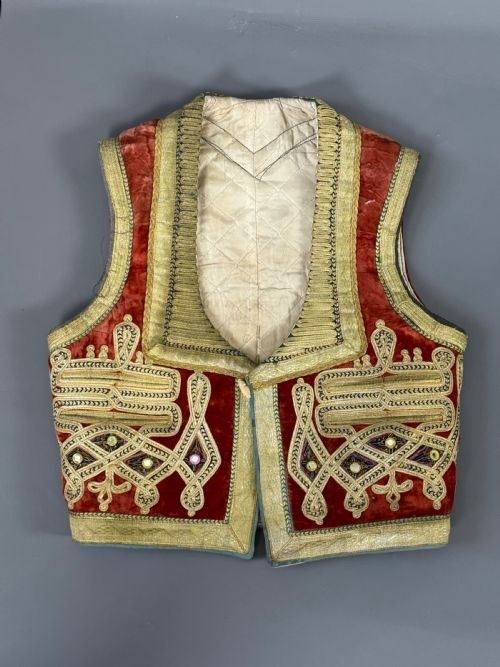
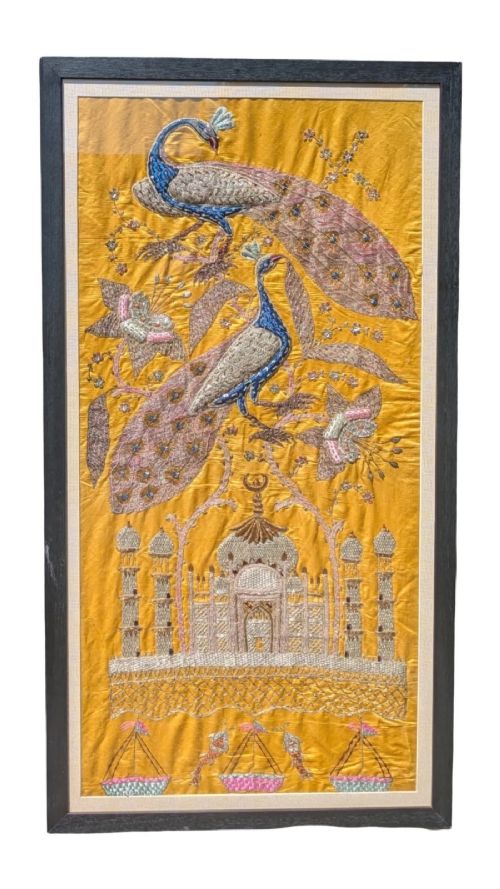
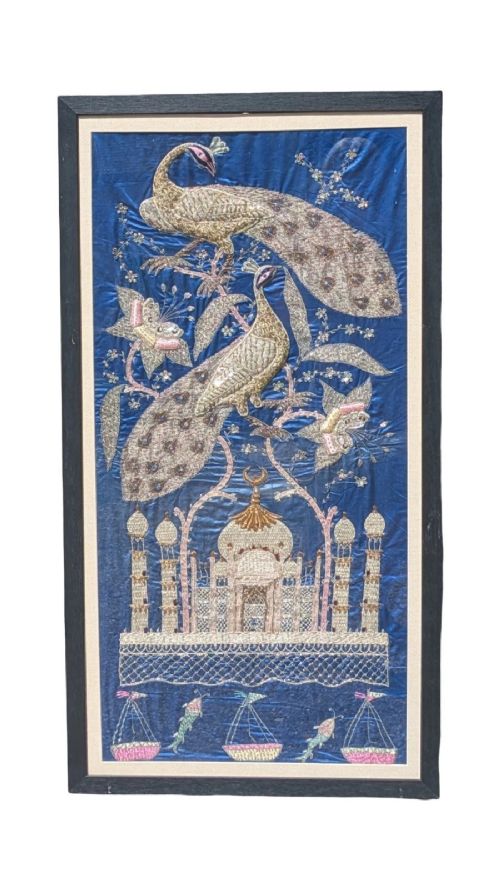
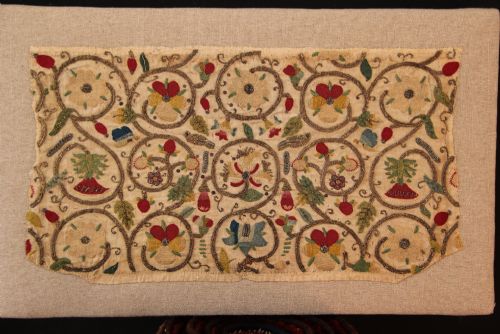
When you search for a gold metallic thread textile, you encounter an array of historical needlework, wall hangings, and garments originating from diverse regions such as the Ottoman Empire, India, England, and the Netherlands. The selection includes embroidered fragments, framed works, waistcoats, coifs, jackets, and coverlets that showcase intricate threadwork across multiple centuries.
The version you are most likely to meet on this page is a nineteenth-century Ottoman or Indian piece, often combining silk grounds with metal thread embroidery. These range from framed textile art and embroidered scarves to larger wall hangings depicting architectural scenes or floral motifs.
How they were made
The construction of these textiles relies primarily on silk, wool, or velvet foundations worked with metallic threads, silver, and gold elements. Makers frequently incorporated additional embellishments such as glass beads and sequins to enhance the visual depth of the embroidery.
Techniques vary by region, spanning the detailed needlework of seventeenth-century English coifs, the layered relief embroidery of Southeast Asian hangings, and the refined metal-thread embroidery seen on Qajar dynasty garments and Ottoman coverlets.
What varies in quality
Quality in these textiles depends on the density of the metal thread work and the preservation of the underlying silk or velvet ground. Pieces featuring elaborate pictorial compositions, such as architectural depictions or figural motifs, often demonstrate superior artisan skill compared to simpler geometric patterns.
The integrity of the textile substrate also dictates overall grade, with intact framed panels and complete garments commanding greater attention than fragmented or heavily degraded examples.
The Gold Metallic Thread Textile Glossary
- Coif
- A close-fitting cap worn in early modern Europe, often featuring elaborate embroidery in metal threads. Surviving examples demonstrate fine seventeenth-century needlework.
- Coverlet
- A decorative bedspread or protective covering often worked in heavy textiles. Ottoman examples frequently incorporate velvet and metal-thread embroidery.
- Abaya
- A traditional long outer garment associated with Qajar Persia and neighbouring regions. These garments occasionally feature wool and metal thread construction.
- Tülbent
- A lightweight traditional Ottoman scarf or head covering. Silk versions often carry delicate gold-embroidered decoration.
- Fire Screen
- A freestanding interior furnishing designed to shield occupants from fireplace heat. These frames frequently house antique embroidered panels.
Gold Metallic Thread Textile: Frequently Asked Questions
How should I display a framed textile?
Display these pieces away from direct sunlight to protect fragile silk grounds and metallic threads from fading over time.
Ensure professional framing uses UV-filtered glass and acid-free mounting materials to preserve the textile structure.
Can I wear antique embroidered waistcoats?
Historical garments such as Ottoman waistcoats or Qajar jackets are generally intended for display or study rather than active daily wear.
The age of the silk and metal threads makes them sensitive to physical stress and body oils.
How are different periods identified?
Dating relies on stylistic motifs, regional stitching techniques, and the type of material foundation used in the piece.
Comparative analysis with dated museum examples helps determine whether a textile belongs to the seventeenth, eighteenth, or nineteenth century.