


Gold Metal Hearth Guard
A gold metal hearth guard brings warmth and polished reflection to a room, functioning as both protection and ornament before the grate.
Gold Metal Hearth Guard
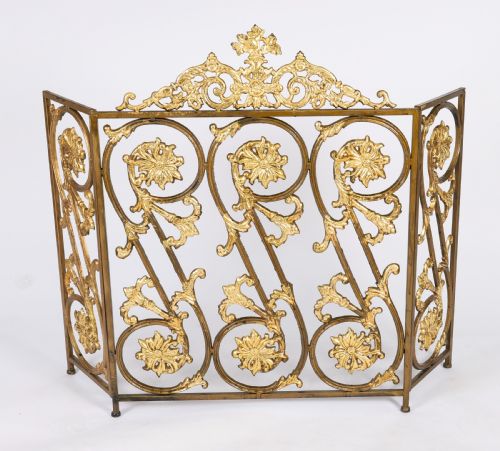
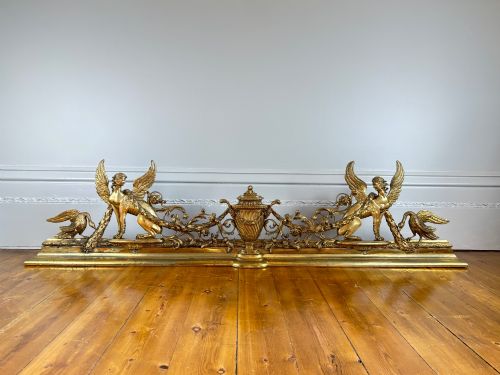
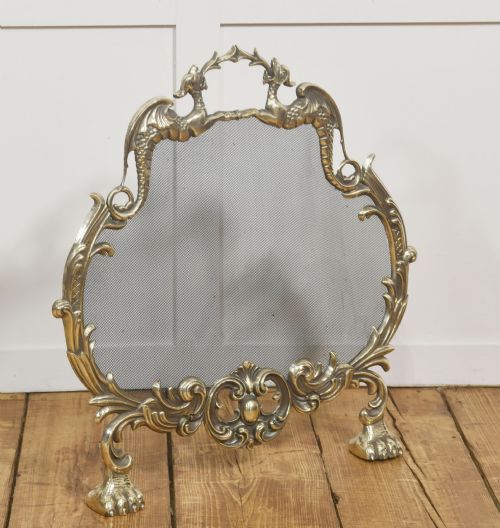
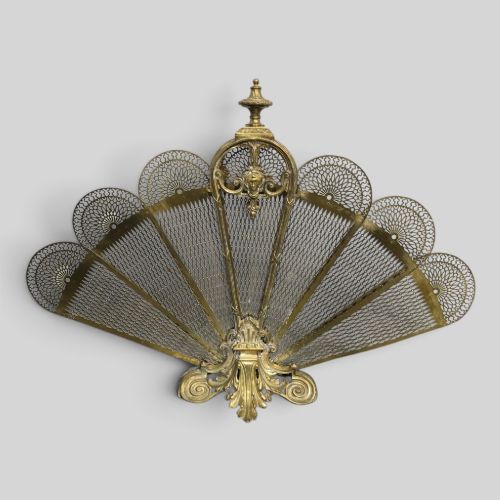
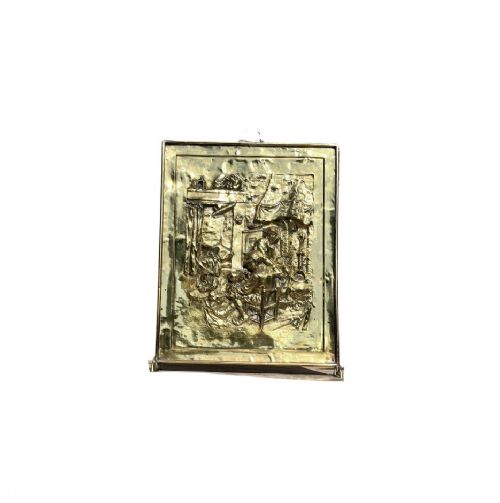
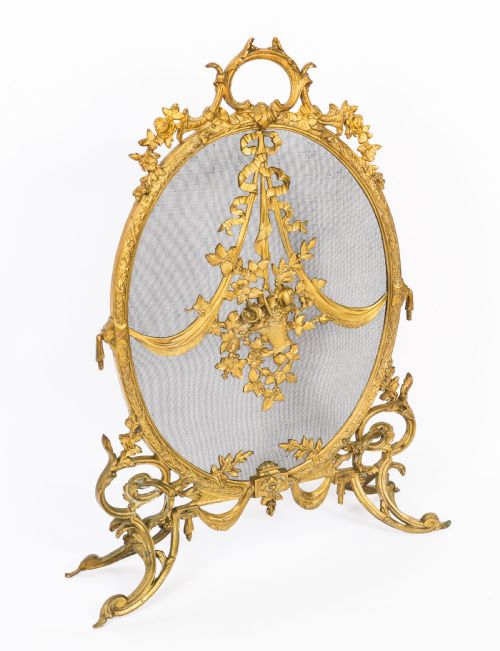
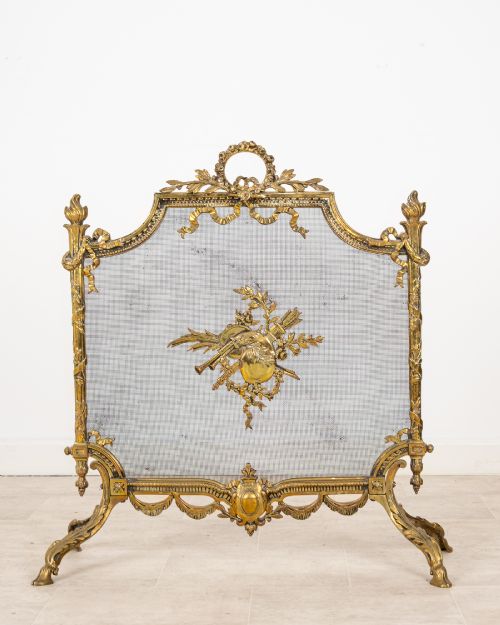
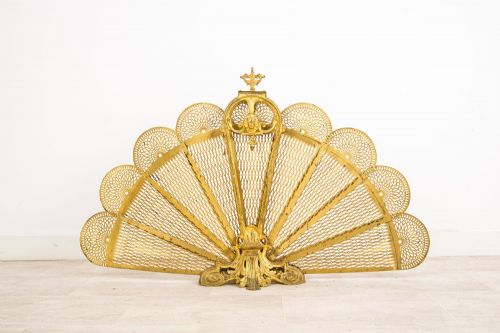
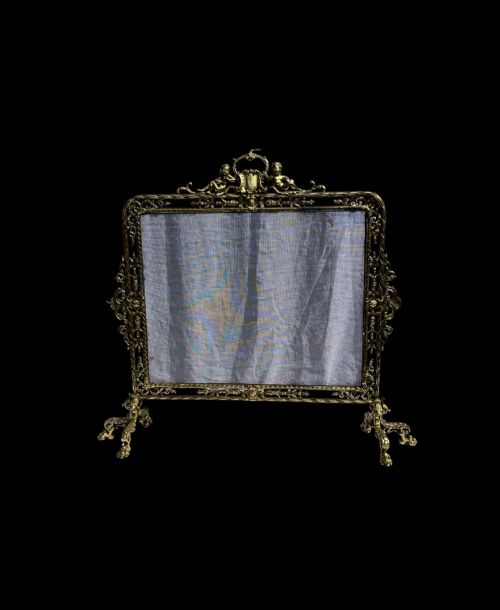
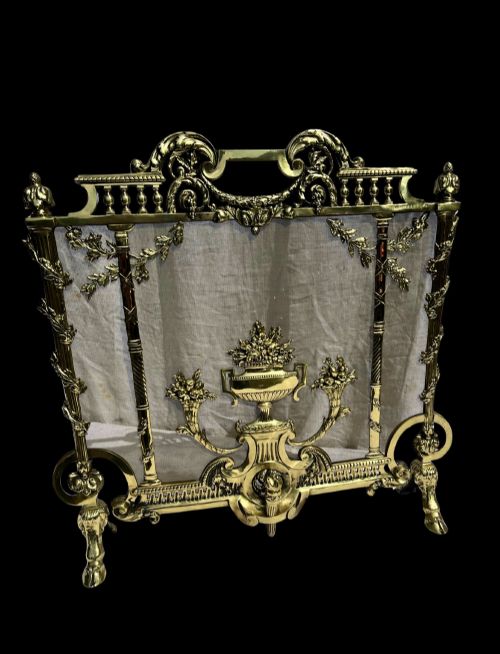
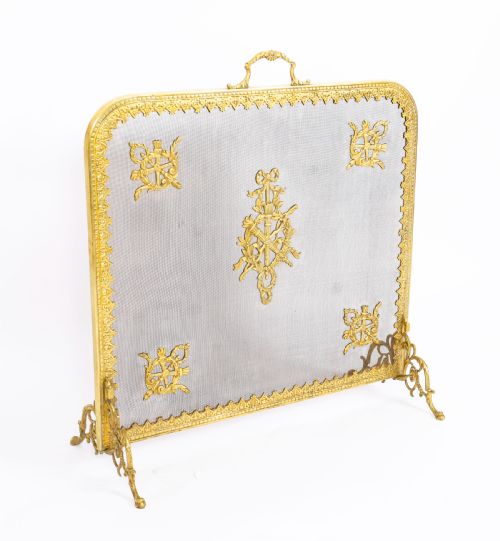
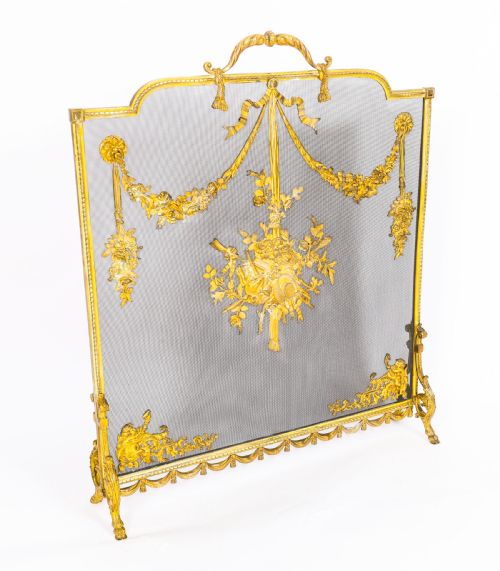
A gold metal hearth guard encompasses brass, gilt bronze, ormolu, and gilt brass fire screens, spark guards, and fenders found on this page. These pieces date from the Victorian period through the early twentieth century, spanning styles such as French Rococo Revival, Louis XVI, and Regency.
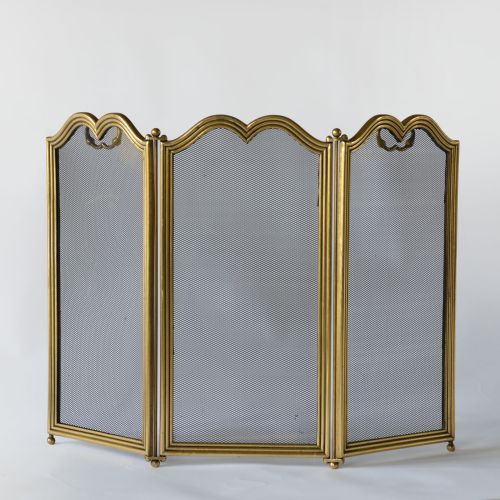
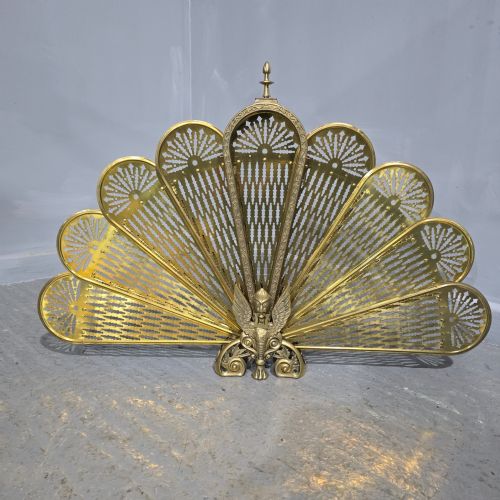
You will most frequently meet upright fire screens and low fenders in brass or gilt finishes, often featuring mesh panels, folding sections, or pierced decoration. The selection draws heavily on nineteenth-century French and British workshops, balancing functional spark protection with ornate metalwork.
Materials and construction methods
Construction relies on cast and sheet brass, gilt bronze, and ormolu, combined with wire and iron mesh for spark protection. Frames are shaped through casting, piercing, and hammering to create intricate Rococo scrolls, floral trophies, and classical motifs.
Makers integrated folding mechanisms, extending rails, and tripartite hinges into heavier metal frames. The metallic surfaces were frequently polished, gilt, or left with the warm patination typical of nineteenth-century foundry work.
Materials recorded across the inventory include brass, wire mesh, gilt bronze, ormolu, steel, and iron.
Evaluating quality and craftsmanship
Quality separates simple utility from master craftsmanship through the depth of metal casting and the crispness of pierced detailing. Superior examples display finely chased bronze or brass ornamentation, substantial weight, and robust framing rather than thin pressed sheet metal.
The sophistication of the stylistic revival matters, with pieces executed in the manner of Louis XIV or Rococo revival showing greater sculptural confidence in their scrolls, dolphins, and musical trophies. Integrated mesh panels and fully articulated folding screens also indicate higher production standards.
E F Caldwell New York·George Bullock
The Gold Metal Hearth Guard Glossary
- Ormolu
- Gilded bronze, where a layer of gold is applied to a bronze base using mercury amalgamation or electrochemical plating. This technique produces a deep, warm metallic lustre seen on finer nineteenth-century frames.
- Fender
- A low metal guard placed on the floor around the hearth to contain stray embers and logs. These items often feature pierced brass or steel and match the surrounding fire furniture.
- Spark guard
- A protective barrier, frequently constructed from wire mesh and brass frames, designed to stop flying sparks from escaping the fireplace. Many designs fold away or stand independently.
- Rococo revival
- A nineteenth-century design style mimicking the asymmetrical curves, scrolls, and naturalistic motifs of the French eighteenth century. It appears frequently on French and British brass screens.
- Pierced brass
- Sheet metal perforated with decorative patterns such as flowers or geometric shapes. This method lightens the visual weight of the guard while permitting heat to radiate.
Gold Metal Hearth Guard: Frequently Asked Questions
What is the difference between a fender and a screen?
A fender sits flat on the hearth floor to contain logs and rolling embers within the fireplace opening. It provides a low physical boundary around the hearth.
A screen stands upright to block radiant heat and catch flying sparks before they reach the room. Screens often incorporate folding panels and decorative mesh.
How do I identify French revival styles?
French revival styles display characteristic ornamentation such as asymmetrical Rococo scrolls, classical trophies, and floral garlands. Look for cast bronze or gilt brass frames that echo Louis XIV or Louis XVI aesthetics.
British Victorian pieces tend toward heavier construction with pierced floral or geometric patterns. French pieces frequently prioritize sculptural bronze work and elaborate crests.
Are these guards suitable for open fires?
Most of these guards were built for active coal or wood fires, utilising sturdy brass, iron mesh, and wire. They provide a practical barrier against spitting embers.
Some delicate gilt bronze ormolu pieces function primarily as decorative room furniture. Check the mesh condition and frame stability before regular use with a roaring fire.
How should I clean polished brass?
Polished brass requires gentle dusting and occasional cleaning with a non-abrasive metal cleaner formulated for antique surfaces. Avoid harsh scrubbing that strips the underlying patination.
Gilt bronze and ormolu need particular care to protect the delicate gold layer from wear. A soft, dry cloth is usually sufficient for regular maintenance.