


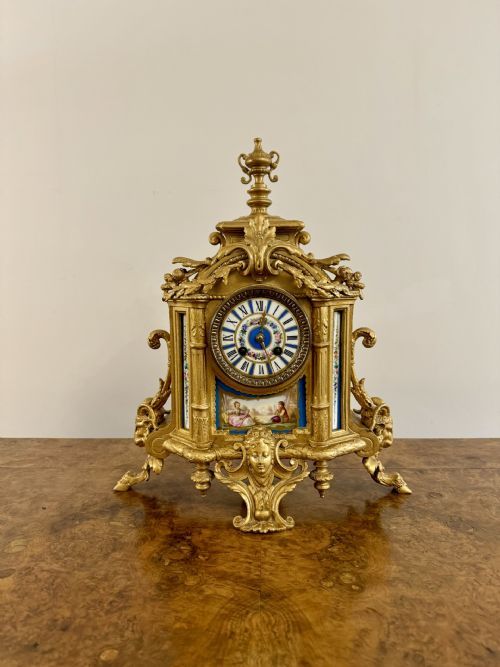


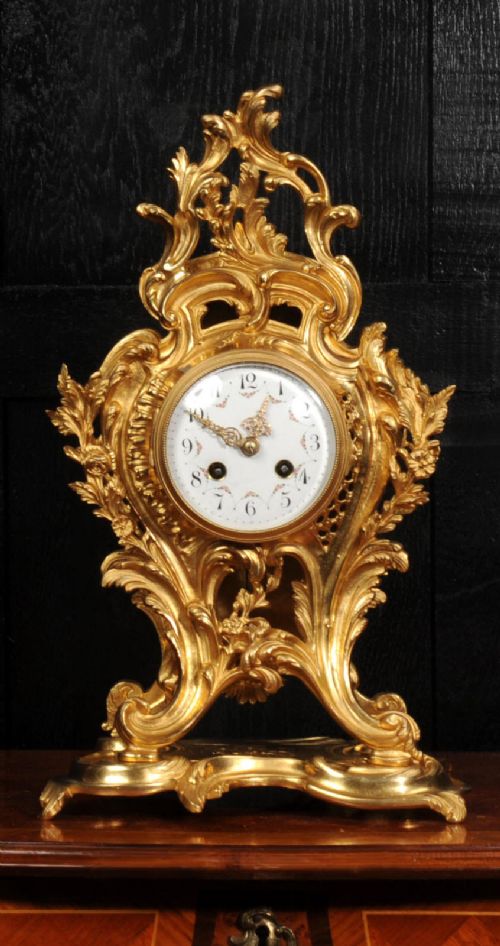


Gold Metal Desk Clock
A gold metal desk clock brings functional elegance to a study, combining polished gilt surfaces with precise mechanical timekeeping.
Gold Metal Desk Clock
A gold metal desk clock encompasses timepieces designed for tables, desks, and mantelpieces, appearing in periods from the Regency era through to the mid-twentieth century. The selection on this page relies heavily on nineteenth-century French designs alongside Victorian and Edwardian examples, spanning compact boudoir pieces and larger mantel clocks.
Most items you encounter utilise brass, gilt bronze, or ormolu as their primary metal housings, frequently paired with porcelain panels, enamel dials, or glass panels. Forms range from ornate Rococo revival cases with intricate scrolling to architectural Gothic bronze variants and sleek mid-century modern silhouettes.
Makers and retailers from London and Paris feature prominently across the periods, incorporating fusee movements, striking mechanisms, and platform escapements into the gilded frames.
Materials and construction methods
The construction of a gold metal desk clock typically involves cast brass or bronze substrates treated with fire gilding, ormolu, or electroplating to achieve the characteristic gold-coloured finish. Artisans chased and engraved the metal casings by hand, creating the textured scrolls and figurative reliefs seen in French Rococo and Victorian pieces.
Dial construction frequently incorporates white enamel with painted Roman or Arabic numerals, sometimes protected beneath bevelled glass bezels. More elaborate variants integrate champlevé enamel or painted porcelain plaques directly into the gilded metal framework.
Gold Metal Desk Clock Retail Price Guide 2026
Typical asking prices for gold metal desk clock among the pieces listed under this phrase on Sellingantiques today, from the lower quarter to the upper quarter. They describe what is for sale here now, not the wider market.
The listings feature gilt metal, brass, and ormolu alongside porcelain and enamel components across French Rococo, Victorian, and Art Deco styles.
Judging the quality of a gold metal desk clock
Quality in a gold metal desk clock rests upon the crispness of the metal chasing and the depth of the gilding, where hand-finished ormolu displays sharper relief and warmer lustre than uniform modern plating. The weight and rigidity of the cast case signal the amount of metal and labour invested in the original manufacture.
Internally, the grade of the movement dictates long-term worth, distinguishing standard platform escapements from intricate fusee movements or repeating striking mechanisms signed by established makers. The survival of fragile elements like original enamel dials, champlevé panels, and matching mercury-gilt surfaces elevates an example above altered or heavily refinished peers.
Leon Message·Jollet et Cie·John Barwise·Bently & Beck·P.H Mourey·Jaeger LeCoultre
The Gold Metal Desk Clock Glossary
- Ormolu
- A gilded bronze technique utilising a mercury amalgam to bond gold leaf to a bronze base, producing a rich matte and burnished finish typical of French decorative arts. This finish resists tarnishing and retains its warmth over centuries.
- Fusee
- A conical pulley used inside mechanical clocks to maintain even power from the mainspring as it unwinds. It ensures consistent timekeeping accuracy across the duration of the wind.
- Champlevé
- An enamelling technique where troughs are dug into the metal surface and filled with vitreous enamel powder before firing. The resulting coloured patterns contrast sharply with the surrounding metal borders.
- Carriage clock
- A portable spring-driven timepiece originally designed for travelling officers, fitted with a carrying handle and a glass-panelled brass case. Many incorporate repeating mechanisms that sound the hours upon demand.
- Escapement
- The mechanical linkage that controls the release of gear train energy to keep the pendulum or balance wheel swinging. It regulates the forward motion of the clock.
Gold Metal Desk Clock: Frequently Asked Questions
What is the difference between ormolu and gilt brass?
Ormolu specifically denotes fire-gilded bronze where a gold and mercury mixture is fused to the metal base through heat. Gilt brass usually refers to a brass foundation treated with modern electroplating or simpler gilding methods.
Ormolu displays a deeper, more nuanced texture under close inspection. Gilt brass often appears thinner and more uniform across flat surfaces.
Where were most nineteenth-century gilt desk clocks made?
Paris served as the primary manufacturing centre for ornate gilt metal and ormolu clocks during the nineteenth century. Many pieces carry French foundry marks or signatures on their backplates.
London workshops also produced notable fusee desk and mantel clocks, often housed in heavy architectural brass or bronze cases.
How should I clean a gilded metal clock case?
Dust the exterior surfaces gently with a soft, dry artist brush to remove particles trapped within the chased recesses. Avoid commercial metal polishes, as they strip away thin layers of historical gilding.
Keep moisture away from enamel dials and glass panels during maintenance. Professional conservation is recommended for heavily tarnished or fragile ormolu surfaces.