

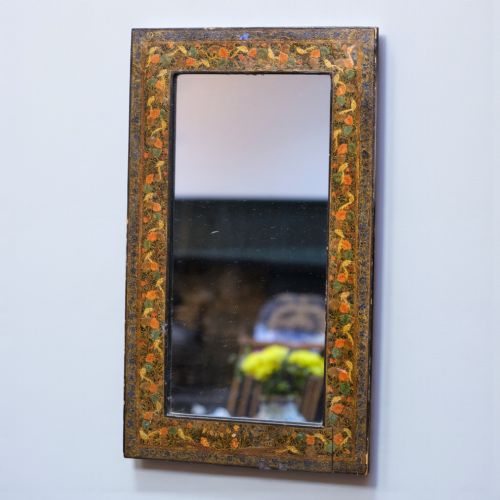
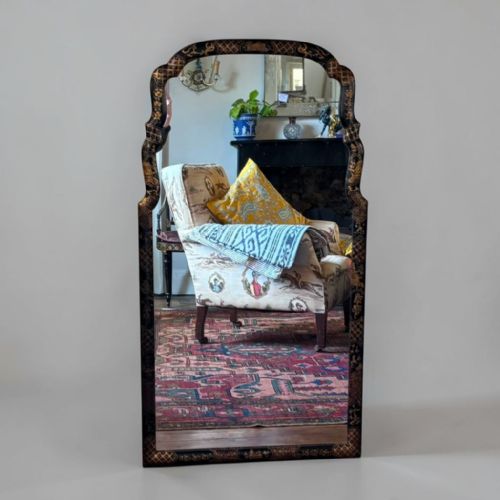
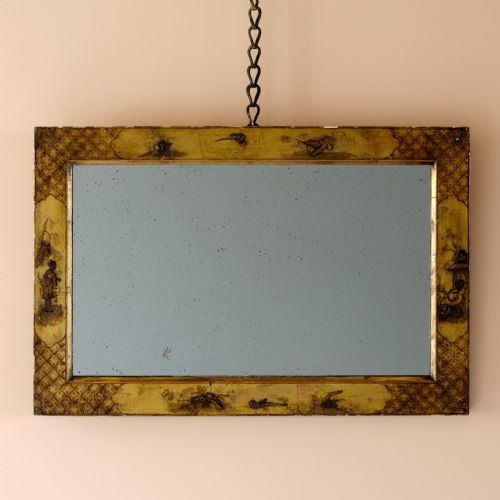

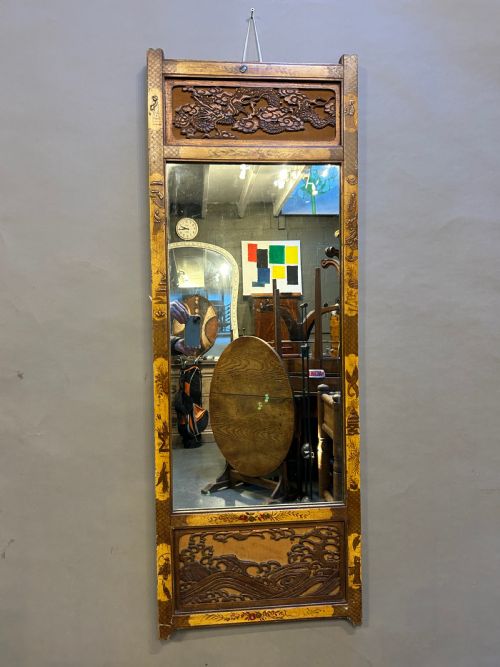


Gold Lacquered Mirror
A gold lacquered mirror brings rich colour and exotic narrative to a room, catching the light across centuries of craftsmanship.
Gold Lacquered Mirror
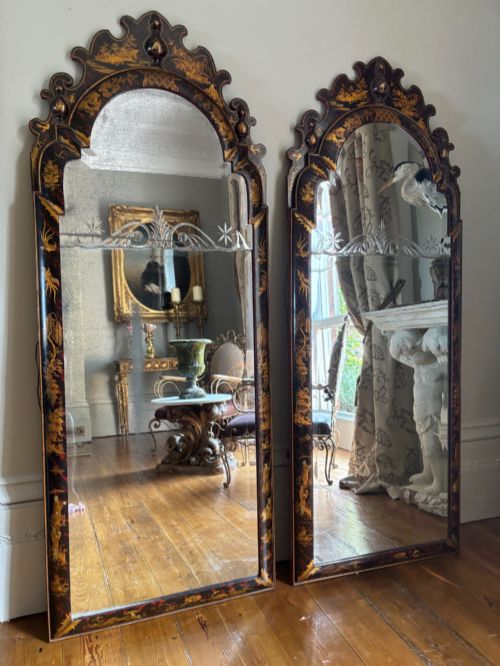
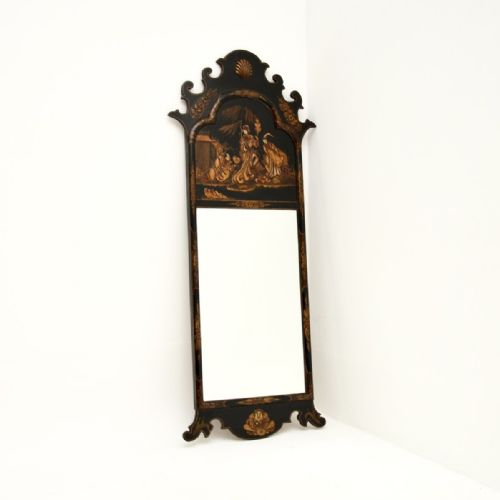
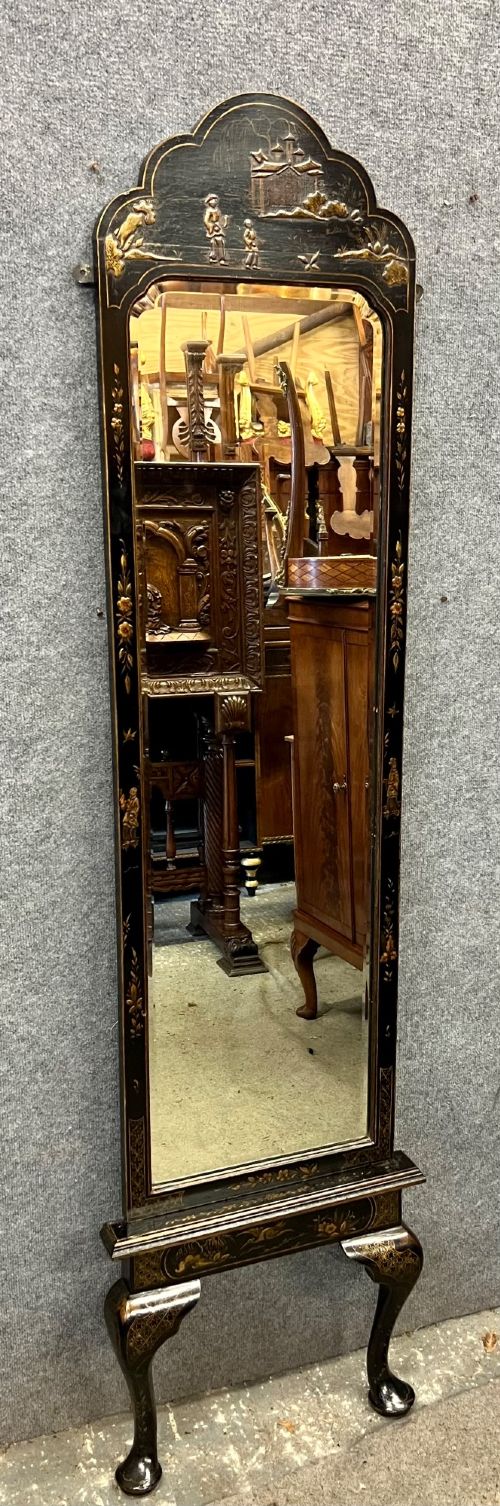
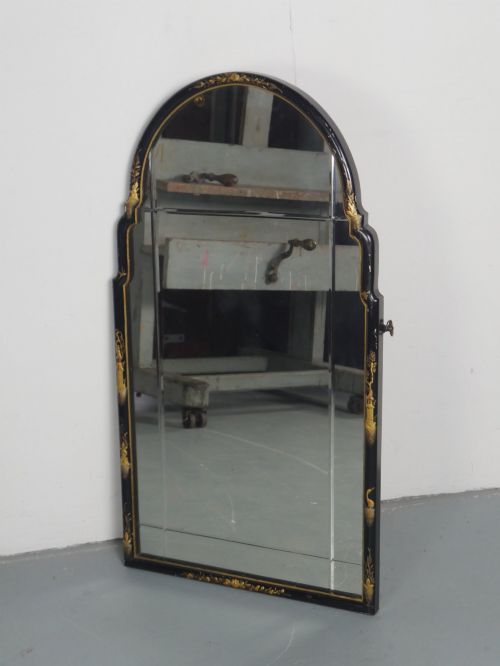
A gold lacquered mirror is a decorative looking glass finished with oriental lacquer and gilt highlights, frequently executed in the Chinoiserie style. Buyers seeking a gold lacquered mirror encounter numerous wall mirrors alongside table mirrors and console tables. These pieces emerge across the nineteenth century, the Victorian era, and into the twentieth century.
The aesthetic draws heavily on revived historical idioms such as Queen Anne, George II, and Edwardian interpretations. Oval wall mirrors and pier mirrors dominate the forms, often displaying intricate painted scenes. The origin spans British revival workshops and continental interpretations influenced by French Empire taste.
Examples range from compact Victorian dressing table pieces to large Edwardian oval wall mirrors. Red japanned finishes and ebonised wood frequently accompany the gold lacquer and giltwood construction. Each piece offers a distinct glimpse into historical interior decoration traditions.
Materials and construction
Construction relies on timber foundations, principally wood shaped into frames for wall and table mirrors. Wood carvers and cabinet makers form the substrate before surface decorators apply layers of lacquer. Mirror glass provides the reflective surface, occasionally held within ebonised wood or giltwood surrounds.
Gold Lacquered Mirror Retail Price Guide 2026
Typical asking prices for gold lacquered mirror among the pieces listed under this phrase on Sellingantiques today, from the lower quarter to the upper quarter. They describe what is for sale here now, not the wider market.
Listings feature pieces spanning the eighteenth to the twentieth centuries, utilising wood, glass, lacquer, and gilt.
Distinctions in quality
The refinement of the painted Chinoiserie decoration dictates the visual success of the piece, separating accomplished artistic work from simpler surface application. Crisp carving on giltwood and wood frames demonstrates superior workshop practice over mechanical shaping. The preservation of the original lacquer surface and mirror glass preserves the integrity of the object.
Proportion and harmony between frame dimensions and pictorial detail distinguish finer examples from standard production. The depth and lustre of the gold leaf and lacquer layers reflect the time invested by the maker. Period consistency in revival pieces also influences the standing of individual mirrors.
The Gold Lacquered Mirror Glossary
- Chinoiserie
- European artistic style reflecting Chinese motifs and decorative techniques. This aesthetic flourished across seventeenth and eighteenth-century furnishings and returned in later revival periods.
- Japanning
- European imitation of East Asian lacquerwork involving layered varnishes and heat curing. The technique produces a hard, glossy finish often finished in black or red with gold detailing.
- Pier mirror
- Tall looking glass designed to hang on the wall between windows. These mirrors frequently paired with console tables to reflect natural light into a room.
Gold Lacquered Mirror: Frequently Asked Questions
How do I date a Chinoiserie mirror?
Dating relies on examining the construction methods of the wood frame, the backing boards, and the characteristics of the mirror glass. Earlier examples from the Georgian period display hand-bevelled glass and heavier timber preparation.
Revival pieces from the Victorian and Edwardian eras often utilise machine-sawn backing and different glass manufacturing traits. Comparing the specific Chinoiserie motifs and lacquer formulation to known period styles clarifies the date further.
Where should I hang a wall mirror?
These mirrors suit locations where they can capture and reflect ambient light, such as above a fireplace mantelpiece or opposite a window. Placing a pier mirror between windows maximises illumination in darker reception rooms.
Ensure the wall structure supports the weight of the wood and glass frame securely. Height placement should ideally centre the reflective glass at eye level for balanced interior proportion.
What is the difference between black and red lacquer?
Black lacquer provides a neutral, glossy dark background that makes gold Chinoiserie detailing stand out with high contrast. It remains the dominant choice across Victorian and Edwardian wall mirrors.
Red lacquer, often associated with japanned surfaces, delivers a bolder visual statement within a room. Both finishes employ similar resin and varnish layering techniques to achieve their protective sheen.
How do I care for antique lacquer?
Maintain antique lacquer by dusting gently with a soft, dry microfibre cloth to prevent surface scratching. Avoid using chemical polishes, water, or commercial cleaners which can damage the delicate varnish layers.
Keep the piece away from direct sunlight and extreme temperature fluctuations to prevent the wood substrate from warping and the lacquer from cracking.