

Gold Gilt Sconces
Gold gilt sconces bring warm, reflected candlelight and sculptural presence to a room, spanning grand French chateaux to intimate Victorian parlours.
Gold Gilt Sconces
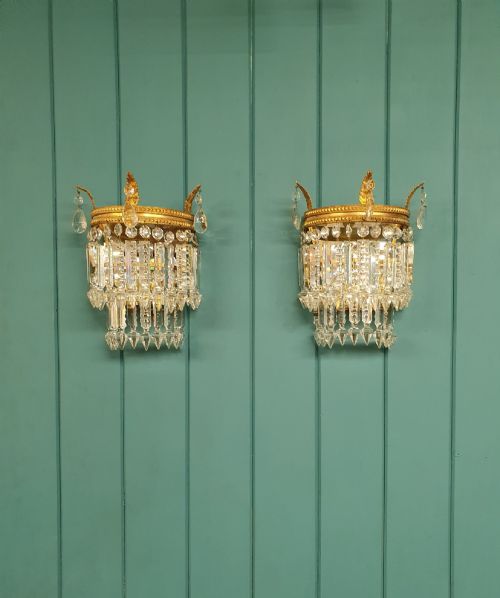
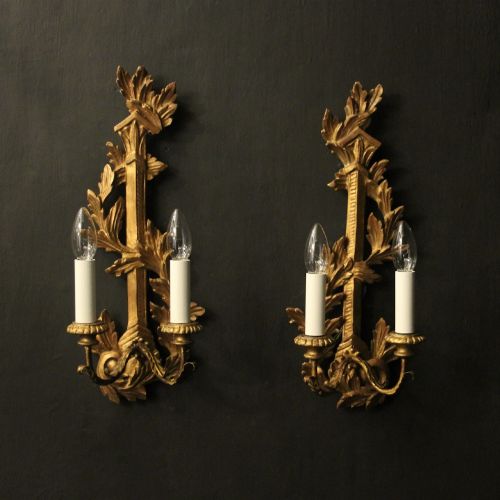
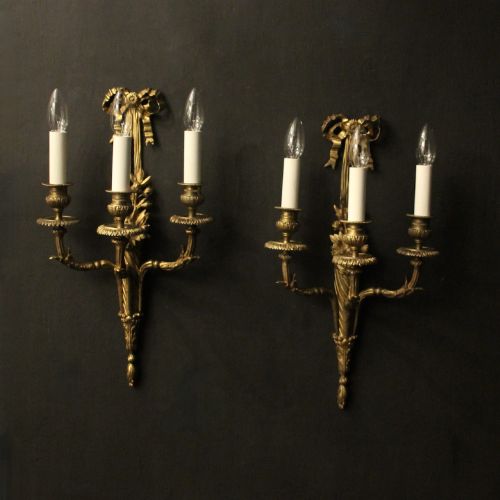
Gold gilt sconces encompass wall-mounted light fittings and ornamental brackets designed to hold candles or illuminate interiors with metallic brilliance. When exploring gold gilt sconces, buyers encounter a diverse array of wall lights, girandoles, and mirrored sconces originating from the eighteenth century through to the early twentieth century.
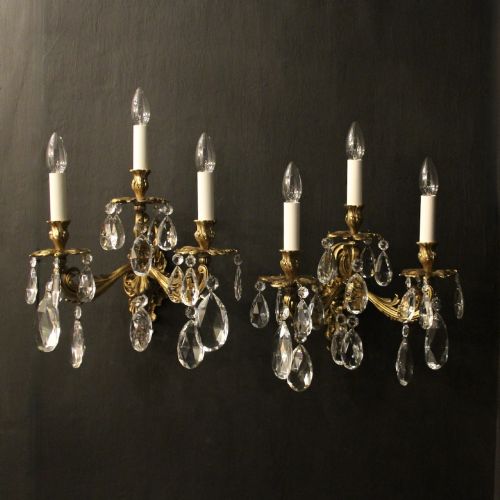
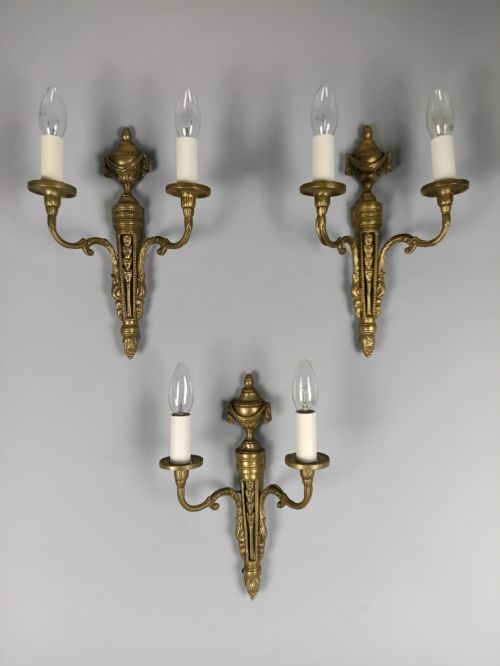
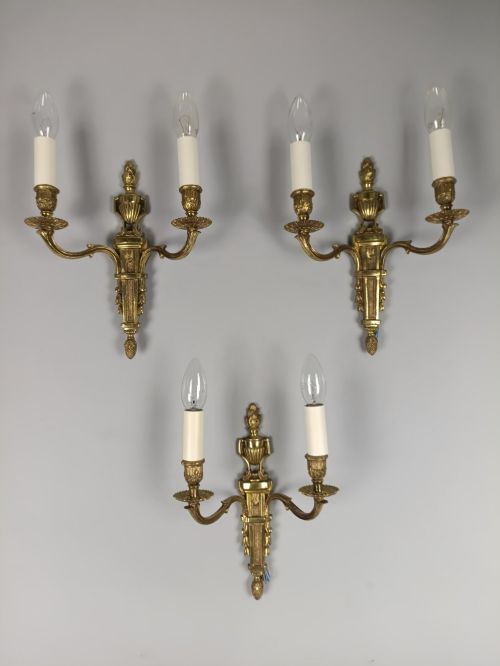
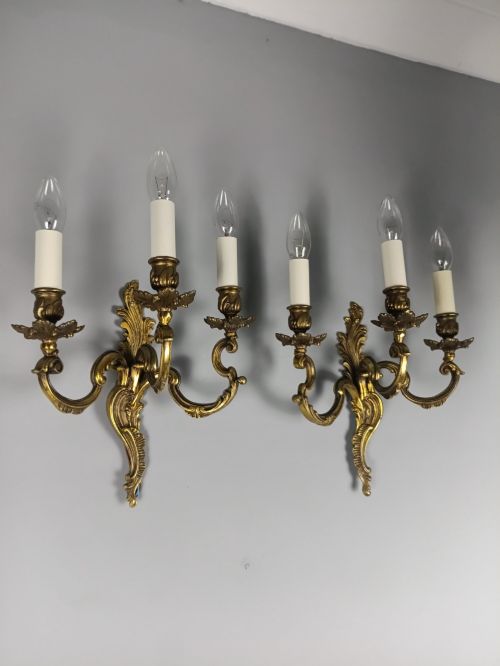
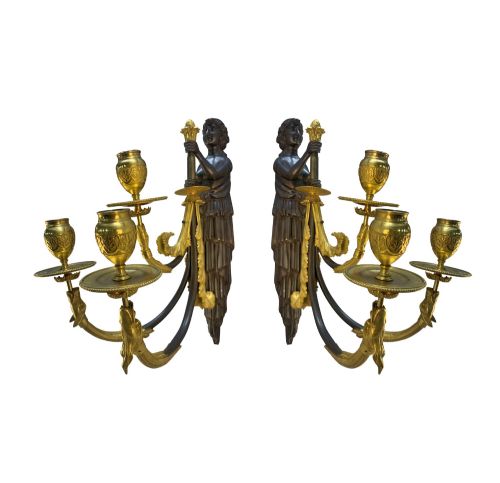
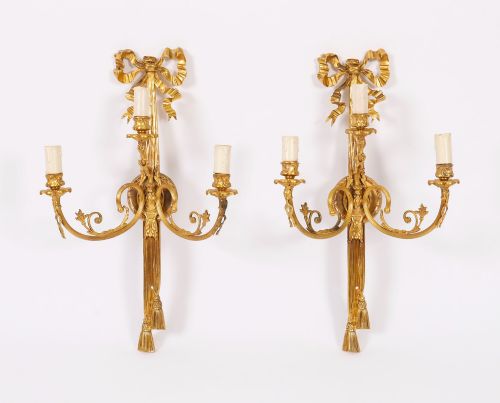
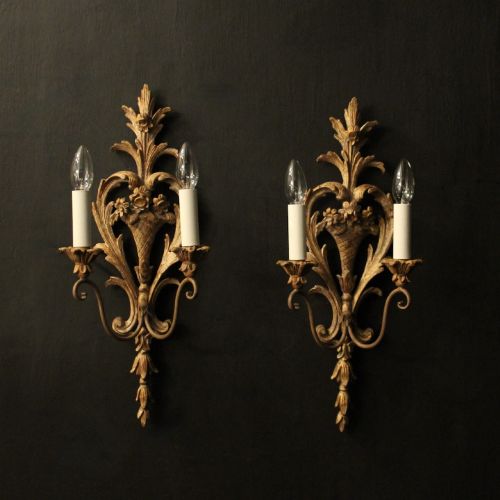
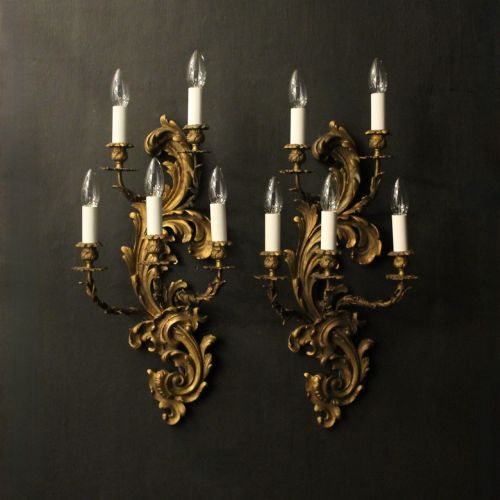
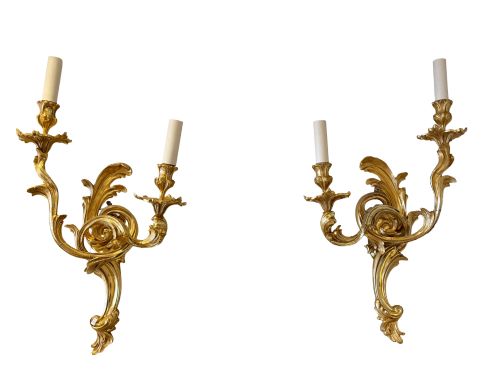
The most common iterations on this page are French twin-arm and multi-branch wall lights fashioned in the nineteenth and early twentieth centuries. These pieces frequently draw upon historic design vocabularies such as French Rococo, Louis XVI Revival, and Empire styles, reflecting a enduring taste for ornate illumination.
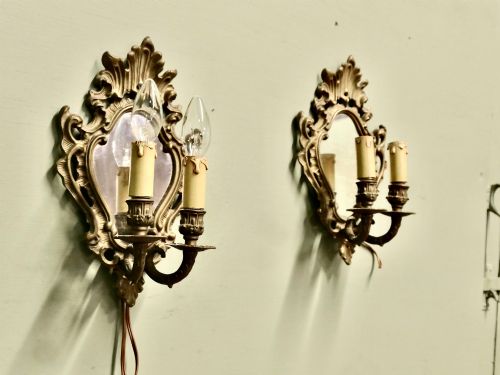
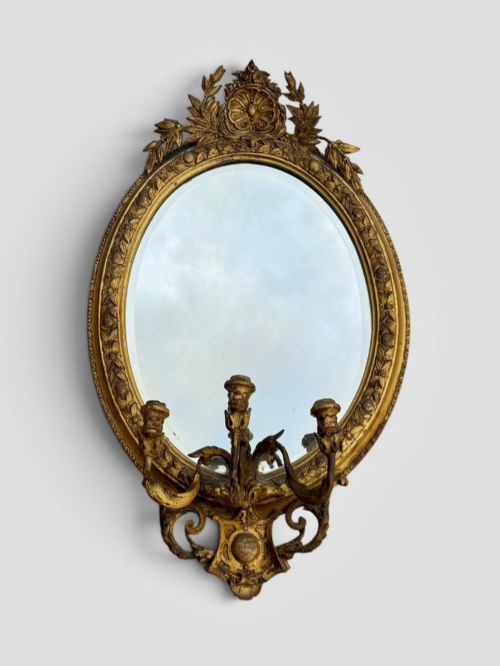
Alongside metal fixtures, the selection includes carved wooden girandoles and gesso mirrors equipped with candle arms. These items combine reflective glass with gilded surfaces to maximise ambient light in darker period rooms.
Materials and construction
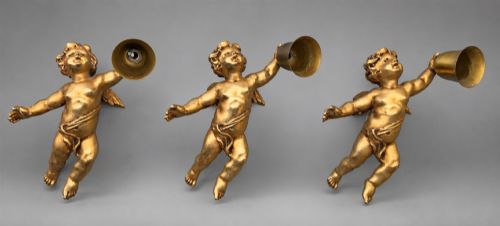
The manufacture of these wall lights relies heavily on cast metals such as bronze, brass, and ormolu, which provide a sturdy armature for branching arms and sculptural details like putti or acanthus leaves. Artisans chased and gilded these metal surfaces to achieve a rich, enduring metallic sheen.
Alternative pieces utilise carved wood, gesso, and glass, particularly within Italian Florentine and English traditions. Skilled carvers shaped timber or built up gesso layers before applying fine gold leaf to create intricate frames and decorative wall brackets.
Gold Gilt Sconces Retail Price Guide 2026
Typical asking prices for gold gilt sconces among the pieces listed under this phrase on Sellingantiques today, from the lower quarter to the upper quarter. They describe what is for sale here now, not the wider market.
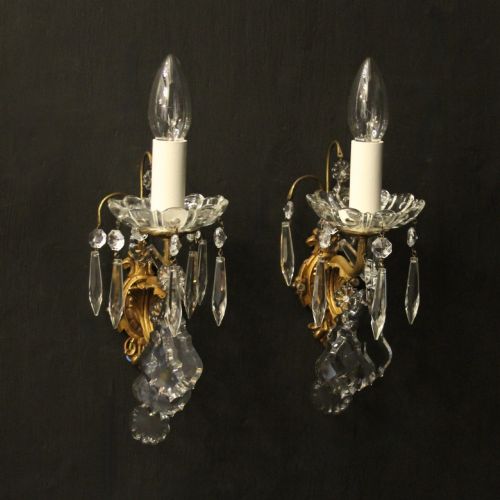
Materials recorded across the inventory include gilt bronze, carved gesso, crystal glass, and Florentine giltwood.
Distinctions in craftsmanship
Quality reveals itself in the crispness of the casting and the depth of the hand-chasing on metal mounts, where superior pieces exhibit sharp relief and naturalistic detail in foliage or figurative elements. Inferior examples often display softened edges and repetitive, machine-smoothed surfaces.
In wooden and gesso pieces, the finesse of the hand-carving and the integrity of the original gilding dictate the standing of the object. Pieces that retain their original gold leaf with minimal restoration possess greater historic and aesthetic coherence than those heavily repainted over time.
Casier
The Gold Gilt Sconces Glossary
- Ormolu
- Gilded bronze, typically produced by applying a mercury-gold amalgam to a cast bronze base and heating it to drive off the mercury. This technique creates a durable, luminous golden finish characteristic of fine French decorative arts.
- Girandole
- A branched wall light or sconce featuring a mirrored backplate. The reflective glass serves to amplify the candlelight within the room.
- Gesso
- A plaster-like mixture applied to wood surfaces as a smooth base for gilding. It allows craftsmen to carve intricate relief ornaments before laying gold leaf.
- Appliqué
- A French term frequently used interchangeably with wall sconce. It denotes a decorative light fixture mounted directly onto a vertical wall surface.
- Campana
- A vase-shaped candle socket resembling an inverted bell. This classical form appears frequently on nineteenth-century branch lights and candlesticks.
Gold Gilt Sconces: Frequently Asked Questions
How were gold gilt sconces originally mounted and used?
These fixtures were attached directly to drawing room and hallway walls, positioned to flank doorways, fireplaces, or large mirrors. By placing them opposite windows or reflective surfaces, historical homeowners maximised the flickering glow of wax candles.
Over time, many of these antique wall lights were carefully adapted to electricity to suit modern living while retaining their original decorative arms and wall plates.
Can I wire antique wall sconces for modern electricity?
Most metal and wooden wall lights from the nineteenth and twentieth centuries can be retrofitted with electrical wiring by a qualified professional. The hollow brass and bronze arms often accommodate modern internal flex without altering the exterior appearance.
When living with these pieces, low-wattage LED candle bulbs help protect delicate nineteenth-century gilding and glass components from excessive heat.
What is the difference between ormolu and gilt brass?
Ormolu specifically describes high-status mercury-gilded bronze, a technique mastered by French bronziers to achieve a deep, warm golden lustre that resists tarnishing. Gilt brass uses a less costly base metal and various twentieth-century gilding methods.
Both materials provide a bright metallic finish, but ormolu typically exhibits sharper chisel work and greater weight.
How do I date a pair of antique wall lights?
Dating relies on stylistic clues, casting techniques, and material composition. Pieces reflecting Louis XVI Revival or French Empire motifs often date from the late nineteenth century, mirroring historical revivals rather than the original eighteenth-century periods.
Examining the backplates, screw threads, and mounting brackets also helps determine whether a fixture originates from the nineteenth century or the interwar period.