

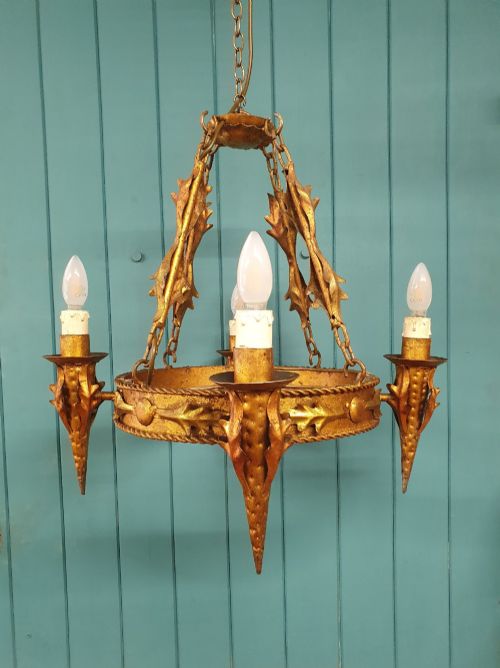
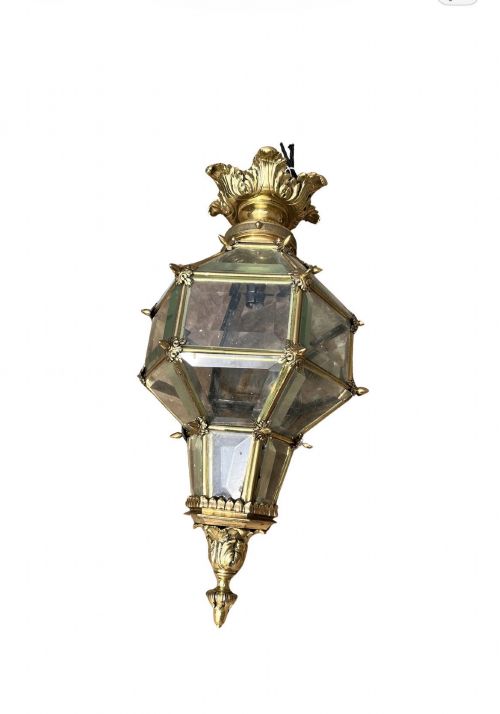


Gold Gilt Ceiling Lamp
A gold gilt ceiling lamp brings warmth and reflected light to a room through gilded metalwork and glass.
Gold Gilt Ceiling Lamp
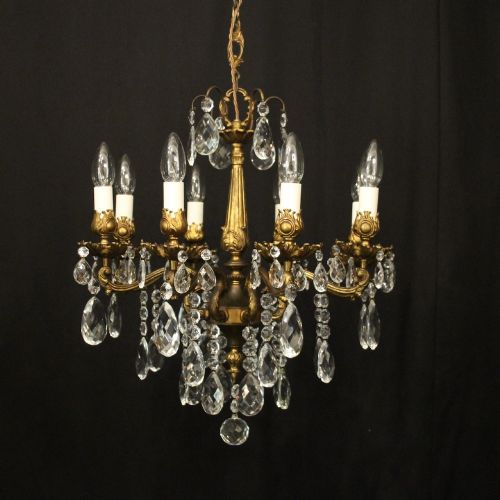
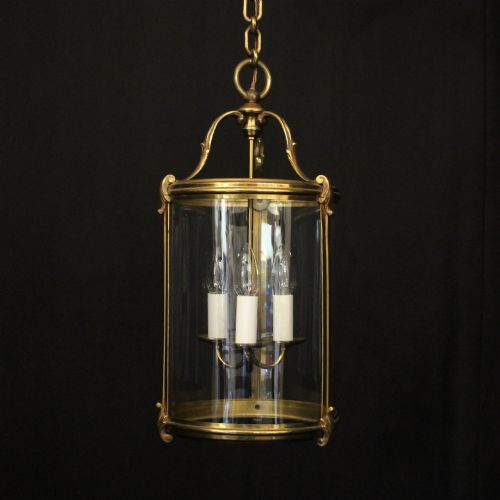
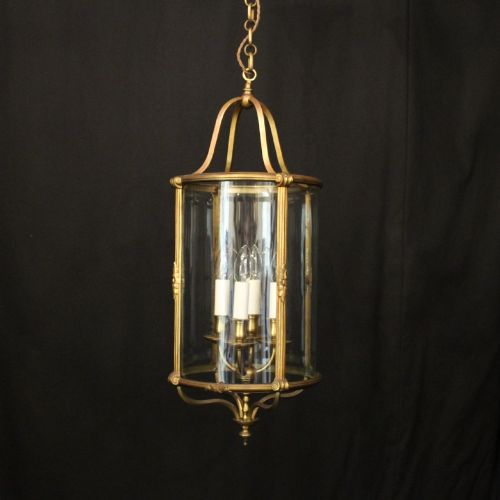
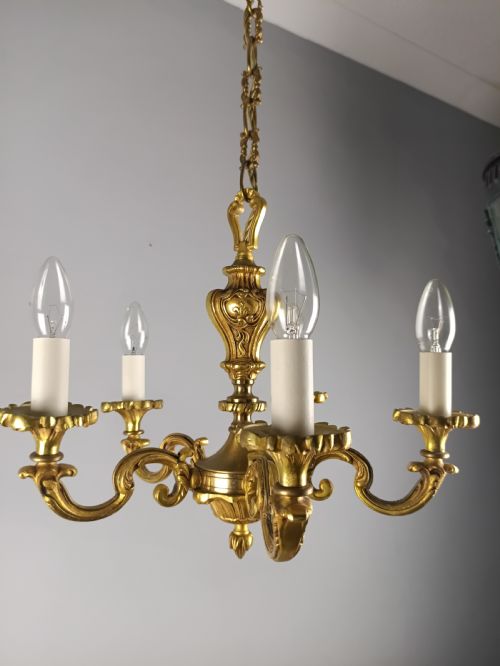
A gold gilt ceiling lamp spans multiple forms, including multi-arm chandeliers, hanging hall lanterns, and single-light pendants. These fittings illuminate interior spaces while serving as decorative architectural elements overhead.
Most examples found on this page originate from French workshops spanning the nineteenth and early twentieth centuries. Styles range from classical Empire and Neoclassical designs to ornate Rococo revivals and provincial toleware branches.
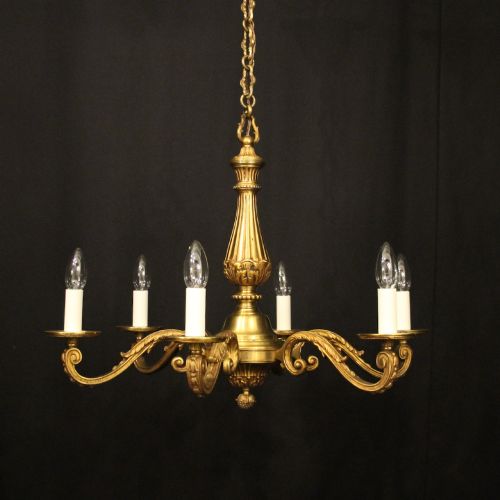
Buyers encounter fixtures fitted with varying numbers of candle arms or electric lights, often dressed with crystal drops or glass spikes. The selection relies heavily on cast bronze, brass, and giltwood structures.
Materials and construction methods
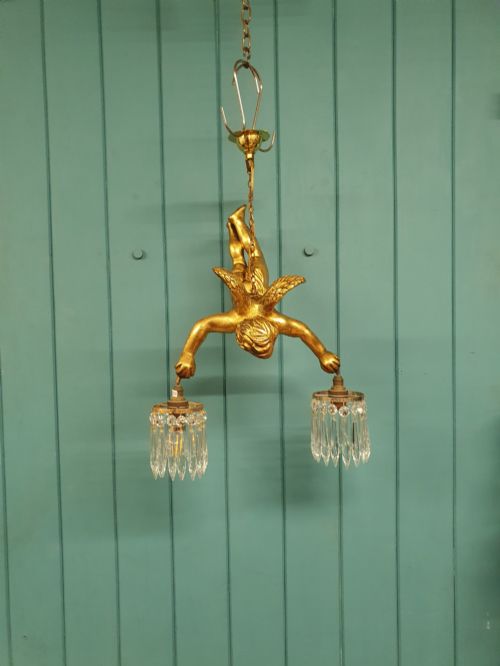
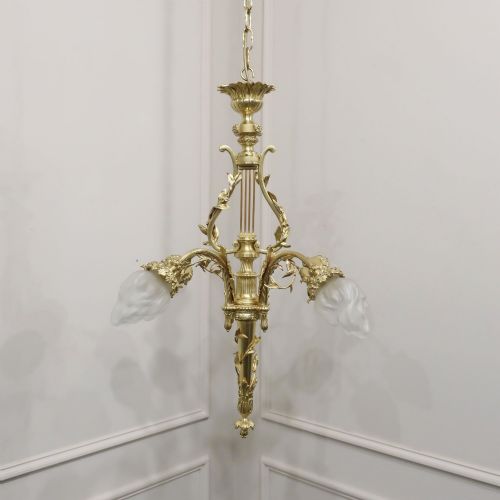
Metal components are formed from cast bronze, brass, or spelter, then finished with gold leaf or gilt layers to create a reflective surface. Skilled artisans shaped the metal frames by hand, integrating decorative motifs such as cherubs, coronets, and floral garlands.
Transparent elements such as cut glass, crystal drops, and opaline glass panels are integrated into the metal frameworks to amplify the distribution of light. Toleware and ceramic elements appear on specific regional pieces, adding colour and texture to the metallic frames.
The inventory includes diverse lighting formats ranging from French hall lanterns to eighteen-light crystal chandeliers.
Distinctions in craftsmanship
Quality rests in the crispness of the metal casting and the depth of the gilding applied to the bronze or brass frame. Finer pieces display meticulously hand-chased details on the metalwork rather than smooth, machine-flattened surfaces.
The assembly of the crystal drops, glass beads, and structural pins dictates the overall integrity of the hanging light. Superior examples employ hand-cut crystal and robust internal wiring or robust candle sockets appropriate to their period.
Perry & Co
The Gold Gilt Ceiling Lamp Glossary
- Gilt bronze
- Metal alloy cast into decorative shapes and coated with a thin layer of gold or gold-coloured leaf. This technique prevents oxidation and provides a durable, lustrous finish.
- Cut glass
- Glass that has been shaped and faceted on a wheel to increase light refraction. These faceted pieces hang from the metal arms to create sparkle.
- Tent and waterfall
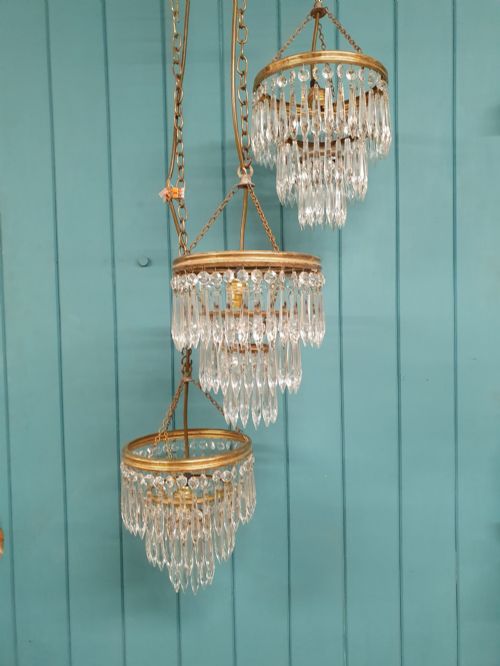
- A chandelier configuration where strings of small glass beads form an upper tent shape above a wider cascading tier of crystals. This style directs illumination across a broad area.
- Toleware
- Painted sheet metal shaped into floral or organic forms for decorative light fixtures. It introduces painted colour alongside gilded surfaces.
- Spelter
- A zinc alloy commonly utilised as a less costly alternative to bronze for cast figures and ornaments. It is frequently gilded to match brass components.
Gold Gilt Ceiling Lamp: Frequently Asked Questions
Are these lamps wired for modern electricity?
Many historical fixtures arrive with wiring adapted for contemporary electrical standards, though some retain older configurations. Buyers should consult a qualified electrician to inspect and test the internal wiring prior to installation.
Rewiring preserves the original metal frame while ensuring the lamp meets current safety codes. Standard candle-sized bulbs are typically used to replicate the original aesthetic.
How do I determine the correct size for my room?
Consider both the ceiling height and the floor area of the space when selecting a hanging light fixture. Large multi-arm chandeliers require adequate clearance below, while compact lanterns suit smaller hallways or lower ceilings.
Proportion remains key to balancing the visual weight of heavy bronze and crystal designs within a domestic interior. Measure the span of the arms against the dimensions of the room before purchase.
What is the difference between an Empire and a Rococo style?
Empire style fixtures draw on classical Roman and Greek motifs, featuring symmetrical lines, laurel wreaths, and restrained geometric forms. They emphasise formal dignity and structural clarity.
In contrast, Rococo revival designs showcase asymmetrical curves, naturalistic leaf scrolls, and ornate floral flourishes. These pieces celebrate dynamic movement and elaborate ornamentation.