

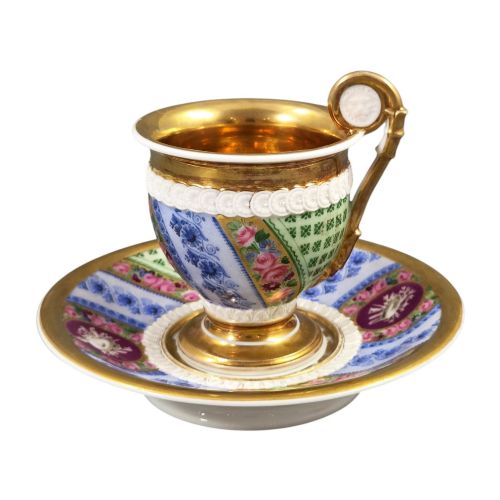


Gold Gilded Saucer
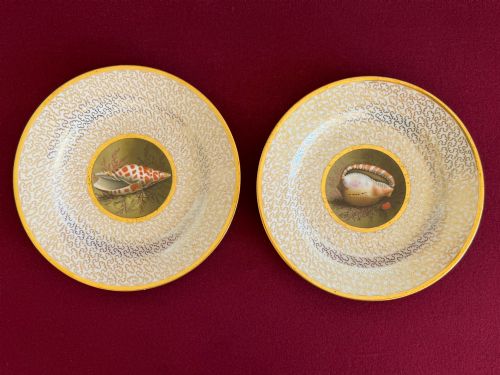
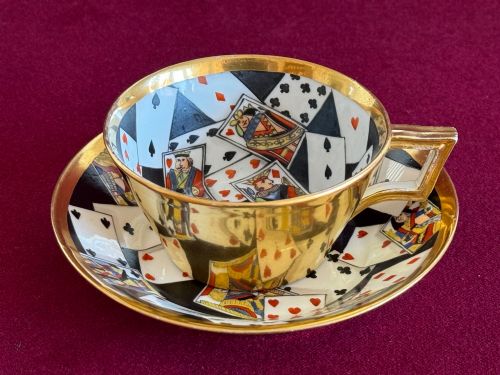
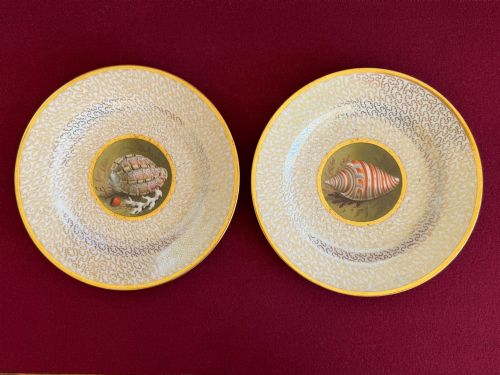
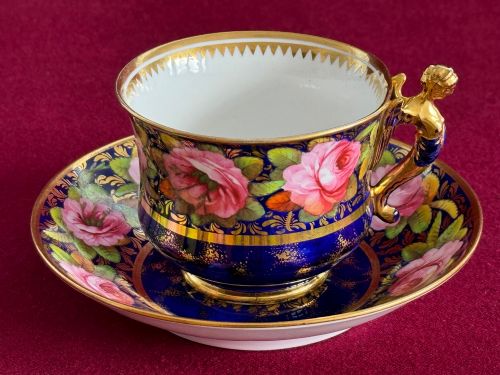
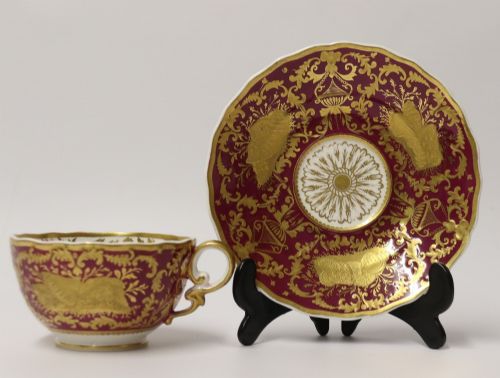
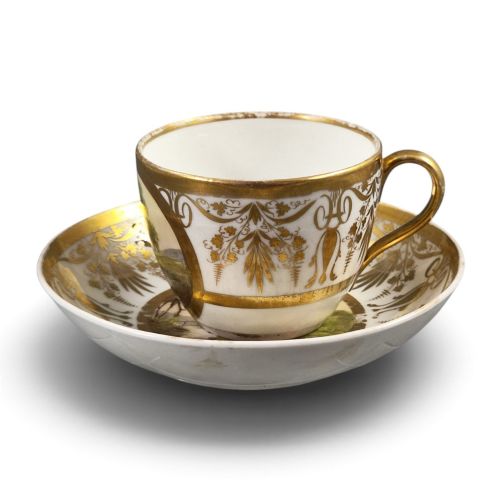
A gold gilded saucer brings refined nineteenth-century ceramics to the table, pairing brilliant metallic accents with delicate painted porcelain.
Gold Gilded Saucer
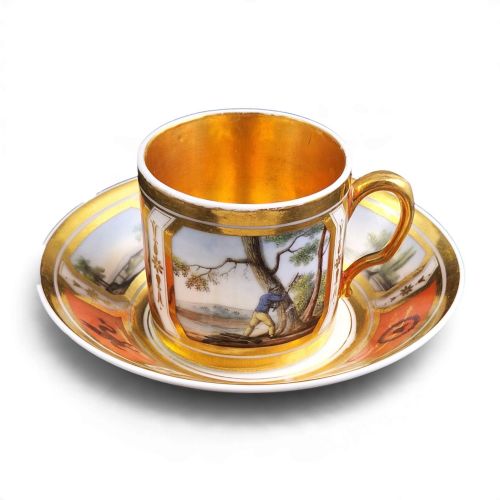
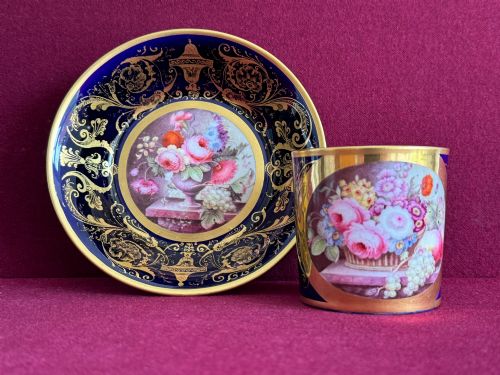
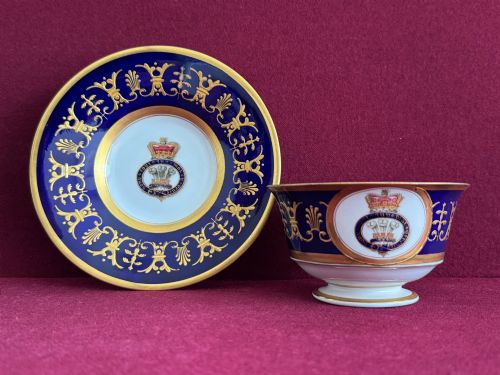
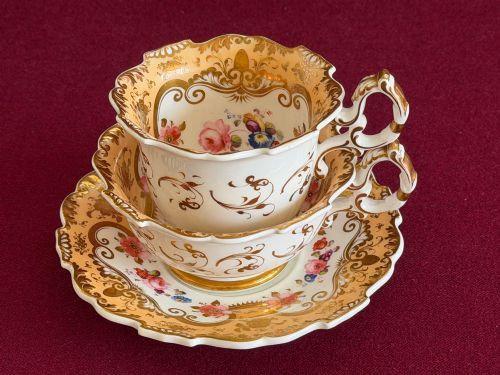
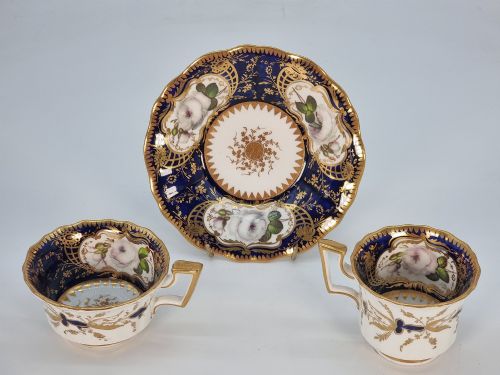
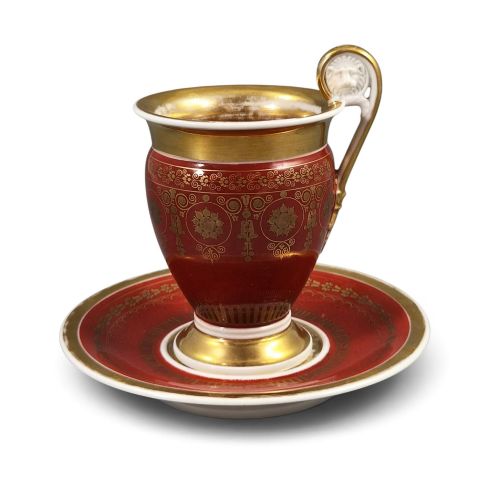
When you search for a gold gilded saucer, you encounter small ceramic dishes created primarily during the Georgian, Regency, and nineteenth-century periods. These items often accompany matching teacups, coffee cans, or chocolate cups as part of larger cabinet trios and tea sets.
The versions most commonly met on this page originate from English factories like Worcester and Spode, alongside continental European makers such as French Old Paris and KPM Berlin. Many examples combine traditional forms with hand-painted landscapes, floral motifs, or martial scenes.
How they were made
Potters shaped these vessels using bone china, hard-paste porcelain, and earthenware, firing the clay before applying intricate hand-painted enamel designs. Artisans then added gold leaf and gilding to rims, handles, and borders to create high-contrast decorative highlights.
Techniques varied from delicate brushwork depicting rural views to moulded structural elements like lion mask handles and image handles. Following the initial painting, pieces underwent subsequent kiln firings to set the metallic leaf and vibrant surface colours.
Gold Gilded Saucer Retail Price Guide 2026
Typical asking prices for gold gilded saucer among the pieces listed under this phrase on Sellingantiques today, from the lower quarter to the upper quarter. They describe what is for sale here now, not the wider market.
Listings span from the eighteenth century through the 1960s, featuring porcelain, bone china, and earthenware across English, French, German, Russian, and Japanese origins.
What varies in quality
Quality rests upon the precision of the hand-painted details and the purity of the porcelain body. Pieces decorated by named artists or produced by premier manufactories demonstrate superior control over form and pigment.
The application of the gold leaf also distinguishes finer specimens, where burnished gilding retains its depth and brilliance rather than appearing flat or worn.
Spode·Barr Flight and Barr·Royal Flight Barr And Barr·Duesbury And Kean·Minton·H And R Daniel·Coalport·KPM Berlin·Flight And Barr·Grainger's Worcester·Kusnetzoff·Fritz Heckert·Royal Worcester·Davenport·Taniguchi·Hutschenreuther·Hirsch Dresden·Spode Copeland
The Gold Gilded Saucer Glossary
- Coffee can
- A straight-sided cylindrical cup designed for drinking strong coffee, frequently paired with a matching saucer in Regency sets.
- Hard-paste porcelain
- A durable ceramic composition fired at high temperatures using kaolin and petuntse, producing a dense white body.
- Bone china
- A British ceramic innovation incorporating animal bone ash into the paste to yield a translucent and resilient body.
- Cabinet trio
- A matched set comprising a teacup, a coffee cup or can, and a saucer intended for display rather than daily service.
- Gilding
- The application of gold leaf or powdered gold to ceramic surfaces to impart a metallic decorative border.
Gold Gilded Saucer: Frequently Asked Questions
How do I use a gold gilded saucer safely?
These ceramic saucers function best for gentle display or careful service during special occasions rather than daily dining. Hand washing in warm water without abrasive sponges preserves the delicate porcelain body and metallic leaf.
Avoid using these pieces in modern dishwashers or microwaves, as the intense heat and harsh detergents degrade the antique gilding and painted enamels over time.
Were saucers always sold with matching cups?
Many nineteenth-century ceramics were manufactured as coordinated sets, pairing cups and saucers or forming complete tea and coffee trios. Makers often decorated both pieces with matching botanical, landscape, or gilt motifs.
Over the decades, individual items frequently became separated through daily use or damage, meaning surviving matched pairs and complete sets remain notable finds for collectors.
How can I tell the period of a saucer?
Dating relies heavily on identifying factory marks stamped or painted on the underside, alongside stylistic indicators like neoclassical motifs or Regency shapes. The type of ceramic body, ranging from soft earthenware to refined bone china, also points toward specific manufacturing decades.
Examining the style of hand-painted decoration helps narrow down the era, as artisans of the Georgian and Victorian periods favoured distinct colour palettes and subject matters.
What is the difference between porcelain and earthenware?
Porcelain is fired at much higher temperatures, resulting in a vitrified, non-porous body that often exhibits translucency when held to the light. Earthenware uses coarser clay bodies fired at lower heats, creating an opaque material that requires an opaque glaze for water resistance.
Antique cabinet pieces and fine saucers predominantly utilise hard-paste porcelain or bone china to achieve their delicate forms and bright white backgrounds.