

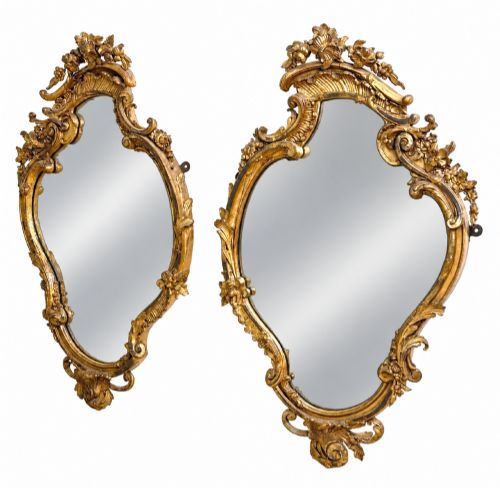
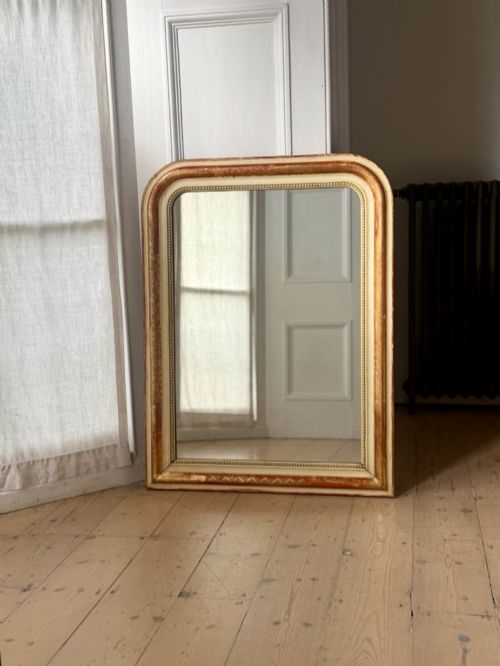
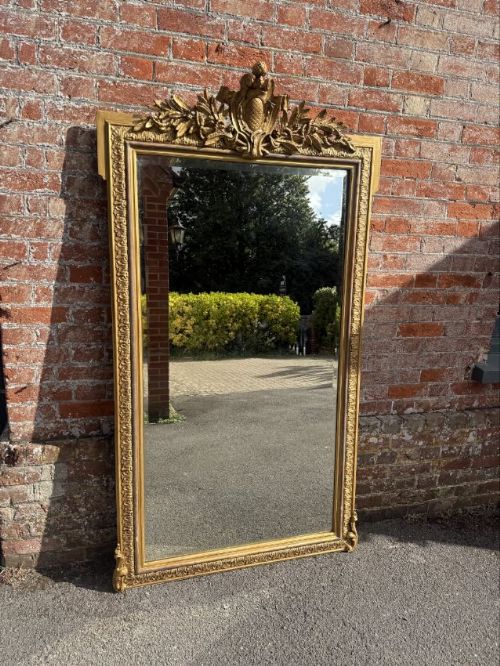
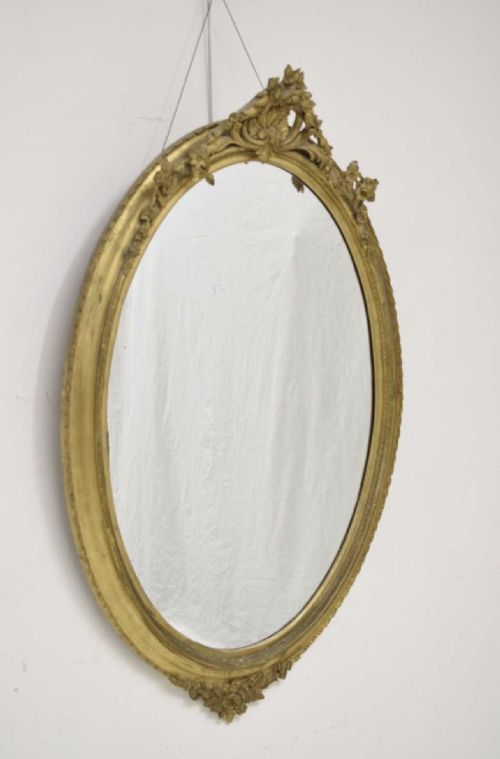
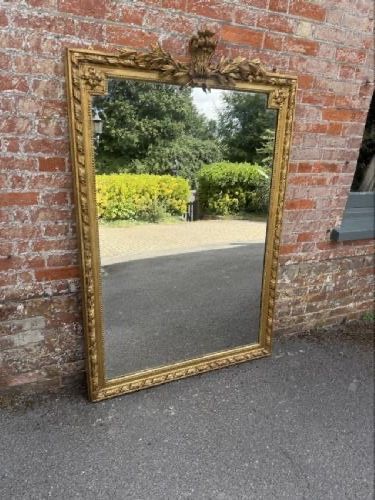


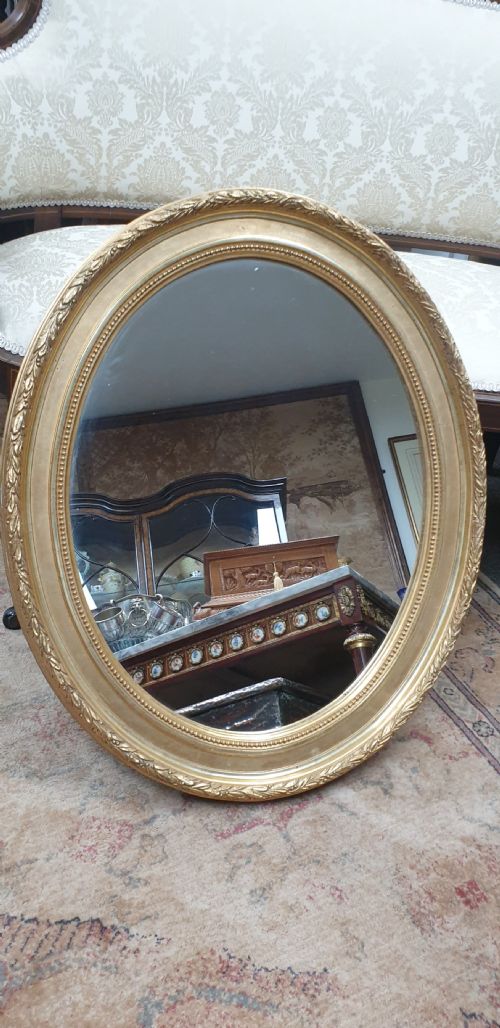

Gold Gesso Accent Mirror
A gold gesso accent mirror brings warmth and reflective depth to a room through carved wooden frames finished in brilliant leaf.
Gold Gesso Accent Mirror
A gold gesso accent mirror is a decorative looking glass housed in a carved wooden frame finished with plaster and gold leaf. These pieces serve as functional wall art, bringing light and a sense of space into interiors.
The selections available here span the nineteenth and early twentieth centuries, drawing heavily upon French Rococo Revival, Victorian, and Neoclassical styles. Buyers will frequently encounter wall mirrors and large overmantel mirrors featuring ornate details such as rope twists and shell motifs.
Origins range from English workshops to French provincial and chateau designs, utilising oak and other carved woods beneath their gilded surfaces. Each piece reflects the historic revivals popular across the Victorian era and the early twentieth century.
How they were made
The construction of a gold gesso accent mirror begins with a carved wooden base, typically formed from timber such as oak. Artisans apply gesso, a mixture of plaster and binder, directly to the wood to build up smooth surfaces and crisp relief details.
Once the gesso hardens and receives detailed carving or moulding, craftsmen apply gold leaf or gilt finishes across the frame. This traditional layering technique produces the distinctive metallic lustre characteristic of nineteenth-century decorative mirrors.
Gold Gesso Accent Mirror Retail Price Guide 2026
Typical asking prices for gold gesso accent mirror among the pieces listed under this phrase on Sellingantiques today, from the lower quarter to the upper quarter. They describe what is for sale here now, not the wider market.
Some nineteenth-century mirrors still hide faint chalk worker marks scrawled beneath their original backing boards by Victorian frame-makers.
What varies in quality
Quality in a gold gesso accent mirror lies in the crispness of the carved details and the depth of the gesso application beneath the gilding. Finer examples display sharp relief work around motifs like shells and rope twists, whereas simpler pieces show softer contours.
The preservation of the original gilt surface and the integrity of the underlying wooden frame also determine the standing of a piece. Original mirror glass with natural ageing adds distinct character compared to later replacements.
John Belchier
The Gold Gesso Accent Mirror Glossary
- Gesso
- A plaster-based mixture applied to wooden frames to provide a smooth, sculpterable surface for gilding. This material allows artisans to carve intricate relief patterns before applying gold leaf.
- Giltwood
- Timber that has been coated with gold leaf or gold paint for decorative effect. It forms the primary structural and visual base for many historic looking glasses.
- Overmantel mirror
- A large horizontal looking glass designed specifically to hang above a fireplace mantel. These pieces often feature arched tops and substantial frames to anchor formal reception rooms.
- Pier mirror
- A tall, narrow looking glass traditionally hung on the narrow pier of wall between two windows. They frequently match console tables and amplify natural light within a room.
- Rococo revival
- A nineteenth-century design movement resurrecting the asymmetrical scrolls, shell motifs, and natural curves of the eighteenth-century French style. This aesthetic dominates many Victorian decorative mirror frames.
Gold Gesso Accent Mirror: Frequently Asked Questions
Where should I hang a gold gesso accent mirror?
These mirrors suit principal reception rooms, hallways, and above bedroom mantelpieces where they can catch and reflect natural light. Their decorative frames make them focal points that anchor surrounding furnishings.
Ensure the wall construction supports the combined weight of the timber frame and glass, particularly with larger overmantel pieces.
How can I tell a nineteenth-century mirror from a later copy?
Examine the construction of the wooden backboards, the type of screws or fixings used, and the ageing patterns within the mirror glass itself. Nineteenth-century pieces often show hand-carving irregularities and period-appropriate joinery.
Gesso layers on older pieces also exhibit natural shrinkage cracks and wear consistent with age.
What is the difference between an overmantel and a wall mirror?
Overmantel mirrors are traditionally wider than they are tall, proportioned specifically to sit horizontally above a fireplace opening. Wall mirrors come in various vertical, square, and oval formats designed for general room placement.
Both utilise similar carved wood and gesso construction methods depending on their period of origin.