
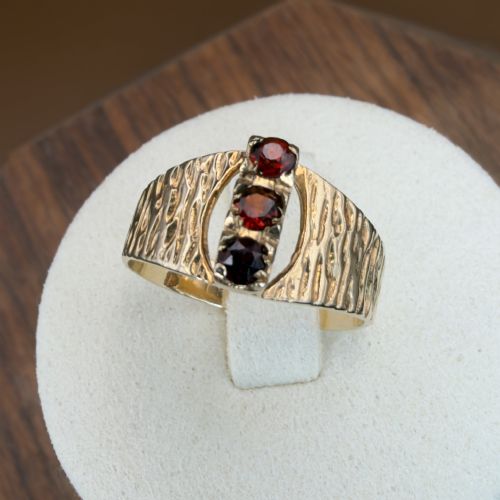
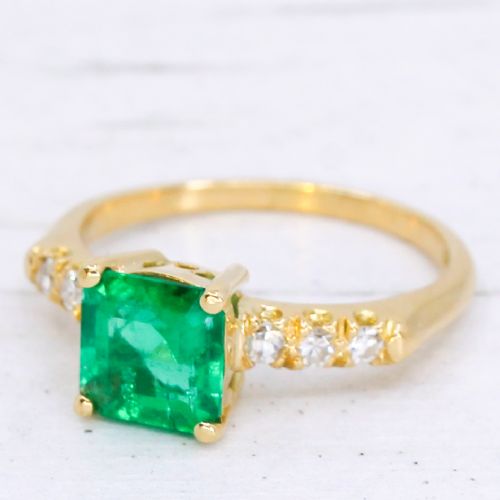
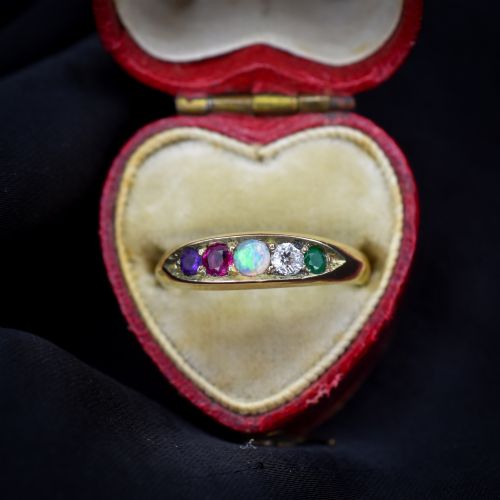
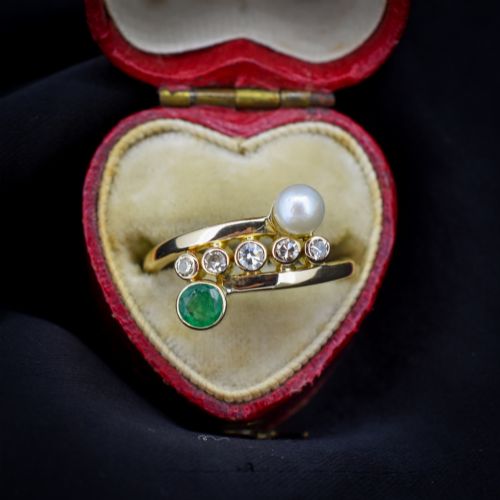


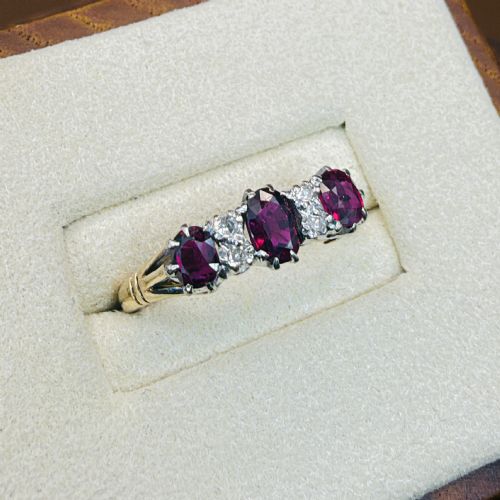
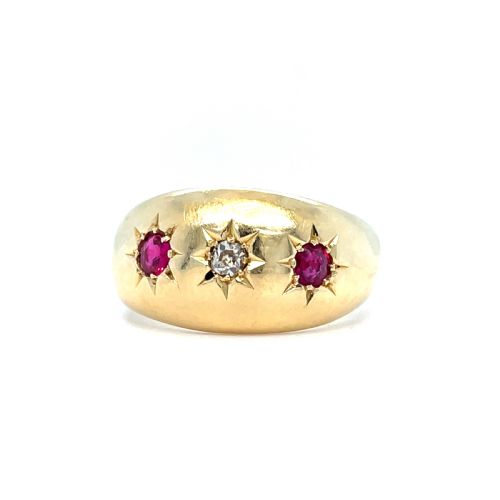
Gold Gemstone Band Ring
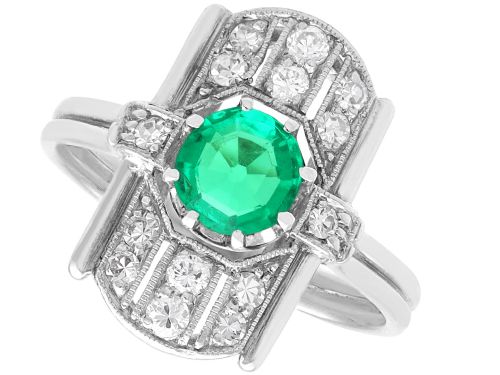
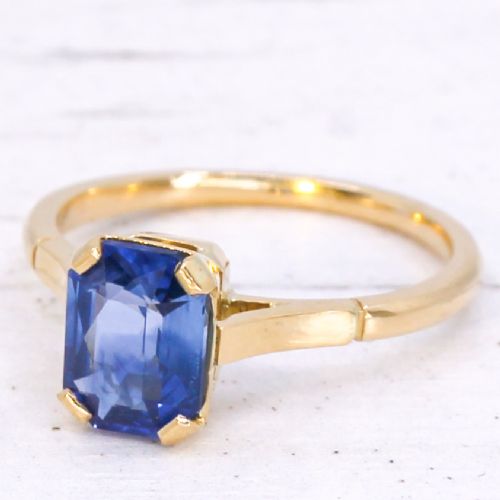
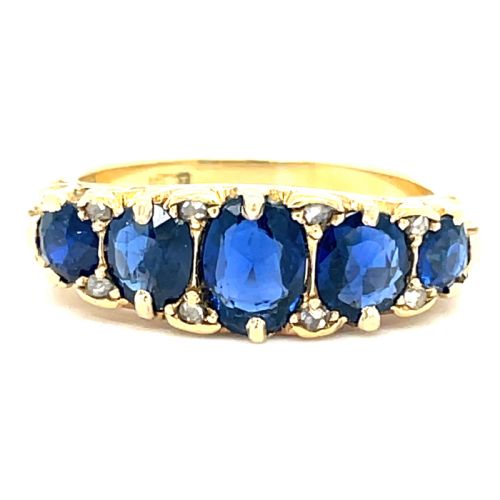
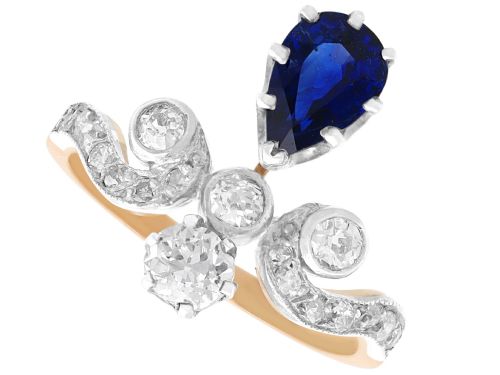
A gold gemstone band ring brings together precious metal and coloured stones in designs spanning the Victorian era through to the mid-twentieth century.
How they were made
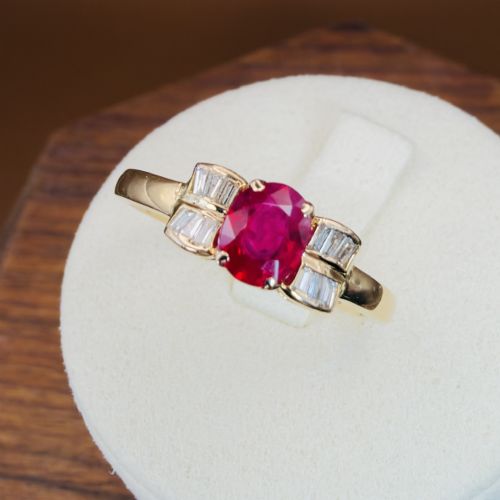
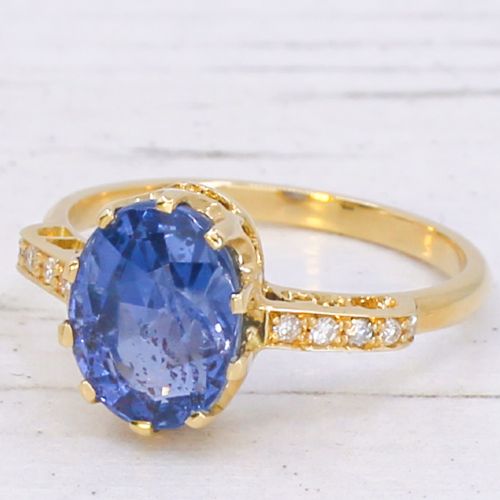
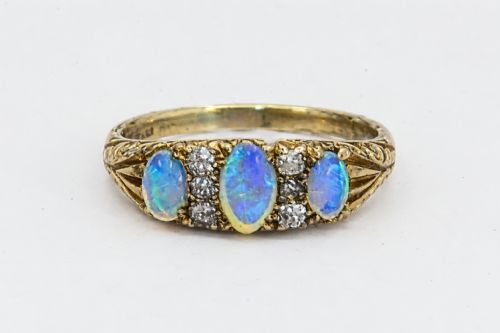
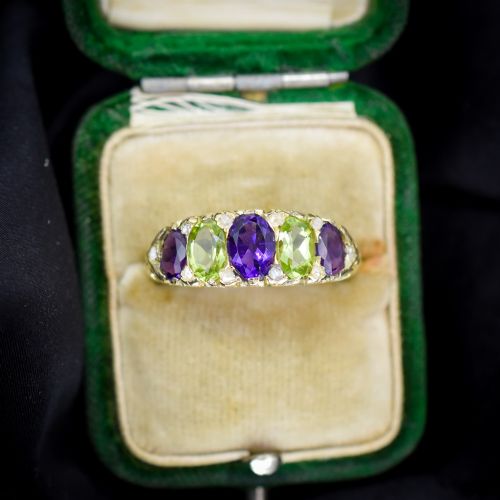
Goldsmiths utilised 18ct gold, 15ct gold and 9ct gold alongside platinum to construct settings for diamonds, rubies, sapphires and opals. Metal components were shaped into bands, boat shapes, cluster frames and navette silhouettes.
Gemstones featured historical cuts including old mine cuts, old cut diamonds, baguette cuts and rose-cut diamonds alongside oval and round stones. Setting techniques secured these stones directly into the gold or platinum framework by hand.
What varies in quality
The standard of a gold gemstone band ring depends on the weight and purity of the gold alongside the natural origin and clarity of the stones. Finer examples display matched gemstone selections with precise claw or flush settings.
Age and provenance influence character, with hallmarks from assay offices such as Birmingham, Chester and London indicating specific years of manufacture. Structural integrity and the preservation of original gemstone cuts distinguish higher grades.
The Gold Gemstone Band Ring Glossary
- Cluster ring
- A ring style featuring a central gemstone surrounded by a cluster of smaller stones, typically diamonds encircling a ruby or sapphire.
- Gypsy ring
- A band ring where stones are flush-set directly into the thick gold band, popular during the late nineteenth century.
- Old mine cut
- An antique diamond cut with a square or cushion outline, high crown and small table facet, common in Victorian and Edwardian jewellery.
- Navette style
- A boat-shaped ring design featuring an elongated pointed oval silhouette set with multiple gemstones.
- Trilogy ring
- A three-stone ring design often representing past, present and future, commonly pairing rubies or sapphires with diamonds.
Gold Gemstone Band Ring: Frequently Asked Questions
What periods do these rings come from?
The pieces span from the late nineteenth century, including Victorian and Edwardian periods, through to the mid-twentieth century and the 1960s.
Each period displays distinct material choices and gemstone cutting styles characteristic of its decade of manufacture.
Which gemstones are set in these bands?
Common gemstones include diamond, ruby, sapphire, opal, emerald, amethyst, peridot, turquoise and tourmaline.
These stones appear in combinations or as single-stone focal points within gold and platinum settings.
How can I identify the date of a ring?
Hallmarks stamped inside the band by assay offices like Birmingham, Chester and London often provide specific year ciphers and gold carat stamps.
Stylistic elements such as old cut diamonds and specific cluster configurations also help indicate the era.
How should I care for antique gemstone rings?
These rings require gentle cleaning suitable for the specific gemstones present, as softer stones like opals and pearls need careful handling.
Regular checks by a jeweller help ensure claws and settings keep the stones secure during daily wear.