
Gold Garnet Jewellery
Gold garnet jewellery brings together deep red stones and warm yellow or rose gold, offering pieces from Victorian clusters to mid-century cocktail rings.
Gold Garnet Jewellery
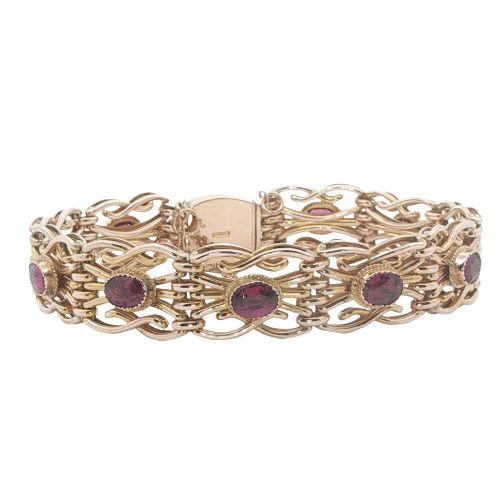
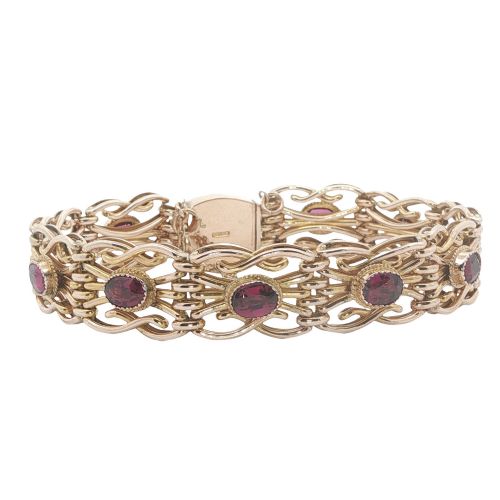
Gold garnet jewellery spans eras from the Georgian period through Victorian and Edwardian designs to vintage mid-century pieces. Buyers encounter rings, brooches, necklaces, pendants, bracelets, earrings, and cufflinks in these selections.
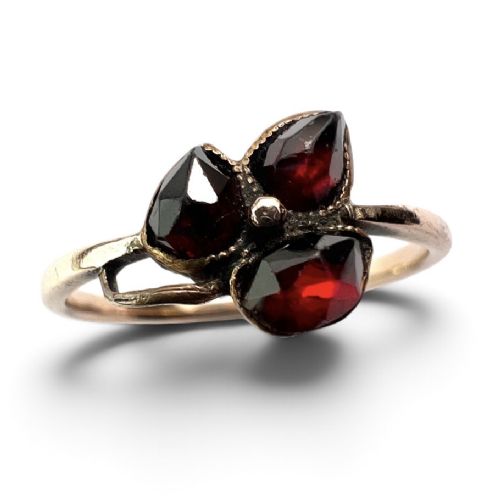
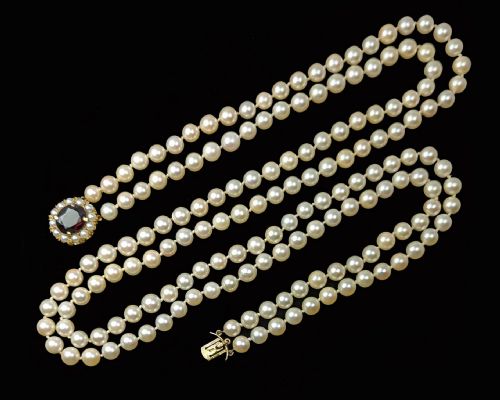
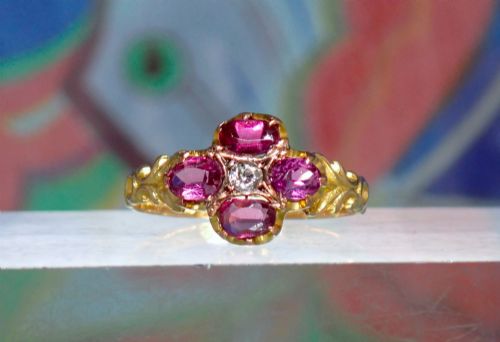
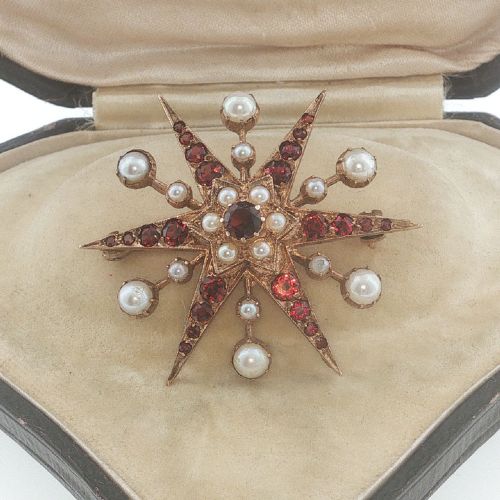
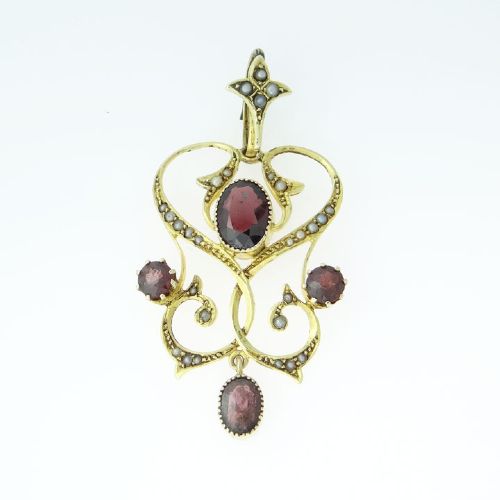
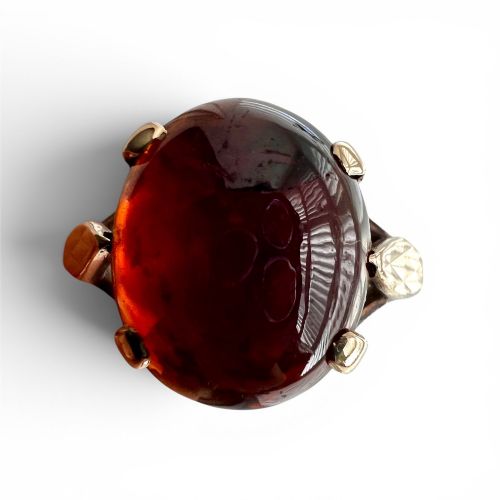
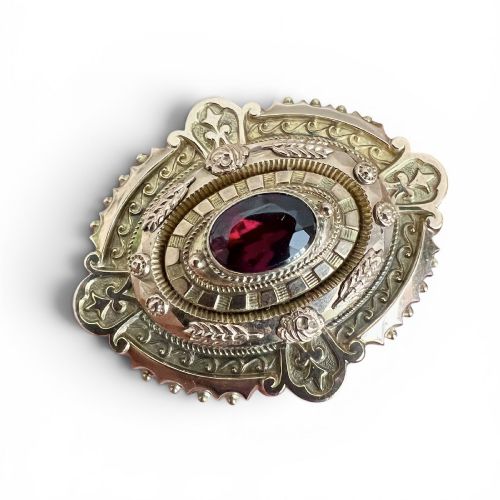
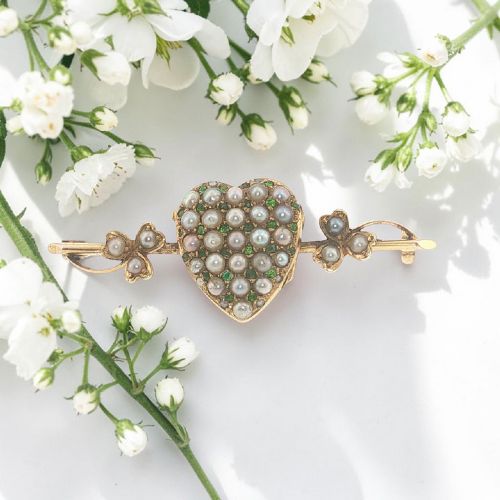
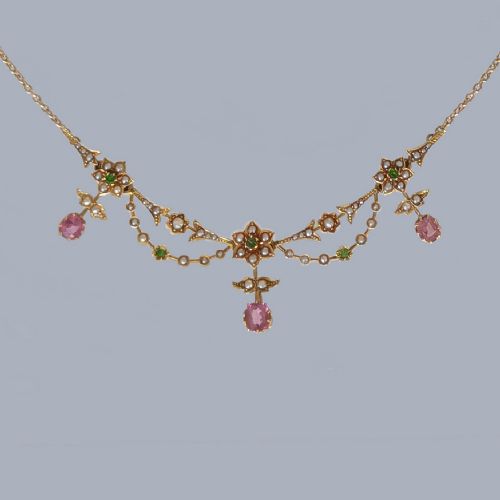
The Victorian pieces often show Etruscan revival styles, starbursts, or large carbuncle cabochons set in 9ct or 15ct gold. Edwardian and later vintage items include fringe necklaces, seed pearl combinations, and cocktail rings.
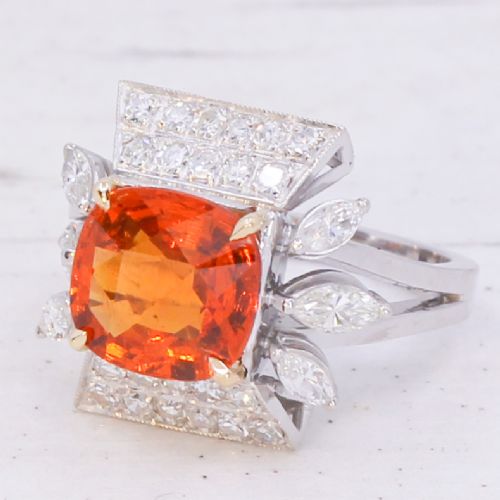
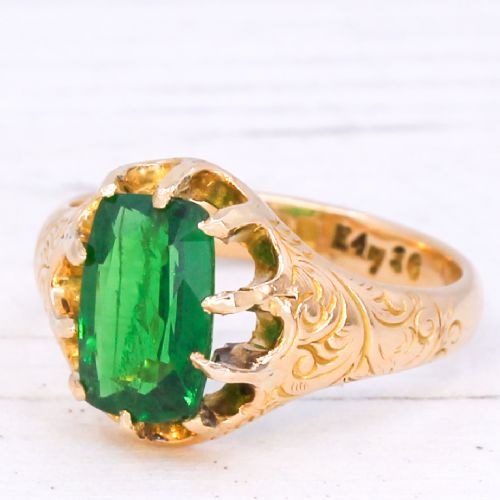
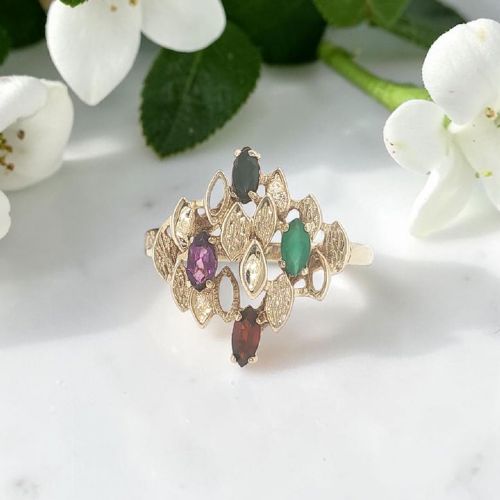
Almandine and Bohemian garnets dominate the older items with deep red hues, while later mid-century creations introduce tsavorite and other green varieties alongside diamonds and pearls.
How these pieces were made
Makers set garnets into varying purities of gold, predominantly 9ct, 15ct, and 18ct, alongside silver-topped gold and silver gilt in specific Austro-Hungarian or continental examples. Metalwork techniques involve granulation and wirework on revival pieces, hand-cut collets, and hollow stampings for lightweight brooches.
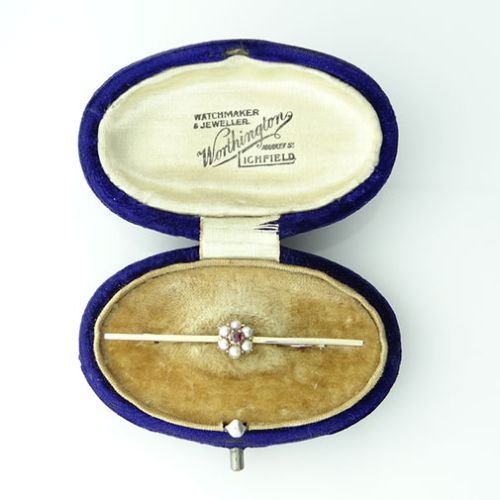
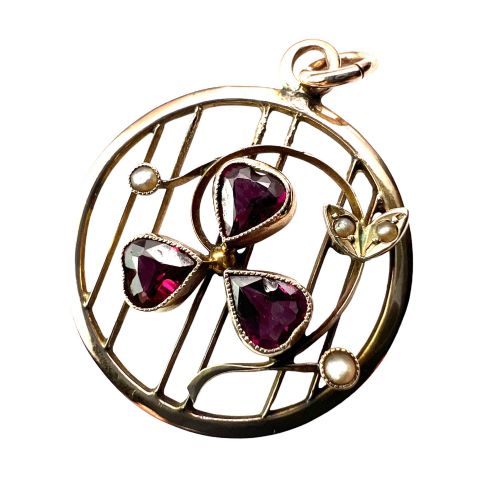
Gemstone selection pairs central almandine or cabochon garnets with accent stones like diamonds, cultured pearls, and seed pearls. Master goldsmiths secured these materials using grain, bezel, and open-back claw settings suited to the depth of the garnet stones.
Listings span from 18th-century Georgian pieces through Victorian, Edwardian, and mid-century 1960s designs in 9ct, 15ct, and 18ct gold.
What separates the examples
Quality rests on the depth of the gold work and the selection of the stones. Solid 15ct and 18ct gold mounts with intricate Etruscan revival wirework or Holbeinesque enamel details sit above simpler mass-produced 9ct settings.
The Gold Garnet Jewellery Glossary
- Almandine garnet
- A dark red variety of garnet rich in iron and aluminium, frequently seen in Victorian jewellery. It provides the deep crimson tone typical of nineteenth-century cluster rings and brooches.
- Carbuncle
- A cabochon-cut garnet or other red gemstone polished smooth rather than faceted. This historic cutting style highlights the rich internal colour of the stone without light-reflecting facets.
- Holbeinesque
- A Victorian revival style drawing on sixteenth-century renaissance designs attributed to Hans Holbein. These complex pendants and necklaces combine coloured stones, pearls, and enamel work.
- Seed pearl
- Very small natural or cultured pearls threaded or sewn onto jewellery. They frame garnet clusters and form delicate floral patterns in Edwardian and Victorian pieces.
Gold Garnet Jewellery: Frequently Asked Questions
How do I care for antique gold garnet jewellery?
Clean these items gently with a soft dry cloth and avoid harsh ultrasonic cleaners or chemical dips that can damage fragile pearls or vintage foil backs. Store individual pieces separately in soft pouches to prevent scratching the softer gold mounts.
Keep them away from moisture and direct cosmetics to preserve the integrity of the antique gold and organic seed pearl elements.
Can I wear a garnet ring every day?
Garnet measures around 6.5 to 7.5 on the Mohs hardness scale, making it suitable for regular wear if handled with care. Rings set with high-profile stones or delicate seed pearls require attention during manual tasks to avoid impact.
Consider lower-profile cabochon or bezel-set rings for everyday use, reserving intricate fringe necklaces and multi-stone cluster dress rings for special occasions.
How do I tell Victorian garnet pieces from mid-century ones?
Victorian examples typically utilise higher gold purities like 15ct alongside rose gold, featuring hand-cut almandine stones, closed-back foils in older work, or intricate Etruscan revival wirework. Mid-century items from the 1950s and 1960s often use standard 9ct yellow or white gold with faceted emerald cuts or bright tsavorites.
Examining the clasp mechanisms, pin stems on brooches, and hallmarks will also clarify the manufacturing era.
What is the difference between Bohemian garnets and almandine garnets?
Bohemian garnets are small, rose-cut pyrope stones mined in Central Europe, traditionally set closely together in dense pavé clusters without metal showing between them. Almandine garnets are larger, deeper red stones with more iron content, usually set individually as focal points in rings and brooches.
Pieces featuring Bohemian garnets often use silver gilt or low-grade gold mounts, whereas almandine frequently appears in solid 15ct or 18ct gold Victorian settings.