

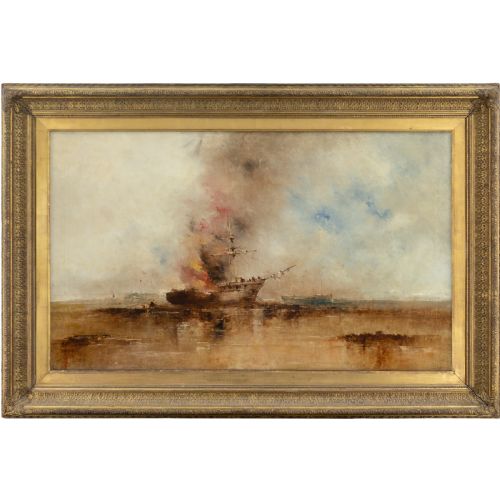
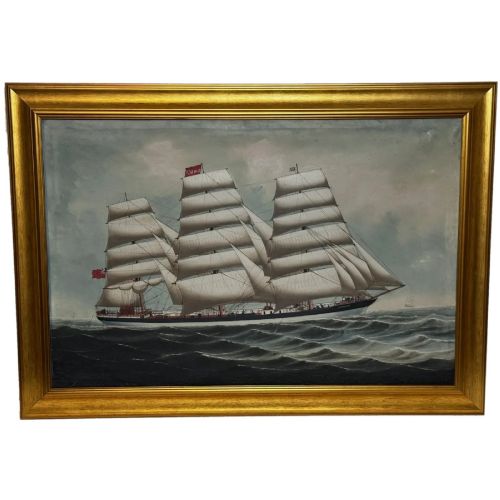
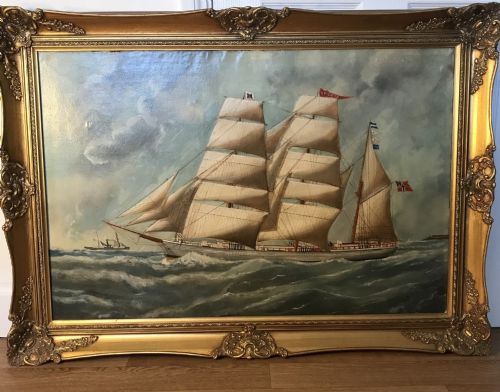


Gold Framed Ship Portrait
These gold framed ship portrait pieces capture maritime history in oil and watercolour, bringing authentic sailing vessels into your room.
Gold Framed Ship Portrait
A gold framed ship portrait presents vessels upon the water, captured in oil paint, canvas, wood, or paper through distinct maritime styles. When you search for gold framed ship portrait, you encounter works spanning the nineteenth century, the Edwardian era, and mid-century interpretations.
The selection ranges from detailed depictions of schooners, barques, and war ships to specific locations like Valletta harbour or the Pearl River. Most examples adhere to Victorian marine traditions or nineteenth-century British school conventions.
Makers and artists recorded in these pieces include Joseph Heard, Samuel John Milton Brown, and Reginald Arthur Borstel, alongside China Trade and Chinese School works. You meet framed paintings and oil paintings that document specific vessels such as the HMS Victory or the West Indiaman.
Materials and construction
Artists utilise oil on canvas or panel, alongside watercolour on paper, applying pigments to capture coastal light and vessel rigging. The support materials range from wood panels and canvas to paper sheets.
Surrounding these works are frames fashioned from giltwood, gilt wood, and plain wood, protecting the painted surface behind glass where appropriate. These frames complement the maritime subjects through traditional gilding techniques.
The listings span from 1850 to 1960, featuring oil on canvas, watercolour, and giltwood frames.
Judging the work
Quality rests upon the precision of the vessel depiction, the handling of water and sky, and the integration of the artwork with its giltwood frame. Works by recorded painters display superior rigging detail and atmospheric depth.
The choice of medium, whether oil on canvas or watercolour on paper, influences the visual impact of the maritime scene. Condition of both the painted surface and the surrounding gold frame dictates the standing of each piece.
James Hardy·William McAlpine·Reginald Arthur Borstel·Joseph Heard·WF Mitchell·Samuel John Milton Brown·Richard Ball Spencer
The Gold Framed Ship Portrait Glossary
- Giltwood
- Wood coated with gold leaf or gold paint to create a decorative frame. This material defines the framing of many marine paintings.
- Barque
- A sailing vessel with three or more masts. These ships frequently appear as the central subject in nineteenth-century maritime art.
- China Trade
- Goods produced in China specifically for Western markets. This includes maritime oil paintings executed by local artists for foreign patrons.
- Marine Art
- Artistic representation of ships and the sea. This genre encompasses both realistic ship portraits and dramatic coastal scenes.
Gold Framed Ship Portrait: Frequently Asked Questions
What is a ship portrait?
A ship portrait is a specific genre of marine art that depicts a vessel from a side-on or three-quarter view, often shown under full sail. These works historically served as records for shipowners and captains who wished to document their specific vessels.
The listings show examples ranging from nineteenth-century British school oils to China Trade works. Each piece captures the distinct rigging, hull form, and flag details of ships like the West Indiaman or the HMS Victory.
How do I hang a framed ship portrait?
Hanging a marine painting requires consideration of weight, wall stability, and lighting to showcase both the canvas and the giltwood frame. Secure fixings suited to the wall type ensure the safety of heavy wood and glass assemblies.
Positioning the artwork at eye level in a room with balanced ambient light allows the details of the oil or watercolour to emerge. These pieces function well in studies, hallways, or living spaces alongside traditional furnishings.
How are periods identified?
Dating a marine painting involves examining the clothing of figures, the type of vessel depicted, and the construction of the canvas or panel. Steam ships, schooners, and war ships evolved rapidly across the nineteenth and early twentieth centuries.
Signatures, artist attributions, and framing styles provide further chronological markers. Pieces from the Edwardian period or the 1850s carry stylistic traits unique to their decade of creation.
What materials were used?
Materials include oil paint applied to canvas, wood panels, or paper supports, alongside watercolours framed behind glass. The physical components reflect the standard artist supplies of the nineteenth and early twentieth centuries.
Frames are predominantly constructed from giltwood or plain wood, enclosing the painted maritime scenes. The combination of oil, canvas, and gold leaf forms the standard physical structure of these works.