

Gold Framed Horse Artwork
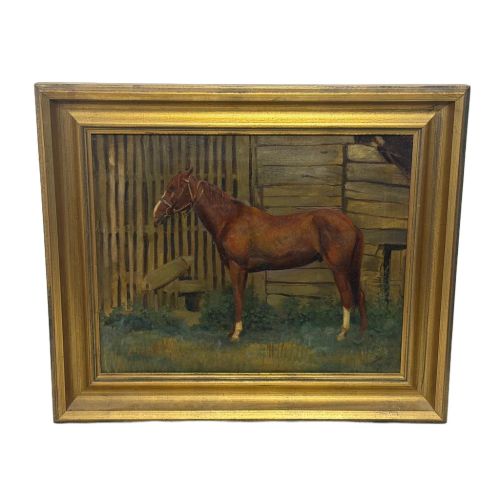
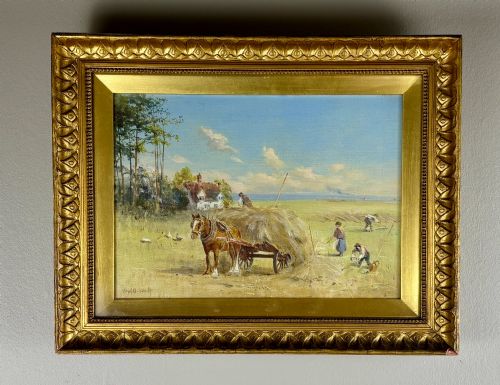
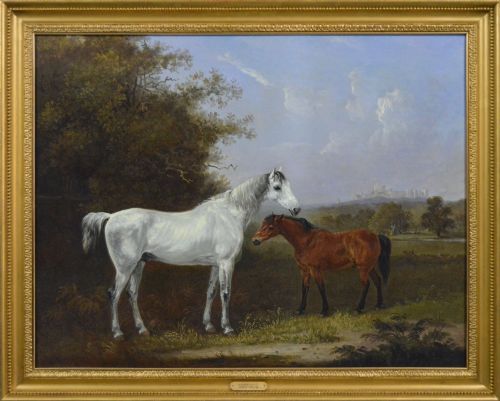
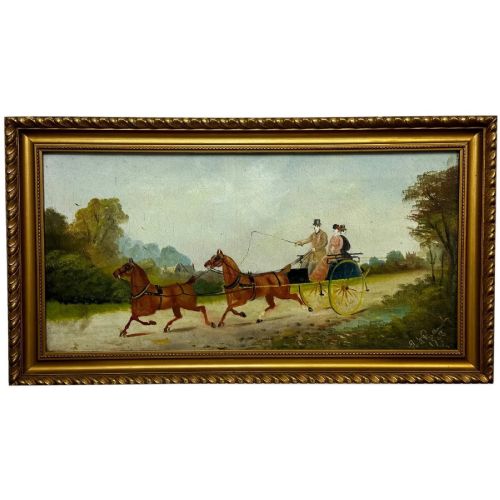
Gold framed horse artwork captures the enduring partnership between humanity and the horse through centuries of fine painting and craftsmanship.
Gold Framed Horse Artwork
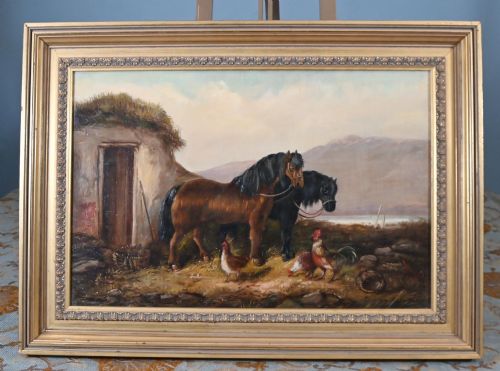
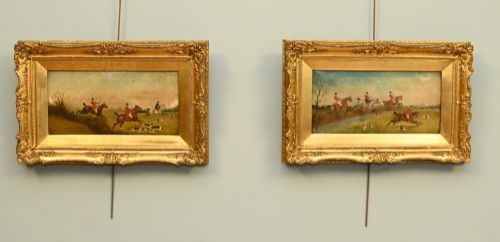
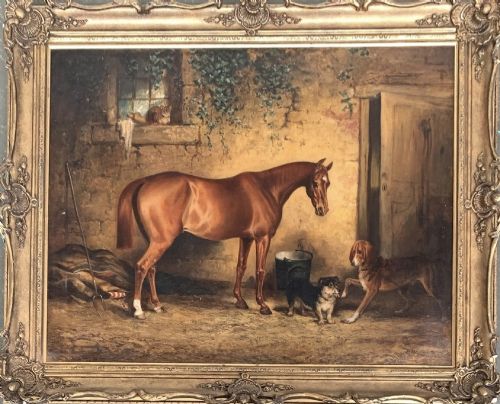
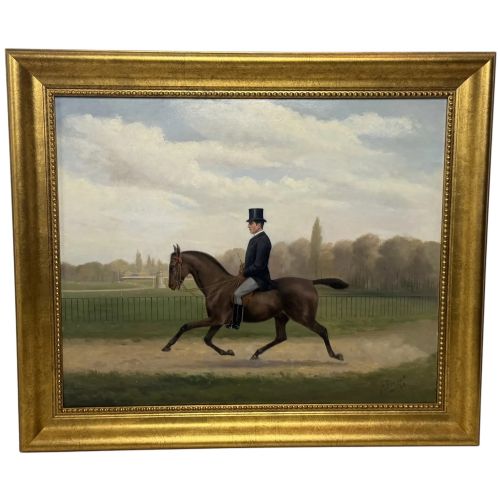
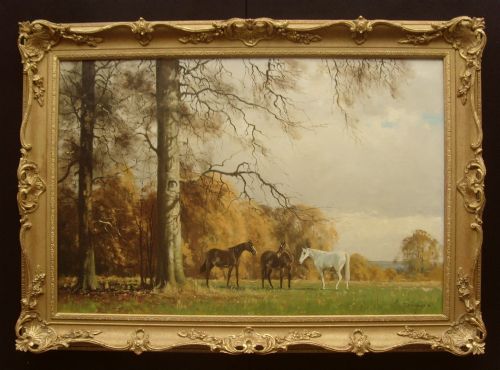
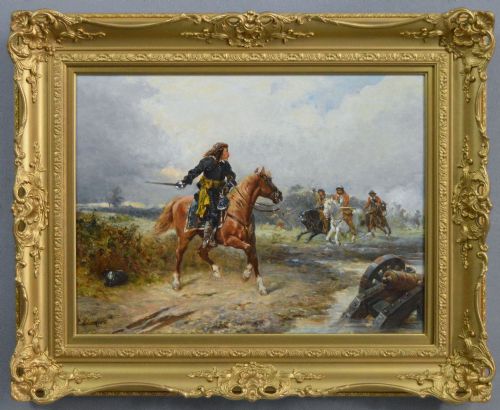
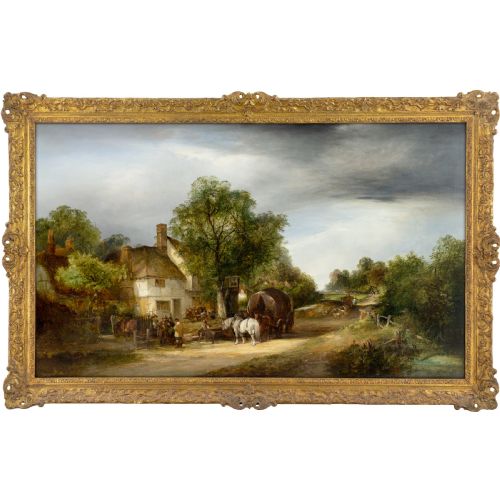
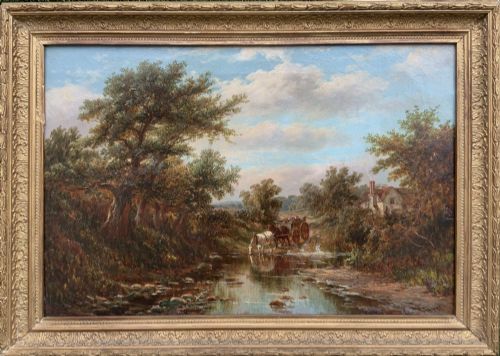
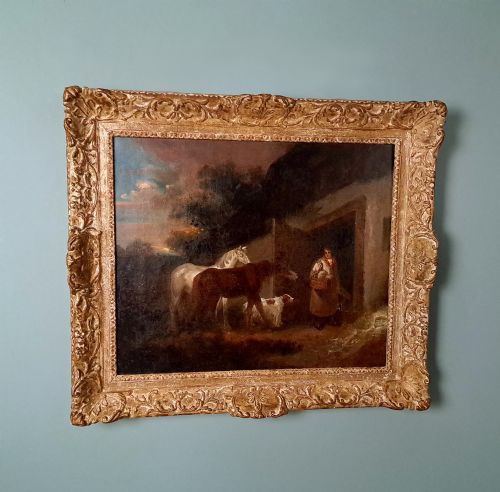
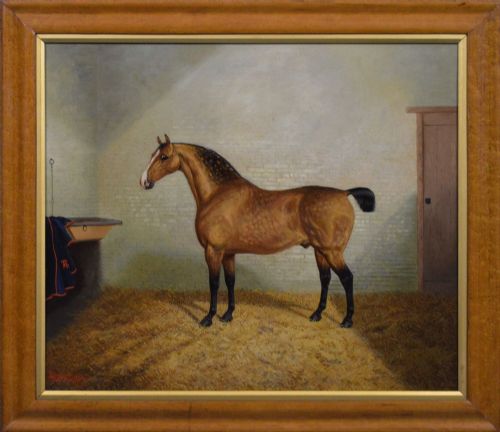
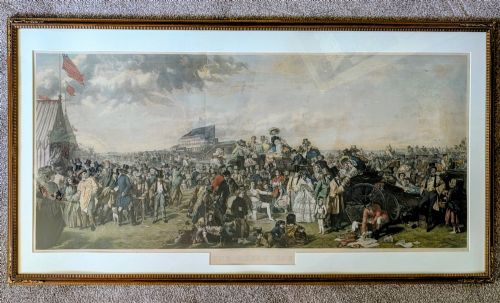
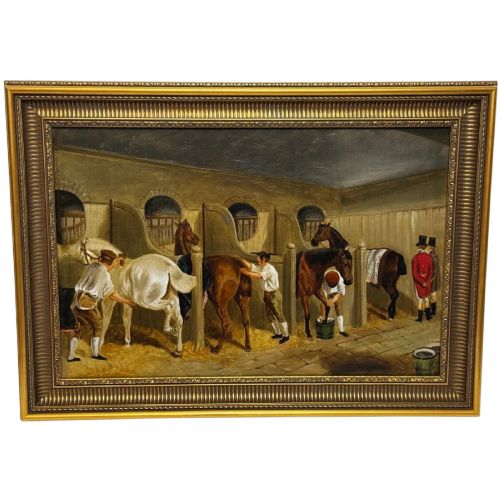
Gold framed horse artwork encompasses oil paintings, watercolours, and needlework pictures created across the Georgian, Victorian, and Edwardian periods, alongside mid-century works. These pieces focus heavily on equine portraits, hunting scenes, coaching subjects, and rural landscapes featuring horses.
The selection here leans predominantly towards nineteenth-century and early twentieth-century oil on canvas works housed in giltwood frames. Buyers encounter everything from intimate studies of individual racehorses to grand depictions of fox hunting and agricultural labour.
Makers and painters of the era recorded specific animals, named racehorses, and picturesque rural settings with careful observation. The surviving works bring nineteenth-century sporting art and British Impressionism directly into domestic interiors.
How they were made
Artists painted primarily with oil paint on stretched canvas or occasionally used watercolour on paper, building texture and depth through layered brushwork. Silk needlework pictures also appear, rendered with fine textile threads to depict racing tracks and rural vistas.
The distinctive gold frames utilise carved wood gilded with gold leaf or finished with gilt composition, designed to reflect ambient light and complement the rich tones of the artwork within. Glass covers protect delicate watercolours and reverse silhouette paintings.
Gold Framed Horse Artwork Retail Price Guide 2026
Typical asking prices for gold framed horse artwork among the pieces listed under this phrase on Sellingantiques today, from the lower quarter to the upper quarter. They describe what is for sale here now, not the wider market.
Several canvases record named nineteenth-century racehorses standing proudly beside local trainers and jockeys.
What varies in quality
Anatomy and movement separate accomplished equine portraiture from rigid academic exercises, as master painters captured the distinct muscle structure and alert expression of a living horse. The handling of background landscapes, whether a stable interior or a sweeping river valley, adds depth and context to the central subject.
The craftsmanship of the surrounding gilt frame contributes significantly to the overall presence of the piece, with deep relief moulding and original gilding marking out superior examples. Provenance and documented attributions to known artists elevate individual works within the broader tradition of sporting art.
William Joseph Shayer Senior·Thomas Smythe·Albert Clark·Abraham Cooper·John Ferneley Senior
The Gold Framed Horse Artwork Glossary
- Giltwood
- Wood carved and coated with gold leaf or gold paint. This finish creates a bright border that enhances the colours of the painting inside.
- Equine portrait
- A painting dedicated to an individual horse. These works often record prized racehorses, hunters, or family pets by name.
- Sporting art
- Depictions of rural pastimes, particularly horse racing, hunting, and coaching. This genre flourished in British art throughout the nineteenth century.
- Oil on canvas
- Pigments bound in oil applied to a woven fabric support. This medium allowed artists to achieve rich colour saturation and subtle blending.
- Reverse painting on glass
- An image painted directly onto the back of a glass panel to be viewed from the front. This technique yields a glossy, preserved surface.
Gold Framed Horse Artwork: Frequently Asked Questions
What periods do these artworks cover?
The pieces span from the early nineteenth century through the Victorian and Edwardian eras up to the mid-twentieth century. This range captures shifts in painting styles from traditional sporting art to British Impressionism.
Most surviving examples date from the Victorian period, reflecting the era's deep enthusiasm for horses, hunting, and rural life.
How do I identify a racehorse portrait?
Racehorse portraits usually feature specific named animals standing in a stable yard or pacing a track, often accompanied by a jockey or trainer. Inscriptions on the canvas or frame frequently record the horse's name and notable racing victories.
Artists paid close attention to the distinct conformation and markings of celebrated thoroughbreds of the period.
Where should I hang a gilt framed painting?
These works suit traditional living spaces, studies, or hallways where natural light can catch the reflective qualities of the gold frame. Pairing them with neutral wall colours allows the warm tones of the giltwood and oil paint to stand out.
Avoid placing canvas paintings in direct sunlight or damp environments to preserve the integrity of the paint and wood.
What is the difference between oils and watercolours here?
Oil paintings use heavy pigments on canvas, offering rich textures, deep shadows, and robust durability over time. Watercolour paintings use water-soluble pigments on paper, presenting a lighter, more translucent finish that requires protective glass.
Both mediums were widely used to capture equestrian subjects but create distinctly different visual textures on the wall.