


Gold Frame Maritime Picture
A gold frame maritime picture brings the drama of nineteenth-century shipping and coastal light directly into a room.
Gold Frame Maritime Picture
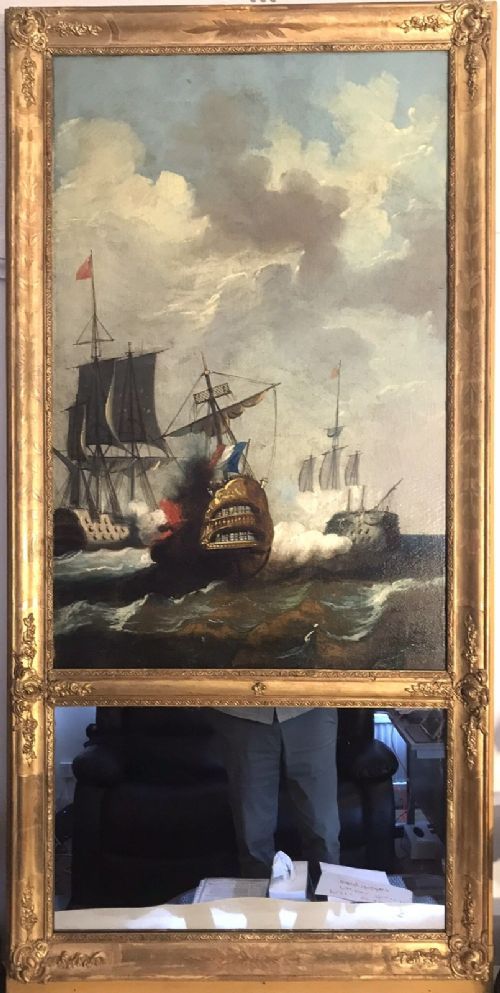
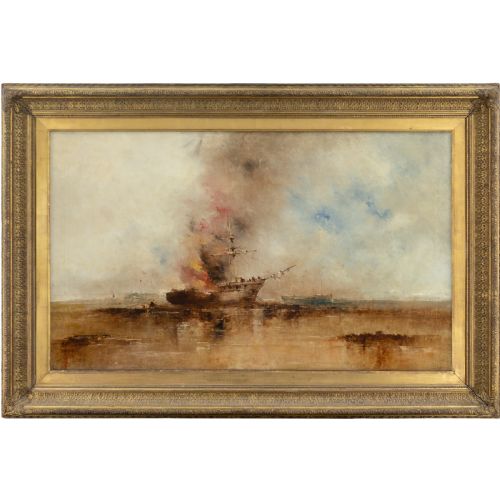
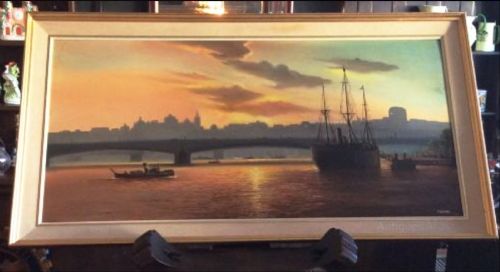
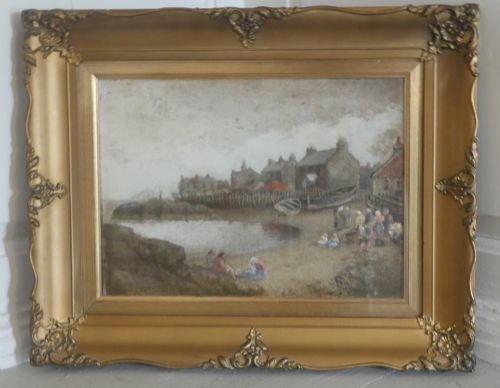
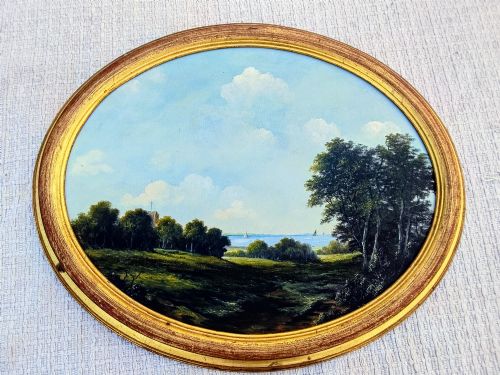
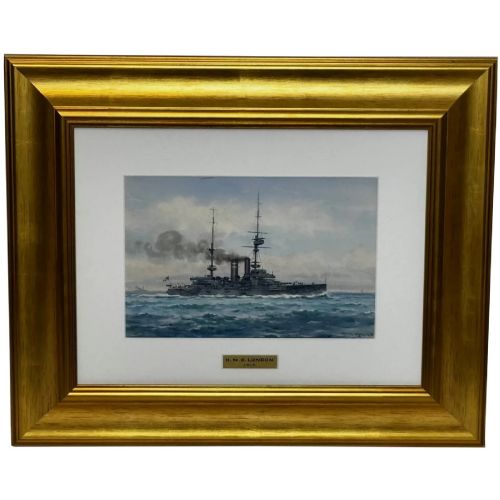
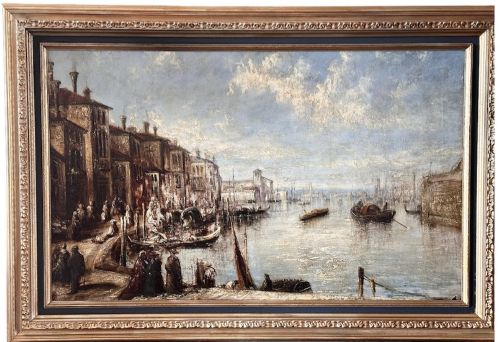
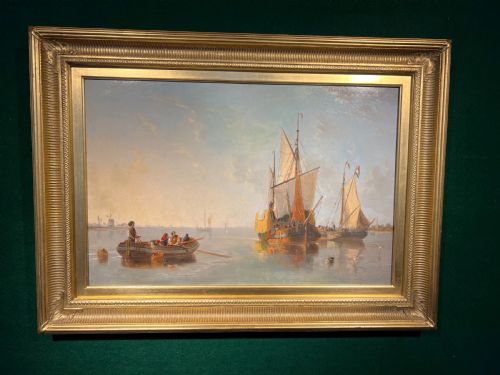
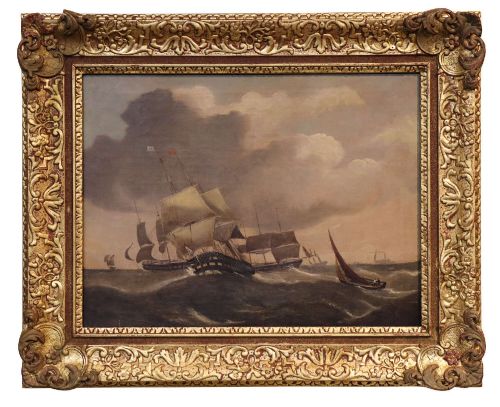
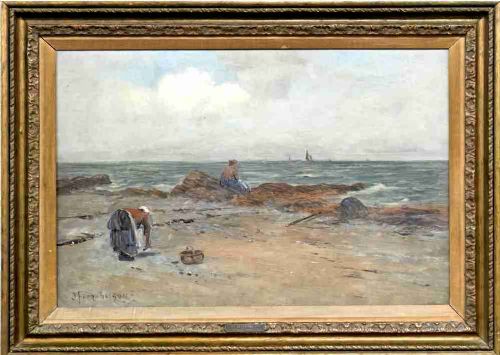
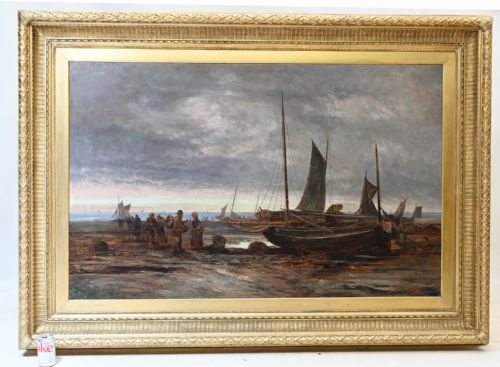
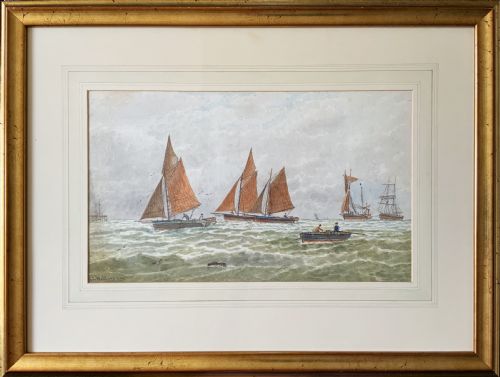
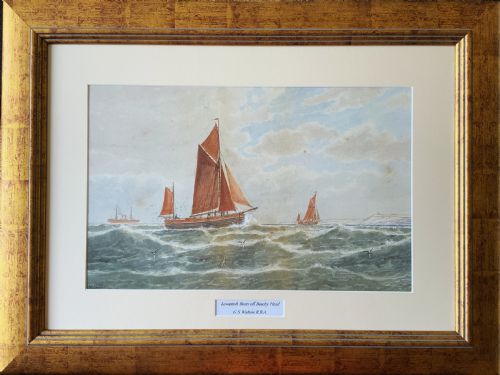
A gold frame maritime picture captures open seas, bustling harbours, and ships under sail, rendered primarily in oil on canvas or watercolour on paper. These works document naval engagements, coastal trades, and serene Venetian canals from the nineteenth and early twentieth centuries.
The most common format on this page is the Victorian oil painting, often set within a heavy, giltwood or gilt wood surround. Subjects range from large-scale depictions of vessels in heavy seas to tranquil river views and panoramic estuary scenes.
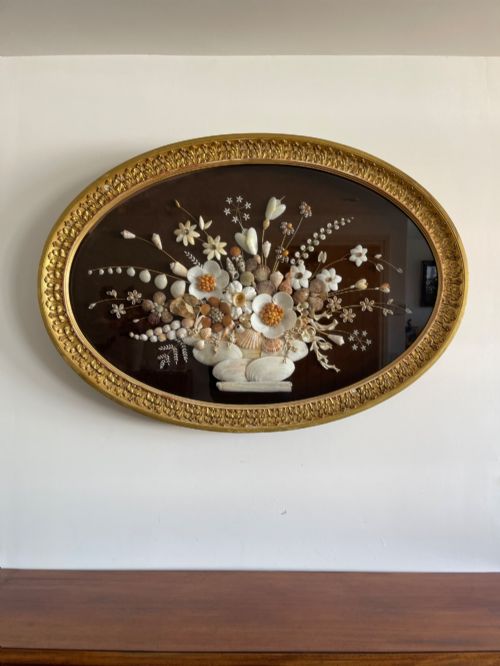
Beyond standard oils and watercolours, buyers encounter specialised formats like trumeau mirrors incorporating seascapes and oval canvas compositions. Origins stretch from British and Scottish coastal locations to French and Venetian waters.
Materials and Technique
Painters utilised oil on canvas or watercolour on paper, applying pigments to build luminous skies, dark water, and detailed rigging. Canvas supports often bear the stamp of period colourmen, while watercolours rely on delicate washes and gum arabic highlights.
The enclosing frames are constructed from wood, heavily gilded with gold leaf or composition metal to create the characteristic metallic lustre. These gilt frames range from restrained moulding to ornate Victorian decorative patterns that complement the maritime subject matter.
Listings feature works spanning the nineteenth and twentieth centuries, utilising oil on canvas, watercolour, and wood.
Assessing Quality
Quality rests upon the artist's command of light, atmosphere, and maritime anatomy, where accurate depiction of rigging and hull structure distinguishes skilled hands from formulaic studio production. Handling of turbulent water and shifting coastal skies reveals the true depth of observation.
The integrity of the giltwood frame contributes significantly to the overall piece, with original hand-carved mouldings and undisturbed gilding holding greater aesthetic weight than later replacements. The relationship between the artwork and its period surround determines the visual harmony of the object.
William McAlpine·Frank Watson Wood·Francis Moltino·John Wilson Carmichael·Joseph Farquharson·George Stanfield Walters·Charles William Wyllie·Charles Napier Hemy·Gustave De Bréanski·Fred Waugh·James Webb·Jane Vivian·William Raymond Dommersen·Alfred Henry Vickers·George Henry Knight
The Gold Frame Maritime Picture Glossary
- Giltwood
- Wood that has been coated with a thin layer of gold leaf or gold powder. This finish provides the characteristic metallic gleam seen on period picture frames.
- Seascape
- A work of art depicting the sea, coastal views, ships, or marine subjects. These compositions focus primarily on maritime activity and coastal weather.
- Provenance
- The documented history of ownership surrounding a work of art. Clear records help establish the authenticity and origin of nineteenth-century paintings.
Gold Frame Maritime Picture: Frequently Asked Questions
How do I hang a heavy maritime oil painting?
Heavy oil paintings require secure picture hooks fixed directly into wall studs or heavy-duty wall anchors designed for substantial weights. Use dual hanging wires or robust brackets to distribute the load evenly across the frame.
Ensure the hanging height places the centre of the canvas at eye level for optimal viewing. Heavy giltwood frames add considerable heft, so professional installation is recommended for very large canvases.
Where should I display maritime art?
Display these works in rooms with stable humidity and away from direct sunlight to protect both the canvas and the delicate gold leaf on the frame. Traditional settings like studies, libraries, or dining rooms complement the historical character of nineteenth-century marine scenes.
Avoid placing oil paintings near active heat sources such as radiators or fireplaces. Consistent environmental conditions prevent the canvas and wooden frame from warping over time.
How do I date a nineteenth-century seascape?
Dating relies on stylistic clues within the painting, such as the rigging and design of the vessels depicted, alongside signatures and exhibition labels on the reverse. Steamships, paddle steamers, and specific naval uniforms offer precise chronological markers.
The construction style of the wooden stretcher and the composition of the gilt frame also provide supporting evidence for the period of creation.
What is the difference between a watercolour and an oil?
Oil paintings use pigments suspended in drying oil applied to stretched canvas or wooden panels, offering rich texture and deep colour saturation. Watercolours use water-soluble pigments on paper, creating translucent washes and lighter effects.
Oils are traditionally displayed without glass protection, whereas watercolours require framing under glass to shield the paper from airborne moisture and dust.