


Gold Floral Box
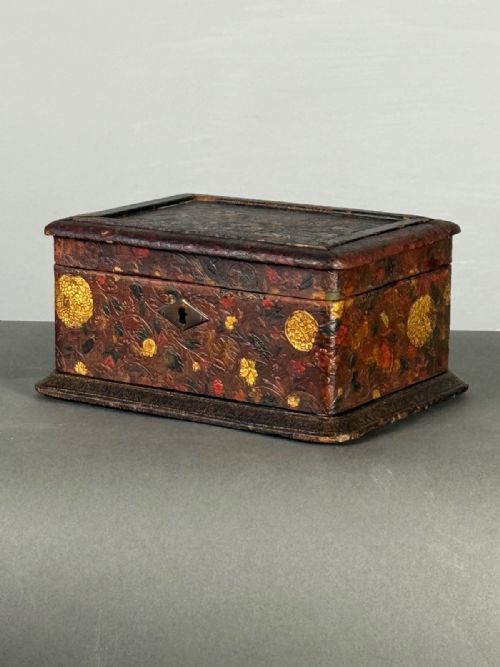
A gold floral box brings together intricate craftsmanship and botanical motifs, offering a decorative vessel for small treasures.
Gold Floral Box
When you search for a gold floral box, you encounter a varied assortment of decorative vessels spanning several centuries. The selections range from Victorian English trinket boxes to Qajar lacquer cashier boxes and Kashmiri collections.
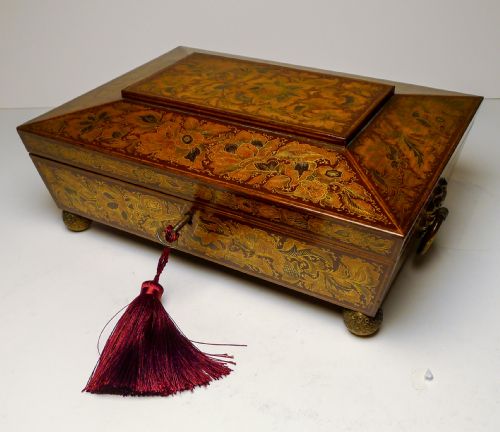
Most pieces on this page lean towards nineteenth-century examples, including Regency penwork items and Victorian metal containers. Forms extend beyond traditional boxes to include table cabinets, tea caddies, and assorted trays.
How they were made
Makers utilised a diverse array of materials, combining wood, leather, and metal with gold leaf and paint. Lacquer and brass appear frequently, often paired with intricate hand-painted or penwork botanical decoration.
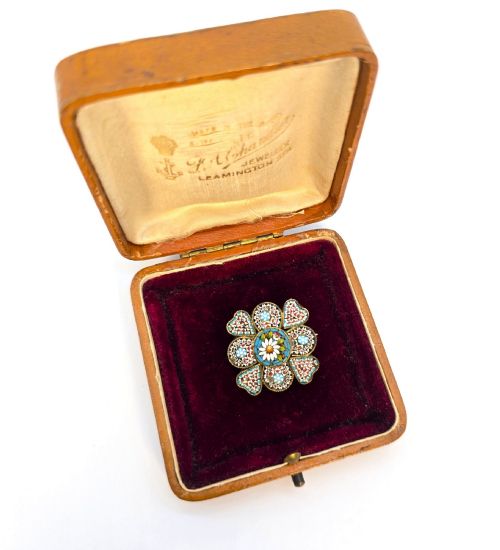
Techniques range from traditional lacquering and micro mosaic work to penwork decoration on wooden tea caddies and games boxes. Gold leaf application provides the characteristic metallic highlights seen across the regional styles.
What varies in quality
Quality rests primarily in the precision of the surface decoration, whether through meticulous hand painting, fine penwork, or delicate micro mosaic assembly. The crispness of the botanical motifs and the stability of the underlying wood, leather, or metal structure dictate the caliber of each piece.
Regional techniques also influence the finish, with refined French leatherwork and detailed Qajar lacquer standing apart from simpler regional production. The integration of gold leaf and polychrome pigments determines the visual depth of the floral designs.
Susse Freres Paris
The Gold Floral Box Glossary
- Penwork
- A decorative technique using fine ink drawing on wood, often finished with varnish to create detailed patterns.
- Lacquer
- A durable resin finish applied in multiple layers to surfaces like wood or metal, providing a smooth base for painted botanical motifs.
- Micro mosaic
- An intricate assembly of tiny glass tesserae to form pictorial scenes or floral patterns, common in nineteenth-century jewellery and small containers.
- Toleware
- Enamelled or japanned metalware produced in England and Europe during the eighteenth and nineteenth centuries.
- Tea caddy
- A small box or chest formerly used for storing tea leaves, often fitted with internal compartments.
Gold Floral Box: Frequently Asked Questions
What is a gold floral box used for?
These decorative containers were traditionally used to store small valuables, letters, or specialty items like tea leaves. Today, they serve as display pieces and practical receptacles for modern trinkets.
Their varied forms allow them to function as desktop organisers, dressing table accessories, or standalone decorative objects in a room.
How do I date a gold floral box?
Dating relies on identifying the underlying material construction, decorative style, and regional manufacturing techniques. Nineteenth-century pieces often feature distinct Regency penwork or Victorian metalwork characteristics.
Examining the hinges, linings, and specific methods of applying gold leaf or lacquer helps narrow down the period of production.
How should I care for a lacquered box?
Lacquered and painted surfaces require protection from direct sunlight and excessive humidity to prevent warping or fading. Dust gently with a dry, soft cloth without applying harsh chemical cleaners.
Maintaining a stable indoor climate preserves the integrity of the delicate gold leaf and polychrome decoration over time.
What styles are common among these boxes?
The inventory encompasses diverse stylistic traditions, including Victorian, Regency, Chinoiserie, and Qajar designs. Each tradition brings distinct regional approaches to floral ornamentation and material selection.
English penwork sits alongside French leatherwork and Japanese or Chinese lacquer, reflecting international influences in nineteenth-century decorative arts.