

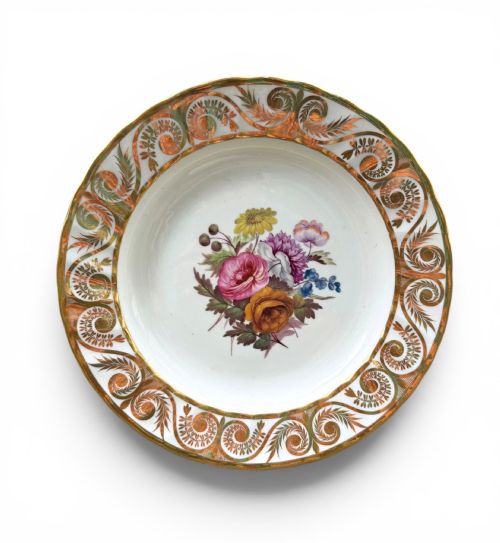


Gold Edged Plate
These gold edged plate examples bring fine painted porcelain and gilt work to your table, prized for their classic display appeal and historical artistry.
Gold Edged Plate
When you search for a gold edged plate, you are looking at decorative and cabinet ceramics that span the nineteenth and twentieth centuries. These pieces encompass porcelain cabinet plates, dessert plates, and large dishes produced by notable English and European houses.
The versions you are most likely to meet on this page include nineteenth-century English porcelain plates alongside mid-twentieth-century Royal Worcester productions. Styles range from Victorian and Edwardian traditional designs to Regency and English Rococo Revival forms.
Makers represented in this selection include Derby, Copeland, Royal Worcester, Ridgway, Vienna, Mintons, and Royal Doulton. Forms vary from soup dishes and chargers to standard cabinet plates adorned with hand-painted floral, fruit, and mythological scenes.
How they were made
These items rely primarily on fine porcelain bodies shaped into plates, dishes, and chargers. Artisans applied hand-painted decoration directly onto the glazed ceramic surface, depicting subjects such as flowers, fruit, orchids, and classical narratives like the Birth of Adonis.
Gilding techniques form a defining characteristic across the group, utilising gold leaf, gilt, and gold gilding to outline rims and edges. Some pieces incorporate specialised methods such as pate sur pate, where layers of liquid clay build up low-relief white designs against a contrasting background.
Gold Edged Plate Retail Price Guide 2026
Typical asking prices for gold edged plate among the pieces listed under this phrase on Sellingantiques today, from the lower quarter to the upper quarter. They describe what is for sale here now, not the wider market.
Listings feature porcelain pieces spanning from the eighteenth century through the 1960s, incorporating materials such as gold leaf, enamel, and glass.
What varies in quality
The standard of painting determines the upper tier of these ceramics, distinguishing factory-standard output from individual artist execution. Pieces bearing signature work by recognised painters command distinct attention for their detailed brushwork and artistic execution.
The crispness of the gilt application and the fineness of the porcelain body further differentiate the range. Superior examples maintain intact gilding along the rims and display balanced composition across the central painted scenes.
Derby·Copeland·Royal Worcester·Ridgway·Mintons·Royal Doulton
The Gold Edged Plate Glossary
- Cabinet plate
- A decorative ceramic plate intended for display in a cabinet rather than for active dining use. These items frequently feature elaborate hand-painted scenes and gilt borders.
- Charger
- A large decorative plate or dish used primarily as a base setting or displayed centrally on a surface. In this selection, chargers showcase intricate pictorial artwork.
- Gilt
- A thin layer of gold or gold-like material applied to the surface of porcelain. It provides the characteristic metallic rim found on these plates.
- Pate sur pate
- A ceramic decoration technique meaning paste on paste, where successive layers of slip build up a cameo-like relief design. This method requires considerable skill from the ceramic artist.
- Rope edge
- A moulded rim design imitating the twisted texture of a rope. It appears on several twentieth-century porcelain plates in this collection.
Gold Edged Plate: Frequently Asked Questions
What is a gold edged plate used for?
These pieces function primarily as decorative items for display within cabinets, on walls, or on sideboard surfaces. They were designed to showcase fine artistry rather than for daily dining.
Historical examples often served as dessert plates or ceremonial chargers during formal meals in the nineteenth and twentieth centuries.
Are these plates safe for food?
Many nineteenth and early twentieth-century plates feature hand-painted enamels and lead-based glazes intended purely for visual admiration. Modern testing is recommended if you intend to use antique ceramics for serving food.
Dishes with extensive gold leaf or gilt decoration are best reserved for display purposes.
How can I tell the period of a plate?
Examine the base of the porcelain for factory backstamps, impressed marks, and artist signatures. These identifiers often correspond to specific operating dates of manufactories like Royal Worcester or Derby.
Stylistic cues such as Victorian floral motifs or mid-century rope edge moulding also help narrow down the decade of production.