


Gold Double Sconces
Gold double sconces bring warm, mirrored illumination to a room, cast in gilded bronze, brass and carved wood across the nineteenth and early twentieth centuries.
Gold Double Sconces
Gold double sconces are twin-armed wall lights designed to mount directly onto interior walls, reflecting candlelight or electric light from metallic or gilded surfaces. When you search for gold double sconces, you encounter pairs and sets originating mostly from French and English workshops spanning the Victorian era through the mid-twentieth century.
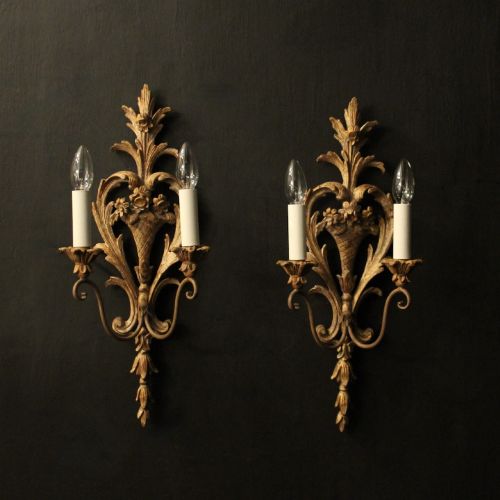
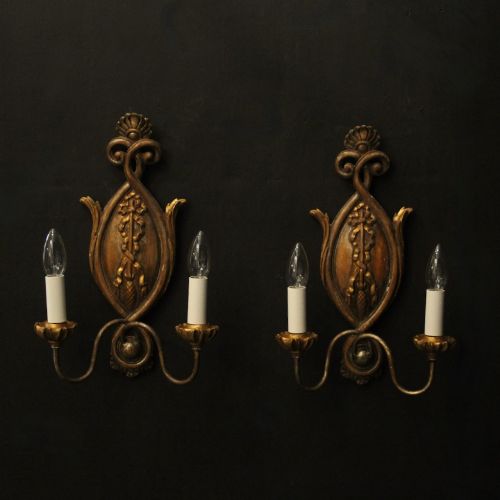
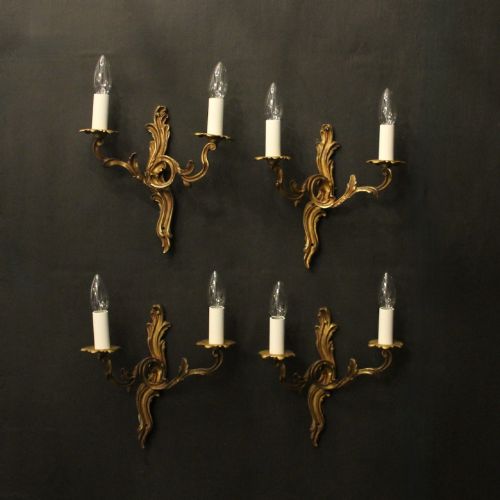
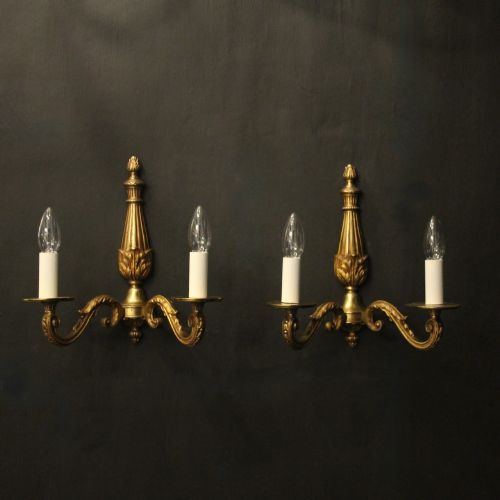
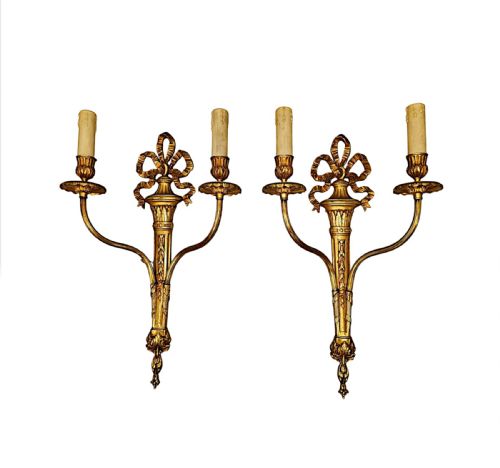
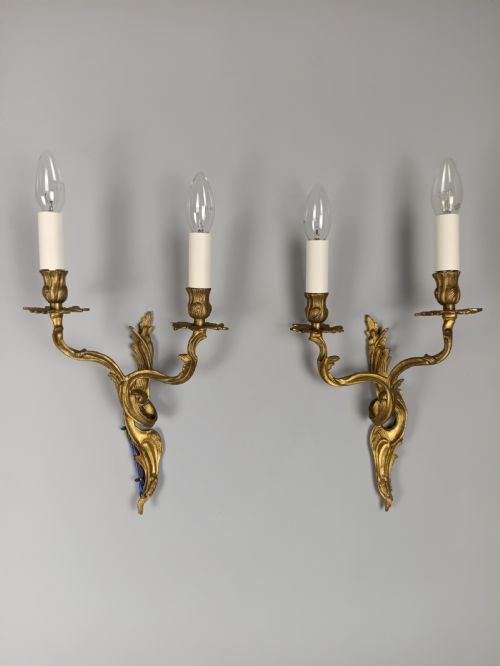
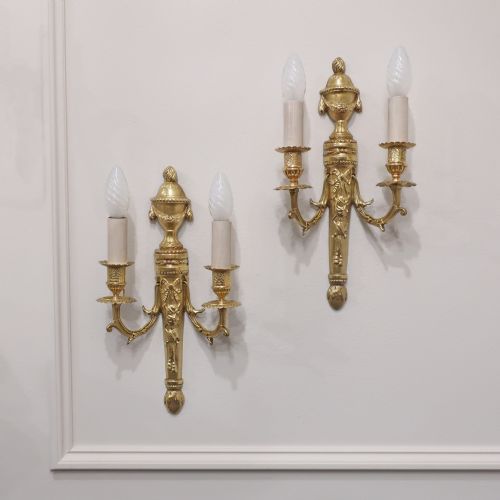
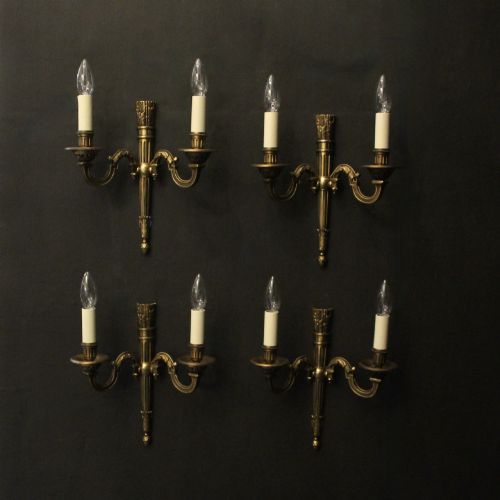
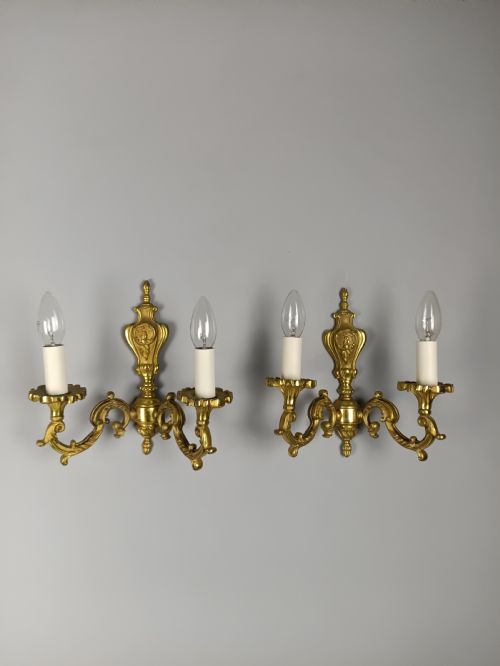
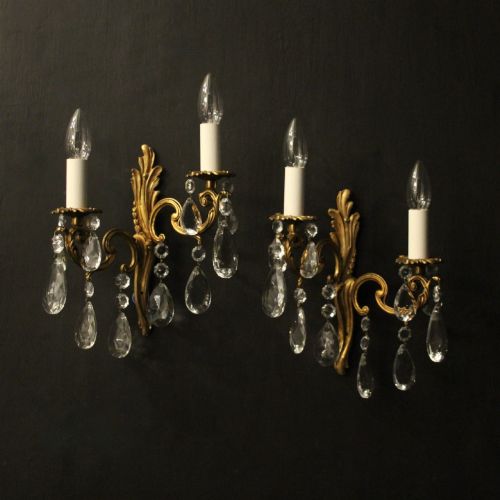
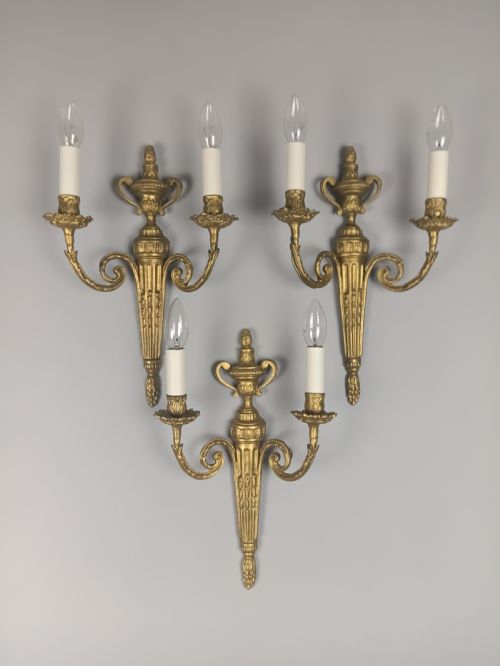
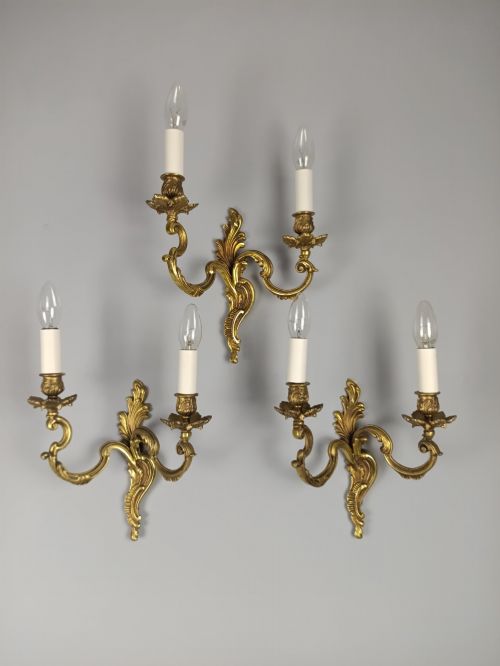
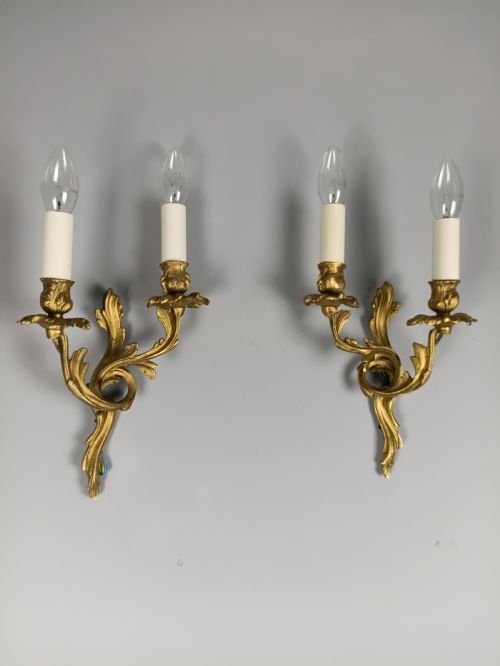
The prevailing form on this page is the twin-armed wall light, heavily represented by French Rococo, Empire and Neoclassical revival designs. These pieces typically utilise brass, bronze or carved wood finished with historical gilding, taking the shape of ribbon motifs, candelabras and classical backplates.
Materials and construction methods
The construction relies heavily on cast bronze, brass and giltwood, formed into robust backplates and sweeping twin arms. Metal components are frequently cast in sections, chased by hand to sharpen surface detail, and then finished with a layer of gold leaf or applied ormolu.
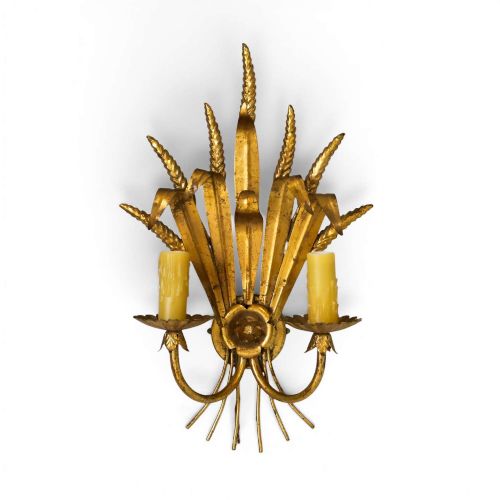
Wooden variants, such as Florentine and Victorian examples, employ carved timber bases covered in gesso before receiving traditional water gilding. Structural integrity depends on secure joints between the mounting backplate and the branching candle arms.
Gold Double Sconces Retail Price Guide 2026
Typical asking prices for gold double sconces among the pieces listed under this phrase on Sellingantiques today, from the lower quarter to the upper quarter. They describe what is for sale here now, not the wider market.
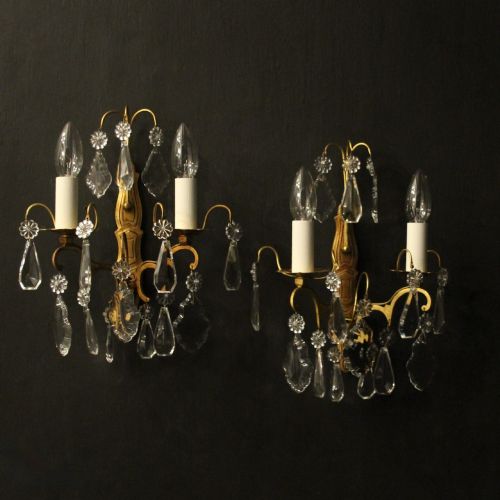
Listings feature pieces spanning the 1850s to the 1950s, executed in brass, bronze, giltwood and crystal.
Factors that define quality
Quality rests upon the crispness of the metal chasing or wood carving and the depth of the original gilding. Finer pieces retain intricate relief work along the ribbon twists and acanthus leaves, whereas simpler production shows softer edges and flatter surface textures.
The weight of the bronze or brass casting and the refinement of the mounting hardware also distinguish superior items. Age-related wear on the gilt surface changes the visual character, separating uniform modern finishes from authentic historical patination.
Casier
The Gold Double Sconces Glossary
- Ormolu
- Finely ground high-carat gold mercury-gilded onto a bronze base. This technique was widely utilised by French makers to achieve a rich, durable lustre.
- Giltwood
- Timber, commonly carved gesso-coated wood, covered in thin sheets of gold leaf. It appears frequently in Florentine and Victorian wall light designs.
- Rococo Revival
- A nineteenth-century style drawing on asymmetrical eighteenth-century French motifs. It incorporates C-scrolls, naturalistic foliage and shell ornamentation.
- Empire
- A neoclassical style inspired by ancient Roman and Greek forms. It utilises symmetry, martial trophies, laurel wreaths and classical drapery.
- Backplate
- The foundational flat or moulded section attached directly to the wall. It supports the projecting arms and distributes the weight of the fitting.
Gold Double Sconces: Frequently Asked Questions
How were gold double sconces originally used?
These fixtures were mounted beside mirrors, doorways or mantelpieces to maximise ambient illumination in domestic interiors.
Pairs and larger sets provided balanced reflection, diffusing candle or early electric light across the room.
How do I install antique wall sconces?
Installation typically requires securing the backplate directly to wall studs or proper wall anchors to support the weight of the metal or wood.
Wiring must be assessed by a qualified professional to ensure historical fixtures meet current electrical standards.
How do I distinguish Rococo revival from Empire style?
Rococo revival pieces feature asymmetric scrolls, floral garlands and curving organic lines.
Empire style relies on strict symmetry, classical geometry and motifs drawn from imperial antiquity.
How should I clean gilded metal surfaces?
Dusting gently with a soft dry brush prevents the accumulation of grime without harming delicate historical finishes.
Avoid chemical polishes and abrasive cloths, which can strip away thin layers of gold leaf or original ormolu.