



Gold Diamond Wristwatch
A gold diamond wristwatch carries the precision of a fine timepiece alongside the brilliance of precious stones.
Gold Diamond Wristwatch
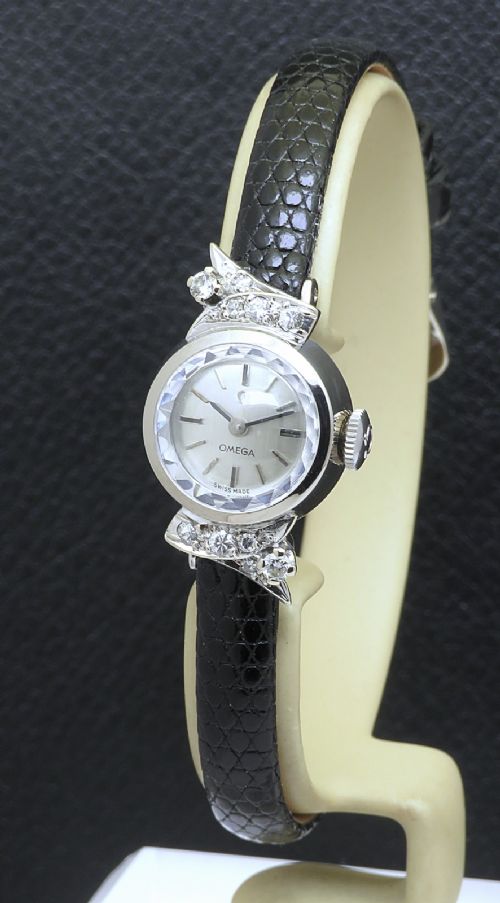
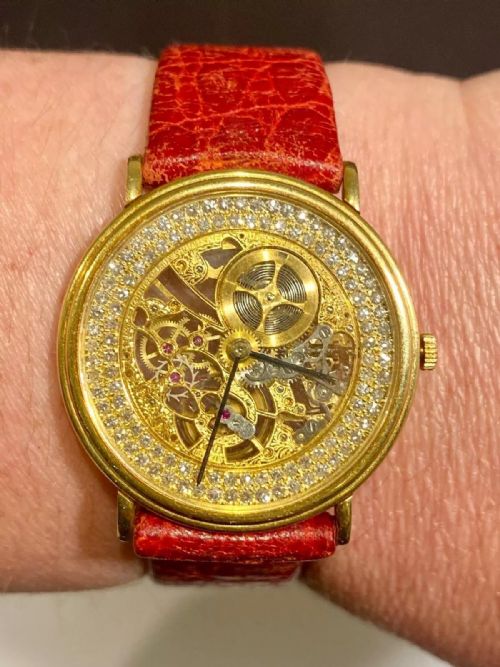
A gold diamond wristwatch unites timekeeping utility with fine jewellery, appearing predominantly as delicate cocktail watches and ladies wristwatches across this selection. These pieces span from Edwardian examples and 1930s Art Deco creations through to Mid-Century Modern and later twentieth-century designs. Buyers encounter forms ranging from mesh bracelets and convertible fob watches to skeletonized gold cases.
The aesthetic leans heavily into geometric Art Deco styling and Mid-Century Luxury, utilising precious metals like white gold, yellow gold, and platinum. Many versions incorporate specific structural variations, such as black onyx accents or rose-cut diamonds set around the bezel. These items function as both functional accessories and statement jewellery pieces.
Materials and construction techniques
Watchmakers utilised 18ct gold, 14ct white gold, and platinum as the primary structural metals for these cases and bracelets. These heavy metal housings provide the secure mounting required for delicate diamond settings.
Diamonds are integrated directly into the bezels, mesh straps, and case surrounds, often paired with glass crystals and manual wind or quartz movements. Craftspeople in locations such as Switzerland and France executed precise metalwork, combining white gold with contrasting materials like black onyx and leather.
Gold Diamond Wristwatch Retail Price Guide 2026
Typical asking prices for gold diamond wristwatch among the pieces listed under this phrase on Sellingantiques today, from the lower quarter to the upper quarter. They describe what is for sale here now, not the wider market.
Listings feature white gold, yellow gold, and platinum paired with diamonds, glass, and leather across periods from Edwardian to later than 1960.
Factors influencing quality and craftsmanship
The grade of a gold diamond wristwatch depends upon the precision of its mechanical movement and the quality of its stone setting. Pieces signed by established makers command higher regard due to the intricate nature of their skeletonized or mesh bracelet construction.
Material purity also dictates value, with heavier 18ct white gold and platinum casings sitting alongside diamond carat weight variations. The integrity of the original components, such as matching mesh bracelets and preserved glass crystals, separates standard items from exceptional examples.
Omega·Tissot·Bucherer·Movado·Vertex·Longines·Audemars Piguet·Rolex·Bar
The Gold Diamond Wristwatch Glossary
- Cocktail watch
- A small, highly decorative ladies wristwatch designed primarily for evening wear rather than daily timekeeping. These pieces often feature extensive diamond pavé settings and precious metal mesh bracelets.
- Manual wind
- A mechanical watch movement that requires the wearer to manually turn the crown to tension the mainspring. Most vintage cocktail watches rely on this traditional method rather than automatic or quartz power.
- Rose-cut diamond
- An antique diamond cut featuring a flat base and a faceted dome shape that resembles an opening rosebud. This style produces a softer, broader reflection than modern brilliant-cut stones.
- Skeletonized
- A watch design where excess metal is cut away from the dial and movement plates to reveal the internal mechanical components. This technique demonstrates high levels of watchmaking skill.
Gold Diamond Wristwatch: Frequently Asked Questions
How do I wear a cocktail watch?
A cocktail watch is traditionally treated as a piece of fine jewellery for evening events or formal occasions. Its delicate proportions pair well with evening wear rather than rugged daily attire.
Because many vintage examples rely on manual wind movements, owners wind them gently before wearing rather than keeping them on continuous automatic rotators.
Are these watches mechanical or quartz?
The vast majority of pieces from the Edwardian, Art Deco, and Mid-Century periods feature traditional mechanical manual wind movements. Later twentieth-century examples occasionally incorporate quartz technology alongside precious metals and diamonds.
Collectors generally seek out the traditional mechanical calibres for their historical authenticity and intricate internal micro-engineering.
What is platinum's role in these watches?
Platinum provides a strong, durable, and bright white setting for diamonds without requiring rhodium plating. Watchmakers used it alongside white gold to securely hold small stones in complex Art Deco geometric designs.
Its natural heft gives the watch a substantial feel on the wrist despite the small dimensions of a cocktail watch case.
How do I identify an Art Deco watch?
Art Deco watches are characterised by geometric case shapes, symmetrical patterns, and structured lines. They frequently combine platinum and white gold with contrasting materials like black onyx.
The integration of diamonds follows strict architectural symmetry, typical of design trends from the 1920s and 1930s.