
Gold Diamond Cluster
A gold diamond cluster brings together a central brilliant stone encircled by smaller gems, offering a dense arrangement of sparkle that has endured across centuries of jewellery design.
Gold Diamond Cluster
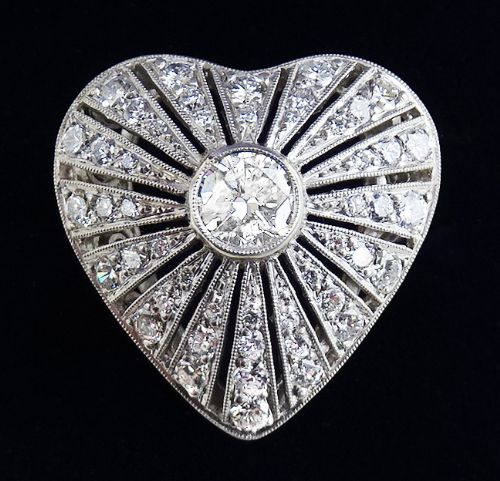
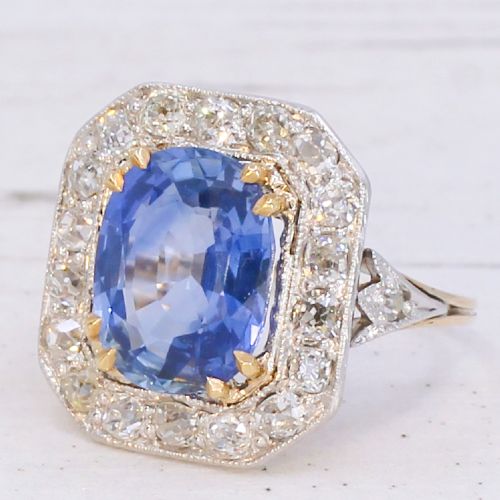
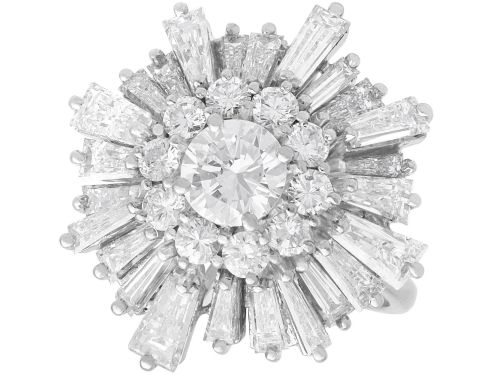
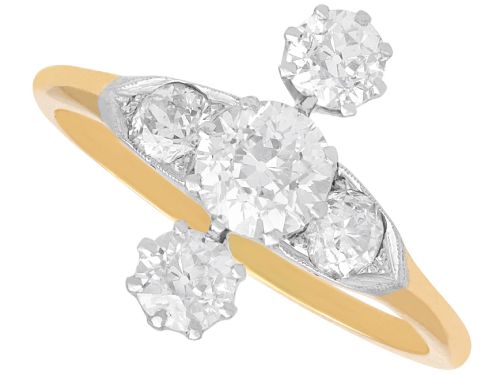
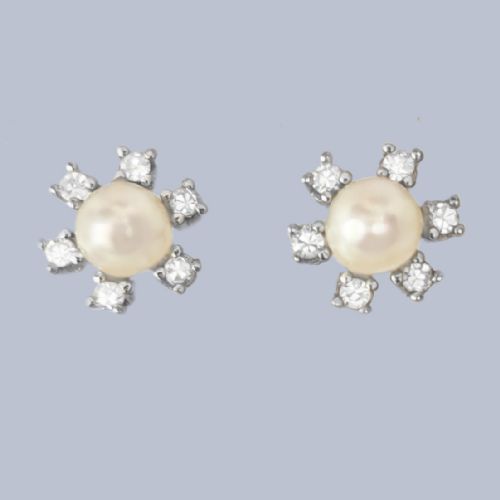
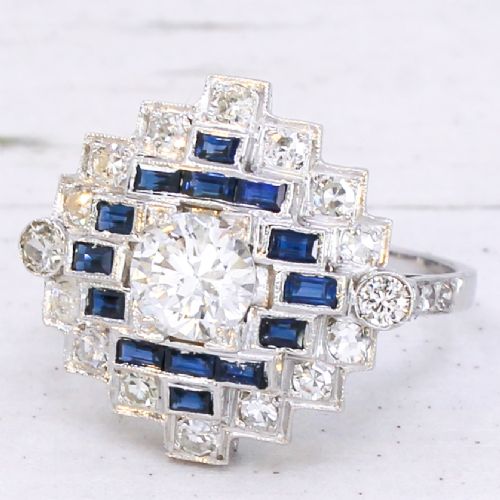
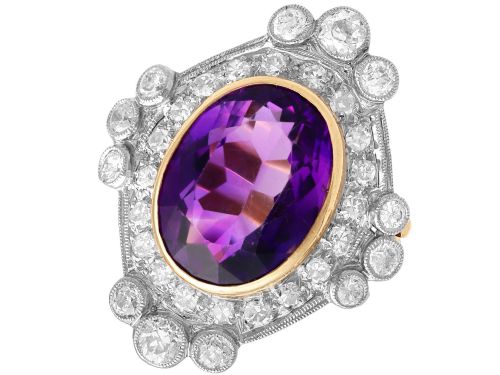
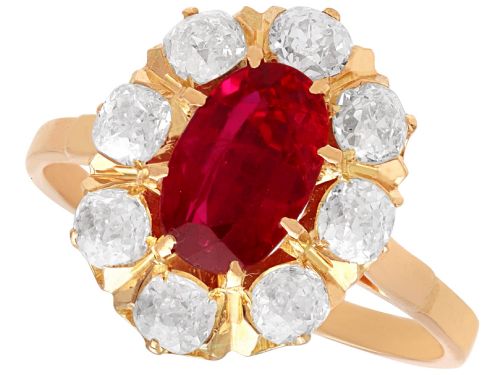
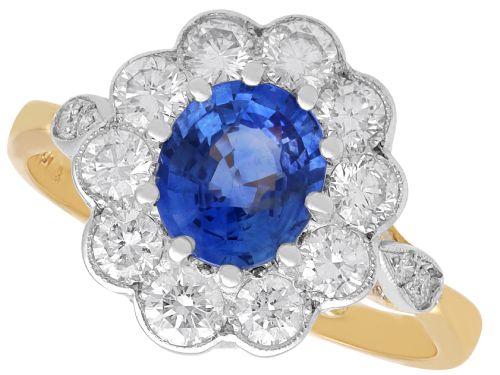
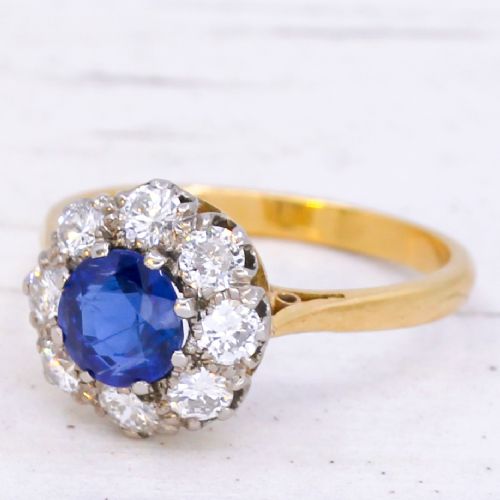
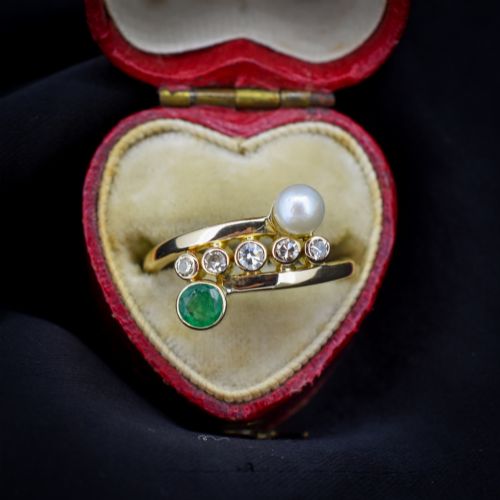
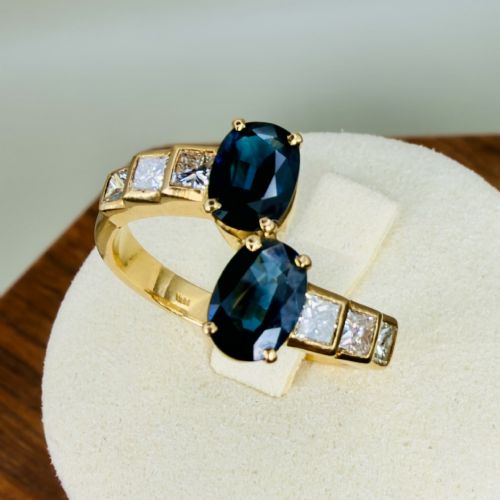
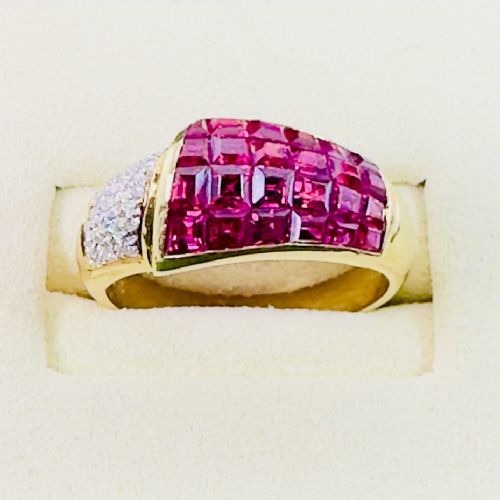
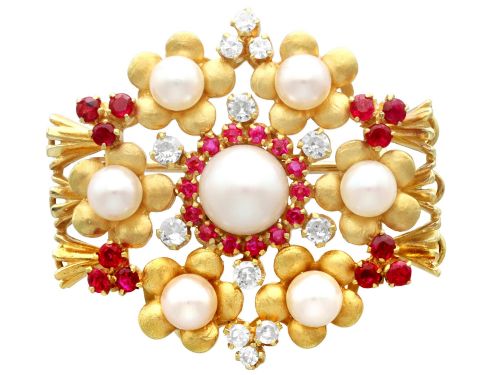
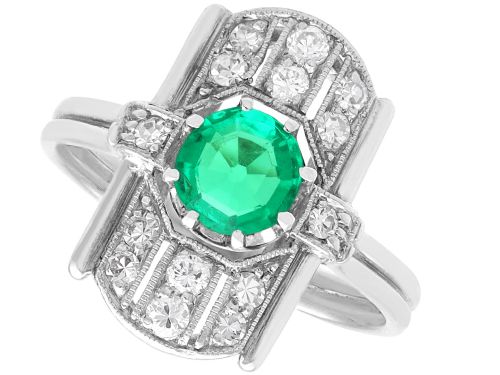
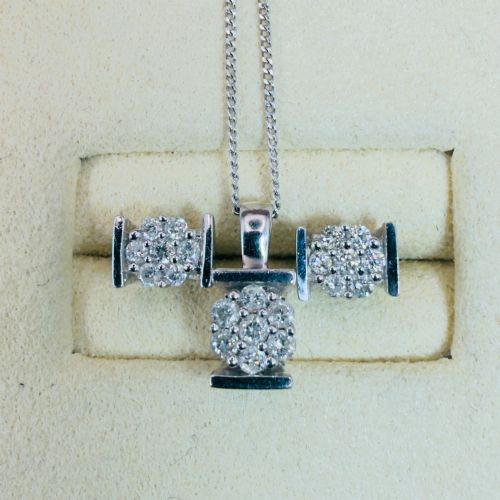
A gold diamond cluster centres on a tight grouping of diamonds, frequently accompanied by sapphires, rubies, emeralds or opals, arranged in circular daisy motifs, navette shapes or geometric configurations. Buyers encounter these formations across rings, earrings, pendants, brooches and bangles spanning the Victorian, Edwardian and Art Deco periods through to mid-century and later vintage eras.
Rings dominate the selections available, ranging from low-profile Edwardian daisy clusters to substantial cocktail rings from the nineteen-seventies. Alongside finger ornaments, the inventory includes drop earrings, multi-stone pendants and occasional heavy gold bangles utilising the same clustered stone layout.
Materials and construction
Goldsmiths utilised eighteen-carat yellow gold, eighteen-carat white gold and nine-carat gold alongside platinum settings, which allowed for secure claw and bezel arrangements while maximising light entry into the stones. Platinum topped mounts appeared frequently in Edwardian and Art Deco pieces to provide bright, durable prongs for old-cut diamonds.
Central stones and their surrounding borders rely heavily on traditional hand-cut gems, including old European cuts and rose cuts in nineteenth-century and early twentieth-century examples, shifting toward brilliant-cut diamonds in later mid-century creations.
Listings feature pieces spanning from the Victorian era through the Edwardian period, Art Deco, and into the nineteen-seventies.
Evaluating craftsmanship and stone pairing
The distinction between tiers rests upon the precision of the stone setting and the uniformity of the surrounding gems. Superior examples display tightly matched calibré-cut sapphires or evenly graded diamonds where individual prongs are hand-beaded and flush to the girdle.
Heavier mountings with solid galleries and substantial shank weights indicate higher grade manufacturing, whereas simpler mass-produced variations demonstrate less attention to the under-gallery and stone symmetry.
Kutchinsky
The Gold Diamond Cluster Glossary
- Cluster
- A jewellery arrangement featuring a central stone encircled by a border of smaller gems. This configuration creates a larger visual footprint on the finger or bodice.
- Navette
- A boat-shaped or marquise-oriented design tapering to points at either end. It lengthens the appearance of the piece along the finger or pendant drop.
- Old Cut
- A hand-faceted diamond cut predating modern brilliant standards, characterised by a smaller table, higher crown and open culet. These stones exhibit distinctive soft facets under candlelight.
- Daisy Cluster
- A specific circular cluster pattern where a central diamond is surrounded by petal-like outer stones. This motif is particularly prevalent in Victorian and Edwardian work.
- Calibré-cut
- Small gemstones cut specifically to fit a geometric channel or border without standard facet counts. They form crisp, continuous lines around a central cluster.
Gold Diamond Cluster: Frequently Asked Questions
What periods do these clusters come from?
The inventory spans Victorian, Edwardian, Art Deco and mid-century modern eras, extending into later vintage decades. Each period brings distinct metal colours and stone-cut combinations.
Early pieces often feature yellow gold paired with old-cut diamonds, while later mid-century examples lean toward white gold and structured cocktail designs.
How should I care for vintage cluster settings?
Regular gentle cleaning with warm soapy water and a soft brush helps maintain the sparkle behind tightly set stones. Avoid harsh chemical dips, particularly when opals or emeralds are present in the cluster.
Periodic inspection by a jeweller ensures that the prongs holding the surrounding diamond border remain secure.
How do I identify an old-cut diamond cluster?
Old-cut diamonds display smaller tables and deeper pavilions, producing a characteristic chunky scintillation rather than the precise pinfire flashes of modern stones. Under magnification, the hand-cut facets reveal slight irregularities unique to pre-twentieth-century lapidary work.
These older stones are frequently housed in Edwardian or Victorian platinum-topped gold mounts.